
When planning your international camping trip, don’t forget crucial documents like passports, visas, and special permits. Pack an all-inclusive first aid kit, medications, and safety supplies to handle health issues. Double-check your tech gear, power banks, and offline maps for navigation. Make sure you have enough local currency, emergency contacts, and insurance info. Many travelers overlook these essentials, but if you keep these tips in mind, you’ll be better prepared for a smooth adventure. Keep going to learn more.
Key Takeaways
- Remember to carry and verify all necessary travel permits, visas, and emergency documents before departure.
- Pack extra prescription medications, first aid supplies, and health essentials for unforeseen health issues.
- Double-check vehicle readiness, including fuel, spare tire, and emergency roadside kit, for smooth travel.
- Download offline maps, translation apps, and ensure all tech devices are fully charged with backup power sources.
- Confirm all accommodation reservations, permits, and safety contacts, and ensure perishable food and supplies are properly stored.
What Travel Documents and Permits Do You Need for International Camping?
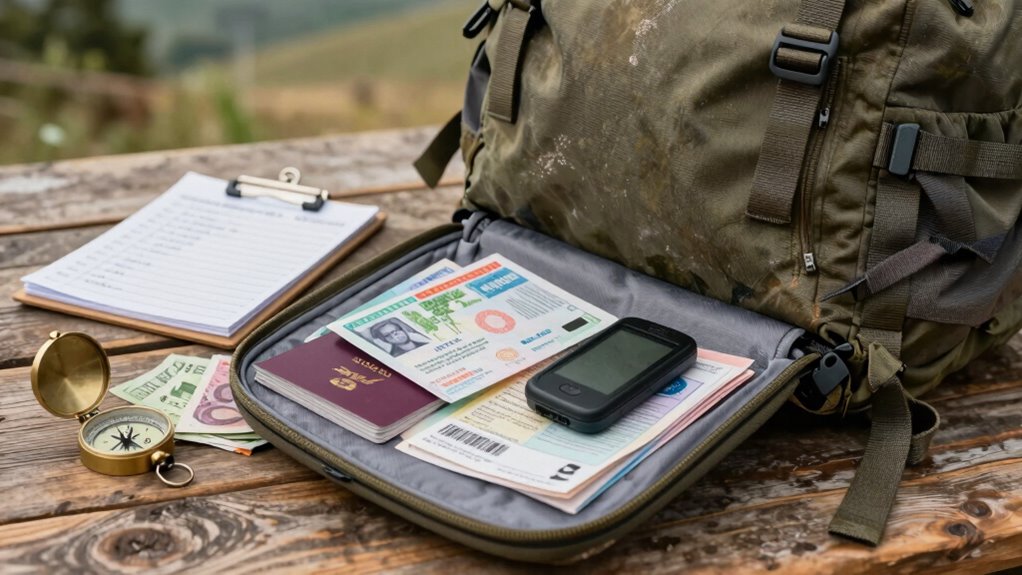
When planning an international camping trip, you need to guarantee you have the right travel documents and permits in order. Start by checking passport requirements for your destination country. Many countries require your passport to be valid for at least six months beyond your travel dates. Also, review visa regulations—some countries need a visa, while others offer visa-free entry for short stays. Make sure to apply for any necessary visas well in advance to avoid delays. Keep copies of your passport and visas, both digital and printed, in case of loss or theft. Additionally, verify if you need any special permits for camping or outdoor activities in your destination. Staying on top of these documents helps ensure a smooth, stress-free start to your adventure. Be aware of potential manipulation tactics that could affect your travel plans, such as scam alerts or misinformation.
Health and Safety Supplies You Must Pack for Your Trip
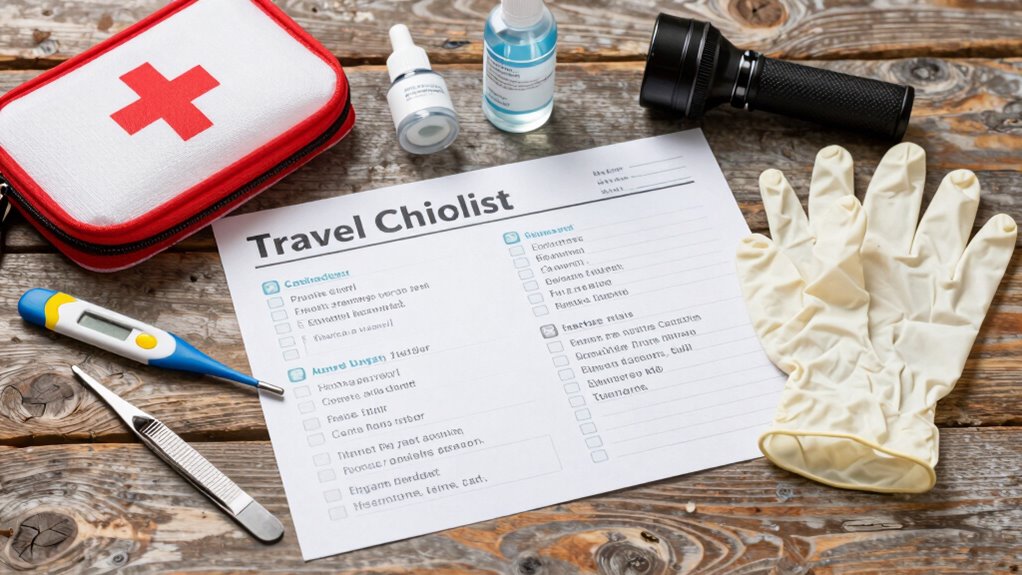
To guarantee your safety and well-being during your international camping trip, packing essential health and safety supplies is crucial. Start with a comprehensive first aid kit that includes bandages, antiseptic wipes, pain relievers, and allergy medications. It’s also vital to bring any prescription medications you take regularly, ensuring you have enough for the entire trip plus a little extra. Don’t forget to include copies of your prescriptions and a list of your medications in case of emergencies. Consider packing insect repellent, sunblock, and any special items needed for your health conditions. Being prepared with these supplies helps you handle minor injuries and health issues promptly, so you can focus on enjoying your adventure without unnecessary stress or risk. Supporting Caregivers’ Emotional Well-Being can also be beneficial in managing stress and staying centered during your travels.
Essential Packing Items Often Forgotten When Camping Abroad
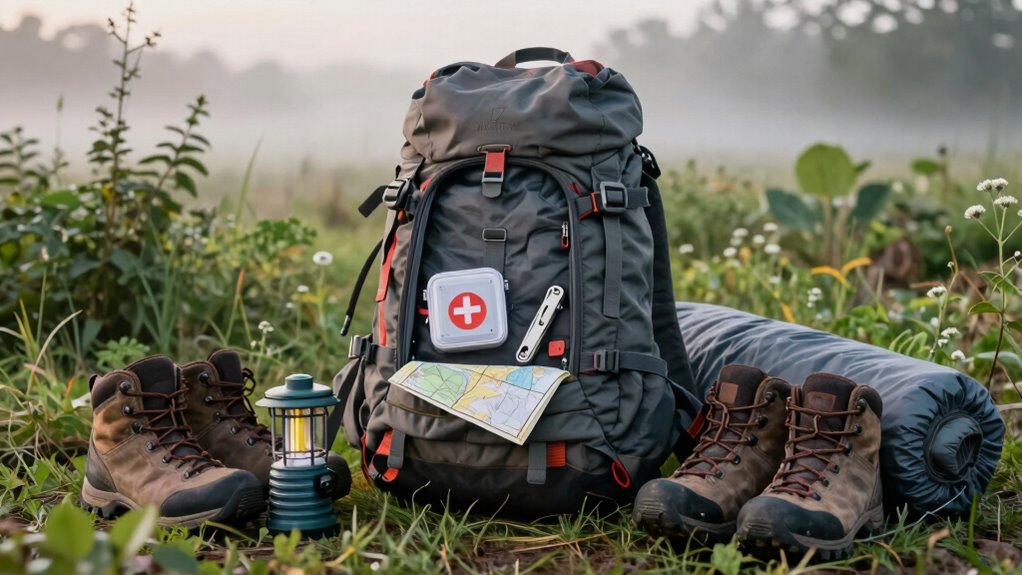
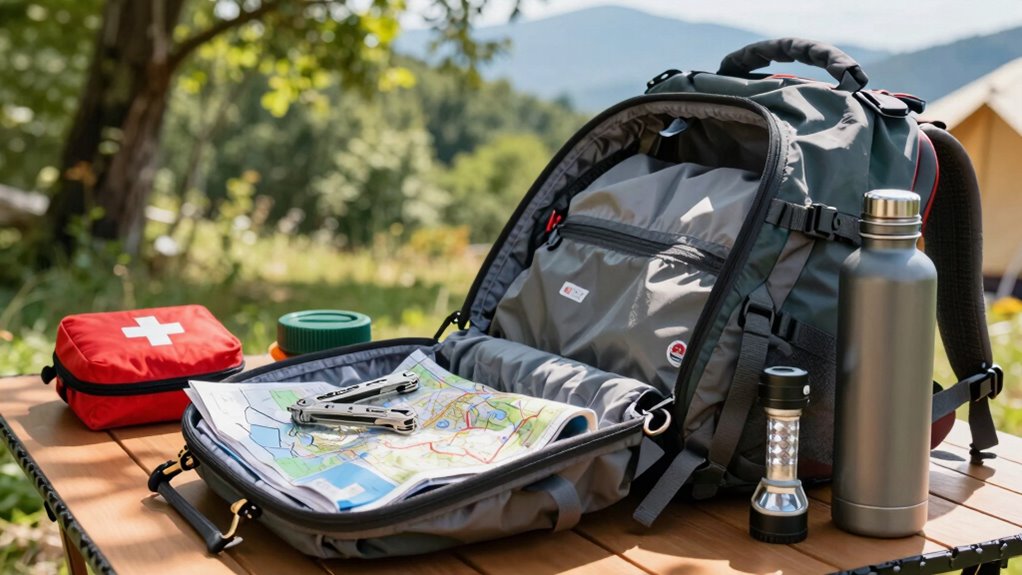
Even experienced campers often overlook small but essential items that can make a big difference abroad. These overlooked essentials are part of your camping gear and travel accessories that guarantee comfort and safety. Forgetting these can lead to inconvenience or discomfort during your trip. Make certain you pack items like:
- Compact first aid kit
- Multi-purpose travel knife
- Waterproof matches or lighter
- Portable trash bags
- Extra batteries or portable power bank
These items might seem minor, but they’re vital for smooth camping experiences abroad. Small, versatile travel accessories and thoughtful additions to your camping gear can save you time and effort. Double-check your packing list to avoid missing these often-forgotten essentials, guaranteeing your trip is enjoyable and hassle-free. Additionally, understanding auditory processing challenges can help prepare for communication needs during your trip, especially when interacting in unfamiliar environments.
Must-Have Tech and Power Gear for Your International Camping Adventure
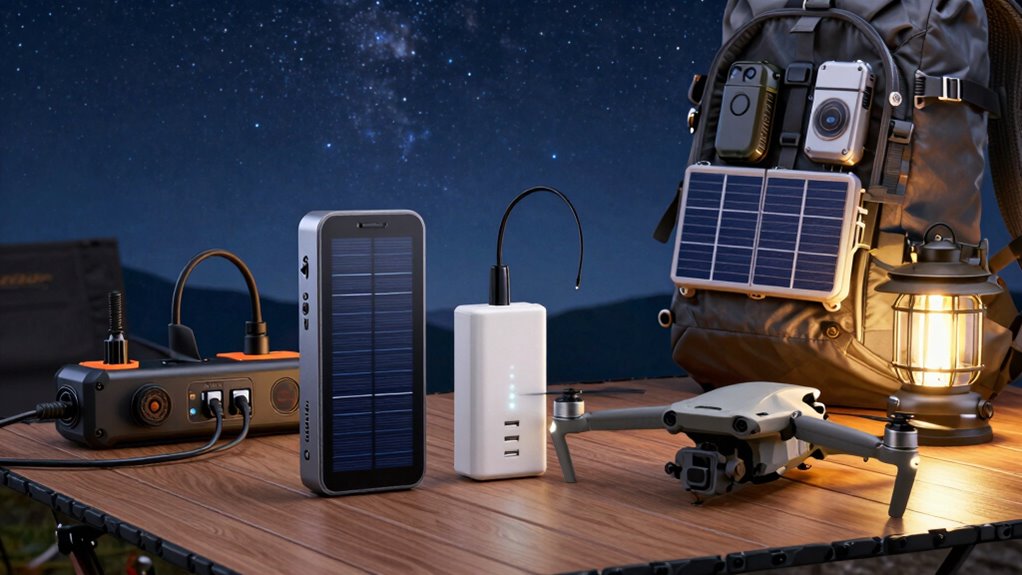
Equipping yourself with the right tech and power gear is essential for a seamless camping experience abroad. Solar chargers are a smart choice, allowing you to harness the sun’s energy to recharge your devices sustainably. Pack a reliable portable battery to keep your phones, GPS, and cameras powered during long hikes or remote stays. These power sources guarantee you’re never left without communication or navigation tools, especially in areas with limited electricity access. Make sure your portable batteries are compatible with your devices and fully charged before departure. Additionally, consider bringing a multi-port USB charger to maximize charging options. Staying connected and powered up enhances your safety and convenience, making your international camping adventure more enjoyable and stress-free. Using a smart power management system can further optimize your device usage and extend battery life during your trip.
How to Prepare Local Currency, Maps, and Language Tools
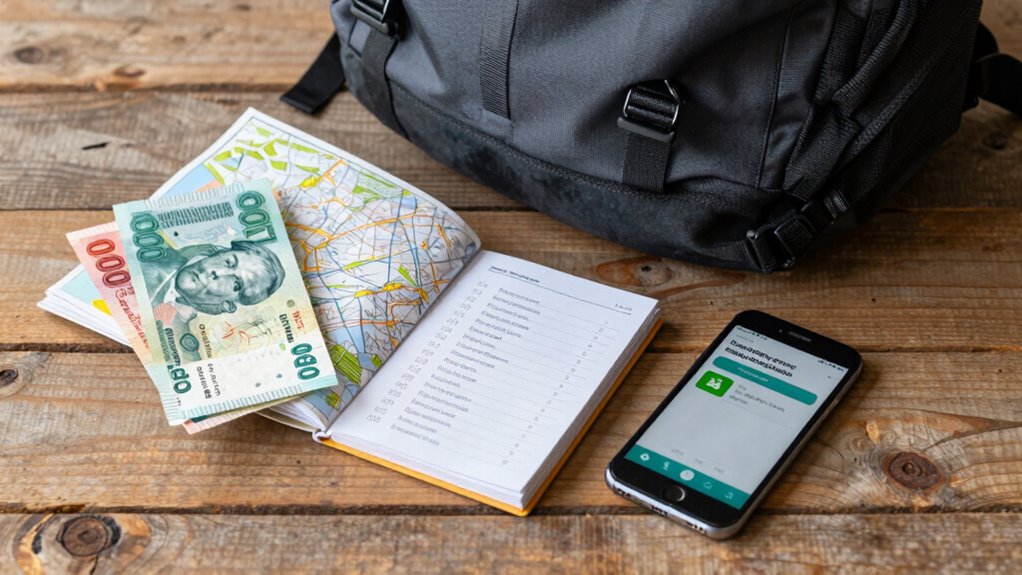
Preparing your local currency, maps, and language tools before your trip guarantees you can navigate and communicate with confidence. Carry enough local currency to cover immediate expenses, and consider a small amount of foreign currency if required. Download offline maps or bring a detailed physical map to avoid getting lost. Use language tools like translation apps or phrasebooks to bridge language gaps quickly. Since a good projector can enhance your entertainment during downtime, consider bringing portable devices for viewing content on the go. Portable projection devices are lightweight and easy to set up, making them ideal for travel.
Emergency Contacts and Insurance Info You Should Have Ready
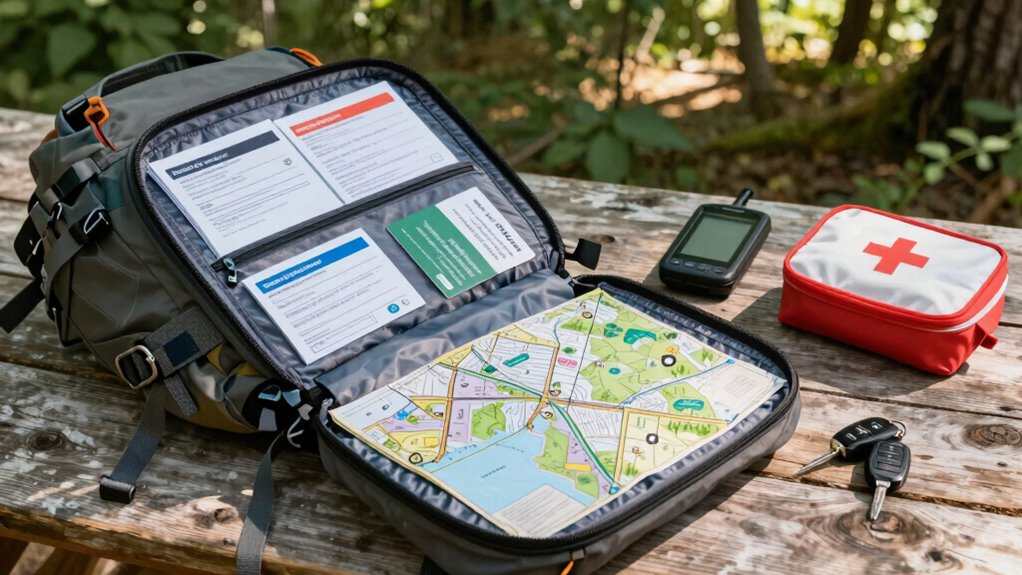
Make sure you have emergency contact numbers, like local medical services, saved and accessible. Keep your insurance policy details handy, so you can quickly provide them if needed. Being prepared with this information can save you time and stress in an emergency. Additionally, consider creating a home and outdoor product list of essential items to bring, ensuring you’re ready for various situations during your trip.
Medical Emergency Numbers
Do you have all the essential medical emergency numbers and insurance details readily available? Before your trip, make sure you’ve compiled key contacts in one place. Keep a list handy with:
- Local hospital contacts at your destination
- Emergency services phone numbers (e.g., 911 or local equivalents)
- Your country’s embassy or consulate phone numbers
- Insurance company emergency hotlines
- Any relevant medical providers or clinics
Having these numbers accessible can save critical time during an emergency. Save them in your phone, print a hard copy, and share with travel companions. Familiarize yourself with how to contact local hospitals and embassy services quickly. Ensuring you understand Relationship Rewind strategies for resolving conflicts can help you stay calm and effective in high-stress situations. Being prepared with this information ensures you won’t waste precious time searching when urgency strikes.
Insurance Policy Details
Have you gathered all your insurance policy details and emergency contact information in one easily accessible place? Making sure your insurance coverage is up-to-date and your policy documentation is organized can save you time and stress if emergencies arise. Carry printed copies of your insurance policy, including policy numbers, provider contact info, and coverage details. Save digital copies on your phone or cloud storage for quick access. Make sure you also have emergency contacts listed, including local authorities and your insurer’s emergency helpline. Confirm that your insurance covers international incidents like medical emergencies, trip cancellations, or evacuations. Regularly reviewing your insurance policy details can ensure you’re fully prepared for unexpected situations. Being prepared with this information ensures you can act swiftly and confidently if unexpected situations occur, giving you peace of mind throughout your camping trip abroad.
Final Checklist: Double-Check Before You Head Out
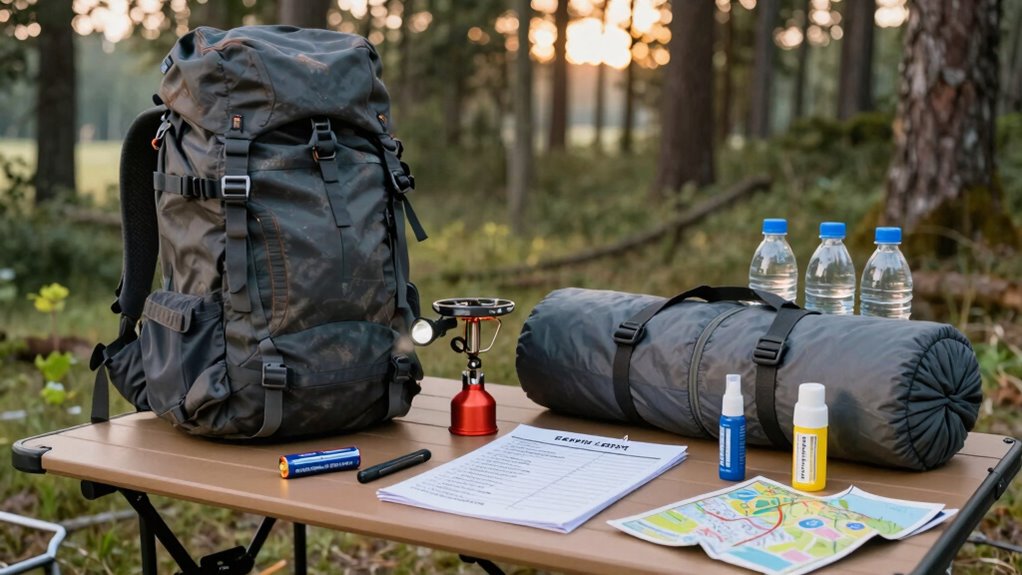
Before you hit the road, it’s essential to double-check your gear and plans to make sure everything’s in order. Confirm your camping gear is complete, including tents, sleeping bags, and cooking supplies. Make certain you have enough travel snacks to keep energy levels up during long drives or hikes. Verify your essentials, like maps, chargers, and any permits. Check that your vehicle has enough fuel and a spare tire. Finally, review your itinerary and emergency contacts, so you’re prepared for any situation. Additionally, ensure your ice cream and frozen yogurt supplies are properly packed if you plan to enjoy treats during your trip.
Frequently Asked Questions
How Can I Ensure My Camping Gear Meets International Safety Standards?
To guarantee your camping equipment meets international safety standards, start with a thorough gear inspection, checking for any damage or wear. Look for safety certifications on labels or packaging, which indicate compliance with international safety regulations. Research the standards required for your destination, and choose gear that explicitly states it meets those certifications. Doing this helps keep you safe and ensures your gear will perform reliably during your trip.
What Cultural Etiquette Should I Learn Before Camping in a Foreign Country?
Before camping abroad, you should learn about local customs and practice respectful behavior. Respectful behavior involves understanding greetings, dress codes, and social norms specific to the country. Familiarize yourself with local customs, such as tipping practices or religious sensitivities, to avoid misunderstandings. By showing respect for local traditions, you’ll build positive interactions, enhance your experience, and guarantee your trip is enjoyable and culturally sensitive.
How Do I Handle Language Barriers During Emergencies?
Ever wondered how to handle language barriers during emergencies? Stay calm and use simple phrases or translation apps to bridge translation challenges. If you’re unable to communicate, consider carrying a phrasebook or pre-written emergency cards in the local language. Gestures and facial expressions often help convey urgency. Remember, clear emergency communication can be lifesaving, so don’t hesitate to seek help from locals or use technology to assist you quickly.
Are There Specific Environmental Regulations I Should Follow While Camping Abroad?
You should familiarize yourself with local environmental regulations, especially wildlife conservation rules and waste disposal regulations. Always follow guidelines to protect local ecosystems, avoid disturbing wildlife, and dispose of trash properly. Check with local authorities or park officials before your trip to understand specific rules. Respecting these regulations not only helps preserve the environment but also guarantees you stay compliant and avoid fines or penalties during your camping adventure abroad.
How Can I Find Reliable Local Emergency Services in Remote Camping Areas?
Think of finding reliable local emergency services as your own personal GPS in a jungle. You should carry updated local maps and note down emergency contacts before heading out. Talk to locals or park rangers for trusted information. Download offline maps and save emergency numbers on your device. This way, if you need help, you’ll navigate quickly and confidently, avoiding any “lost in space” moments.
Conclusion
By attending to these details, you’ll guarantee a smooth and memorable adventure abroad. A little extra preparation can gently steer away unforeseen hurdles, allowing you to fully embrace the joy of exploring new horizons. Trust in your planning, and let each step be a quiet reassurance that your journey is as seamless as it is inspiring. After all, a thoughtfully organized trip whispers the promise of unforgettable experiences just waiting to unfold.