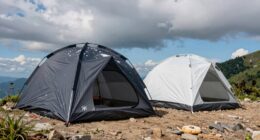
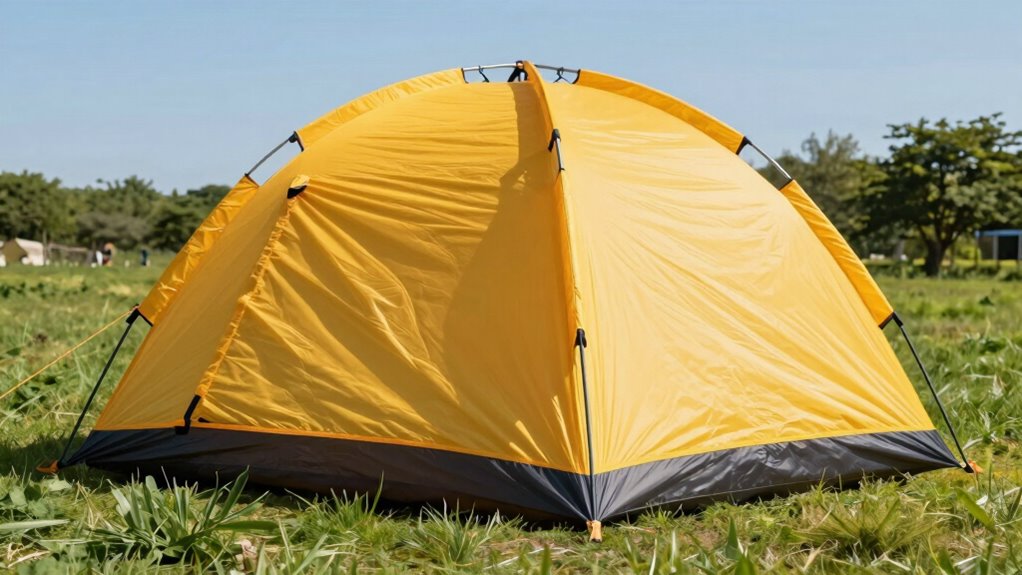
Inflatable tents use flexible, durable materials like PVC or polyester inflated with blowers to create strong, pole-free structures that are quick to set up and easy to transport. To guarantee stability in windy conditions, choose wind-resistant models with reinforced seams, low-profile shapes, and solid anchoring points. Proper setup, secure staking, and regular pressure checks are key to keeping your tent safe. Keep exploring for expert tips to maximize your inflatable tent’s safety and longevity.
Key Takeaways
- Inflatable tents use durable, flexible beams inflated by pumps, enabling quick setup without traditional poles.
- Proper site preparation, anchoring, and aerodynamics are essential for wind resistance and stability.
- Secure stakes, guy lines, and correct inflation pressure prevent damage and collapse during windy conditions.
- Regular maintenance, including cleaning valves and inspecting fabric, extends tent lifespan and ensures safety.
- Adjust tent orientation and monitor air pressure to minimize wind impact and maintain structural integrity.
What Are Inflatable Tents and How Do They Work?
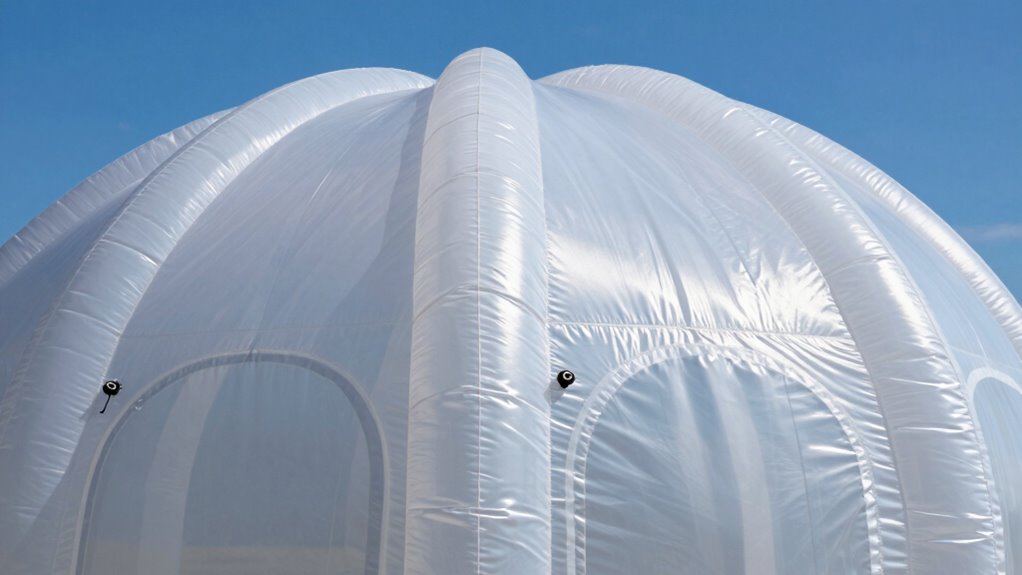
Have you ever wondered how inflatable tents are set up so quickly and easily? It all comes down to inflatable technology and high-quality tent materials. These tents use inflatable beams made from durable, flexible materials like PVC or polyester, which are inflated with a blower or pump. Once inflated, the beams create a sturdy structure that holds the tent upright without traditional poles. The tent materials are lightweight yet strong, ensuring resistance against weather elements. Inflatable tech allows for rapid setup and takedown, making these tents perfect for camping, events, or emergency shelters. Because of their design, they’re easy to transport and store, and their materials are chosen specifically for durability and weather resistance. This combination of innovative technology and quality materials is what makes inflatable tents so practical. Contrast ratio plays a role in how well the tent can withstand different lighting conditions, especially in outdoor environments with varying sunlight.
How to Choose a Wind-Resistant Inflatable Tent

When selecting an inflatable tent for windy conditions, focusing on wind resistance is key to guaranteeing safety and stability. Start by examining the material durability; strong, puncture-resistant fabrics like polyester or ripstop nylon can withstand gusts better. Look for tents with reinforced seams and robust anchoring points, which help secure the tent during high winds. Pay attention to design features such as low-profile shapes and aerodynamic structures that reduce wind catch. Additionally, tents with multiple inflation points and sturdy frame reinforcements provide extra stability. Remember, a well-designed tent balances durable materials with thoughtful features that minimize wind impact, making it safer and more reliable in adverse weather. Proper SSD organization can also help keep your gear secure and accessible in challenging conditions. Choosing the right combination ensures your inflatable tent remains steady no matter the conditions.
How to Set Up Your Inflatable Tent Step by Step
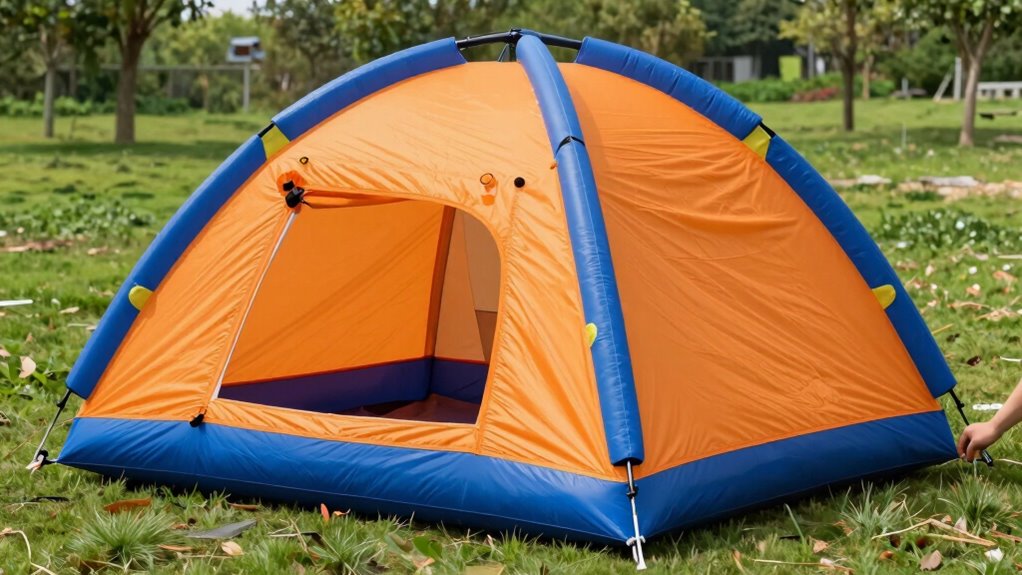
Start by preparing a flat, clear site to set up your tent, removing any debris or sharp objects. Once the area is ready, unfold the tent and begin inflating it according to the manufacturer’s instructions. Ensure you follow the proper setup procedures to prevent damage or instability. Finally, secure the tent properly with stakes or anchors to make certain stability.
Prepare the Site
Setting up your inflatable tent begins with choosing a flat, clear site free of rocks, sticks, and debris. Proper ground leveling ensures stability and comfort, so remove uneven patches or high spots. Check the weather forecast before you start, aiming for calm, dry conditions to prevent unexpected issues during setup. Clear the area of any sharp objects that could puncture the tent or damage the inflatable structure. If the ground isn’t perfectly level, use soil, gravel, or mats to create a stable base. This preparation helps prevent shifting or leaning once the tent is inflated. Ensuring proper ground preparation is crucial for a safe and successful setup. Taking these steps ensures a smooth setup process and a secure, comfortable shelter once you’re ready to inflate your tent.
Inflate and Secure
Once your site is prepared, you can begin inflating the tent by unfolding the air panels or tubes and connecting the pump. Focus on maintaining the right air pressure through your inflation technique, ensuring a steady, even fill. As you inflate, keep a close eye on the tent’s shape and listen for the sound of the air being evenly distributed. To secure your tent properly, follow these steps:
- Gradually increase air pressure, avoiding overinflation that could damage the fabric.
- Check for uniform tension across all panels, adjusting as needed.
- Secure the tent with stakes or weights once fully inflated, ensuring stability against wind or movement.
- Monitor the air pressure regularly to prevent leaks or deflation during your use.
This approach guarantees a safe, stable setup, letting you enjoy your adventure without worries.
How Does Wind Affect Inflatable Tents? Safety Tips to Keep in Mind

Wind can pose a significant challenge to inflatable tents, as strong gusts can cause instability or even damage if you’re not prepared. Sudden wind gusts can shift or collapse your tent if it’s not secured properly. To maintain tent stability, always stake your tent firmly and use additional guy lines if possible. Be aware of changing weather conditions and avoid setting up in exposed areas prone to strong winds. If you notice increasing wind speeds, consider taking down the tent to prevent damage. Regularly check the tension of your stakes and guy lines during your stay. Remember, safety comes first—don’t ignore wind warnings, and always have a plan to secure or evacuate your inflatable tent if conditions worsen. Proper anchoring methods are essential to withstand gusts and keep your tent safe.
Troubleshooting Common Wind-Related Problems
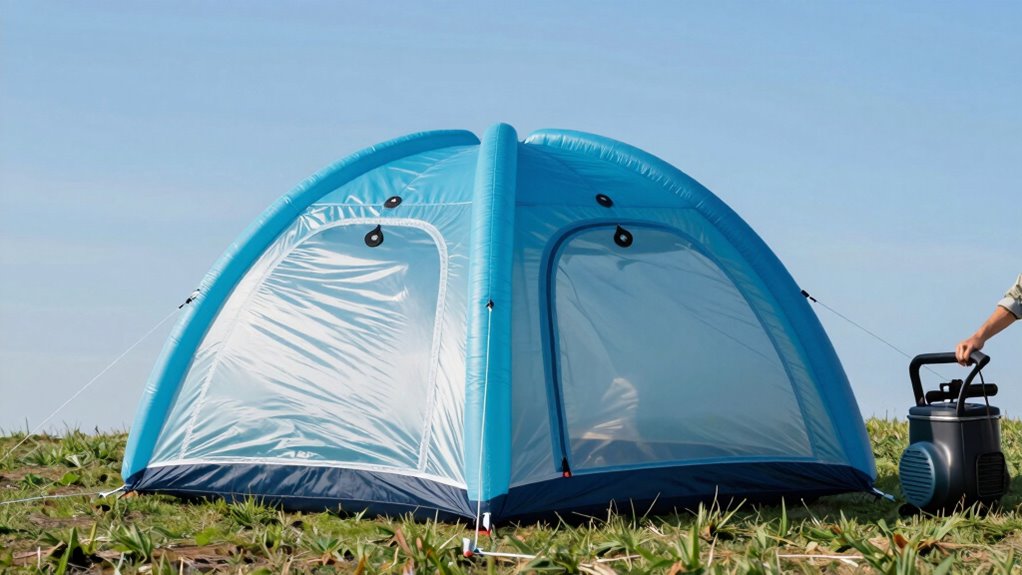
When wind causes issues with your inflatable tent, you need to act quickly to maintain stability. Make sure your anchor points are secure and adjust the tent’s orientation to reduce wind impact. Keep checking the pressure inside the tent to prevent deflation or damage during gusts. Regularly inspecting the stability of the tent can help prevent unexpected collapses or damage caused by strong wind.
Secure Anchor Points
Securing anchor points properly is crucial to prevent inflatable tents from shifting or collapsing in strong winds. Use sturdy ground stakes driven deep into the ground to hold your tent firmly. Tension lines are essential; they help distribute wind pressure evenly and keep the tent stable. To guarantee your setup is secure, focus on these key steps:
- Confirm ground stakes are driven at the correct angle, not straight down, for maximum holding power.
- Attach tension lines tightly, ensuring even tension across all anchor points.
- Regularly check stakes and tension lines during wind events to prevent sudden loosening or failure.
- Proper ground stake installation is vital to ensure your tent remains stable and secure under adverse weather conditions.
Proper Wind Orientation
Proper wind orientation can make the difference between a stable inflatable tent and a potential collapse during gusty conditions. To achieve this, you need to pay close attention to the wind direction when setting up your tent. Position the tent so that its strongest, most reinforced sides face away from prevailing winds. This reduces stress on the fabric and frame, minimizing the risk of tearing or tipping. Adjust your tent orientation based on the forecasted wind patterns, ensuring that the airflow hits the tent’s less vulnerable areas. Remember, aligning the tent properly prevents wind from catching open entrances or loose fabric, which can cause instability. Correct wind orientation is essential for safety, stability, and prolonging your tent’s lifespan during windy conditions. Incorporating free floating structures like inflatable tents can also help with stability by allowing some movement without damage.
Continuous Pressure Checks
Have you ever noticed your inflatable tent shifting or losing stability during gusty winds? Continuous pressure checks are essential to keep your tent secure. Regular pressure monitoring helps you spot issues before they worsen, ensuring safety and comfort. Use a reliable gauge to track pressure levels and detect leaks early. Here’s what you should do:
- Check pressure levels frequently—don’t wait for instability.
- Listen for hissing sounds—a sign of leak detection.
- Inspect seams and valves—tighten or repair as needed.
- Maintain proper air pressure protocols—following manufacturer guidelines can prevent over- or under-inflation, reducing the risk of damage during windy conditions.
Tips to Maintain Your Inflatable Tent’s Stability and Extend Its Lifespan
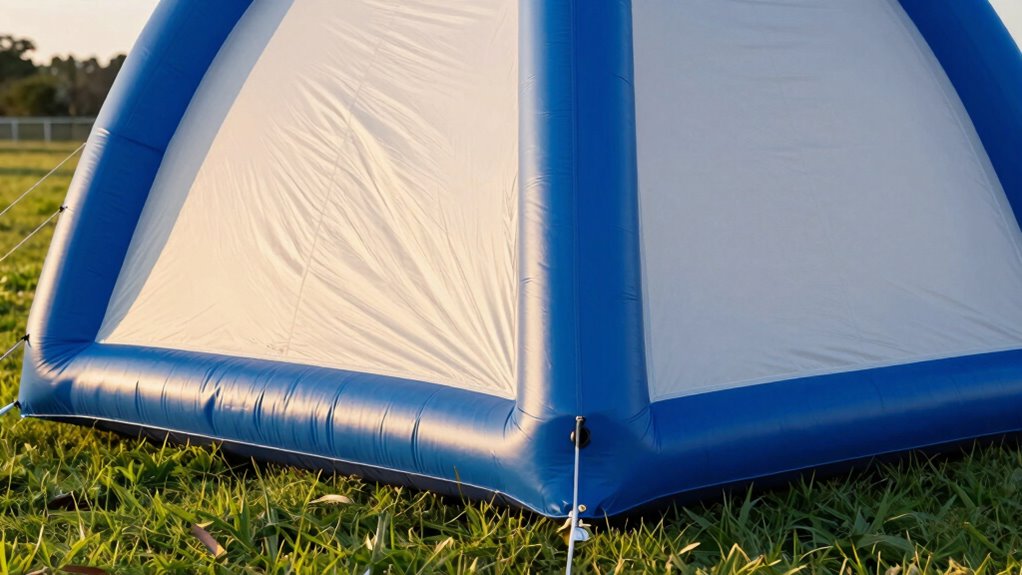
To keep your inflatable tent stable and guarantee it lasts through many adventures, regular maintenance is essential. Focus on inspecting the tent fabric for tears or punctures and repairing them promptly. Proper valve maintenance is vital—clean valves regularly and ensure they seal tightly to prevent air leaks. Avoid overinflating, which stresses the fabric and valves, reducing lifespan. When packing up, deflate the tent gently and store it in a cool, dry place away from direct sunlight. Check for any signs of wear before each trip. To help you stay organized, here’s a quick maintenance guide:
| Maintenance Task | Frequency | Tips |
|---|---|---|
| Inspect tent fabric | Before and after use | Repair tears immediately |
| Clean valves | Monthly | Use mild soap and water |
| Deflate properly | Every packing | Avoid overstressing the fabric |
| Store correctly | After each trip | Keep in a cool, dry place |
Frequently Asked Questions
How Long Does It Take to Fully Inflate an Inflatable Tent?
It typically takes about 10 to 15 minutes to fully inflate an inflatable tent, depending on the inflation speed of your pump and the size of the tent. If you use a high-powered pump, the setup time shortens, making the process quicker. Make certain you monitor the inflation process to avoid over-inflation. With practice, you’ll become more efficient, and the setup time will decrease, making your camping experience smoother.
Can Inflatable Tents Be Used in Extreme Weather Conditions?
Like a ship braving stormy seas, inflatable tents can handle some extreme weather, but they’re not invincible. Their durability varies by model and material, so high-quality tents with reinforced seams and sturdy materials perform better in strong winds or heavy rain. Still, for severe conditions like hurricanes or blizzards, traditional tents or specialized shelters are safer choices. Always check the manufacturer’s specifications and weather ratings before heading into extreme weather.
What Are the Best Storage Practices for Inflatable Tents?
To keep your inflatable tent in top shape, you should follow proper storage maintenance and packing techniques. Always clean and dry your tent thoroughly before packing it away to prevent mold and mildew. Use a lightweight, compressible bag and roll the tent tightly to save space. Store it in a cool, dry place away from direct sunlight and extreme temperatures, ensuring it stays durable and ready for your next adventure.
Are Inflatable Tents Suitable for Long-Term Camping?
Inflatable tents can be suitable for long-term camping if you’re willing to address durability concerns and maintenance requirements. Regular inspections and proper cleaning help prevent damage, ensuring longevity. While they offer quick setup and portability, you should be prepared for potential wear and tear over time, especially in harsh weather. With diligent upkeep and careful use, inflatable tents can serve well for extended outdoor stays.
How Do I Repair a Puncture or Tear in an Inflatable Tent?
When you find a puncture or tear in your inflatable tent, don’t panic. First, locate the damage, then quickly apply a patch repair designed for inflatables. Use tear sealing techniques to guarantee a tight seal. Carefully follow the patch instructions, pressing firmly to prevent air leaks. With patience and the right materials, your tent can be restored, keeping you comfortable and secure on your adventures.
Conclusion
Think of your inflatable tent as a sturdy sail, catching the wind’s energy but staying grounded with the right setup and care. When you respect its delicate balance, you become the captain steering through unpredictable weather. By choosing the right tent, setting it up properly, and staying vigilant, you guarantee it remains your loyal vessel—ready to weather any storm. With mindful attention, your inflatable tent will stand tall, symbolizing your confidence and resilience in every adventure.