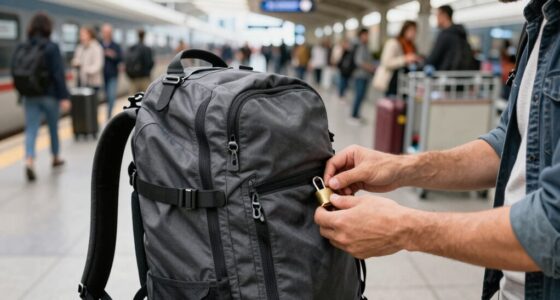
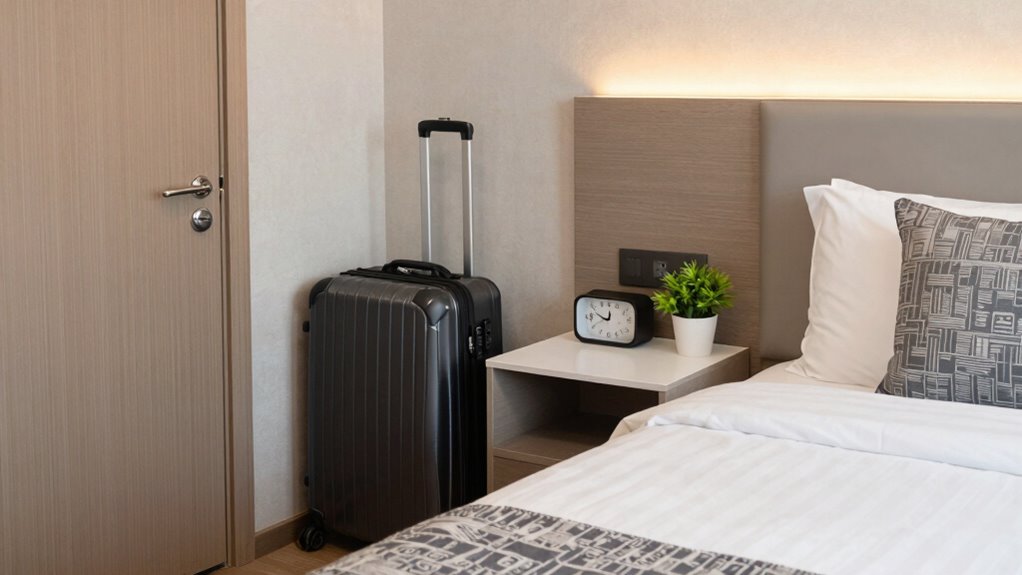
To quickly secure your hotel room in 60 seconds, start by checking that your door lock, deadbolt, and latch are engaged, then test the door’s sturdiness by pushing against it. Lock windows, close curtains, and store valuables out of sight. Reinforce security with items like a chair or towel behind the door, wedge doorstops, or secure window latches. Staying safe also means trusting your instincts and knowing additional tips—keep going to discover more ways to protect yourself.
Key Takeaways
- Quickly verify and lock the main door with deadbolt or chain for immediate security.
- Test alarm systems and ensure windows are properly closed and locked.
- Use furniture, wedges, or heavy objects to reinforce doors and windows against forced entry.
- Store valuables securely out of sight to protect privacy and belongings.
- Carry safety devices like a whistle or alarm, and share your itinerary with trusted contacts.
Why Hotel Room Safety Matters for Travelers
Hotel room safety is essential because it directly impacts your well-being and peace of mind during travel. Protecting guest privacy ensures you feel secure and comfortable in your space, reducing stress and potential risks. It’s important to verify that your room has secure locks and privacy features, so outsiders can’t intrude. Additionally, having emergency contacts readily available allows you to quickly seek help if needed, whether it’s for medical emergencies or safety concerns. Being proactive about these safety measures helps you avoid unnecessary trouble and gives you confidence during your stay. Remember, your safety depends on taking simple precautions like safeguarding your privacy and keeping emergency contacts accessible. Ensuring your room’s security features are up to date and functioning properly can prevent potential intrusions. These steps create a safer environment, letting you focus on enjoying your trip.
How to Perform a 60-Second Hotel Room Security Check
Performing a quick 60-second security check can substantially enhance your safety by ensuring your room is secure before settling in. First, verify the lock on your door, engaging lockdown techniques like deadbolts or security bars. Check the alarm system—set it if available, and test its functionality to alert you to unauthorized entry. Inspect windows to ensure they’re tightly closed and locked. Keep valuables in a safe place or hidden spot. Use the table below to evoke how vital quick actions are:
| Safety Step | Action | Emotional Impact |
|---|---|---|
| Lock the door | Engage deadbolt or security latch | Feel protected and confident |
| Activate alarm system | Test and set alarm if possible | Gain peace of mind |
| Secure windows | Confirm they’re locked and closed | Reduce vulnerability |
This routine keeps you alert and in control, making your stay safer. Additionally, understanding the importance of energetic alignment can help you feel more secure and empowered during your stay.
How to Secure Your Doors and Windows Effectively
To guarantee your safety, it’s essential to secure your doors and windows effectively as soon as you enter your room. Start with door reinforcement by locking the main door and using the deadbolt or chain lock if available. Push against the door to check its sturdiness, and consider placing a wedge or portable door stopper for extra security. For windows, ensure they are properly locked using the built-in locking mechanisms. If possible, close and lock curtains to prevent outsiders from peering in. If your room has sliding doors or windows, use additional security measures like a rod or wedge to prevent forced entry. These quick steps considerably improve your safety by making it harder for intruders to gain access. Additionally, inspecting and maintaining your room’s hardware, such as mount leveling kits or other security accessories, can help reinforce locks and prevent accidental failures.
How to Use Common Items to Reinforce Room Security

Using common household items can substantially enhance your room’s security without special tools. For door reinforcement, place a sturdy chair or a rolled-up towel behind the door handle or lock to add extra resistance. You can also wedge a doorstop or even a thick book at the base of the door for added stability. To create effective window barricades, use furniture like a desk or chair pressed against the window, or place heavy objects in front of it to prevent forced entry. If you have a wooden or plastic rod, slide it into the window latch to prevent it from opening. These simple, quick measures give you immediate added security, making it harder for someone to break in or access your room without your consent. Additionally, understanding projector technology can help you choose devices that provide clearer images, which can be useful if you need to verify your surroundings through visual aids.
Extra Tips for Staying Safe Throughout Your Hotel Stay
Staying safe throughout your hotel stay requires staying alert and proactive. Carry personal safety gadgets like a whistle, portable door alarm, or a personal alarm to quickly attract attention if needed. Make sure your emergency contact plans are clear—share your itinerary with a trusted friend or family member and confirm your whereabouts regularly. Keep your phone charged and easily accessible at all times. Avoid opening the door to strangers and trust your instincts if something feels off. Use hotel safes for valuables and stay aware of your environment. Being mindful of your surroundings and understanding nail biology and hygiene can also help you recognize signs of potential health issues during your stay. These small precautions help create a safer experience, giving you confidence and peace of mind during your trip. Staying vigilant and prepared is the key to a secure and enjoyable stay.
What Should You Do If You Feel Unsafe in Your Hotel Room
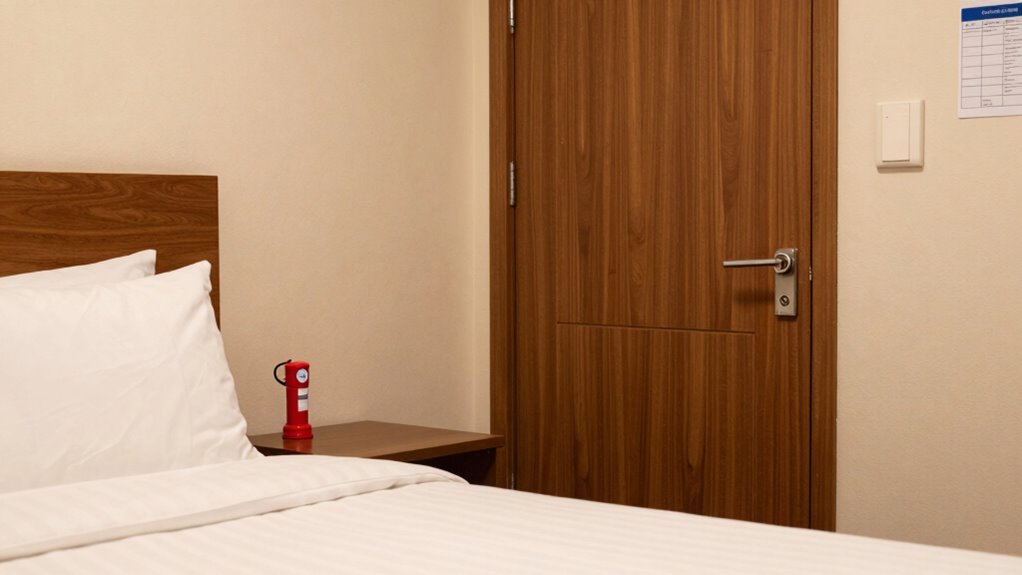
If you ever feel unsafe in your hotel room, your first priority is to stay calm and assess the situation quickly. Take a deep breath and determine if immediate action is needed, such as locking the door or hiding if there’s a threat. If possible, discreetly call your emergency contacts or the front desk for assistance. If you believe you’re in danger, don’t hesitate to contact local authorities by dialing the emergency number. Keep your phone within reach at all times. Remember, your safety is the top priority, so avoid confronting anyone or making loud noises that could escalate the situation. Trust your instincts and act swiftly to protect yourself, then follow the instructions provided by emergency responders. Being aware of appliance maintenance plans might seem unrelated, but it underscores the importance of preparedness and quick decision-making in emergencies.
Frequently Asked Questions
What Are the Best Signs Indicating a Hotel Room May Be Unsafe?
If you notice signs like a poorly maintained lock, broken windows, or strange odors, your room may be unsafe. During a quick room inspection, look for suspicious activity or anything out of place, such as missing safety features or tampered locks. These signs indicate potential risks, so trust your instincts and consider moving to another room or alerting hotel staff to make sure your safety.
How Can I Discreetly Alert Hotel Staff if I Feel Threatened?
Imagine you’re feeling threatened, and you want to discreetly alert hotel staff. You can use guest signaling or discreet alerts, like placing a specific object by your door or using a prearranged code with the front desk. For example, you might leave a certain item or send a silent message via a hotel app. These subtle signals help you communicate your need for help without escalating the situation.
Are There Specific Security Items I Should Carry for Hotel Safety?
You should carry personal safety gadgets like a whistle, door alarm, or a portable door lock for added security. Also, bring room security devices such as a door wedge or portable latch to reinforce your door. These items help you feel more secure and give you quick options to alert others or deter unwanted visitors, ensuring you stay safe during your stay. Always keep them easily accessible.
How Can I Verify the Hotel’s Overall Safety Measures Before Booking?
Did you know that 85% of travelers check guest reviews before booking? To confirm a hotel’s safety measures, look for mentions of hotel security in reviews, such as well-lit parking, secure entry systems, and on-site staff. Contact the hotel directly to ask about safety protocols. By doing this, you guarantee the hotel prioritizes guest safety and meets your security expectations before you make your reservation.
What Are Quick Escape Strategies if I Need to Evacuate Urgently?
If you need to evacuate urgently, always locate the emergency exits and plan your escape route quickly. Check if smoke alarms are functional and nearby, so you’re aware of hazards. If smoke or fire blocks your path, stay low to the ground to breathe cleaner air and use an alternate exit if possible. Stay calm, follow signs, and move swiftly to safety, prioritizing your well-being.
Conclusion
Remember, your safety is your top priority. A quick 60-second check can greatly reduce risks—did you know that most hotel security breaches happen in less than five minutes? By securing doors, windows, and using common items, you’re taking essential steps to protect yourself. Stay vigilant, trust your instincts, and don’t hesitate to ask for help if you feel unsafe. Your awareness can make all the difference in staying secure during your travels.