
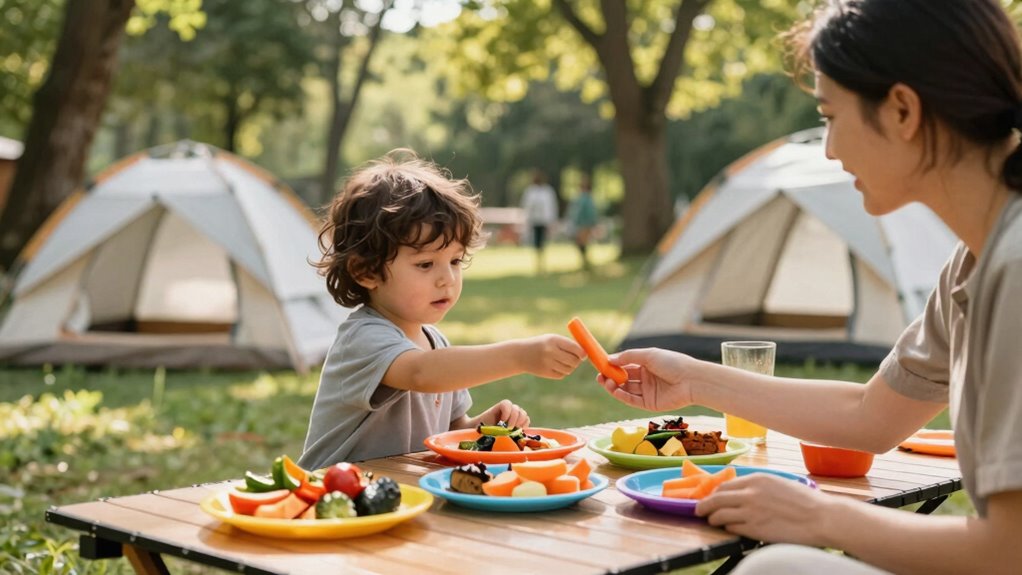

When managing mealtime with picky eaters at camp, involve everyone in meal prep and allow kids to choose ingredients for foil packets or skewers. Keep portions small, serve familiar foods alongside new options, and create a relaxed, respectful atmosphere. Encourage patience and offer alternatives if needed. Establish routines, teach outdoor dining etiquette, and foster a sense of control and inclusion. If you want to discover more tips, there’s plenty to learn about making camp meals enjoyable for all.

Get travel and outdoor gear delivered free with Prime
- Fast, free delivery on millions of items
- Prime Video, Amazon Music and more included
- Member-only deals all year
Key Takeaways
- Involve picky eaters in meal prep to give them a sense of control and increase willingness to try new foods.
- Offer familiar foods alongside new options to comfort and gradually introduce variety.
- Respect individual preferences, and avoid forcing them to eat, fostering a positive mealtime environment.
- Create an inviting, social atmosphere around the campfire to encourage sharing and open-mindedness.
- Keep portions small and flexible, allowing campers to sample without feeling overwhelmed or frustrated.
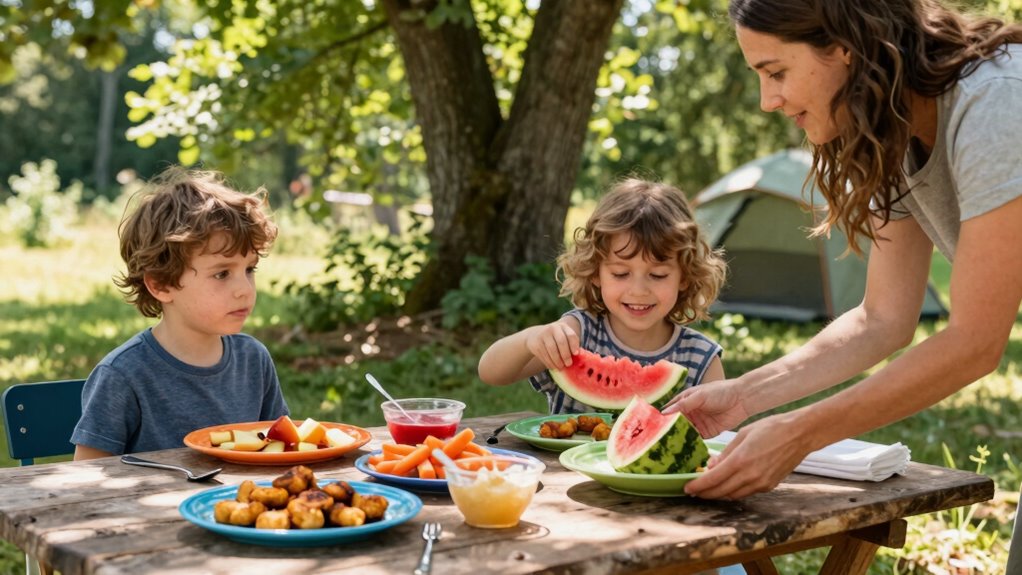
Mealtime at camp can be challenging when you’re dealing with picky eaters, but with a little planning and patience, you can make it a smoother experience for everyone. One way to do this is by embracing campfire cooking, which adds a fun, interactive element that often encourages kids to try new foods. When you prepare simple, familiar dishes over the fire—like foil-wrapped vegetables, s’mores, or grilled meats—your campers are more likely to eat comfortably in a relaxed, outdoor setting. Keep in mind that outdoor dining etiquette is important too; teaching kids to clean up after themselves, use utensils properly, and respect the shared space ensures a pleasant mealtime for all.
Embrace campfire cooking with familiar, simple dishes to make outdoor mealtime fun and stress-free for everyone.
You can start by involving everyone in the meal prep process. Kids tend to be more willing to try foods they helped prepare, even if they’re initially hesitant. Bring along a variety of ingredients, and let them choose what to include in their foil packets or skewers. This sense of control often makes picky eaters more open-minded. Additionally, serve familiar foods alongside new or adventurous options. If a camper refuses a new vegetable, offer a familiar side or dip to make the meal less intimidating. Keep portions small to avoid waste and frustration, and be patient if they’re slow to try something new.
Setting clear expectations around outdoor dining etiquette helps everyone enjoy the meal. Remind campers to wait their turn, keep their area tidy, and be considerate of others. This fosters respect and makes mealtime less stressful. Keep a routine—set a consistent time for meals and gather everyone together, making the experience predictable and calming for picky eaters. You can also make mealtime more appealing by creating a cozy atmosphere: bring along a blanket or camp chairs, and sit around the campfire. The warmth and ambiance naturally encourage conversation and sharing, making the meal feel special rather than a chore. Additionally, incorporating outdoor dining etiquette into your camp rules can help establish a respectful dining environment that benefits everyone.
Moreover, understanding cultural and spiritual symbols can help you create a more inclusive atmosphere that respects different backgrounds and preferences. Being aware of diverse food traditions can also inspire new ideas for meals that may appeal to a wider range of campers. Lastly, be flexible. If a camper refuses to eat what’s served, don’t force it. Respect their preferences and offer alternative options if available. The goal isn’t just to get food into them but to foster a positive attitude toward outdoor dining and campfire cooking. With patience and a bit of creativity, mealtime can become a memorable part of the camping experience, even for the pickiest eaters.
Products Worth Considering

Samsonite Underseat Carry-On Spinner with USB Port, Jet Black

Amazon Kindle Paperwhite (2024), 16 GB, 7-inch Display, Jade

DJI Osmo Mobile 8 Phone Gimbal with Mic Mini Transmitter, Infinity Black
As an affiliate, we earn on qualifying purchases.
Frequently Asked Questions
How Can I Encourage Picky Eaters to Try New Foods?
To encourage picky eaters to try new foods, you should provide regular food exposure in a positive way. Offer small portions and let them explore without pressure. Use positive reinforcement by praising their efforts, even if they only taste a new dish. Create a relaxed environment that makes trying new foods feel like a fun challenge rather than a chore, helping them develop a more adventurous palate over time.
What Are Quick, Healthy Snack Ideas for Picky Campers?
You can offer healthy snacks like trail mix with nuts and dried fruits, yogurt cups, or sliced veggies with hummus for quick options. Fresh fruit, granola bars, or cheese sticks are also great choices. Keep these snacks easily accessible to encourage picky campers to grab them when they’re hungry. These options are nutritious, simple to prepare, and perfect for satisfying hunger during busy camp days.
How Do I Handle Food Allergies at Camp?
Worried about food allergies at camp? You should be, because allergy management and food safety are vital. Always ask campers or parents about allergies beforehand, and clearly label all food. Keep allergy-friendly options separate to prevent cross-contact, and train staff on recognizing allergic reactions. Are you prepared to respond swiftly? By staying vigilant and proactive, you guarantee a safe, inclusive environment where everyone can enjoy mealtime without worry.
What if a Camper Refuses to Eat Altogether?
If a camper refuses to eat, you should gently encourage participation in mealtime routines and foster positive peer influence. Engage them in conversation, offer small portions, and create a relaxed environment. Sometimes, peer encouragement can motivate reluctant eaters. Avoid pressuring them, but stay supportive and patient. Over time, consistency in mealtime routines and peer interactions can help them feel more comfortable and willing to try new foods.
How Can I Make Mealtime More Enjoyable for Picky Eaters?
Think of mealtime as a garden—you nurture curiosity and patience. You can make it more enjoyable for picky eaters by focusing on appealing meal presentation, colorful plates, and familiar flavors. Respect dietary restrictions and offer alternatives, so everyone feels included. Encourage small bites and positive conversations about food. Your patience helps picky eaters feel safe exploring new tastes, turning mealtime into a welcoming, shared experience rather than a challenge.
Conclusion
Handling mealtime with picky eaters at camp can be challenging, but with patience and creative strategies, you can make it smoother. Remember, about 20-30% of children are considered picky eaters, so you’re not alone in this! By offering a variety of options and respecting their preferences, you help build a positive mealtime experience. Keep encouraging them to try new things without pressure, and you’ll create a more enjoyable camp environment for everyone.