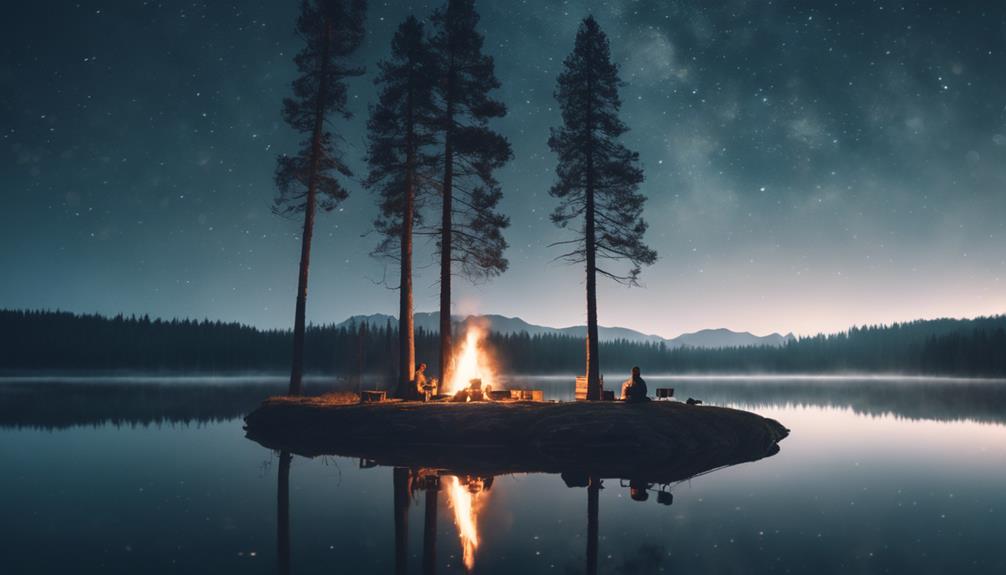
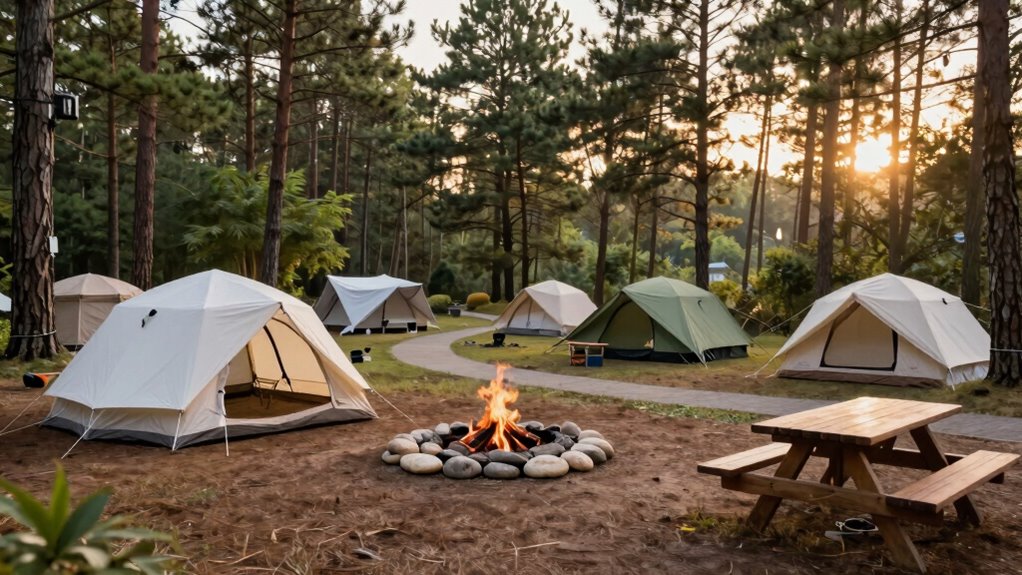

A good campsite layout is more important than most people realize because it guarantees safety, convenience, and comfort. Proper placement of tents, fire pits, and natural barriers helps prevent accidents and manage fire hazards. Thoughtfully organizing your space allows quick access to essentials and reduces tripping or clutter. Considering environmental factors like wind and terrain makes your stay safer and more enjoyable. Keep exploring to discover how careful planning can transform your camping experience.
Key Takeaways
- A well-organized layout enhances safety by preventing fire hazards and minimizing accidents around tents and fire pits.
- Proper placement of tents, fire pits, and natural barriers improves comfort, airflow, and reduces environmental impact.
- Strategic planning ensures easy access to essentials and quick response to emergencies or hazards.
- Using natural features for windbreaks and barriers increases fire safety and protects against harsh weather.
- An organized campsite creates a more enjoyable and stress-free experience by reducing clutter and potential hazards.
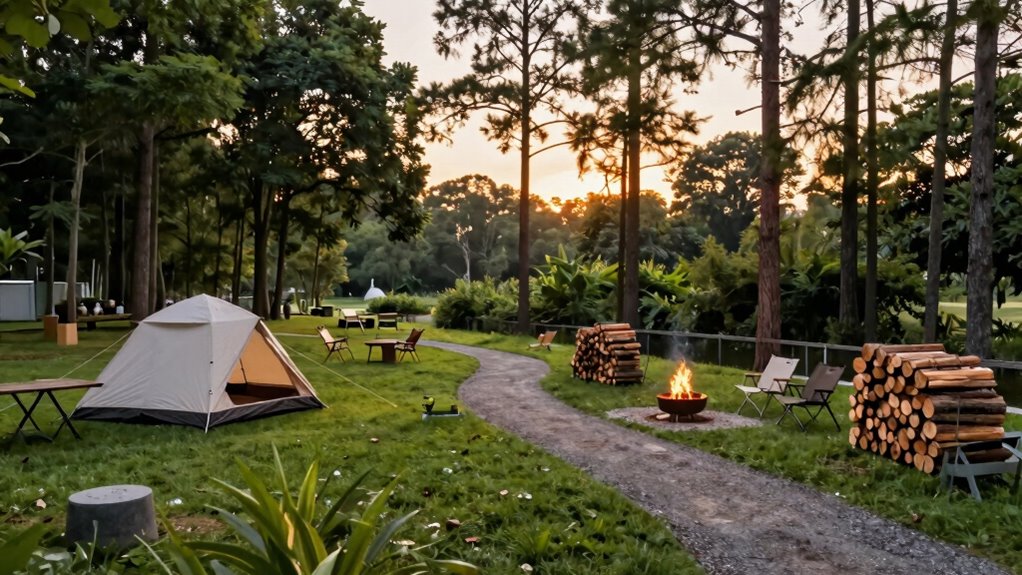
Have you ever wondered why some campsites feel more comfortable and organized than others? The secret often lies in the layout. A well-planned campsite isn’t just about choosing a pretty spot; it’s about strategic placement of everything to ensure safety, convenience, and comfort. When you pay attention to campfire safety, tent placement, and overall organization, you make your experience safer and more enjoyable.
Campfire safety is crucial, and your campsite layout plays a big role in it. You want to position your fire pit away from tents, trees, and other flammable materials. A good layout keeps the campfire at a safe distance from where you sleep and relax, minimizing the risk of accidental fires. You should also clear the area around the fire pit of leaves, twigs, and other debris. By doing this, you prevent stray sparks from igniting unintended fires. Proper placement prevents smoke from blowing directly into your tent or sitting area, making your evenings more comfortable. Remember, a responsible campsite design considers wind direction and natural barriers, helping you keep the fire controlled and your family safe. Understanding campfire safety and how to implement it effectively can greatly enhance your safety. Additionally, recognizing natural barriers such as rocks or dense bushes can help create windbreaks and protect your campfire.
Position your fire pit away from tents and debris for safety and comfort.
Tent placement is another critical aspect often overlooked. You want to find a flat, dry spot that’s away from potential hazards like falling branches or water runoff. Position your tent so that the door faces away from the wind, which helps keep the interior comfortable and reduces condensation. It’s also smart to set your tent up with some space around it — not too close to your fire or cooking area, but close enough for easy access. A thoughtful layout ensures you have enough room for gear, chairs, and other essentials without feeling cramped. It also makes it easier to keep the campsite organized, so you’re not tripping over gear or scrambling to find things in the dark. Being mindful of natural barriers and environmental factors, like wind and terrain, can make a significant difference in maintaining control over your campfire. Proper planning of tent placement can improve airflow and help prevent moisture buildup inside your tent, enhancing your overall camping comfort.
As an affiliate, we earn on qualifying purchases.
Frequently Asked Questions
How Can a Good Layout Improve Safety at a Campsite?
A good campsite layout improves safety by organizing spaces to prevent accidents. You can guarantee proper water drainage, avoiding puddles that attract insects or cause slips. Clear pathways reduce tripping hazards, and strategic placement of the campfire keeps it away from tents and trees, enhancing fire safety. Thoughtful planning also minimizes the risk of wild animals, creating a safer environment for everyone. Proper layout truly makes your camping experience safer and more enjoyable.
What Are Common Mistakes to Avoid in Campsite Planning?
You should avoid poor campsite planning by placing the campfire too close to tents, risking safety and smoke inhalation. Keep tent spacing adequate to prevent noise and pests. Don’t overlook the importance of clear pathways or neglecting natural drainage, which can lead to water pooling. Properly managing campfire placement and maintaining proper tent spacing guarantees safety, comfort, and an enjoyable outdoor experience.
How Does Layout Impact Environmental Preservation?
You might think your campsite layout is just about comfort, but it actually plays a huge role in environmental preservation. A poor setup causes ecosystem disruption and disturbs wildlife, turning a peaceful retreat into a chaos zone. By planning thoughtfully, you minimize habitat damage, reduce wildlife disturbance, and keep nature’s delicate balance intact. So, remember, your campsite layout isn’t just for you—it’s for the environment, too.
Can a Poor Layout Affect Campsite Privacy?
A poor campsite layout can definitely affect your privacy. If your tent orientation isn’t thoughtfully planned, you might be too close to other campers, reducing your sense of seclusion. Similarly, improper campfire placement can lead to smoke or noise drifting into neighboring sites, disturbing your privacy. By strategically positioning tents and choosing a good campfire spot, you create a more private, peaceful environment where you can relax without unwanted interruptions.
What Tools or Apps Assist in Campsite Layout Planning?
Did you know that over 60% of campers say layout impacts their comfort? You can use apps like iCAMP or AllTrails for campsite planning. These tools help you visualize tent positioning and fire pit placement, ensuring safety and privacy. They consider terrain and regulations, making setup easier. With these apps, you’ll create a well-organized, enjoyable campsite that maximizes space and minimizes conflicts or hazards.
Conclusion
A well-designed campsite layout isn’t just about aesthetics; it’s about safety, comfort, and efficiency. When you plan thoughtfully, you minimize conflicts, reduce environmental impact, and enhance everyone’s experience. Did you know that poorly planned campsites can increase noise disturbances by up to 40%? By paying attention to layout details, you create a more enjoyable environment for all. So, take the time to plan carefully — your future camping trips will be smoother and more memorable.