
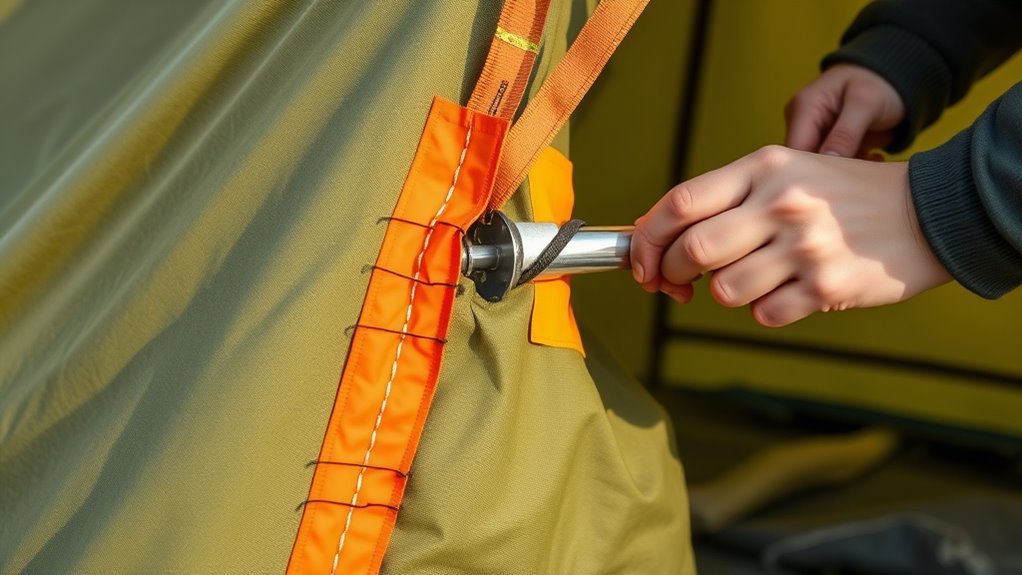

To repair rips, thoroughly clean the area with rubbing alcohol, then cut a compatible patch with rounded edges slightly larger than the tear. Use a high-quality seam sealer or tent adhesive for secure bonding, pressing firmly until it cures to restore waterproofing. For broken poles, identify the material, then replace damaged sections with exact measurements, securing fittings tightly. Proper cleanup and precise reassembly guarantee durability; continuing will reveal detailed steps to optimize your tent repairs.
Key Takeaways
- Clean and dry torn fabric before applying patches made from nylon or polyester with seam sealer or repair adhesive.
- Cut patches with rounded edges slightly larger than the tear for effective reinforcement and waterproofing.
- Identify tent pole material, then replace broken sections using appropriate tools and secure fittings or repair sleeves.
- Use epoxy or specialized adhesive to join pole segments, ensuring proper alignment and tension for stability.
- Regularly inspect the tent for minor damages, promptly repair tears, and reinforce poles to prolong tent lifespan.
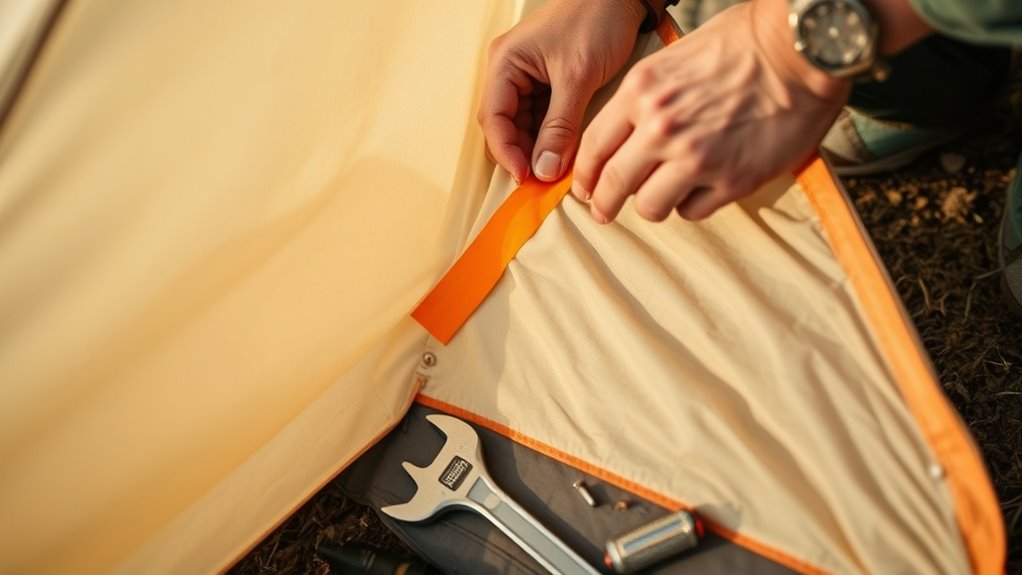
Have you ever experienced a tear or puncture in your tent during a camping trip? When this occurs, immediate action is essential to preserve the integrity of your shelter and prevent further damage. Proper repair begins with understanding how to reinforce tent fabric effectively. Tent fabric reinforcement involves applying a durable patch made from compatible materials, such as nylon or polyester, to the damaged area. To ensure a secure bond, clean the area thoroughly with rubbing alcohol to remove dirt and oils. Cut the patch with clean, rounded edges slightly larger than the tear itself. Apply a high-quality seam sealer or tent repair adhesive, ensuring even coverage beneath and atop the patch. Press firmly and allow the adhesive to cure according to manufacturer instructions. This process restores tensile strength and prevents the rip from expanding, maintaining the tent’s waterproof properties. Additionally, inspecting the entire tent for minor damages can help prevent larger issues in the future.
In the case of broken or bent tent poles, pole replacement techniques are necessary to restore structural stability. First, identify the type of pole—aluminum, fiberglass, or composite—as each requires specific handling. For aluminum poles, remove the damaged section by unscrewing or sliding apart the segments. Measure the length of the broken segment precisely before acquiring a replacement section, which can often be sourced from the manufacturer or a specialized repair kit. To connect a replacement section, use the same ferrules or connectors, ensuring a tight fit. For fiberglass or composite poles, inspect the break site for splinters or cracks. If the pole is shattered, replace the entire segment with a matching length and diameter, securing it with the original fittings or reinforced tape if necessary. When reassembling, apply a thin coat of epoxy or specialized pole adhesive to joints, then slide or screw the sections together. Use tensioning cords or pole repair sleeves if available to reinforce the connection further. Always verify the pole’s alignment and tension after replacement, as uneven or loose poles compromise stability. Properly maintaining and repairing your tent’s components extends its lifespan and ensures safety during your outdoor adventures.
Both tent fabric reinforcement and pole replacement techniques demand precision. Properly patched fabric prevents leaks and prolongs the tent’s lifespan, while correctly replaced poles ensure your shelter remains upright and resilient against wind and rain. These repairs are often straightforward but require careful attention to detail, appropriate tools, and quality materials. With a systematic approach, you can effectively restore your tent’s functionality, minimizing downtime and costs. Always carry essential repair supplies, including patches, adhesives, replacement poles, and tools, to handle unexpected damage in the field. This proactive preparation allows for quick, efficient repairs, ensuring your outdoor experience continues smoothly with minimal disruption. Developing problem-solving skills can significantly improve your ability to handle unexpected issues like tent damage efficiently.
Frequently Asked Questions
How Do I Prevent Future Tent Rips?
To prevent future tent rips, you should practice proper tent fabric care by avoiding sharp objects and abrasive surfaces. Always use a repair kit with essentials like seam sealer and patches for minor damage. Set up your tent on even ground, and avoid overstretching the fabric during assembly. Regularly inspect for early signs of wear, and promptly repair small rips to prevent them from worsening.
Can I Repair a Broken Pole Without Replacing It?
You can repair a broken tent pole without full replacement by using a tent pole repair kit, which often includes splints or shock cord for stability. For minor breaks, fabric patching can reinforce the area, but for structural issues, consider tent pole replacement options. Carefully align the broken sections, secure with splints or epoxy if suitable, and guarantee the repair preserves the pole’s integrity for safe, reliable support.
What Tools Are Essential for DIY Tent Repairs?
Tools for tent repair are essential, crucial for victory. You’ll need a seam sealer to seal slick seams, scissors to snip fabric patches precisely, and a durable fabric patch for lasting repairs. A seam ripper helps undo damaged seams, while a lightweight roller ensures airtight adhesion. A repair kit, including these essentials, empowers you to patch rips and reinforce fabric effectively, ensuring your tent’s longevity and reliable shelter during your adventures.
How Long Does a Typical Tent Repair Take?
A typical tent repair takes about 1-2 hours, depending on the damage. You’ll start by cleaning the affected area, then applying a tent seam sealant or attaching a fabric patch over rips. For torn seams, sealing can take around 30 minutes, while patching fabric might require more time for proper adhesion. Precise work guarantees durability, so don’t rush—quality repairs extend your tent’s lifespan effectively.
Are There Temporary Fixes for Urgent Situations?
Think of your tent as a ship caught in a storm; a temporary patch acts as a sturdy bandage, providing an emergency fix. For urgent situations, use a waterproof tape or a patch kit as a quick, reliable solution. These temporary fixes seal rips or small holes instantly, buying you time until a permanent repair. Always carry a basic repair kit for such emergencies, ensuring safety and shelter in critical moments.
Conclusion
With the right tools and techniques, your tent can endure years of adventures, transforming from a torn shelter into a sturdy fortress. Think of your repaired tent as a resilient shield standing firm against wind and rain, contrasting its previous vulnerability. Mastering these DIY repairs not only saves money but also sharpens your skills, ensuring you’re always prepared. Ultimately, a well-maintained tent offers reliable refuge, turning fragile moments into lasting memories under a strong, dependable canopy.