
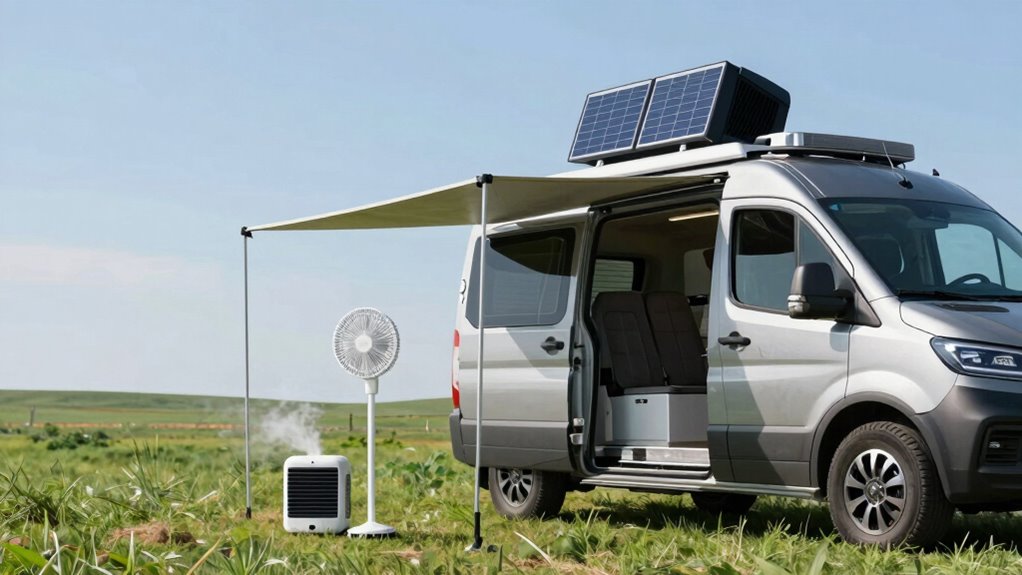

To cool your campervan without shore power, focus on passive methods like ventilation, reflective window covers, and insulation to reduce heat gain. Use portable fans powered by batteries or solar to improve airflow, and consider evaporative coolers in dry climates for natural cooling. High-end options include solar-powered air conditioners and enhanced vent systems, while budget-friendly solutions involve fans and reflective curtains. Combining these strategies can keep your camper comfortably cool—continue exploring to find the best setup for your needs.
Key Takeaways
- Use passive cooling methods like reflective window covers and insulation to reduce heat gain without consuming power.
- Enhance ventilation through strategic placement of vents, windows, and portable fans to promote airflow.
- Rely on evaporative coolers in dry climates, which use water evaporation to naturally lower interior temperatures.
- Install solar-powered fans and small cooling devices to utilize renewable energy efficiently off-grid.
- Combine shading, insulation, and ventilation strategies for cost-effective, energy-efficient campervan cooling without shore power.
What Are the Main Challenges of Cooling Your Campervan Without Shore Power?
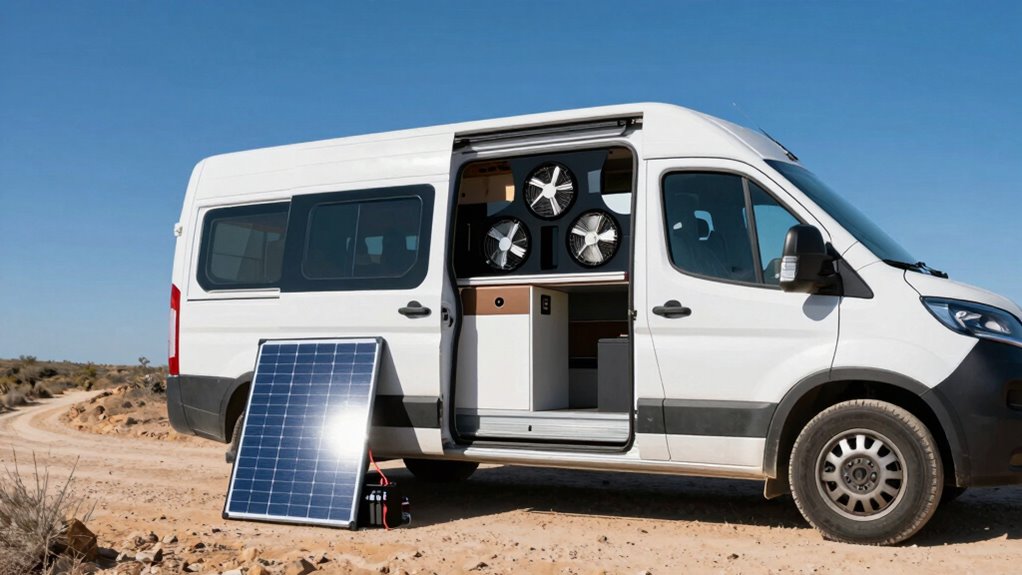
Cooling your campervan without shore power presents several significant challenges. One major obstacle is limited energy sources. Without access to grid power, you rely solely on your battery capacity and renewable options like solar panels to run cooling devices. Solar panels can help recharge your batteries during the day, but their efficiency depends on sunlight, which is not always reliable. This means you must carefully manage your energy consumption, avoiding high-power appliances that drain batteries quickly. Additionally, small battery capacity limits how long you can run cooling solutions, forcing you to prioritize and conserve power. To enhance your system, integrating appropriate performance parts like efficient fans or specialized cooling equipment can improve energy management and cooling effectiveness. Balancing these factors requires planning and understanding your energy system, making effective cooling without shore power more complex but achievable with the right setup.
How Can Ventilation and Portable Fans Keep Your Campervan Cool?
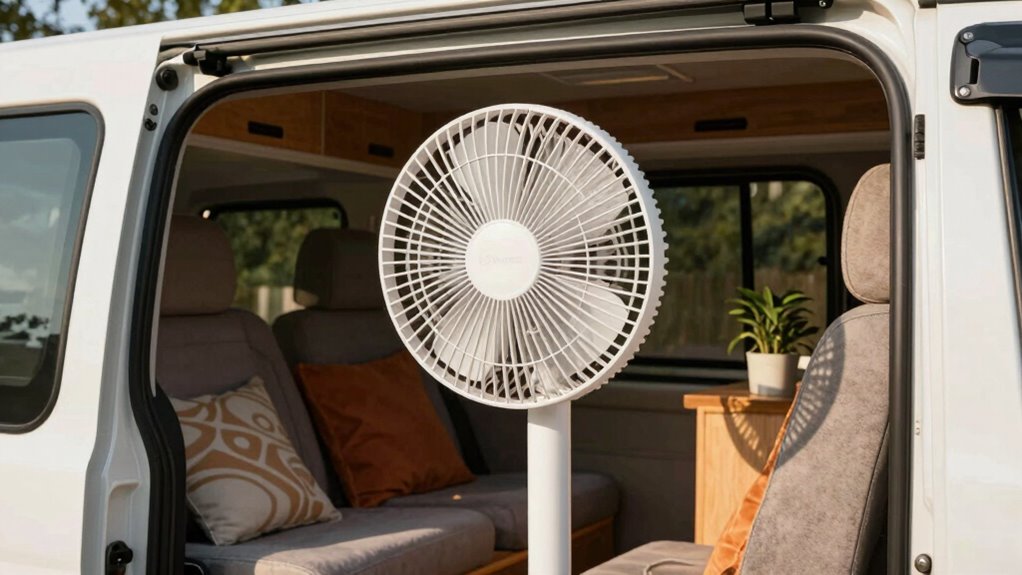
Using ventilation and portable fans can considerably improve airflow inside your campervan, making it more comfortable on hot days. To get the best results, consider how to enhance airflow efficiency and select the right type of fan for your needs. Choosing the appropriate fans and maximizing ventilation will help keep your campervan cooler without relying on shore power. Proper cabling solutions ensure that your installation remains safe and effective, preventing failures and maintaining optimal airflow.
Enhancing Airflow Effectiveness
Maximizing airflow is essential for keeping your campervan comfortable, especially when you’re off-grid. To improve airflow efficiency, focus on enhancing your ventilation design. Proper placement of vents and windows encourages cross-ventilation, drawing in cool air and expelling hot air. Use adjustable vents or vents with insect screens to control airflow without compromising security. Position portable fans strategically near intake vents or windows to boost circulation, especially during the hottest parts of the day. Keep interior doors open to promote unobstructed airflow throughout the van. Regularly clean vents and fans to prevent blockages and maintain peak performance. Additionally, choosing recycled materials in gardening for your outdoor space can help create a more eco-friendly environment around your campervan. By refining your ventilation design and enhancing airflow efficiency, you’ll create a cooler, more comfortable environment without relying on shore power.
Choosing Portable Fan Types
Choosing the right portable fan types is essential for effectively keeping your campervan cool without shore power. There are various portable fan varieties, including battery-operated, solar-powered, and manual fans, each suited for different needs. When selecting, consider noise levels, as some fans can be loud and disruptive, especially during sleep. Quiet fans help maintain a peaceful environment while providing adequate airflow. Look for fans with adjustable speeds and good ventilation coverage to maximize cooling efficiency. Lightweight and compact designs make them easy to move around and store. By understanding the different types and their noise levels, you can choose a portable fan that offers effective ventilation without adding unnecessary noise, helping you stay comfortable in your campervan even off-grid.
Are Evaporative Coolers Effective for Campervans in Dry Climates?
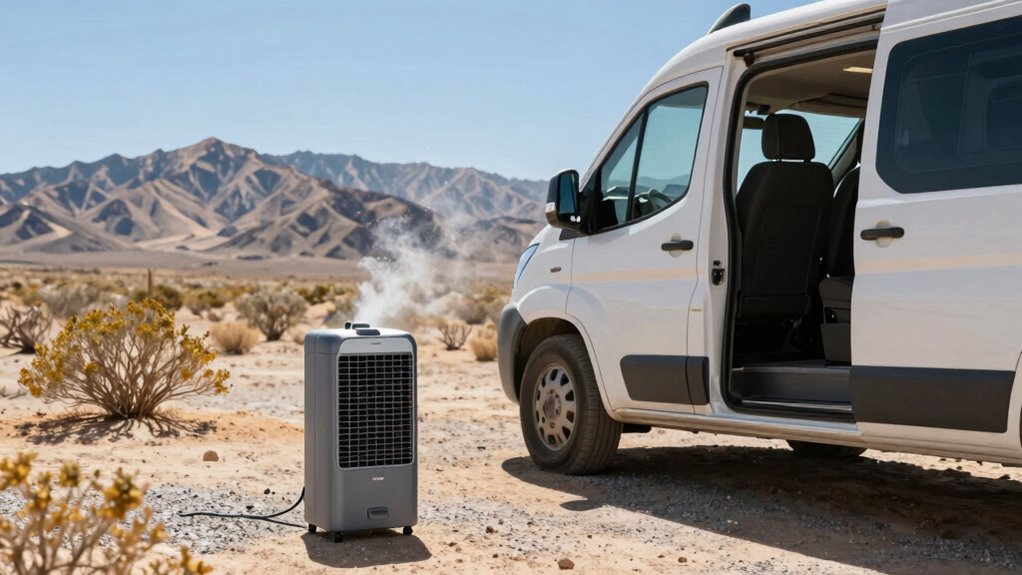
Evaporative coolers can be quite effective for campervans in dry climates because they rely on the natural process of water evaporation to lower air temperature. In dry climates, where humidity is low, these coolers work best, as they efficiently add moisture to the air while reducing temperature. When you operate evaporative coolers, warm air passes through water-saturated pads, causing water to evaporate and cool the air before it enters your campervan. This makes them an energy-efficient, portable option for staying comfortable off-grid. Additionally, air humidity levels play a crucial role in their performance; in humid conditions, their effectiveness drops markedly because the air already contains a lot of moisture, limiting evaporation. So, if you’re in a dry climate, evaporative coolers are among your best options for cooling your campervan without shore power.
Should You Consider Solar-Powered Air Conditioners for Off-Grid Camping?
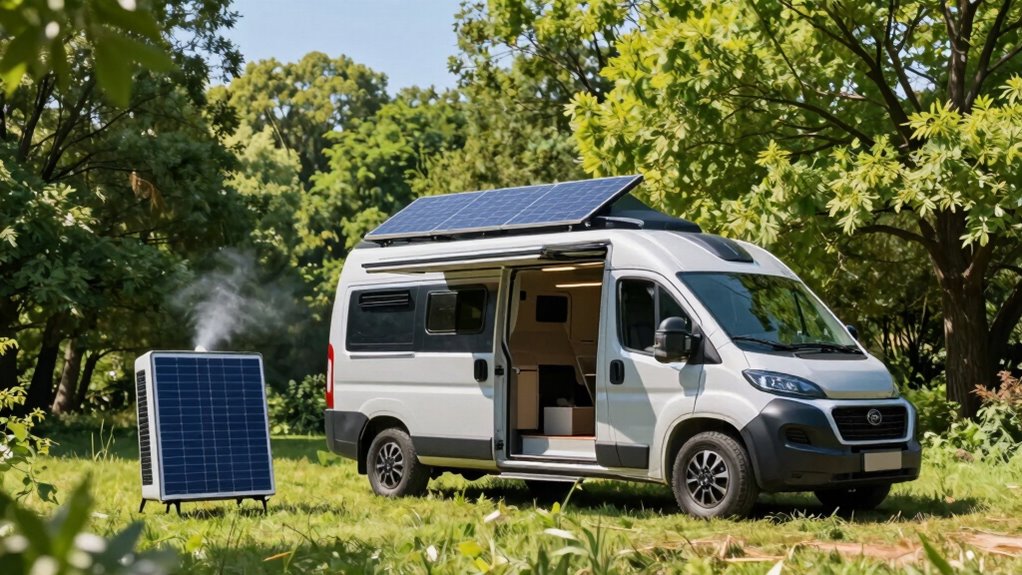
Solar-powered air conditioners are an increasingly popular option for off-grid campers because they offer a quiet, eco-friendly way to beat the heat without relying on hookups or generators. Solar cooling systems harness sunlight to run small, efficient units that keep your camper comfortable during hot days. They often work alongside battery powered fans to improve airflow and cooling efficiency when sunlight is limited. While solar AC units can be more expensive upfront, they eliminate ongoing fuel costs and noise. Additionally, advancements in solar panel technology have made these systems more accessible and reliable than ever before.
How Can Insulation and Window Coverings Help Reduce Campervan Temperatures?
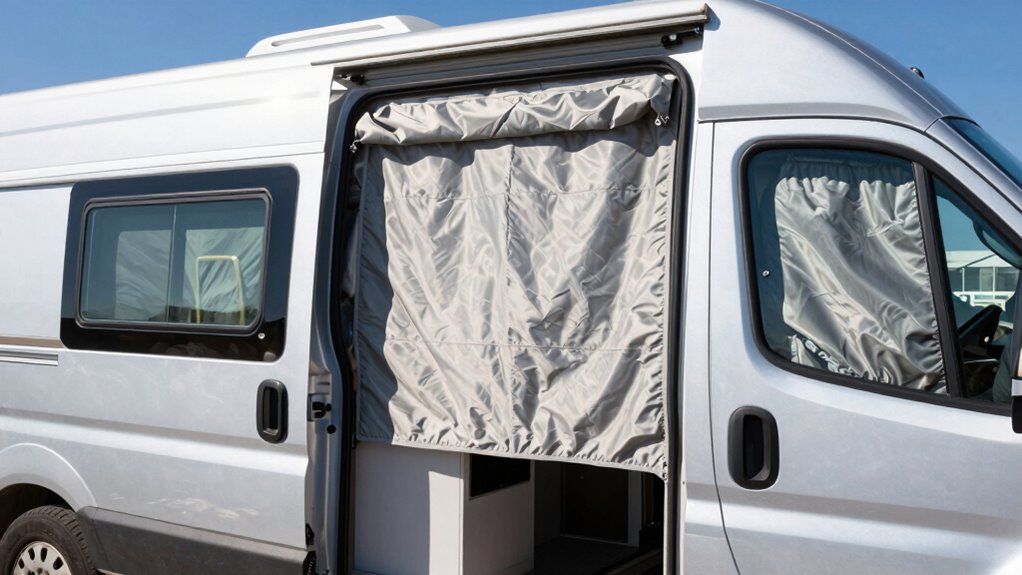
Insulation and window coverings are practical tools to keep your campervan cooler without relying on power sources. They act as thermal barriers, reducing heat transfer from the outside to the interior. Thick insulation materials, like foam or reflective barriers, help maintain a stable indoor temperature by blocking heat gain during hot days. Reflective barriers, such as reflective foil or radiant barriers, bounce sunlight away, preventing it from heating your van’s interior. Window coverings like thermal curtains, reflective window shades, or solar screens further limit heat entry through windows. Combining insulation with reflective barriers and effective window coverings creates a layered defense against heat, making your campervan more comfortable and cooler naturally. This approach minimizes the need for active cooling systems and conserves energy during off-grid adventures. Proper insulation and window coverings are essential components of an effective heat management strategy for off-grid comfort.
Practical Tips to Stay Cool During Hot Days in Your Campervan
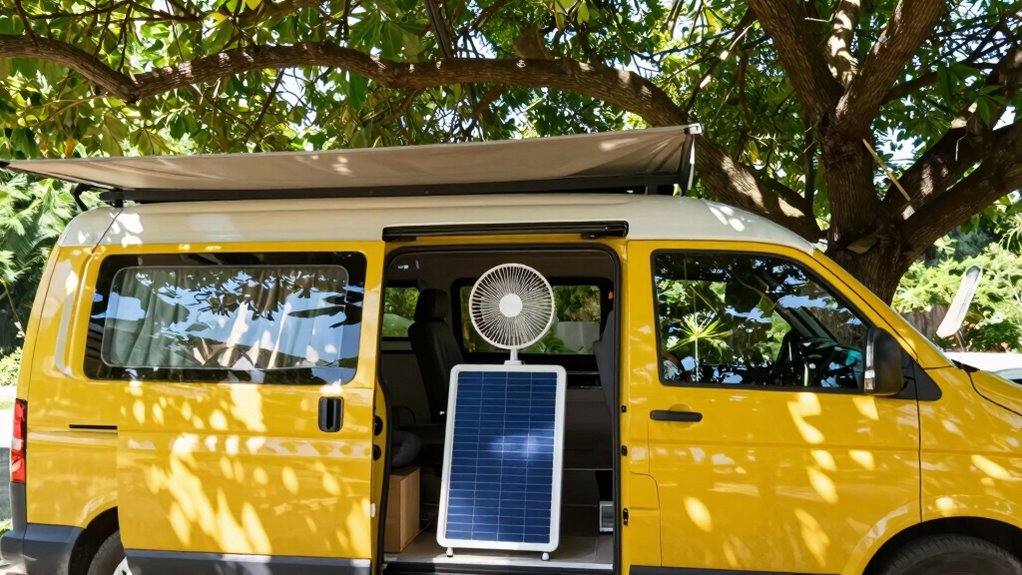
When the temperature soars outside, staying cool in your campervan requires proactive strategies. Start by optimizing insulation and adding reflective window covers to reduce heat gain. Use solar panel installation to power small fans or portable evaporative coolers, which boost airflow without shore power. Park in shaded areas whenever possible, and crack windows at opposite ends for cross-ventilation. Limit heat-generating activities inside, like cooking, or do them during cooler parts of the day. Keep curtains closed during peak heat hours to block sunlight. Consider a portable solar-powered fan or misting system for added cooling. Proper ventilation is essential to maintaining good indoor air quality and humidity levels while cooling. Here’s a quick overview:
| Tip | Tool/Method | Benefit |
|---|---|---|
| Improve campervan insulation | Insulation materials | Keeps heat out |
| Use reflective window covers | Reflective shades | Reduces solar heat gain |
| Install solar panels | Solar panel installation | Powers cooling devices |
| Cross-ventilation | Open windows strategically | Enhances airflow |
| Limit inside heat sources | Avoid cooking during heat peaks | Maintains cooler interior |
What Are the Best Budget-Friendly vs. High-End Cooling Solutions?

If you’re looking to cool your campervan without breaking the bank, there are affordable options that can effectively reduce interior temperatures. Budget-friendly solutions often include portable fans, reflective window covers, and ventilation strategies. Installing solar panels and battery storage can power these fans and small cooling devices without needing shore power, making them cost-effective over time. Portable cooling devices such as battery-powered fans or mini air circulators can also provide relief in moderate heat conditions. While these options may not cool as intensely as high-end systems, they’re practical for moderate heat. High-end solutions typically involve built-in air conditioning units, advanced vent systems, or sophisticated solar-powered cooling systems with larger battery banks. These options provide more consistent and powerful cooling but come with higher upfront costs. Balancing your budget with your cooling needs helps you choose the best solution for your campervan.
How Can You Combine Different Strategies for Maximum Comfort?
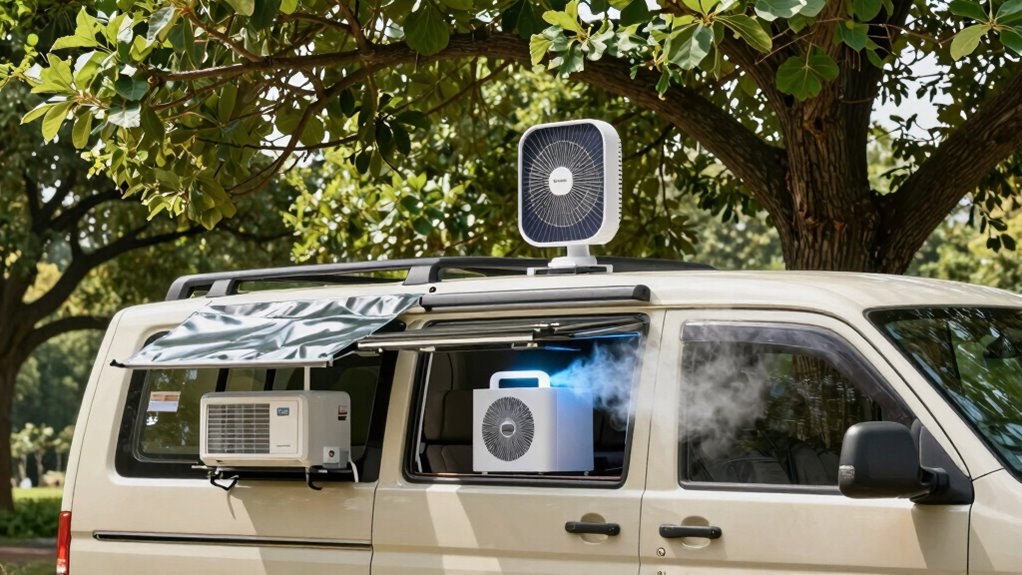
Combining different cooling strategies can substantially enhance your campervan’s comfort without relying solely on one method. Start by installing a solar shade on your windows to block direct sunlight and reduce interior heat. Pair this with reflective paint on the roof, which deflects solar energy and keeps the van cooler. Using these together minimizes heat buildup more effectively than a single approach. You can also complement these with passive ventilation, like roof vents or windows left slightly open during cooler parts of the day. This multi-layered approach stabilizes interior temperatures and boosts comfort. By integrating solar shades, reflective paint, and ventilation, you create a cooler, more pleasant environment—even without shore power or air conditioning. Understanding dream symbolism related to clocks and time can also inspire creative solutions to manage your campervan’s environment more effectively.
Frequently Asked Questions
Can Reflective Window Covers Significantly Lower Campervan Temperatures?
Yes, reflective window covers can substantially lower your campervan’s temperature by reducing solar gain. They work by blocking heat from entering through the windows, enhancing thermal insulation. When you use these covers, they reflect sunlight away, keeping the interior cooler. This simple solution effectively minimizes heat buildup, making your campervan more comfortable and reducing the need for additional cooling methods, especially when you’re off-grid.
What Are the Best Methods to Prevent Heat Buildup Overnight?
Did you know that proper ventilation can reduce indoor temperatures by up to 20%? To prevent heat buildup overnight, use thermal insulation to block heat transfer and keep your campervan cooler. Combine this with ventilation strategies like roof vents or small fans to promote airflow. These methods work together to maintain a comfortable temperature, ensuring you sleep soundly without relying on shore power or air conditioning.
How Effective Are DIY Cooling Solutions for Off-Grid Campervans?
DIY cooling solutions like insulation and solar-powered fans can be quite effective for off-grid campervans. By improving insulation, you reduce heat gain and retain coolness longer, while solar fans actively circulate air to lower temperatures. Together, these solutions are eco-friendly, cost-effective, and easy to set up, providing noticeable comfort without relying on shore power. With proper implementation, you’ll enjoy a cooler, more comfortable campervan environment during hot days.
Are There Portable Misting Fans Suitable for Campervan Use?
Yes, portable misting fans are perfect for campervan use. Think of them as personal rainstorms, cooling you down on hot days. I once used a compact portable fan with a built-in misting system during a desert trip, and it made a huge difference. These fans are lightweight, easy to carry, and effectively lower temperatures by combining portable fans with misting systems, making your off-grid adventures much more comfortable.
How Does Interior Shading Impact Overall Temperature Control?
Interior shading considerably reduces your campervan’s temperature by blocking direct sunlight and preventing heat buildup. When you install shades or reflective window coverings, they act as effective heat insulation, keeping the interior cooler. This simple step minimizes the need for extra cooling methods, saves energy, and makes your space more comfortable. By managing interior shading wisely, you can maintain a cooler environment without relying on shore power or advanced cooling systems.
Conclusion
Cooling your campervan without shore power is doable with the right strategies. While it might seem challenging at first, combining ventilation, insulation, and solar options can keep you comfortable off-grid. Some worry these methods aren’t enough in extreme heat, but with thoughtful planning, you’ll find a solution that works for your needs. Don’t let lack of power hold you back—your perfect, cool getaway is within reach.