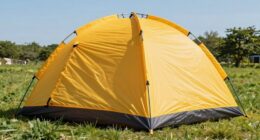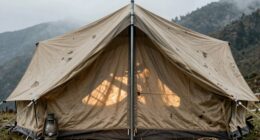
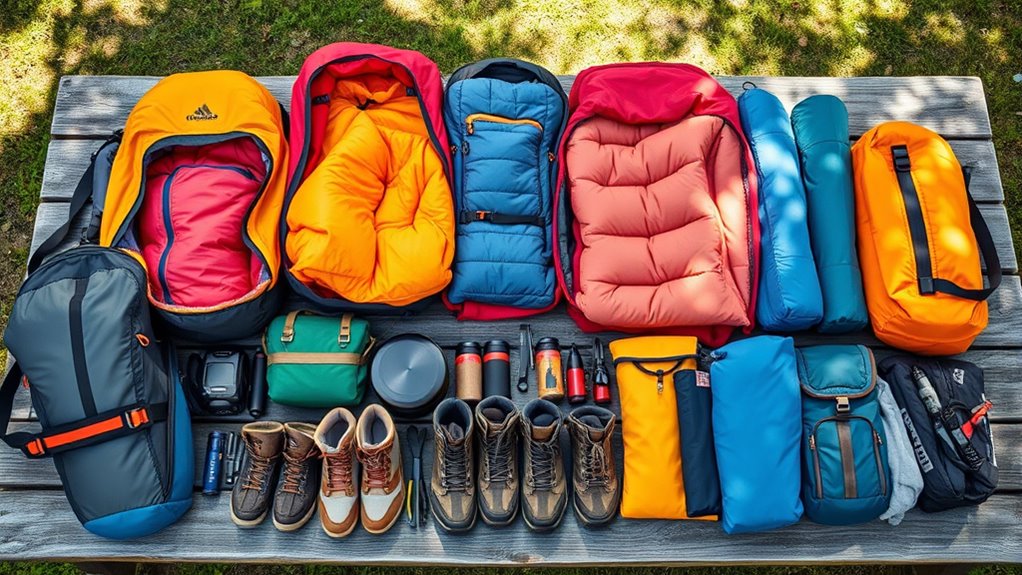

To guarantee a successful camping trip, pack essential gear like a high-quality tent with stakes, a rated sleeping bag, and insulated pad for comfort. Bring a portable stove, fuel, and water filtration system for safe cooking and hydration. Don’t forget moisture-wicking base layers, weather-resistant outerwear, and extra socks or gloves suited for the forecast. Safety gear includes a multi-tool, headlamp, signaling devices, and first aid kit. Covering these critical items safeguards your adventure—more detailed tips await you if you continue exploring.
Key Takeaways
- Prioritize a durable shelter, sleeping gear, and weather-appropriate clothing based on climate and terrain.
- Pack essential safety tools like a multi-tool, headlamp, first aid kit, and emergency signaling devices.
- Include portable cooking equipment, lightweight cookware, and water filtration systems for food and hydration.
- Bring weather-resistant outerwear, moisture-wicking base layers, hats, sunglasses, and extra socks and gloves.
- Carry navigation tools (compass/GPS), repair kit, personal hygiene items, insect repellent, and sunscreen.
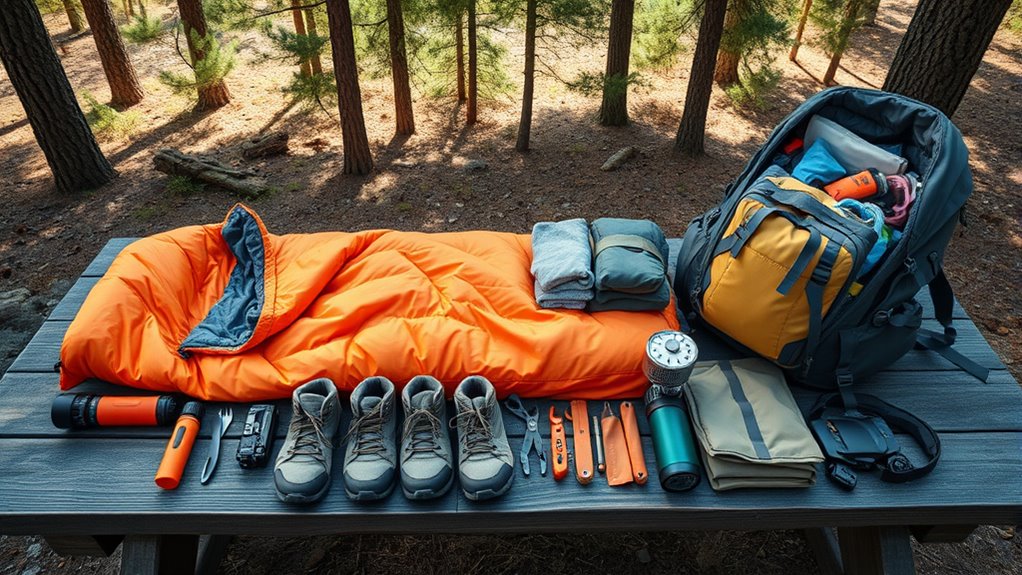
Planning an effective packing list for camping requires careful consideration of both environmental conditions and activity requirements to guarantee safety and comfort. To achieve this, you must develop a comprehensive camping gear checklist that addresses all necessary components for a successful outdoor experience. Start by evaluating the specific climate and terrain of your destination, which influences your selection of shelter, clothing, and survival essentials. For example, if you’re venturing into a remote wilderness with unpredictable weather, your outdoor survival essentials should include items like a multi-tool, waterproof matches, a first aid kit, and a reliable compass or GPS device. These tools are critical for navigation, emergency repairs, and medical situations, ensuring you’re prepared for unforeseen circumstances.
Your camping gear checklist should also focus on lightweight yet durable equipment to optimize mobility and reduce fatigue. A high-quality tent with appropriate stakes, a sleeping bag rated for the expected temperatures, and an insulated sleeping pad form the core of your shelter system. Pack a portable stove, fuel, and cooking utensils if you plan to prepare meals on-site, along with a water filtration system or purification tablets for hydration. These essentials facilitate safe and efficient food and water management, which are vital for maintaining energy and health during your trip.
Clothing selection is equally crucial. Pack moisture-wicking base layers, insulating mid-layers, weather-resistant outerwear, and extra socks and gloves to adapt to changing conditions. Consider the activity level and expected weather when choosing your apparel, ensuring that your clothing choices prevent hypothermia, heat exhaustion, or dehydration. Include a broad-brimmed hat and UV-protection sunglasses, especially if you’ll be exposed to prolonged sunlight.
In addition to the core camping gear, don’t overlook personal hygiene items, insect repellent, and sunscreen to mitigate environmental hazards. Carry a multi-purpose knife, headlamp with extra batteries, and a repair kit for gear maintenance. These outdoor survival essentials are indispensable for addressing minor issues before they escalate into serious problems. Remember to pack emergency signaling devices, such as whistles or reflective mirrors, to facilitate rescue if needed.
Ultimately, your goal is to assemble a well-rounded, technically sound camping gear checklist that balances safety, comfort, and convenience. Prioritize multi-use items and lightweight options, and tailor your packing to your specific adventure profile. This meticulous preparation will enable you to respond effectively to environmental challenges while focusing on the enjoyment of your outdoor experience. Additionally, becoming familiar with outdoor survival essentials can greatly enhance your confidence and safety in unfamiliar terrains.
Frequently Asked Questions
How Do I Choose the Right Camping Backpack Size?
To choose the right camping backpack size, consider your trip duration and gear load. Opt for a 40-50 liter pack for 1-3 days, and 60-70 liters for longer expeditions. Pay attention to backpack weight considerations, ensuring it’s lightweight yet durable. Use adjustable pack features like straps and torso length to customize fit, preventing discomfort and improving weight distribution. Proper sizing enhances comfort and efficiency on your hike.
What Are Eco-Friendly Packing Options?
Why settle for plastic waste when you can go green? Opt for eco-friendly packing by choosing reusable containers for your snacks and gear, reducing single-use plastics. Incorporate biodegradable toiletries like compostable soap and bamboo toothbrushes, which break down naturally without harming the environment. These choices not only minimize your ecological footprint but also demonstrate a commitment to sustainability, ensuring future generations can enjoy pristine camping spots as much as you do.
How Do I Pack Efficiently for a Multi-Day Trip?
To pack efficiently for a multi-day trip, start by organizing camping gear into designated categories, like sleeping essentials, cooking supplies, and clothing. Use packing cubes to maximize space and keep items accessible. Incorporate packing meal plans to streamline food storage, reducing bulk. Prioritize lightweight, versatile items, and pack in layers to optimize space. Double-check that all essentials are accounted for to avoid overpacking and make certain a smooth, well-organized adventure.
What Safety Gear Should I Carry?
You should carry a well-stocked first aid kit, including bandages, antiseptic wipes, pain relievers, and blister treatment, tailored to your group’s needs. A fire extinguisher is essential for safety, especially in fire-prone areas, to quickly suppress small fires. Additionally, include a flashlight, multi-tool, whistle, and emergency blanket. Make certain all gear is accessible, functional, and suitable for the terrain and weather conditions to effectively manage potential hazards.
How Can I Prevent Packing Excess or Missing Essentials?
To prevent packing excess or missing essentials, you should create a detailed packing checklist tailored to your trip’s duration and environment. Use gear organization techniques like compartmentalized bags and labeled containers to streamline packing. Cross-reference your checklist throughout the packing process, ensuring each item is accounted for. Regularly review and adjust your list based on weather forecasts and planned activities, minimizing omissions and unnecessary items.
Conclusion
By meticulously reviewing this thorough packing list, you’ll be well-prepared for your camping trip, ensuring safety, comfort, and convenience. Double-check each item—think of it as dotting your i’s and crossing your t’s—so nothing essential slips through the cracks. Proper planning prevents poor performance, and being thorough now means you’ll be able to handle unexpected situations with confidence. Remember, an ounce of prevention is worth a pound of cure; preparation truly makes all the difference.