

To keep your sanity during rainy, muddy camping days, set up designated zones for muddy gear and muddy play areas with easy cleanup options like waterproof mats and shallow trays. Use waterproof shelters and ground covers to stay dry, and develop daily routines for mud cleanup around your campsite. These systems help contain messes and keep everyone safe and comfortable. Keep going, and you’ll discover more tips to tackle the mess and enjoy your trip.
Key Takeaways
- Establish designated muddy gear zones to contain dirt and streamline cleanup efforts.
- Use waterproof shelters and ground covers to keep tents and gear dry during rain.
- Set up mud play areas with easy-to-clean surfaces and quick rinse stations for safe outdoor fun.
- Keep food stored securely and away from wildlife to prevent encounters driven by rain and mud.
- Implement routine mud and footprint checks at camp entrances to maintain cleanliness and reduce indoor messes.
How to Prepare Your Campsite for Muddy, Rainy Days With Kids
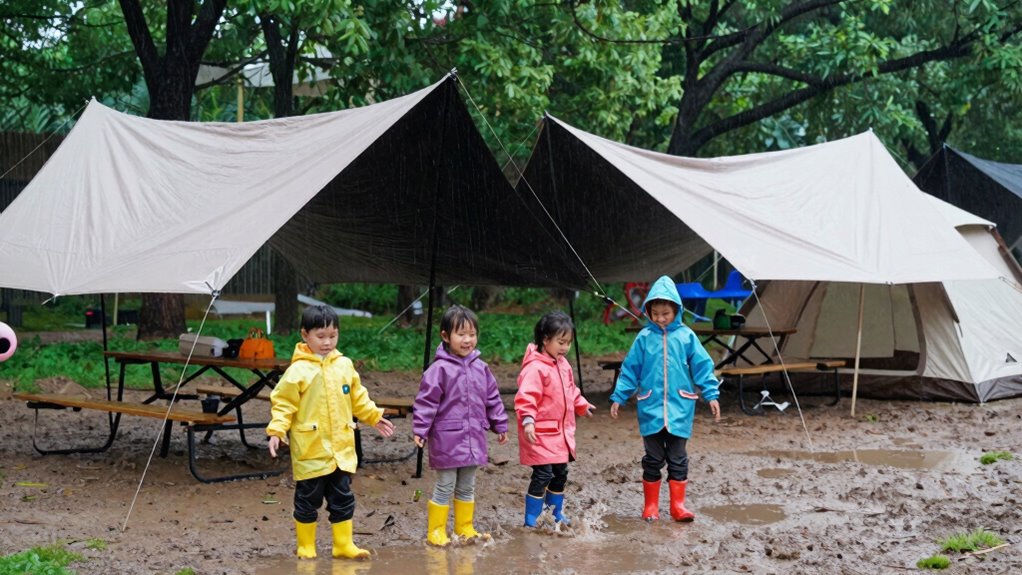
Muddy, rainy days can quickly turn your campsite into a mess if you’re not prepared. To stay safe, prioritize campfire safety by keeping fires small, clear of wet wood, and never leaving them unattended. Use a designated fire ring to contain sparks and prevent wildfires. Be mindful of wildlife awareness; rain can drive animals closer, so store food securely and avoid leaving crumbs around. Consider bringing waterproof gear and extra tarps to protect your gear and create dry zones for activities. Set up your campsite on higher ground if possible to avoid flooding. Keep pathways clear to prevent slips and falls. Incorporate natural landscape features into your campsite setup to help with drainage and stability. By taking these steps, you’ll minimize hazards, stay dry, and enjoy your trip despite the muddy weather.
Designate Muddy Gear Zones to Keep the Mess Contained
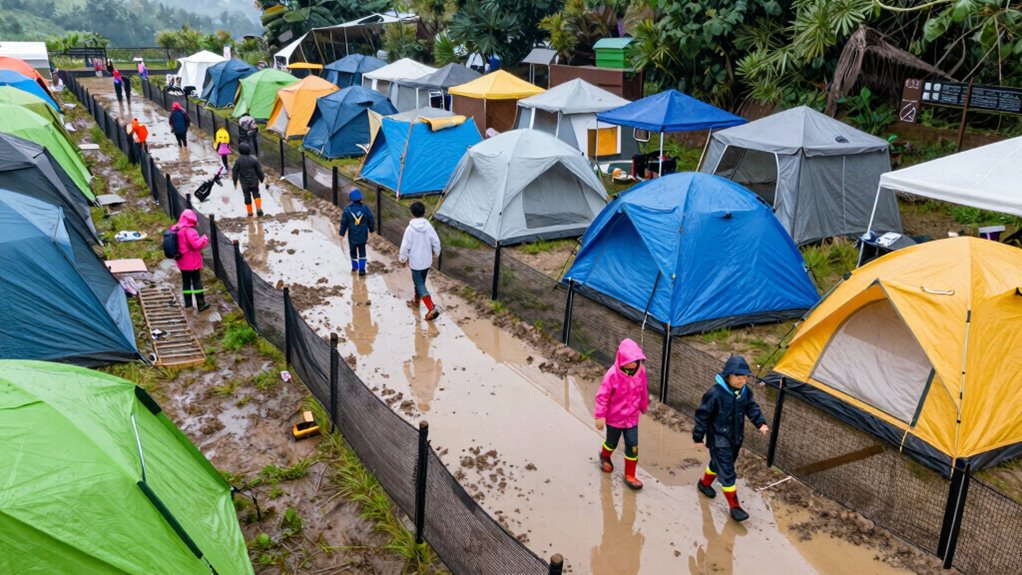
Setting up designated muddy gear zones helps keep your campsite organized and prevents dirt from spreading everywhere. By allocating specific areas for muddy shoes, boots, and gear, you create clear boundaries that aid in mess containment. This not only streamlines cleanup but also minimizes the spread of mud to clean areas. Use a simple table to identify gear zones and their purpose:
| Zone Name | Purpose |
|---|---|
| Muddy Shoes Area | Store muddy footwear |
| Gear Drop Zone | Place for backpacks and gear |
| Wet Clothing Spot | Hang or place wet clothes |
| Muddy Tools Zone | Keep muddy tools separate |
| Clean Gear Area | Store cleaned items |
Clear zones help kids understand where to place muddy gear, reducing the mess and keeping your campsite neat.
Create Kid-Friendly Mud Play Areas With Easy Cleanup Options
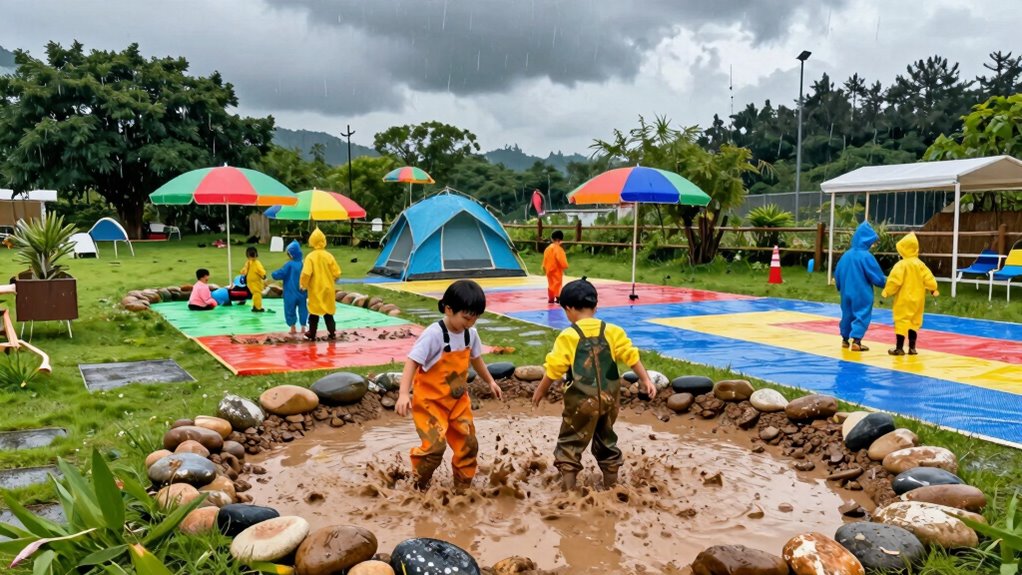
Creating kid-friendly mud play areas allows children to enjoy messy fun without turning your entire campsite into a swamp. Set up designated sandbox zones with sturdy, easy-to-clean surfaces to contain the mess. Incorporate simple mud kitchens made from waterproof materials or plastic bins, so kids can dig, mix, and create without hassle. Use shallow containers or trays to help contain mud and make cleanup easier afterward. Keep a supply of wipes, towels, or a hose nearby for quick rinses. Encouraging kids to play within these zones promotes creativity and sensory exploration while preventing mud from spreading everywhere. Vetted – The Pinball Spot With optimal setup, these areas can also be designed for safety and durability, ensuring long-lasting fun. With these easy cleanup options, you’ll enjoy their outdoor adventures without the stress of a post-play cleanup marathon.
Use Waterproof Shelters and Ground Covers for Comfort and Dryness

To keep your campsite comfortable and dry, using waterproof shelters and ground covers wisely is essential. Opt for waterproof tents to protect everyone from rain and moisture. Additionally, lay down a ground tarp beneath your tent to prevent ground seepage and keep gear dry. These simple tools can make a huge difference during wet weather. Proper privacy policy management ensures that your personal information remains secure while enjoying your outdoor experience. Use the table below to choose the right setup:
| Shelter Type | Ground Cover Recommendation |
|---|---|
| Waterproof Tent | Ground Tarp for extra protection |
| Canvas Tent | Heavy-duty ground tarp |
| Pop-up Shelter | Waterproof ground cover |
| Family Cabin Tent | Large ground tarp |
| Backpacking Tent | Lightweight ground tarp |
Daily Cleanup Routines to Minimize Mud Indoors and Around Camp
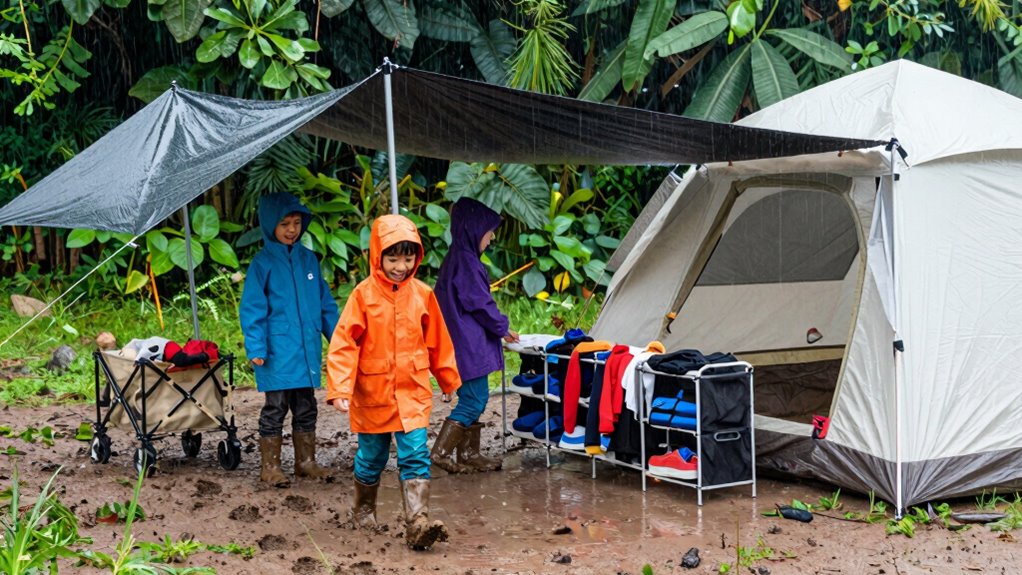
Keeping mud outside starts with a simple daily routine. Each day, check your kids’ shoes and boots, and wipe off muddy footprints before they enter your tent or cabin. Designate a specific area or mat for changing into dry clothes, which helps prevent wet clothing from spreading mud inside. Encourage kids to remove muddy gear immediately and hang or place it in a designated wet bag. Regularly sweep or shake out mats and rugs near the entrance to trap dirt. By establishing these routines, you reduce the spread of mud around camp, keeping indoor spaces cleaner and more comfortable. Incorporating sound vibration techniques or calming music can also help create a relaxed atmosphere during cleanup routines. Consistency is key; a quick, daily cleanup minimizes the mess, making your campsite more enjoyable and less stressful for everyone.
Frequently Asked Questions
What Are the Best Waterproof Clothing Options for Kids in Rainy Campsites?
You should choose waterproof jackets and mud-resistant pants for kids in rainy campsites. These options keep them dry and comfortable during wet weather. Look for jackets with sealed seams and breathable fabric to prevent sweat build-up. Mud-resistant pants are durable and easy to clean, making them perfect for outdoor adventures. Together, these clothing pieces guarantee your kids stay dry, happy, and ready for any outdoor fun despite the rain.
How Can I Teach Kids to Clean up Mud Effectively Without Frustration?
You can teach kids to clean up mud effectively by turning it into a fun routine. Show them how to wipe muddy footprints with a damp cloth or rinse their shoes in a designated area. Keep cleaning routines simple and consistent, praising their effort. Encourage responsibility by letting them help with their gear, making mud cleanup an easy, manageable task instead of a frustrating chore.
What Are the Safest Materials for Mud Play Areas?
For mud play safety, choose child-friendly materials like non-toxic, natural clay, or organic play dough that are safe if ingested. Avoid sharp or hazardous items and steer clear of treated soils with chemicals. Use sandbox sand or natural, untreated soil, and guarantee the area is free of debris. Regularly inspect the space for safety, and always supervise kids to keep mud play both fun and safe.
How Do I Prevent Mud From Tracking Into Tents and Sleeping Areas?
Think of your tent like a castle—you want to keep mud outside the gates. To prevent mud from tracking in, use sturdy tent entry mats to trap dirt at the entrance. Encourage everyone to wipe their feet thoroughly before entering. Consider creating a designated muddy gear area outside the tent. These simple mud prevention strategies keep your sleeping space clean, making camping more enjoyable and less stressful.
Are There Eco-Friendly Ways to Manage Campsite Mud and Debris?
You can manage campsite mud and debris eco-friendly by using natural erosion control methods like planting native grasses or spreading straw to stabilize soil. Encourage kids to use biodegradable debris like compostable wipes and avoid non-biodegradable trash. Set up designated walkways with natural materials, and regularly clear away organic debris to prevent buildup. These steps help protect the environment while keeping your campsite cleaner and more sustainable.
Conclusion
With the right campsite systems in place, you’re building a sturdy fortress against muddy chaos. Think of your setup as a well-oiled machine, turning messy moments into manageable memories. When you designate zones, create kid-friendly mud spots, and keep everything dry, you’re not just surviving the rain—you’re thriving in it. Embrace these strategies, and your campsite becomes a playground where mud and rain only add to the adventure, not the hassle.