
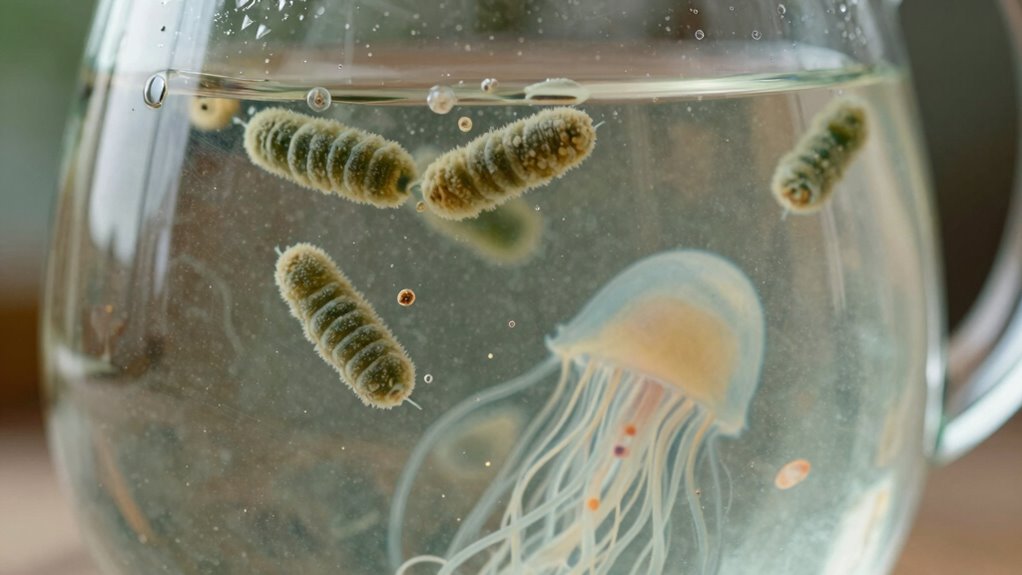
To choose the right water filter, you need to understand the differences between viruses, bacteria, and protozoa. Viruses are tiny and often require advanced filtration like UV or reverse osmosis to be effectively removed. Bacteria are larger and can be filtered out with ceramic or physical filters. Protozoa are the biggest and are easily trapped by most filters. Knowing which contaminants you’re concerned about will help you pick the best option to keep your water safe; explore further to learn more.
Key Takeaways
- Different water contaminants require specific filtration methods; bacteria, viruses, and protozoa vary in size and resilience.
- Bacteria are larger, often removed by physical filters like ceramic or activated carbon.
- Viruses are smaller and typically need advanced filtration such as ultrafiltration or UV disinfection.
- Protozoa are relatively large and effectively removed by physical filters like ceramic or microfiltration.
- Match your filter type to targeted contaminants for optimal water safety and effective removal.
What Are Waterborne Contaminants and Why Do They Matter?
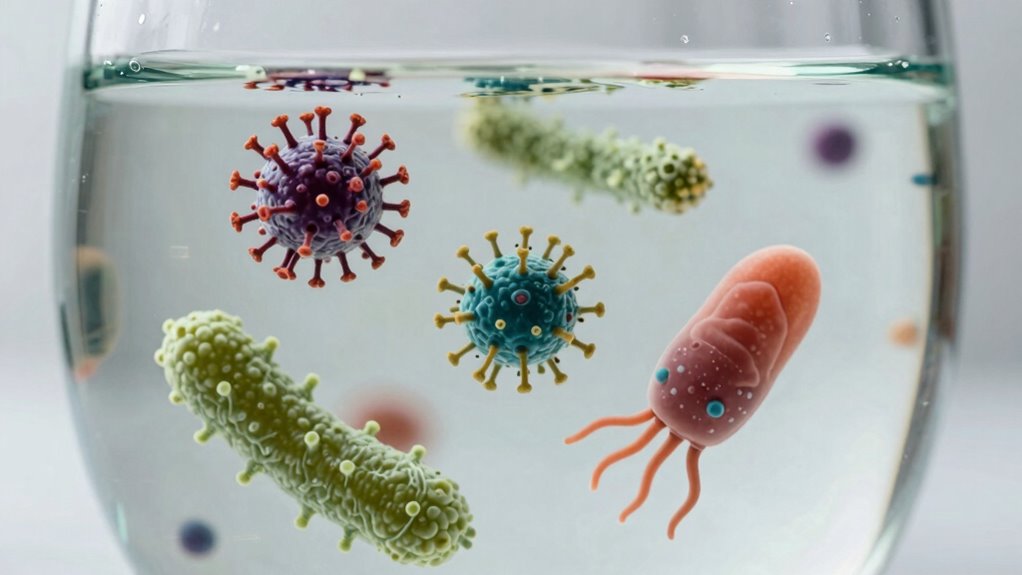
Have you ever wondered what lurks in your tap water? Contaminant sources include natural deposits, agricultural runoff, sewage, and industrial waste. These pollutants introduce harmful substances like chemicals, microbes, and heavy metals into your water supply. Waterborne contaminants matter because they can cause serious health impacts, ranging from gastrointestinal illnesses to long-term chronic conditions. Bacteria, viruses, and protozoa are common threats, but chemical pollutants like pesticides and lead also pose risks. Understanding these sources helps you realize why water quality is crucial. When contaminants enter your drinking water, they can compromise your immune system and lead to infections or other health problems. The presence of different waterborne pathogens depends on the types of microorganisms in your water. That’s why choosing the right water filter is necessary to reduce these risks and ensure safe, clean water for you and your family.
How Do Water Filters Remove Viruses, Bacteria, and Protozoa?
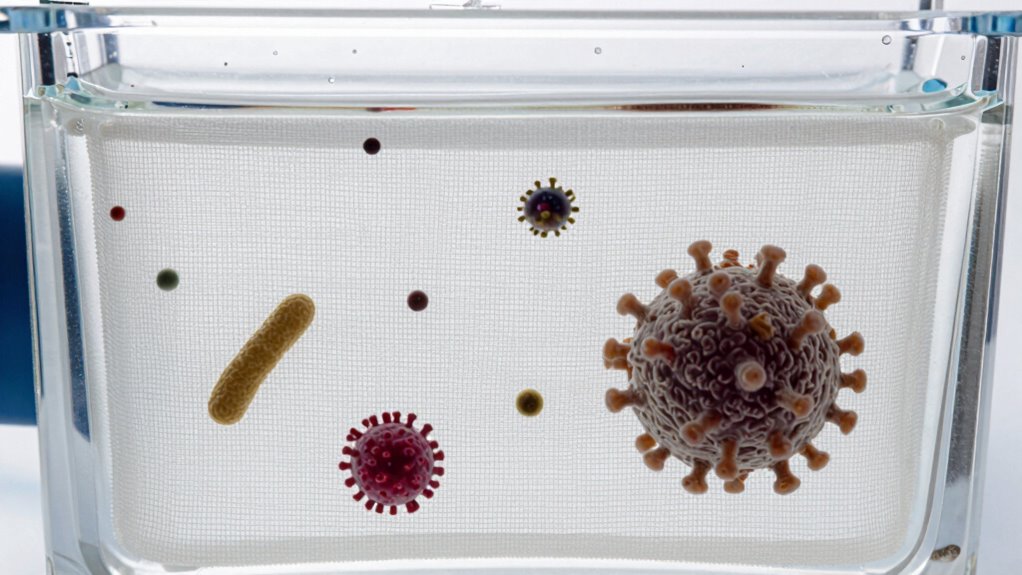
Water filters remove viruses, bacteria, and protozoa through a variety of physical, chemical, and biological processes designed to target these microorganisms. Understanding filtration mechanisms helps you choose the right filter. Here are three key ways they work:
Water filters eliminate viruses, bacteria, and protozoa through physical, chemical, and advanced filtration methods.
- Physical Filtration: Using pore sizes small enough to block contaminants based on size, filtering out bacteria and protozoa by trapping them in the filter media.
- Chemical Processes: Employing disinfectants like chlorine or activated carbon to chemically inactivate or remove viruses and bacteria.
- Advanced Technologies: Using ultrafiltration or reverse osmosis membranes that have tiny pores to eliminate even microscopic viruses, considering contaminant size guarantees effective removal.
- Additionally, filtration efficiency can vary depending on water quality and maintenance, impacting how well these processes remove microorganisms.
Which Water Filter Is Best for Removing Specific Contaminants?
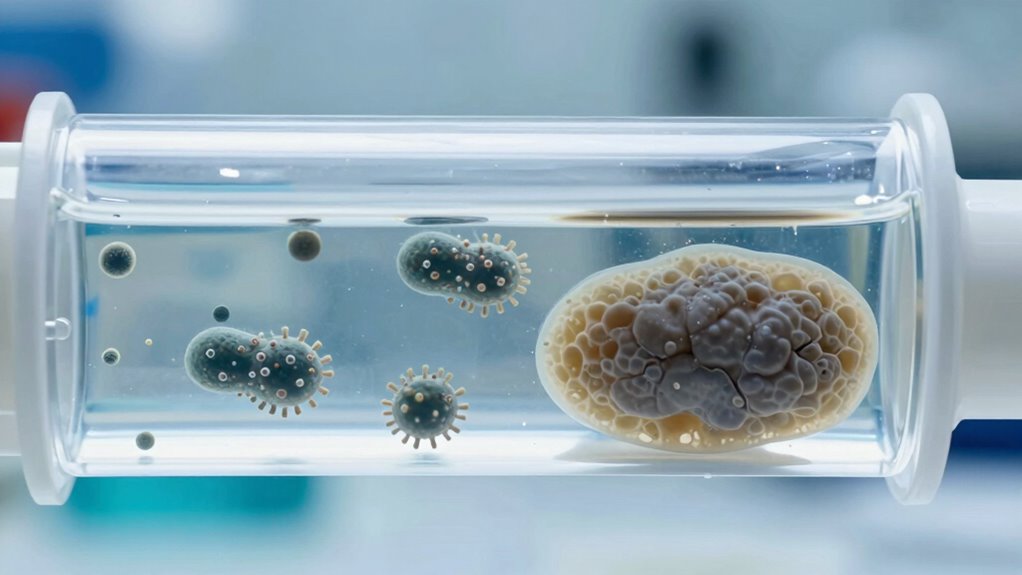
Choosing the right water filter depends on the specific contaminants you want to remove from your water. Different filtration technologies target various contaminant specifics, so knowing what’s in your water helps you select the best option. For example, activated carbon effectively reduces chlorine and organic compounds, while reverse osmosis handles heavy metals and salts. UV filters are ideal for viruses, but less effective against chemicals. Consider this table:
| Filtration Technologies | Contaminant Specifics |
|---|---|
| Activated Carbon | Organic chemicals, chlorine, bad taste |
| Reverse Osmosis | Heavy metals, salts, certain bacteria |
| UV Disinfection | Viruses, some bacteria |
| Ceramic Filters | Bacteria, protozoa |
Match your needs with these technologies to ensure your water is safe and clean. Additionally, understanding contaminant types can help you choose the most effective filtration method for your specific water quality.
What Factors Should I Consider When Choosing a Water Filter?
When selecting a water filter, it’s crucial to take into account several key factors to guarantee you choose the right one for your needs. First, consider your water source—whether it’s tap water, well water, or outdoor sources—as this influences the type of contaminants you’ll encounter. Second, assess the filter capacity to match your household’s daily water consumption and avoid frequent replacements. Third, think about the specific contaminants you need to remove; some filters target bacteria, viruses, or protozoa, so choose one suited for your water quality. Additionally, understanding water filtration technologies can help you select the most effective system for your situation. By focusing on these factors, you guarantee your filter effectively protects your health while fitting your lifestyle. Making an informed choice means you’ll enjoy clean, safe water every day.
Common Mistakes to Avoid When Filtering Water for Safety
One common mistake is selecting a water filter that doesn’t effectively remove the specific contaminants present in your water. Overfiltering water can lead to unnecessary costs and waste, especially if you choose a filter designed to eliminate particles or microbes you don’t have. It’s essential to match your filter’s capabilities to your water quality, rather than overcomplicating the process. Another mistake is ignoring filter maintenance; neglecting to clean or replace filters as recommended compromises their effectiveness and can introduce contaminants. Regular maintenance ensures your filter functions properly and extends its lifespan. Additionally, understanding the different types of filters—such as those for viruses, bacteria, and protozoa—is crucial for selecting the right one for your needs. By avoiding these mistakes, you ensure your water remains safe, clean, and cost-effective to filter. Properly matching your filter and maintaining it is key to safe, reliable drinking water.
Frequently Asked Questions
Can All Water Filters Effectively Remove Viruses, Bacteria, and Protozoa Simultaneously?
Not all water filters can effectively remove viruses, bacteria, and protozoa at the same time. The filter types matter; some are designed specifically for bacteria and protozoa, while others include additional features to target viruses. To guarantee contaminant removal across all three, look for high-quality filters like reverse osmosis or UV purifiers. These options provide extensive protection, giving you safe, clean water from various sources.
How Often Should I Replace My Water Filter for Optimal Protection?
You should replace your water filter based on its filter lifespan and recommended replacement schedule, usually every 2 to 6 months. Check the manufacturer’s guidelines, as usage and water quality can affect timing. Regular replacements ensure your filter maintains peak protection against viruses, bacteria, and protozoa. Don’t wait until you notice a decline in water flow or taste—sticking to the schedule keeps your water safe and clean.
Are UV or Chemical Treatments Necessary Alongside Physical Filters?
Think of your water filter like a castle wall—it’s your first line of defense. UV necessity varies; it’s like archers defending against viruses, while chemical enhancement acts as a moat blocking bacteria and protozoa. Often, combining physical filters with UV or chemicals offers the best protection, especially in contaminated water sources. So, assess your water quality to decide if these extra defenses are needed for complete safety.
Do Filtered Water Filters Remove Beneficial Minerals From Water?
Filtered water filters generally retain beneficial minerals like calcium and magnesium, so they don’t strip away all minerals. This mineral retention supports your health by maintaining essential nutrient levels. However, some filters, especially reverse osmosis types, may remove more minerals, potentially impacting your mineral intake. To balance health impact and mineral retention, choose filters designed to preserve essential minerals while effectively removing contaminants.
What Are the Signs That My Water Filter Is No Longer Effective?
You might notice your water’s taste or smell changes—that’s a gentle nudge your filter’s filter lifespan is nearing its end. Other contaminant indicators include reduced flow rate or visible buildup on the filter. If you see these signs, it’s time to replace your filter to guarantee it continues to do its job effectively. Regular maintenance keeps your water clean, fresh, and safe to enjoy.
Conclusion
Choosing the right water filter is like revealing a secret to health—your safety depends on understanding what each contaminant needs to be removed. Don’t settle for a one-size-fits-all solution; instead, match your filter to your water’s specific threats. Remember, the right choice isn’t just about clean water, but about safeguarding your future. After all, isn’t it worth protecting what’s most precious—your health?