To keep your food safe at camp, follow the 2-hour rule by refrigerating or consuming perishable items within two hours of being out, or one hour if it’s hot outside. Pack your cooler with frozen ice packs and organize food properly—raw meats on the bottom, cooked foods above—to prevent cross-contamination. Using a food thermometer helps verify safe temperatures. Continuing with these tips helps you prevent illness and enjoy your trip worry-free.
Key Takeaways
- Keep perishable foods out of the danger zone (below 40°F) and follow the 2-hour rule to prevent bacterial growth.
- Use sturdy, pre-frozen ice packs to maintain consistent cold temperatures in your cooler.
- Store raw meats on the bottom of the cooler to prevent cross-contamination with cooked foods.
- Limit cooler openings to preserve cold temperature and check food temperatures regularly with a calibrated thermometer.
- Organize and separate foods properly to reduce contamination risk and ensure food safety throughout the trip.
How the 2-Hour Rule Keeps Your Food Safe on Camping Trips
When you’re camping, bacteria can grow rapidly on perishable foods if they’re left out too long. The 2-hour rule is a simple yet effective way to prevent foodborne illness. Many food safety myths suggest that cooking food thoroughly eliminates all risks, but bacteria can multiply quickly at room temperature, especially during campfire cooking. Staying within the 2-hour window helps ensure your food remains safe to eat. If the temperature exceeds 90°F (32°C), shorten this window to one hour. Always keep perishable items chilled or hot to prevent bacterial growth. Proper food handling practices are essential to maintaining safety during outdoor meals. Remember, the 2-hour rule isn’t just about following rules; it’s about protecting your health during your outdoor adventure. Properly managing time and temperature keeps your camping trip safe and enjoyable.
How to Pack and Use Your Cooler for Food Safety
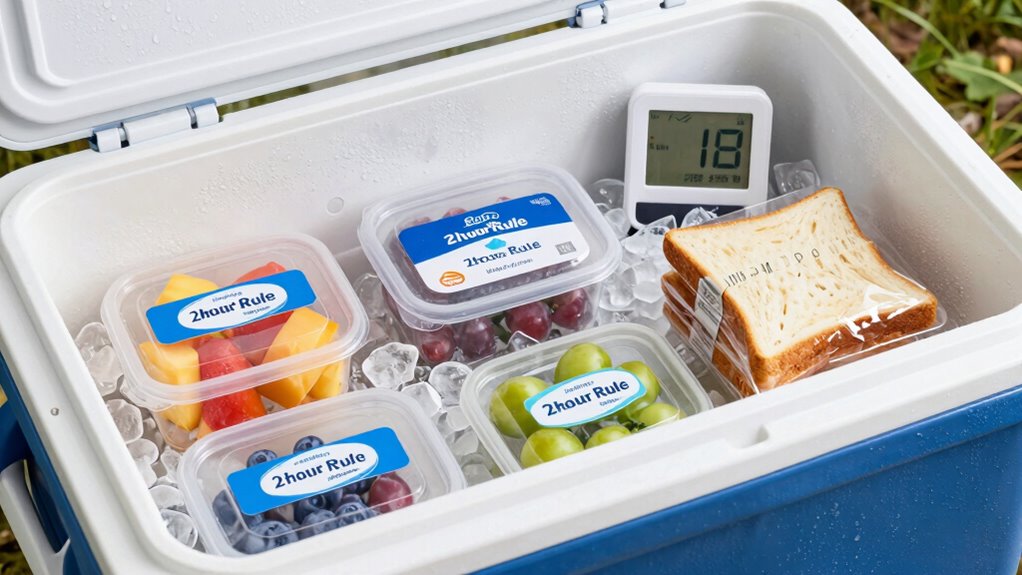
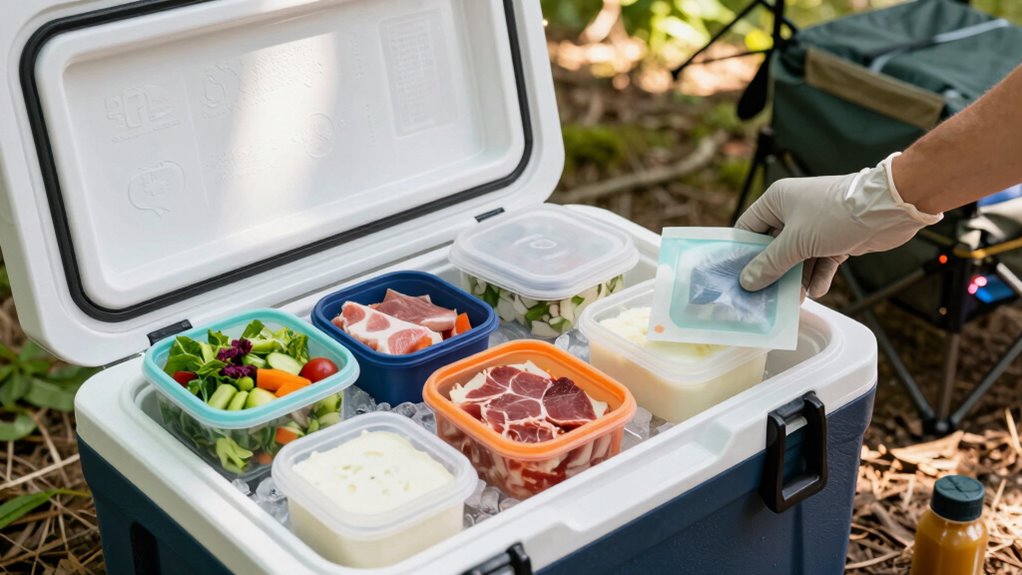
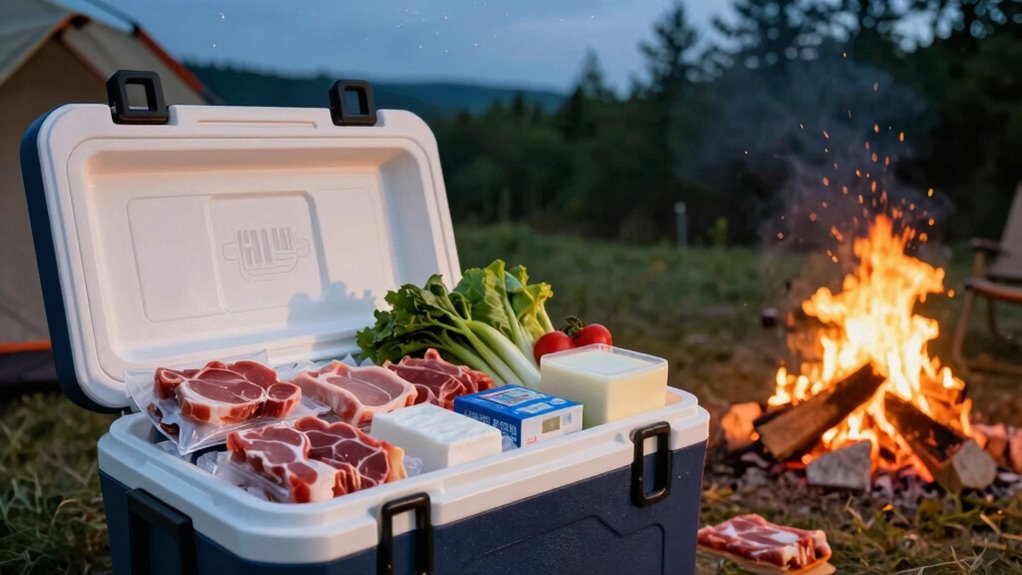
Packing your cooler correctly is key to maintaining food safety during your camping trip. Start by organizing your cooler so perishable items are easily accessible and separated from non-perishables. Use cooler organization techniques such as placing raw meats on the bottom to prevent cross-contamination. When selecting ice packs, choose those that are sturdy and provide consistent cold temperatures. Freeze them ahead of time to maximize efficiency. Place the ice packs on the top and around your food, especially near items that need to stay cold the longest. Keep the cooler closed as much as possible to maintain a consistent temperature. Proper organization and effective ice pack selection help guarantee your food stays safe and fresh throughout your outdoor adventure.
How to Use a Food Thermometer to Check Temperatures at Camp
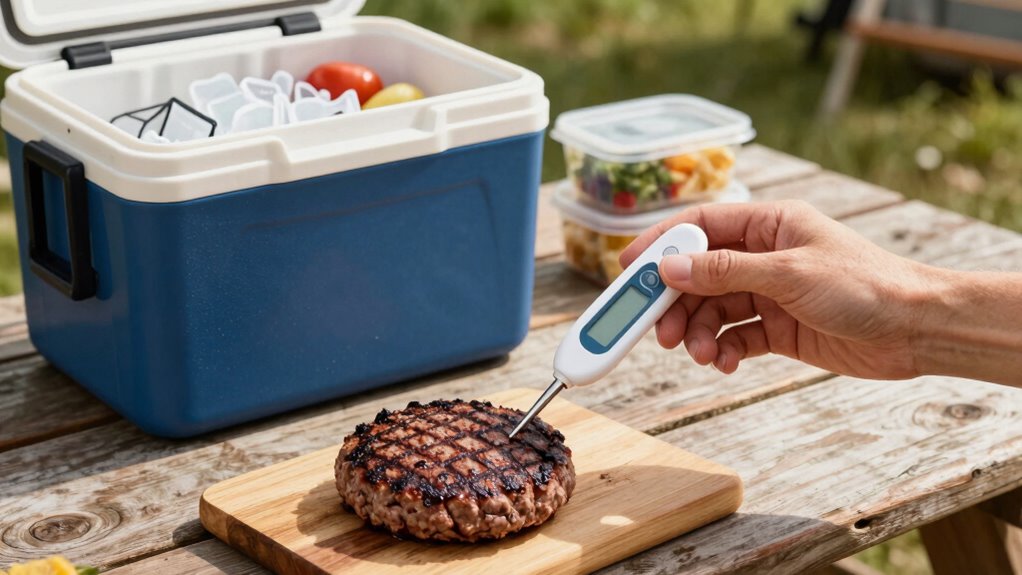
Using a food thermometer at camp is essential for guaranteeing your cooked foods are safe to eat. To get accurate readings, you need to focus on measuring accuracy and proper calibration. Before use, check your thermometer’s calibration by placing it in ice water or boiling water. If it’s off, adjust it according to the manufacturer’s instructions. When checking food temperatures:
- Insert the thermometer into the thickest part of the meat or food.
- Avoid touching bone, fat, or the cooking surface for a true reading.
- Wait a few seconds until the thermometer stabilizes for an accurate measurement.
- The accuracy of the thermometer directly impacts the safety and quality of your food.
This ensures your food reaches the safe internal temperature and reduces the risk of foodborne illness. Regular calibration and proper technique guarantee reliable readings throughout your camping trip.
Top Food Safety Mistakes to Avoid While Camping
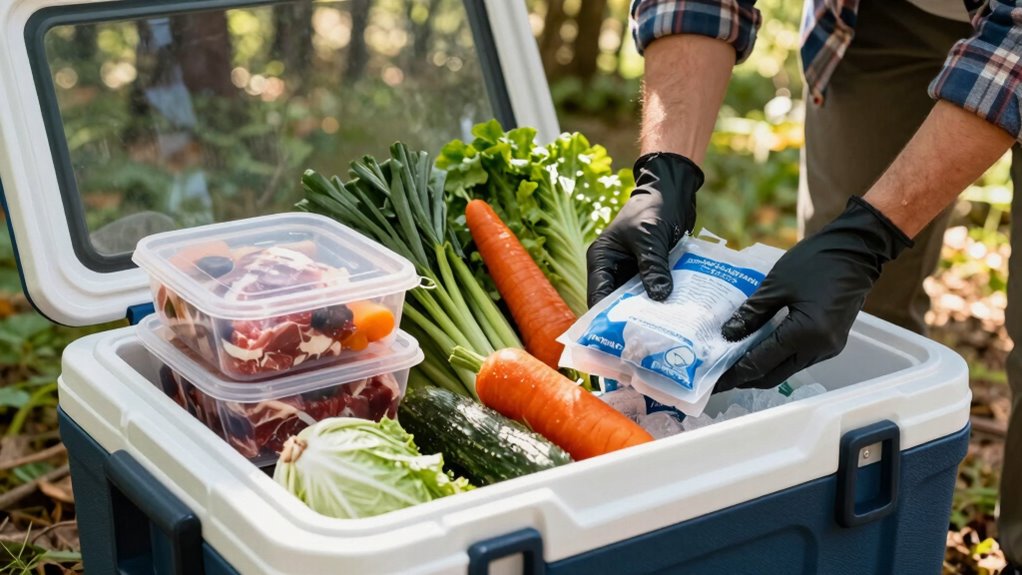
One common mistake to avoid while camping is neglecting proper food storage, which can lead to bacterial growth and food poisoning. To prevent this, always practice cross contamination prevention by keeping raw meats separate from cooked foods and ready-to-eat items. Proper hand hygiene is essential; wash your hands thoroughly before handling food and after touching raw meat or using the restroom. Avoid placing cooked food on surfaces that contact raw ingredients to reduce contamination risks. Also, don’t forget to clean utensils and cutting boards regularly. These simple steps help maintain food safety and keep everyone healthy. Remember, staying vigilant about food storage, cross contamination prevention, and proper hand hygiene makes a significant difference during your camping trip. Additionally, understanding regional flavors and pairings can enhance your outdoor dining experience while ensuring food safety.
How to Keep Food Fresh and Safe on Longer Camping Trips
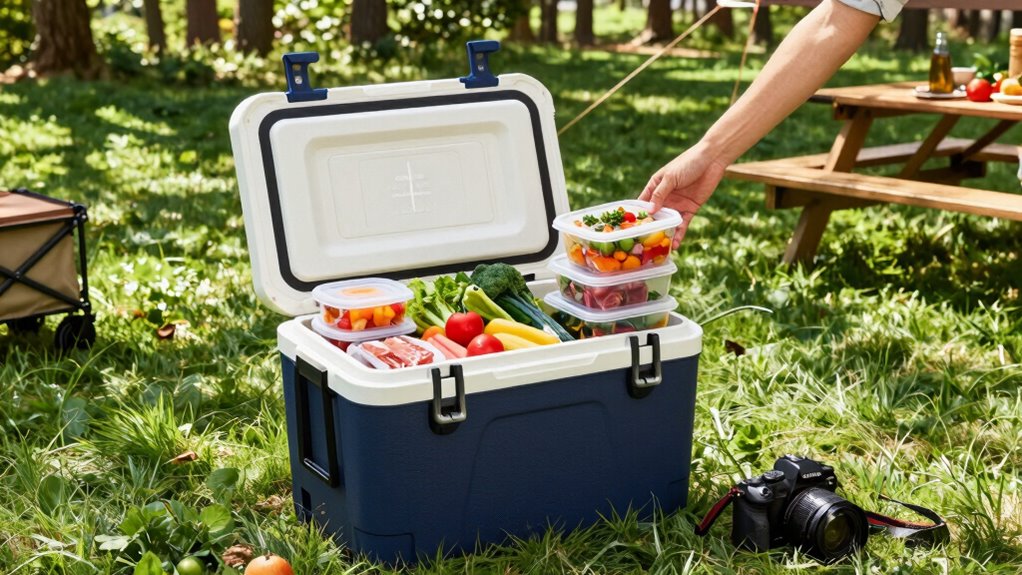
When you’re planning a longer camping trip, keeping your food fresh and safe requires careful strategies. Proper food preservation and storage are key. Use durable storage containers to prevent leaks and contamination. Keep perishable items cold by packing them in a well-insulated cooler, replenishing ice regularly. Consider freezing some foods beforehand to extend their freshness. Pack non-perishable staples separately to avoid spoilage. Be mindful of how you organize your cooler, placing fresh items near the ice and cooked foods separately. Also, store raw meats below cooked foods to prevent cross-contamination. Remember, staying vigilant with food safety practices ensures your meals stay fresh and safe throughout your adventure. Proper storage containers and smart food preservation techniques make all the difference. Additionally, understanding the 2-hour rule helps prevent foodborne illnesses by ensuring perishable foods are not left out too long.
Frequently Asked Questions
How Often Should I Clean My Cooler During a Camping Trip?
You should clean your cooler at least once a day during your camping trip to maintain proper cooler maintenance. After each day’s use, wipe down the interior with soap and water, then disinfect with a mixture of water and bleach if needed. A good cleaning schedule guarantees your cooler stays sanitary, prevents bacteria growth, and keeps your food safe. Make sure to also check for any spills or leaks regularly.
Can I Reuse Leftover Camping Food Safely?
Leftover camping food can be a tempting treasure chest, but you need to be cautious. Reusing leftovers safely depends on proper food storage and how long they’ve been sitting out. Check for any signs of spoilage, like bad smell or slimy texture. If stored correctly in your cooler and eaten within safe timeframes, leftovers can be enjoyed again. Otherwise, it’s better to discard and avoid risking foodborne illnesses.
What Are Signs of Food Spoilage at Camp?
You can spot food spoilage signs like sour or off odors, slimy textures, or mold on camping food. Discolored or mushy items also indicate spoilage. Always trust your senses—if something looks, smells, or feels wrong, discard it. These signs of food spoilage threaten camping food safety, so check your food carefully and avoid eating anything questionable to prevent illness during your trip.
Is It Safe to Refreeze Thawed Food?
It’s generally safe to refreeze thawed food if you thawed it properly using appropriate techniques like in the refrigerator, and it hasn’t been left out too long. Follow freezing guidelines, ensuring the food was kept at safe temperatures. If you thawed food using the microwave or at room temperature, it’s best to cook it before refreezing. Always check for signs of spoilage before deciding to refreeze.
How Do I Prevent Cross-Contamination in My Cooler?
To prevent cross-contamination in your cooler, guarantee proper storage by placing raw meats on the bottom to avoid drips onto other foods. Practice good hygiene by washing your hands before handling food and using separate utensils for different items. Keep the cooler at the correct temperature, and avoid opening it frequently. Proper storage and hygiene practices are key to keeping your food safe and preventing cross-contamination.
Conclusion
By following the 2-hour rule and packing your cooler correctly, you can enjoy your camping trip without worrying about food safety. Imagine forgetting to keep your leftovers cold, only to find them spoiled later — it’s a preventable mistake. Staying vigilant with proper storage, temperature checks, and timely consumption guarantees your food stays fresh and safe. With these tips, you’ll create happy, healthy memories around the campfire, not trips to the doctor.