BTUs measure how much heat a camp stove can produce, but bigger isn’t always better. Higher BTUs mean more power, but they don’t guarantee faster cooking or better efficiency. Often, stove design, fuel type, and portability matter more for your outdoor needs. Focusing solely on BTU size can lead to choosing a stove that’s too bulky or wasteful. To get the most out of your gear, find out how other factors influence performance.
Key Takeaways
- Higher BTUs indicate more heat output but don’t guarantee faster or better cooking results.
- Proper burner design and heat distribution are crucial for efficiency, regardless of BTU size.
- Excessive BTUs can lead to uneven cooking, fuel waste, and reduced stove durability.
- Choosing a stove with BTUs aligned to your cooking needs ensures optimal performance and fuel economy.
- Balance between BTU rating, portability, and stove quality results in better outdoor cooking experiences.
What Are Camp Stove BTUs and Why Do They Matter?
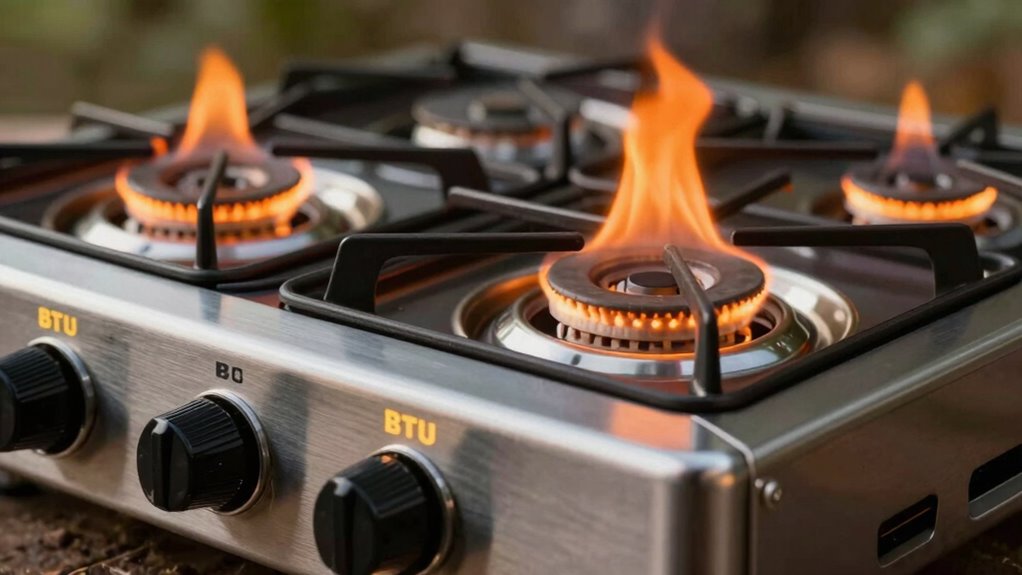
Have you ever wondered what BTUs mean when choosing a camp stove? BTUs, or British Thermal Units, measure how much heat a stove can produce. This rating influences fuel efficiency, helping you understand how quickly the stove can cook or boil water. A higher BTU usually means more power, but it doesn’t always translate to better performance for your needs. Portability also plays a big role; stoves with high BTUs can be heavier or bulkier, making them less convenient to carry for backpacking trips. If you’re looking for a lightweight option, a lower BTU stove might be more practical, offering decent cooking power without sacrificing portability. Understanding BTUs helps you pick a stove that balances power, fuel efficiency, and ease of transport. Additionally, considering the overall design and features of a stove can significantly impact its usability and suitability for your outdoor adventures.
How Do BTU Ratings Affect Cooking Power and Efficiency?
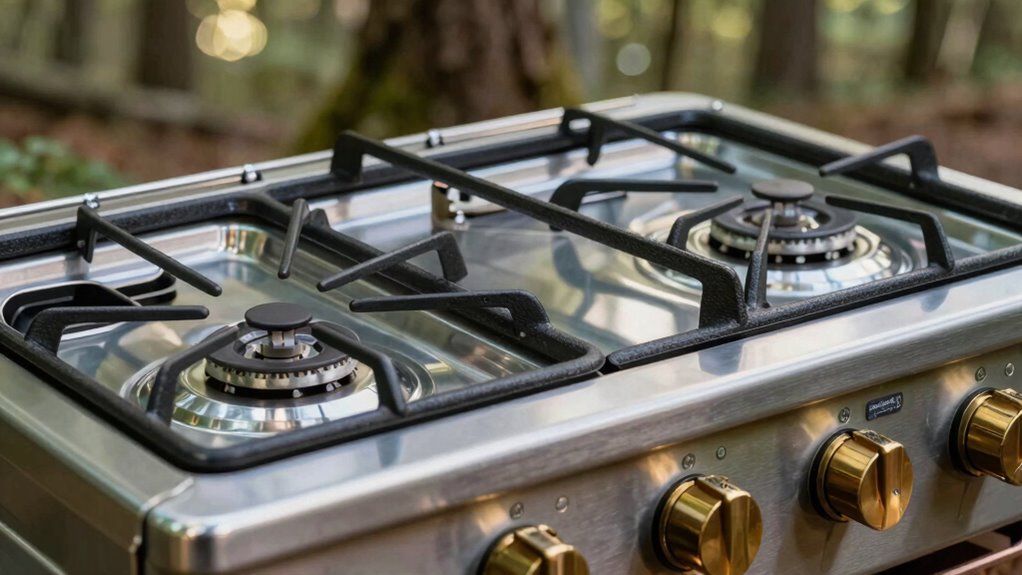
Your camp stove’s BTU rating influences how quickly and intensely it can heat your food. However, higher BTUs don’t always mean better efficiency—burner design plays a big role. Understanding the balance between heat output and design helps you choose a stove that meets your cooking needs. Additionally, factors like cultural beliefs can influence how users perceive and select their outdoor cooking equipment based on perceived performance.
Heat Output Versus Efficiency
While a higher BTU rating indicates a stove’s potential to produce heat, it doesn’t automatically mean you’ll cook more efficiently. Your stove’s fuel efficiency depends on more than just BTUs; burner design plays a vital role. Here’s what to consider:
- Burner design: A well-designed burner distributes heat evenly, reducing fuel waste and improving efficiency.
- Size and control: Smaller, adjustable burners can optimize heat output for different cooking tasks, saving fuel.
- Usage habits: Using the right flame size for your pot size prevents unnecessary fuel consumption.
Impact of Burner Design
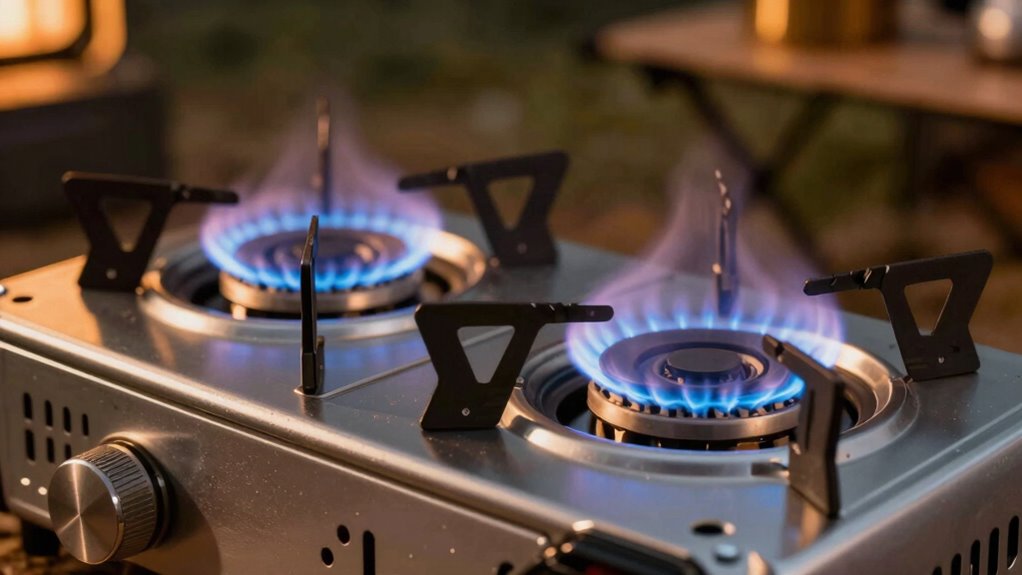
Burner design directly influences how effectively a stove uses its BTU rating to generate heat. The burner shape and flame control determine how evenly and efficiently heat is distributed. For example, a wide, circular burner provides better heat coverage than a narrow one, making cooking more consistent. Good flame control allows you to adjust heat precisely, saving fuel and preventing overcooking. Here’s a quick comparison:
| Burner Shape | Flame Control | Cooking Power |
|---|---|---|
| Circular | Precise | Even heat distribution |
| Square | Moderate | Suitable for simmering |
| Rectangular | Limited | High heat for boiling |
| Irregular | Variable | Less predictable |
| Concentric | Precise | Multi-zone cooking |
Choosing the right burner shape and flame control improves overall efficiency, regardless of your BTU rating. Additionally, burner design can impact the overall durability and maintenance needs of your stove.
Why Bigger BTUs Don’t Always Mean Better Cooking Results
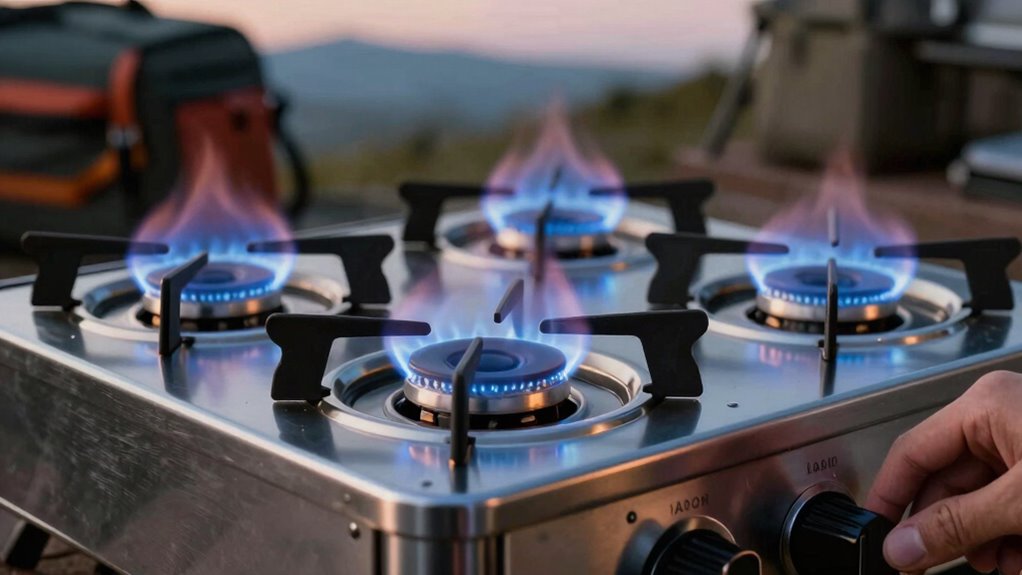
Higher BTUs might seem like a quick fix for better cooking, but they don’t guarantee even heat or efficiency. If the heat isn’t distributed well, your food can burn or stay undercooked, no matter how powerful the stove is. Plus, bigger BTUs often mean higher fuel use, which isn’t always practical for your camping trips. Additionally, heat distribution plays a crucial role in achieving optimal cooking results.
Heat Distribution Efficiency
Even if a camp stove boasts a high BTU rating, it doesn’t guarantee better cooking results. One key factor is heat distribution efficiency—how evenly heat spreads across your cookware. A stove with impressive BTUs might concentrate heat in one spot, causing uneven cooking. To optimize performance, consider:
- *Design of the burner:* Better-designed burners promote uniform heat flow rather than hot spots.
- *Size and shape of the flame:* Even flames ensure consistent heat across your pan.
- *Fuel efficiency:* Efficient heat distribution utilizes fuel better, saving you resources and reducing waste.
- *Impact of heat distribution efficiency* on overall cooking performance can be just as important as raw BTU power.
Fuel Consumption Impact
While a stove’s BTU rating indicates its maximum heat output, it doesn’t necessarily mean you’ll cook more efficiently or effectively. Higher BTUs often lead to increased fuel consumption rates, which can drain your fuel supply faster and cost more over time. Bigger BTUs don’t guarantee better cooking results if your stove isn’t designed for ideal fuel efficiency. In fact, excessive heat can cause uneven cooking or burning, wasting fuel without improving performance. To get the most from your fuel, focus on stoves with balanced BTUs and good efficiency ratings. This way, you’ll conserve fuel, reduce costs, and achieve consistent cooking results without sacrificing performance. Remember, the goal is effective heat, not just maximum heat. Additionally, understanding fuel efficiency ratings can help you select a stove that offers the best balance between power and consumption.
What Other Factors Should You Consider When Choosing a Camp Stove?
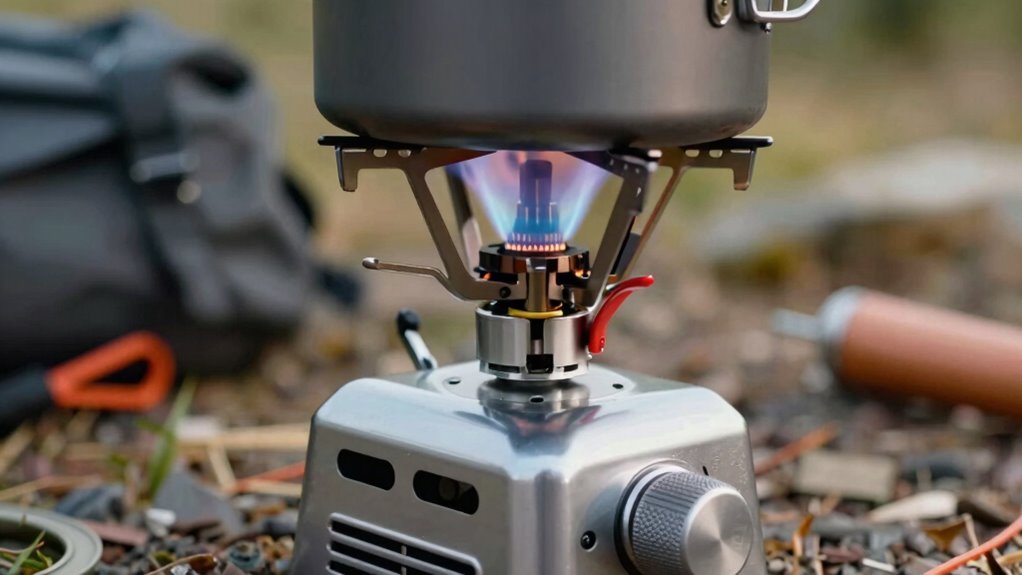
When choosing a camp stove, considering factors beyond just BTUs can make a big difference in your outdoor cooking experience. First, think about the fuel type—whether it’s propane, butane, or multi-fuel—and how readily available it is at your destination. Second, assess portability considerations, including size, weight, and ease of setup, especially if you’ll be backpacking or moving frequently. Third, evaluate durability and build quality to ensure your stove withstands the elements and rough handling. Remember, a stove with high BTUs isn’t always ideal if it’s bulky or uses hard-to-find fuel. Additionally, understanding heat output efficiency can help you choose a stove that provides the right amount of heat without wasting fuel. Balancing these factors helps you pick a stove that’s reliable, convenient, and suited to your camping style.
How to Match a Stove’s BTU Output to Your Camping Style
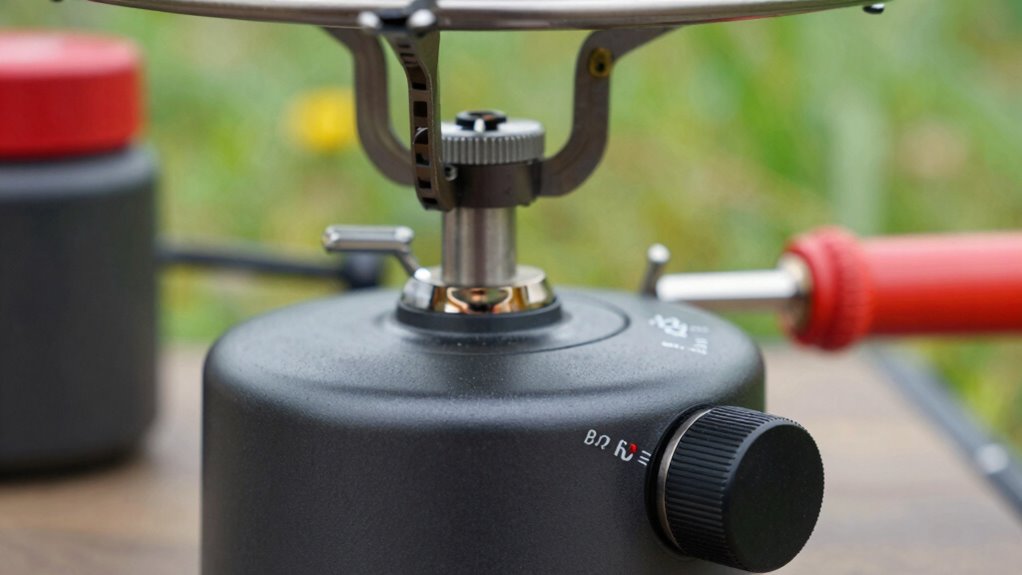
Matching a stove’s BTU output to your camping style guarantees you get the right balance of power and efficiency. If you prefer quick meals and boiling water fast, a higher BTU stove works well, but it may decrease fuel efficiency and add weight, impacting portability. For lightweight, minimalist trips, lower BTU stoves conserve fuel and are easier to carry. Consider the table below to match your needs:
| Camping Style | Ideal BTU Range | Key Concerns |
|---|---|---|
| Backpacking & ultralight | 2,000–5,000 | Fuel efficiency, weight |
| Car camping | 5,000–8,000 | Power, cooking speed |
| Extended trips | 3,000–6,000 | Fuel economy |
| Solo adventures | 2,000–4,000 | Portability |
| Group cooking | 6,000+ | Power and efficiency |
Additionally, understanding the BTU rating of your stove can help you better optimize your fuel consumption and overall camping experience.
Common Myths About BTUs and Stove Size, Debunked
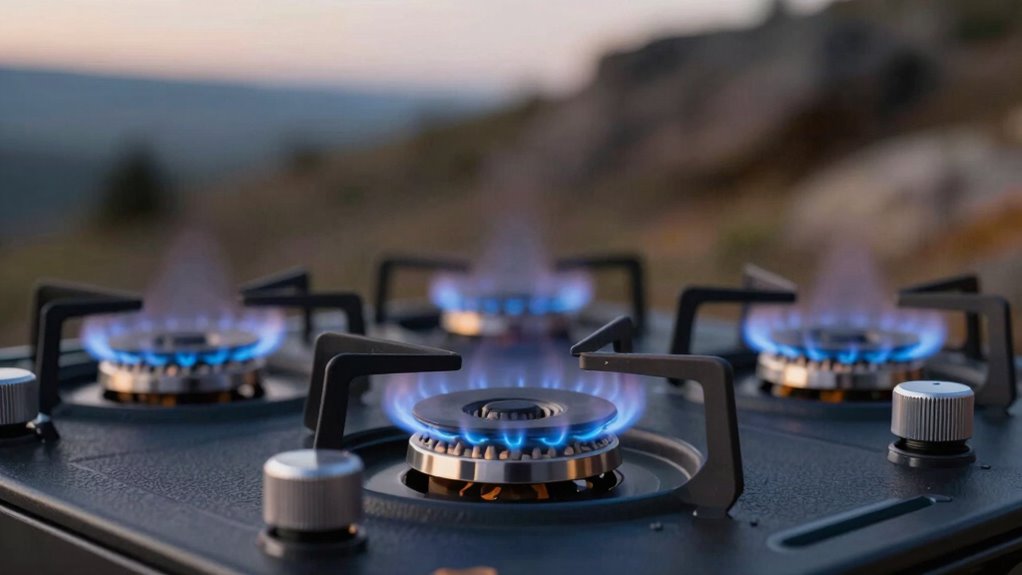
Many people assume that a higher BTU rating always means better performance, but this isn’t true. Stove wattage and cooking duration matter just as much. Here are common myths debunked:
- Bigger BTUs mean faster cooking – Not necessarily. High BTUs can lead to quick boiling but may cause uneven cooking if your stove isn’t well-designed.
- More BTUs equals longer stove lifespan – Overworking a stove with excessive wattage can reduce its durability.
- BTU rating determines stove efficiency – Cooking duration, heat control, and quality impact overall efficiency, regardless of wattage. Understanding stove efficiency is key to choosing the right appliance.
Practical Tips to Pick the Best Camp Stove for Your Needs
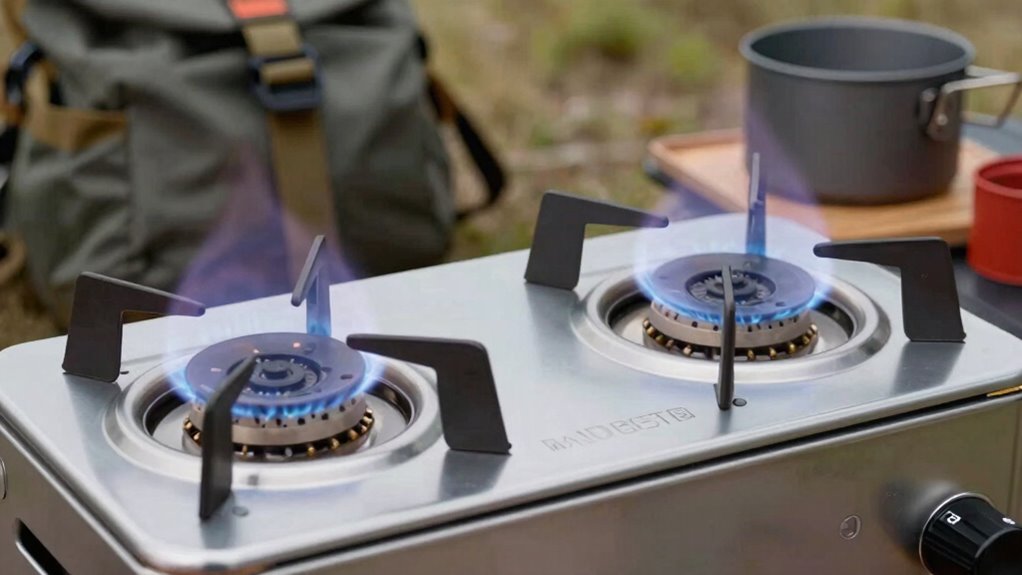
Choosing the right camp stove depends on understanding your specific needs and cooking habits. Think about how often you cook, the type of meals you prepare, and your preferred fuel type. For instance, if portability matters, select a lightweight stove compatible with portable cookware. If you rely on certain fuel types, like propane or butane, ensure your stove supports them. Consider these factors:
| Cooking Frequency | Fuel Preference | Portability |
|---|---|---|
| Occasional trips | Propane, butane | Compact, lightweight |
| Frequent camping | Multi-fuel options | Easy to carry |
| Quick meals | Instant setup | Small size |
| Gourmet cooking | High heat output | Stable, durable |
Additionally, understanding the fuel compatibility of your stove is crucial to ensure safe and efficient operation. Matching your needs with these factors guarantees you’ll pick the best camp stove for your adventures.
Frequently Asked Questions
Can a Stove With Lower BTUS Still Cook Effectively?
Yes, a stove with lower BTUs can still cook effectively. You’ll find that cooking efficiency depends on how well the stove distributes heat and how you manage fuel consumption. Smaller BTU stoves often use less fuel and can be just as effective for simple tasks or quick meals. Focus on proper heat control and cooking techniques, and you’ll enjoy efficient cooking even with lower BTU stoves.
How Does Altitude Affect a Stove’s BTU Performance?
Imagine your stove as a mountain climber struggling against thin air; altitude causes pressure effects that reduce your stove’s BTU performance. You’ll need to make altitude adjustments to compensate for lower pressure, helping your stove burn efficiently. Without these adjustments, your cooking slows, and flames flicker. By understanding how altitude impacts pressure effects, you can tweak your stove to perform well, even at high elevations.
Are Higher BTU Stoves More Fuel-Efficient?
Higher BTU stoves aren’t necessarily more fuel-efficient. While they generate more heat, they often consume more fuel quickly, reducing overall efficiency. If you want better cooking efficiency, choose a stove with an appropriate BTU rating for your needs and manage your fuel consumption wisely. Remember, a stove with too high BTUs can waste fuel and may not perform better if it’s not suited to your cooking style or conditions.
What Safety Considerations Relate to High BTU Stoves?
Think of high-BTU stoves as roaring lions—powerful but demanding respect. You need to prioritize safety precautions with these beasts to keep your campfire safe. Make certain proper ventilation to avoid dangerous fumes, watch for flare-ups, and never leave them unattended. While they can boost fuel efficiency by cooking faster, they also require careful handling. Remember, controlling the fire is key to keeping your adventure fun and safe.
Does Stove Size Impact Portability and Storage?
Yes, stove size impacts portability and storage. A larger stove typically has more stove weight, making it heavier to carry around, which can be inconvenient if you’re backpacking. Additionally, bigger stoves often require more storage space, challenging you to find suitable storage options. If you prioritize ease of transport and compact storage, choose a smaller, lightweight stove that fits your needs without sacrificing performance.
Conclusion
Remember, when choosing a camp stove, bigger BTUs aren’t always the superhero you think they are. It’s more about finding the perfect balance for your camping style—like a skilled chef balancing flavors. Don’t get dazzled by the biggest number; instead, focus on what truly suits your needs. With the right stove, you’ll cook up a storm faster than you can say “campfire feast,” making your outdoor adventures truly unforgettable!