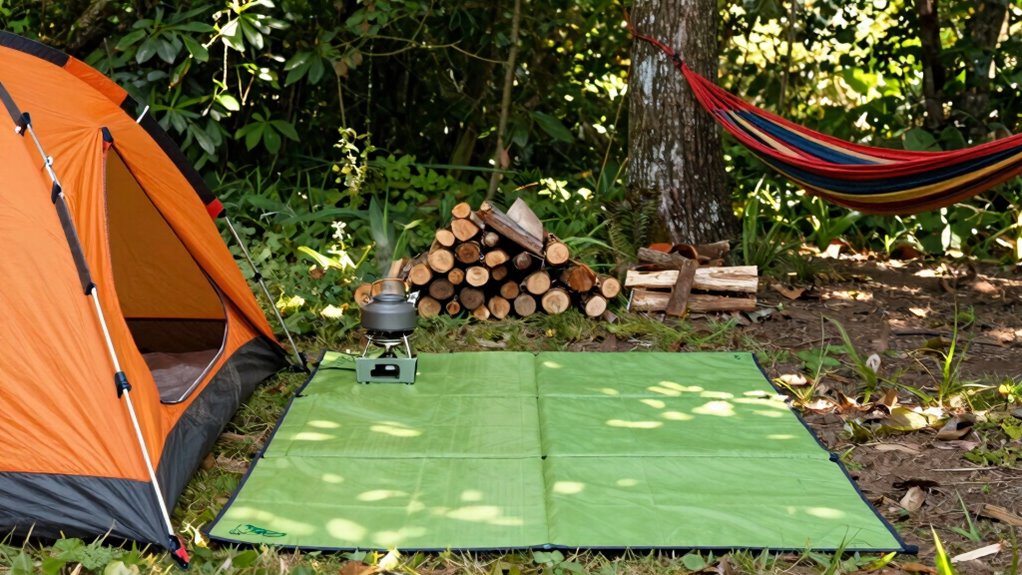
Start by choosing a flat, hazard-free site away from dead trees, then clear debris and establish natural shelter for protection. Unpack and assemble your tent poles first, lay out the tent, and position vents for proper airflow and ventilation. Next, pick a safe spot for your campfire, keeping it clear of flammable materials and nearby gear. Organize your essentials inside the tent for quick access. Following this sequence keeps setup smooth, safe, and stress-free—learn more to perfect your process.

Get travel and outdoor gear delivered free — and shop member deals
- Fast, free delivery on millions of items
- Access to Prime Big Deal Days deals on October 6–7
- Prime Video, Amazon Music and more included
Key Takeaways
- Plan and choose a flat, hazard-free site with natural shelter and good airflow before setup.
- Unpack and assemble tent poles first, then lay out the tent for quick pitching.
- Set up the campfire in a safe, clear area away from tents and flammable materials.
- Organize essential gear inside the tent immediately after setup for easy access.
- Follow a structured sequence: site selection, tent setup, fire safety, and organization for efficiency.
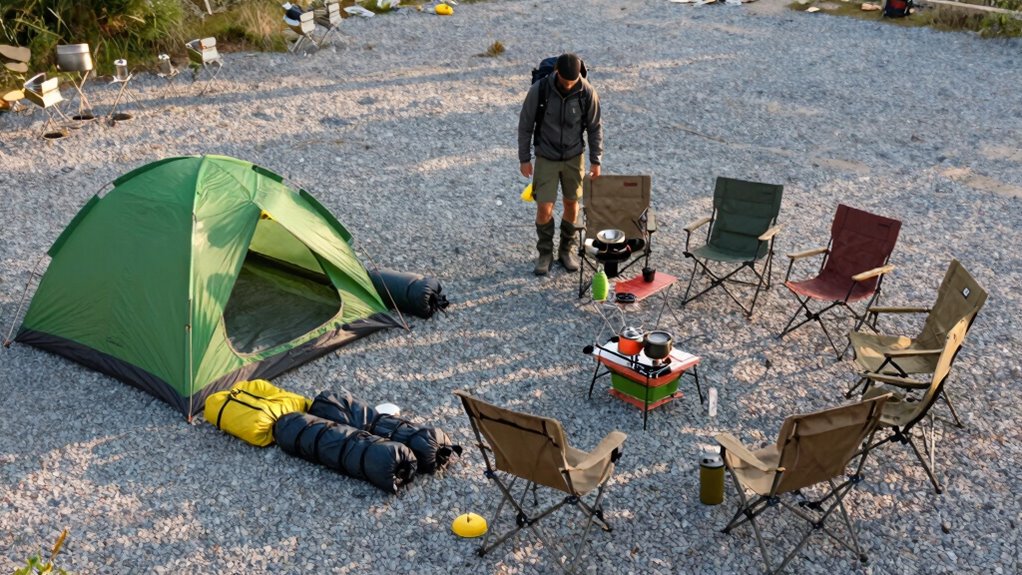
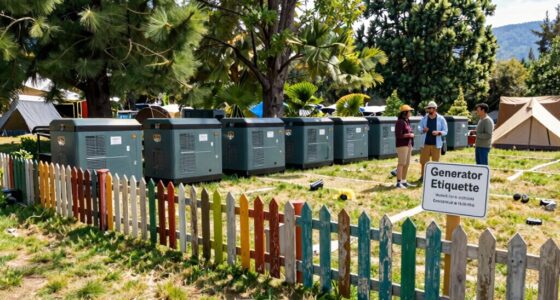
Have you ever wondered what the most efficient way to set up camp is? It’s all about planning your steps carefully so you save time and avoid chaos. When you arrive at your campsite, start by choosing a flat, level spot that’s away from hazards like dead trees or unstable ground. This initial decision sets the foundation for a smooth setup process. Before diving into pitching your tent, take a moment to clear the site of any debris, rocks, or twigs. This simple step prevents damage to your tent floor and makes the setup quicker.
Choose a flat, hazard-free spot for easy, safe, and efficient campsite setup.
Next, focus on setting up your tent. Unpack it and assemble the poles, then lay the tent out flat. This is where tent ventilation comes into play. Ensuring your tent is well-ventilated isn’t just about comfort; it’s also about safety. Proper airflow helps prevent condensation buildup inside the tent, which can make sleeping uncomfortable and promote mold over time. Position the tent’s vents and windows to catch any prevailing breezes, so air circulates freely once you’re inside. Incorporating proper site selection techniques can also help improve airflow and reduce environmental impact. Additionally, paying attention to natural shelter can help protect your tent from wind and weather elements, making your stay more comfortable. When you’re setting up your campsite, considering airflow optimization can further enhance comfort and safety.
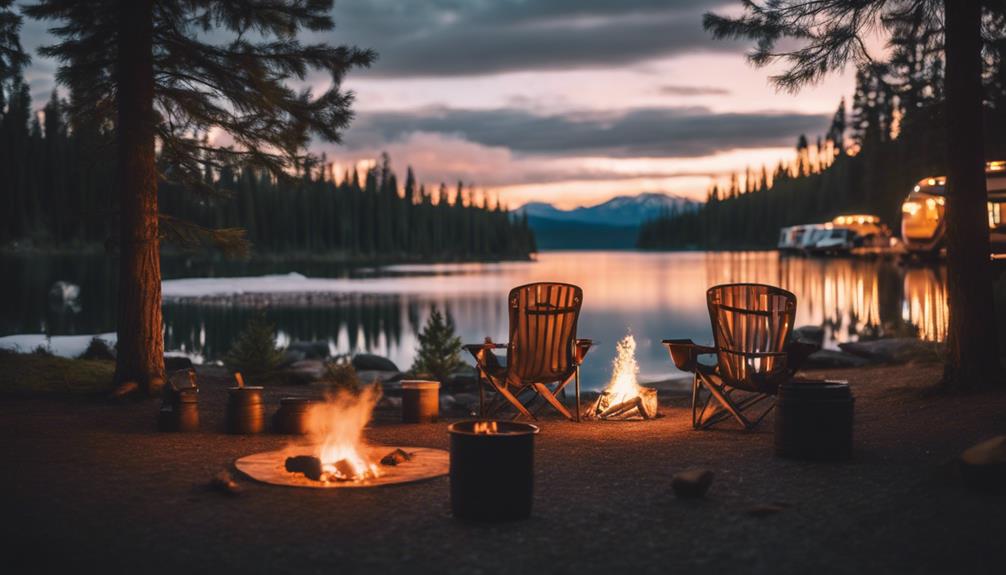
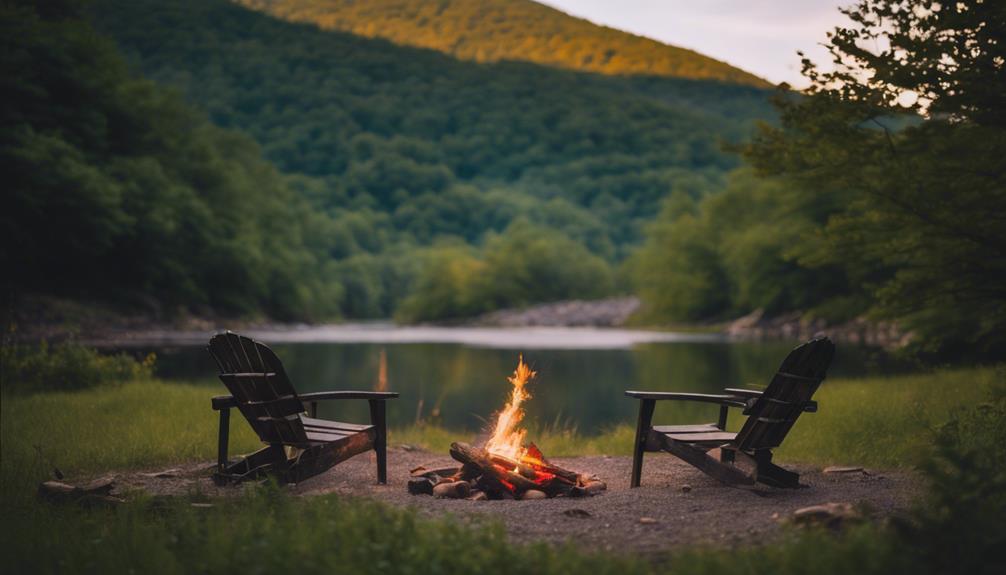
While your tent is going up, it’s smart to prepare your campsite for a cozy campfire. Campfire safety should be top priority—pick a spot that’s clear of overhanging branches and at least 15 feet away from your tent and other gear. Keep a bucket of water or a fire extinguisher nearby, and double-check local regulations about fire permits or restrictions. When you’re ready to build the campfire, keep the area clear of flammable materials like dry leaves or paper, and build it on bare soil or a fire ring if available. Never leave the fire unattended, and ensure it’s fully extinguished before leaving or sleeping.
Additionally, site selection plays a crucial role in creating a safe and enjoyable camping experience, so take your time to choose the best spot. Considering environmental impact during your site selection can help preserve the natural surroundings for future campers. As soon as your tent is secured and your fire setup is safe, unpack your gear inside the tent and organize everything efficiently. Keep essentials like your flashlight, water, and first aid kit within easy reach. By establishing a routine—starting with site selection, then tent setup with good ventilation, followed by fire safety—you streamline the process and reduce the stress of camping. This method saves you time, keeps chaos at bay, and helps you enjoy your adventure from the moment you arrive. A little planning upfront makes all the difference, letting you relax and savor your outdoor experience with confidence.
As an affiliate, we earn on qualifying purchases.
Frequently Asked Questions
How Do I Choose the Best Campsite Location?
You should choose a campsite away from wildlife trails and water sources to guarantee wildlife safety. Look for a flat, well-drained area that’s sheltered from wind and sun. Keep in mind campsite etiquette by selecting a spot that’s respectful to others, avoiding crowded areas. Avoid low-lying spots prone to flooding, and steer clear of existing fire rings to minimize environmental impact. This thoughtful approach keeps your camp safe and enjoyable.
What Tools Are Essential for Quick Setup?
Tools are your best friends for quick setup, like reliable teammates in a race. You’ll need a tent with waterproofing features, stakes, a mallet, and a multi-tool for adjustments. Don’t forget essentials like a lighter or matches for campfire safety, ensuring your fire stays controlled. A headlamp or flashlight helps you work efficiently in low light. With these tools, you’ll set up swiftly and stay safe, enjoying your adventure sooner.
How Do I Organize Camping Gear Efficiently?
To organize your camping gear efficiently, use smart packing strategies like grouping similar items together and packing in clearly labeled containers. Keep essentials like cooking gear and first aid kit accessible, while less-used items go at the bottom. Use gear organizers and compression bags to save space. By planning your packing, you’ll set up camp faster and avoid chaos, making your outdoor experience more enjoyable and stress-free.
What Safety Precautions Should I Take During Setup?
Think of setting up camp as building a fortress—your safety depends on strong precautions. You should prioritize campfire safety by keeping fires away from tents and never leaving them unattended. Stay wildlife aware by storing food securely and avoiding attracting animals. Always check your surroundings for potential hazards, and keep a first aid kit nearby. These steps protect you and preserve the natural environment, ensuring everyone stays safe and the experience remains enjoyable.
How Can I Set up a Campsite in Bad Weather?
When setting up a campsite in bad weather, focus on weatherproofing essentials like waterproof tarps and sealed tents. Look for shelter stability by choosing natural or man-made windbreaks and anchoring everything securely. Set up your tent on higher ground to avoid flooding, and make certain all gear is fastened tightly. Avoid setting up in low-lying areas prone to water accumulation, and double-check stakes and guylines to withstand strong winds.
Conclusion
By following this camp setup sequence, you’ll save time and avoid chaos. Imagine arriving at a campsite after a long drive, quickly pitching your tent and organizing your gear with confidence. For instance, Sarah once arrived exhausted but used this method, setting up camp in half the usual time. Soon, she was relaxing, enjoying the sunset instead of stressing over misplaced items. Stick to the sequence, and your outdoor experience will be smoother and more enjoyable from start to finish.
Fall Picks
fall essentials
As an affiliate, we earn on qualifying purchases.