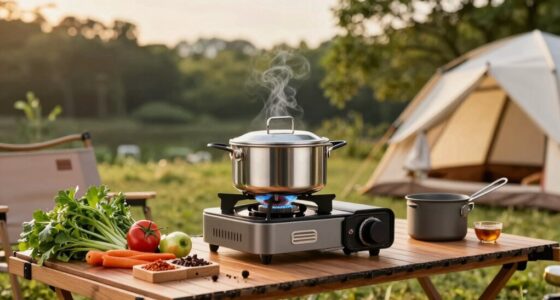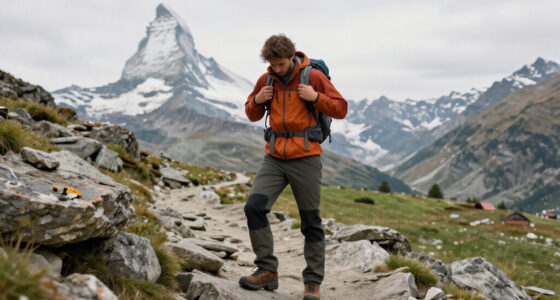
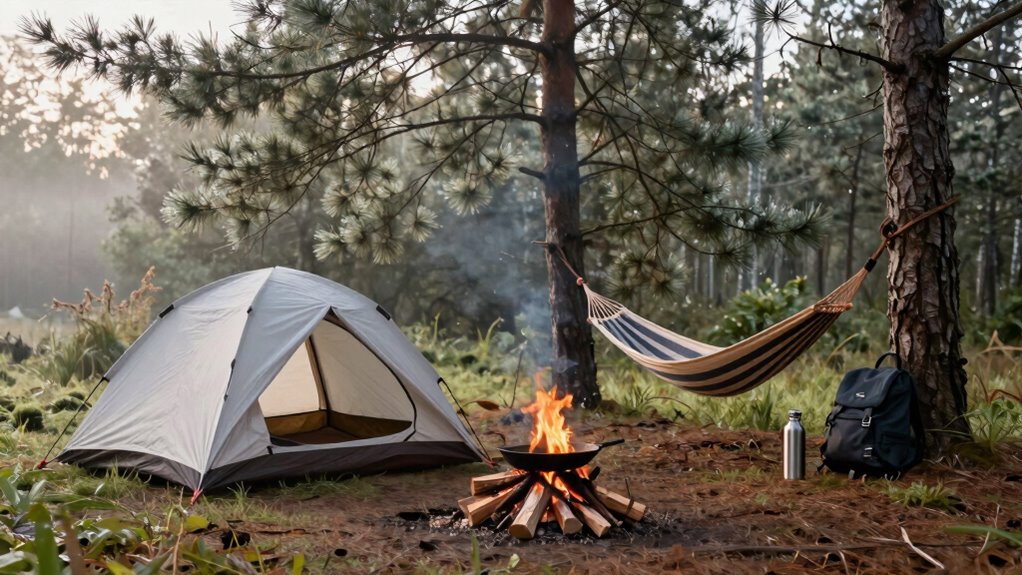

To build better camping habits one trip at a time, focus on consistency in safety, organization, and environmental care. Always verify fires are fully extinguished, pack only what you need, and follow Leave No Trace principles. Share your plans, stay weather-aware, and prepare your gear efficiently. Developing routines for setup, cleanup, and safety checks will improve your experience over time. Keep honing these habits, and you’ll discover how small changes can make each adventure safer, more enjoyable, and more eco-friendly.

Get travel and outdoor gear delivered free with Prime
- Fast, free delivery on millions of items
- Prime Video, Amazon Music and more included
- Member-only deals all year
Key Takeaways
- Develop a pre-trip checklist to ensure consistent packing, safety, and environmental practices each time.
- Establish routines for setting up and breaking down your campsite efficiently and responsibly.
- Practice fire safety and leave no trace principles to build environmentally conscious habits.
- Share safety plans and weather updates with companions to promote preparedness and communication.
- Reflect on each trip to identify areas for improvement and reinforce positive camping routines.
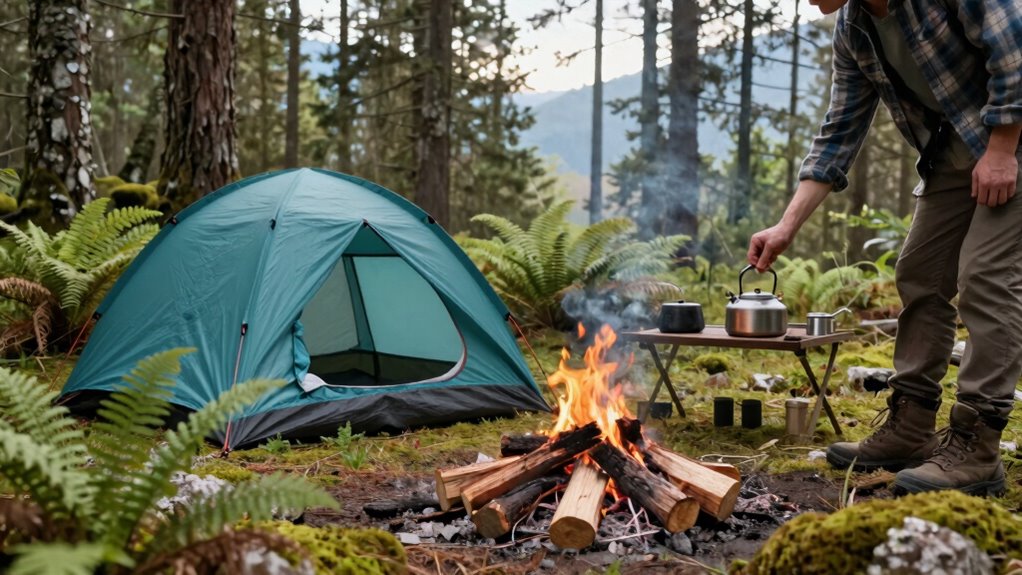
Camping can be a rewarding experience, but developing good habits guarantees you get the most out of your outdoor adventures. The foundation of successful camping starts with simple practices that keep you safe, organized, and prepared. One of the most important habits is paying close attention to campfire safety. You want to verify that your fire is controlled and completely extinguished before leaving it unattended or going to sleep. Always keep your fire small and manageable, and use designated fire rings or clear a safe area free of dry leaves and twigs. Keep a bucket of water or a shovel nearby so you can quickly put out the fire if needed. This not only prevents wildfires but also protects your campsite and the environment. Practicing fire safety can significantly reduce the risk of causing forest fires and harming local ecosystems.
Always ensure your campfire is fully extinguished and keep safety tools nearby to prevent wildfires and protect the environment.
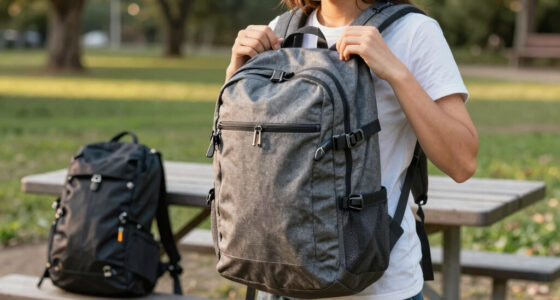
Another habit that notably improves your camping experience is packing efficiency. You should aim to pack only what’s necessary, organizing gear systematically so you can find items quickly. Use packing cubes or separate bags for different categories like cooking supplies, clothing, and first aid. Making a checklist before each trip helps you avoid forgetting essential items and reduces overpacking, which can make your campsite cluttered and harder to manage. Efficient packing also means thinking about weight and space, especially if you’re hiking to your campsite. When you pack thoughtfully, you’ll set yourself up for a smoother, more enjoyable trip, with less stress and more focus on exploring and relaxing. Additionally, being mindful of packing strategies can help you adapt to different environments and weather conditions, and understanding cabling essentials can ensure your electronic devices stay powered during longer stays. Incorporating knowledge about environment-specific safety precautions can further enhance your preparedness and prevent common camping mishaps. Being aware of weather patterns can also help you anticipate and react to changing conditions, keeping you safer during your outdoor stay.
As you develop better camping habits, focus on maintaining cleanliness and respecting nature. Always clean up after yourself and dispose of waste properly, following Leave No Trace principles. This habit guarantees the beauty of the outdoors for future campers and minimizes your environmental impact. Additionally, establishing a routine for setting up and breaking down your campsite saves time and energy. When you arrive, take a moment to plan your layout for comfort and safety, and when you leave, ensure you leave it as you found it, leaving no trace behind.
Finally, good communication and preparation are key habits. Share your plans with your camping companions, review safety procedures, and be aware of the weather forecast. These habits help prevent accidents and ensure everyone’s needs are met. By consistently practicing these habits on each trip—focusing on campfire safety, packing efficiency, cleanliness, and communication—you’ll gradually turn good camping practices into second nature. Over time, these routines will enhance your outdoor experiences, making each adventure safer, more organized, and more enjoyable.
As an affiliate, we earn on qualifying purchases.
Frequently Asked Questions
What Are the Essential Gear Items for Beginner Campers?
You’ll want essential gear like a reliable tent, sleeping bag, and stove. Don’t forget a flashlight or lantern for nighttime lighting, and some cookware for cooking campfire recipes. Bring along a first aid kit, extra clothing, and a map or GPS. Comfortable footwear and insect repellent are also key. With these items, you’ll stay safe, enjoy easy campfire cooking, and have enough light after dark to relax and explore.
How Can I Camp Sustainably to Reduce Environmental Impact?
Want to impress Mother Earth? Simply adopt Leave No Trace principles and eco-friendly practices! Pack out everything you bring in, minimize campfire impacts, and stay on durable surfaces. Use reusable gear, avoid plastics, and choose biodegradable products. By doing so, you’ll not only reduce your environmental impact but also earn serious karma points. Remember, the best way to enjoy nature is to leave it exactly as you found it—pristine and perfect.
What Safety Precautions Should I Take While Camping Alone?
When camping alone, you should prioritize safety by staying aware of wild animals and maintaining safe distances. Keep your food stored securely to avoid attracting wildlife. Always carry emergency communication devices like a whistle, a fully charged phone, or a satellite messenger. Share your plans with someone trusted, and know the area’s emergency contacts. These precautions help you stay safe and prepared during your solo adventure.
How Do I Choose the Best Camping Spots for Beginners?
Choosing the best camping spots for beginners is like finding a hidden treasure chest! Look for sites with easy access, flat ground, and nearby water. Pick spots with safe surroundings, away from heavy traffic or wild animals. Imagine cooking campfire recipes under the stars or star gazing without worries—that’s the kind of serene environment you want. Prioritize well-maintained campgrounds with good amenities to make your first trip unforgettable and stress-free.
What Are Some Quick Tips for Setting up a Tent Efficiently?
To set up a tent efficiently, start with your camping gear essentials like stakes, a rainfly, and a sleeping pad nearby. Follow tent setup tips by choosing a flat spot, laying out your tent body, and anchoring the corners first. Use the stakes to secure the tent and attach the rainfly last. Practice these steps before your trip, so setting up becomes quick and smooth, saving you time and effort.
Conclusion
So, there you have it—master the art of camping, or at least look like you know what you’re doing. With these habits, you’ll impress both bears and fellow campers alike, all while secretly just winging it. Remember, perfection isn’t the goal; it’s about having fun, making memories, and maybe forgetting your tent stakes once in a while. Happy camping—because who needs a plan when you have a good story to tell?
Halloween Picks
halloween
As an affiliate, we earn on qualifying purchases.