
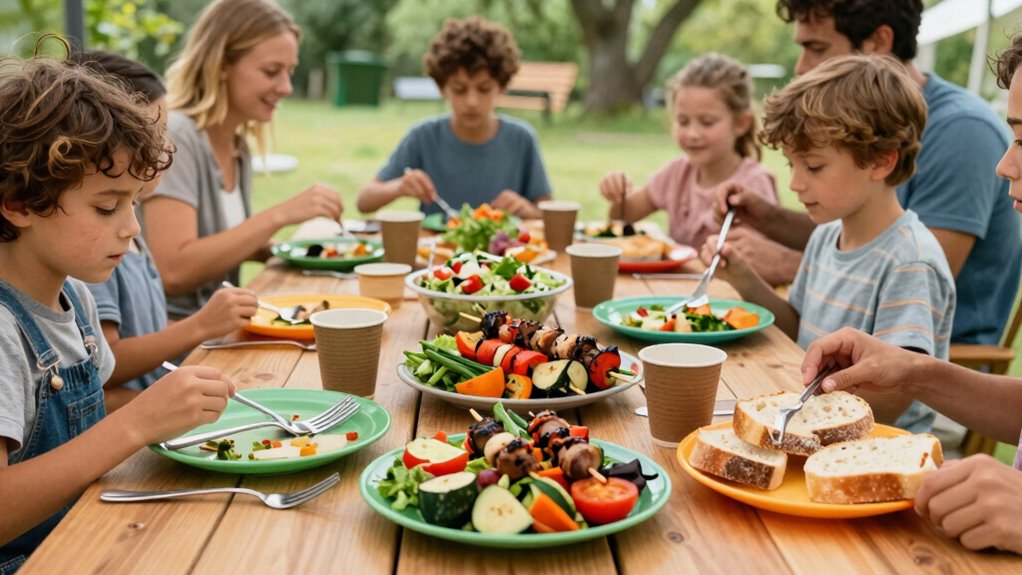
To create a family camp menu that cuts complaints and food waste, involve everyone in meal planning and choose simple, tasty recipes like foil packs or skewers with customizable toppings. Prepare ingredients ahead, pack only what you need, and use reusable containers. Set up a designated outdoor dining space and keep essentials handy to make meals enjoyable. If you keep these tips in mind, you’ll turn mealtime into a happy, eco-friendly adventure—there’s more to discover!
Key Takeaways
- Involve family in meal planning to match preferences and reduce complaints.
- Prepare customizable, simple recipes like foil packs and skewers for quick, fuss-free meals.
- Use pre-measured ingredients and portion control to minimize food waste.
- Incorporate reusable containers and creative leftovers repurposing to promote eco-friendly practices.
- Designate a dedicated outdoor dining area to enhance enjoyment and streamline meal setup.
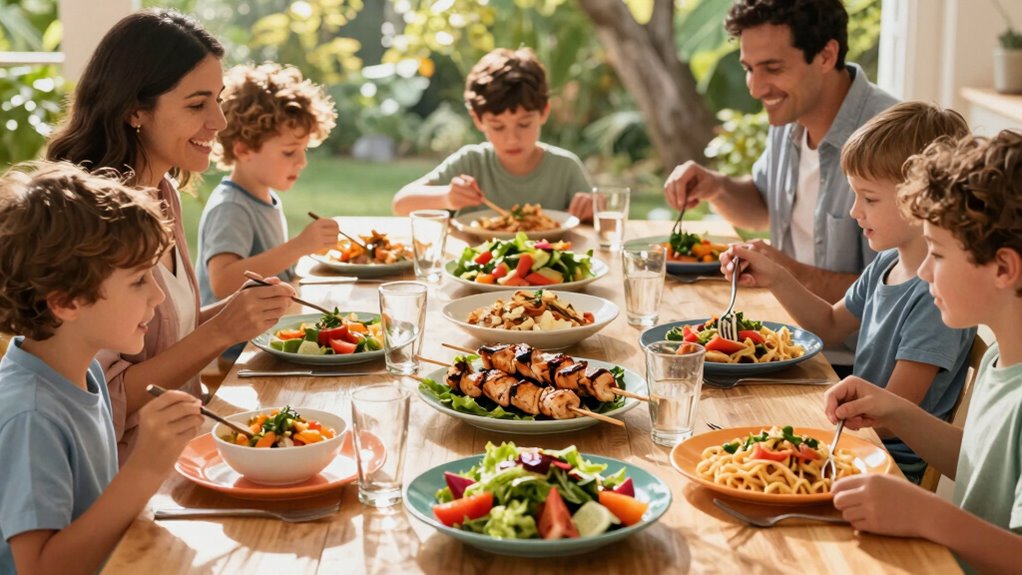
Planning a family camp menu can be both fun and satisfying, ensuring everyone gets delicious meals while enjoying the outdoor experience. When you focus on simple, crowd-pleasing dishes, you minimize complaints and reduce food waste. A key to success is choosing campfire recipes that are easy to prepare and fun for all ages. Think foil packs filled with seasoned vegetables and meats, or skewers loaded with colorful veggies and chicken chunks. These recipes are straightforward, cook quickly, and keep cleanup minimal, making outdoor dining tips easier to follow. Plus, they add an element of adventure to mealtime, keeping kids engaged and excited.
Simple, fun campfire recipes like foil packs and skewers make outdoor meals easy and exciting for everyone.
To keep complaints at bay, involve everyone in the meal planning process. Ask your family what they enjoy and try to include some of their favorites. When kids have a say, they’re more likely to eat what’s served. Also, plan meals that are flexible and forgiving if adjustments are needed. For example, prepare a variety of toppings for tacos or salads so everyone can customize their plates. This approach minimizes fuss and encourages independent eating, which is especially helpful when you’re outdoors and managing limited resources. Incorporating sustainable practices can also make your camping experience more eco-friendly and educational for children.
Smart shopping and prep work also go a long way in cutting food waste. Make a detailed list based on your meal plan, and stick to it. Pack only what you need and consider bringing reusable containers to store leftovers safely. If you have extra ingredients, think of creative ways to use them the next day—leftover grilled chicken can become a quick salad topping, or extra bread can turn into croutons. Being organized and mindful of food waste reduction can lead to a more sustainable camping experience. By being organized, you avoid overbuying and throwing away unused food.
When it comes to outdoor dining tips, setting up a designated eating area makes a big difference. Arrange a comfortable picnic table or blanket, and keep utensils, napkins, and trash bags nearby. This setup encourages proper waste disposal and keeps your campsite tidy. Use biodegradable plates and utensils to lessen your environmental impact. For campfire recipes, prepare as much as you can ahead of time—pre-cut vegetables, marinate meats, or assemble foil packs—to save time and reduce mess at the site. Keeping everything streamlined allows you to focus on enjoying the meal and the company.
Ultimately, a well-planned family camp menu that emphasizes simple campfire recipes and smart outdoor dining tips will keep everyone happy and well-fed. It minimizes complaints and food waste, letting you concentrate on making memories rather than stressing over the details. With a little organization and some creative cooking, your family can enjoy delicious, satisfying meals amidst nature’s beauty.
As an affiliate, we earn on qualifying purchases.
Frequently Asked Questions
How Do I Customize the Menu for Dietary Restrictions?
You can customize the menu for dietary restrictions by offering meal substitutions and ingredient alternatives. When planning, ask your guests about their needs and preferences. Then, prepare options like gluten-free bread, dairy-free spreads, or veggie-based dishes. Clearly label these alternatives, and communicate that substitutions are available. This approach guarantees everyone feels included, reduces complaints, and minimizes food waste by meeting individual dietary needs effectively.
What Budget Considerations Are Involved in Planning This Menu?
Planning this menu is like balancing a tightrope—you need to manage costs carefully. Focus on a thorough cost analysis to identify where money goes, and practice portion control to reduce waste and keep expenses in check. Consider bulk purchasing and seasonal ingredients to stretch your budget further. Staying flexible and mindful of these factors helps you craft a satisfying menu without overspending, ensuring everyone leaves happy and well-fed.
How Do I Handle Food Allergies or Sensitivities?
You handle food allergies and sensitivities by clearly labeling allergy-safe snacks and meals, ensuring everyone knows which options are safe. Always ask for dietary restrictions ahead of time and communicate with the kitchen staff to accommodate specific sensitivities. Offer a variety of allergy-safe snacks and meals to include all campers. Staying proactive and attentive helps create an inclusive environment where everyone feels safe and cared for.
What Are the Best Ways to Involve Families in Meal Planning?
You can involve families in meal planning by encouraging family bonding through collaborative menu choices. Offer flexible meal options that accommodate different preferences and dietary needs, making everyone feel included. Host planning sessions or surveys before the camp starts, allowing families to suggest dishes. This approach fosters a sense of ownership, guarantees meal flexibility, and creates a more enjoyable, inclusive dining experience for everyone.
How Can I Ensure Food Freshness During the Camp?
Imagine you’re managing a family camp, and you want to keep food fresh. You can prioritize meal storage by using airtight containers and refrigeration for perishable items. Implement freshness preservation techniques, like storing fruits and vegetables in crisper drawers or using coolers during outdoor activities. Regularly check temperatures and rotate stock to prevent spoilage. These steps help make certain your food stays fresh, safe, and enjoyable throughout the camp.
Conclusion
By implementing a well-planned family camp menu, you can considerably reduce complaints and food waste. Surprisingly, studies show that properly portioned meals can cut food waste by up to 25%. So, next time you’re organizing a family camp, focus on balanced, manageable portions and diverse options. Not only will everyone leave happier, but you’ll also be doing your part for the environment. A smart menu truly makes all the difference for a smooth, enjoyable camping experience.