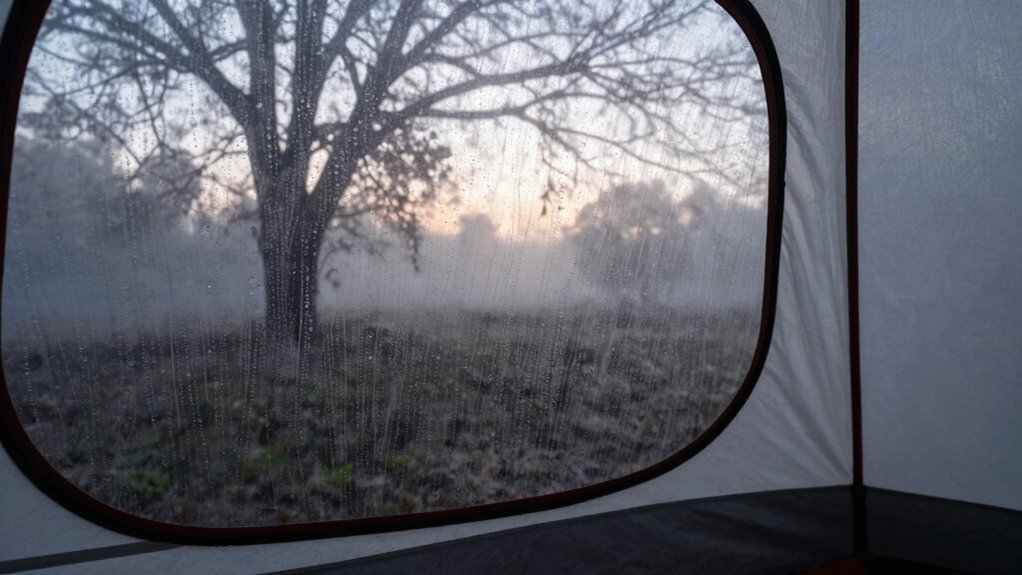
During shoulder season trips, you’ll notice worse tent condensation because fluctuating weather and humidity create perfect conditions for moisture to build up inside. Cooler mornings and warmer afternoons lead to condensation on tent walls, while high humidity levels add to the dampness. Poor ventilation and ground moisture also contribute. To manage this, you need to understand how weather changes affect moisture, and there’s more to explore on how to keep your tent dry and comfortable.
Key Takeaways
- Fluctuating temperatures cause greater temperature differences between inside and outside the tent, increasing condensation.
- Higher humidity levels during shoulder season lead to more moisture in the air, promoting condensation on tent surfaces.
- Cooler mornings and warmer afternoons create moisture condensation as warm, moist air contacts cold tent walls.
- Poor ventilation during unpredictable weather traps humid air inside, worsening condensation buildup.
- Lack of groundcover or groundsheet allows ground moisture to seep in, adding to interior dampness.
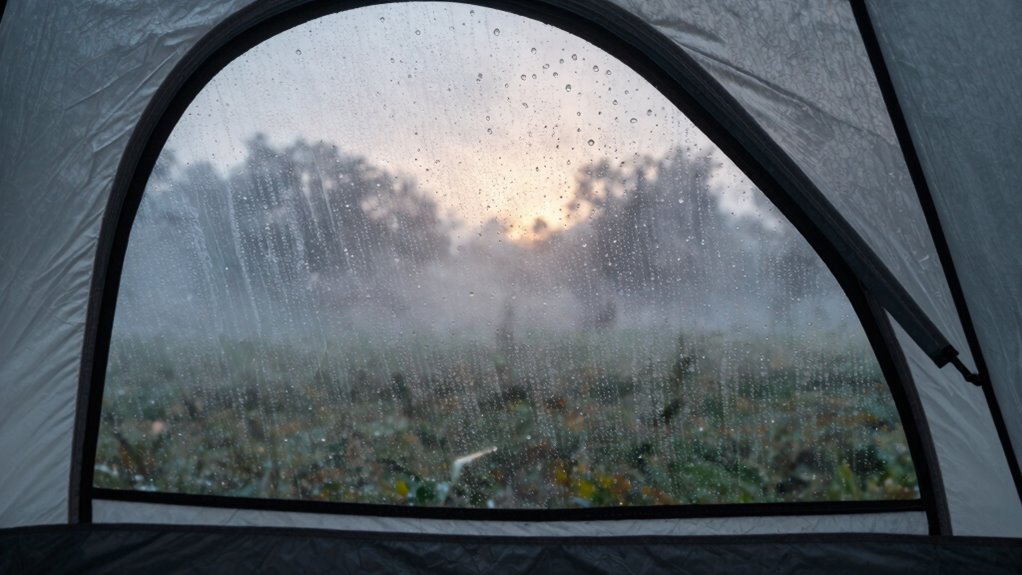
As the shoulder season arrives, tent condensation becomes a common challenge for outdoor enthusiasts. During this time, the weather patterns fluctuate more unpredictably, making it harder to keep your camping gear dry and comfortable. You might notice that your tent feels damp, even after a full night’s sleep. This happens because the temperature swings and humidity levels are more extreme, leading to increased moisture buildup inside your tent. Unlike peak summer or deep winter conditions, the shoulder season creates a perfect storm where the conditions for condensation are more favorable.
Shoulder season weather fluctuations increase tent condensation and moisture buildup, requiring better ventilation and preparation for dry camping.
You’ll find that the changing weather patterns—such as chilly mornings followed by warmer afternoons—cause moisture in the air to condense on cooler surfaces, including your tent walls. When you pack up in the early morning, the air is often still very moist, and if your tent isn’t well-ventilated, this moisture turns into condensation on the interior surfaces. It’s particularly frustrating because it feels like your tent is dripping, and that dampness can seep into your sleeping bag or clothing, making it uncomfortable and potentially leading to damp gear issues. Recognizing the weather fluctuations that contribute to this problem can help you better prepare and adapt your setup accordingly. Additionally, understanding how humidity levels fluctuate during shoulder season can further aid in your preparation.
Your choice of camping gear plays a crucial role in managing this problem. Lightweight tents with good ventilation help prevent moisture from accumulating inside. Breathable fabrics and rainflies designed for shoulder season weather patterns can also make a significant difference, reducing the amount of condensation that forms overnight. Properly setting up your tent—like ensuring it’s taut and not sagging—helps maintain good airflow and minimizes pockets of stagnant, moist air. Additionally, using a groundsheet or footprint can prevent ground moisture from seeping in, which adds to the overall dampness inside the tent. Being aware of environmental conditions such as wind and temperature changes can help you better anticipate and mitigate condensation issues. It’s also helpful to consider ventilation techniques to optimize airflow inside your tent during fluctuating weather. Moreover, staying informed about weather forecasts can assist in planning your trips to avoid the most challenging conditions.

Golabs CT3 2 Person Instant Camping Tent, 1-Minute Setup by Pre-Attached Pole, 4 Side Mesh & Door Ventilation, Lightweight 4.8lbs Portable Design with Carry Bag, Inner Storage Pockets & Hooks for Park
Quick & Effortless Setup: Pitch this pre-attached pole tent in just 60 seconds. Simply lift the center pole,…
As an affiliate, we earn on qualifying purchases.
As an affiliate, we earn on qualifying purchases.
Frequently Asked Questions
How Does Humidity Affect Tent Condensation During Shoulder Seasons?
During shoulder seasons, high humidity levels increase humidity buildup inside your tent, making condensation worse. As the moisture from your breath and the environment gets trapped, it retains more moisture on the tent’s interior surfaces. This moisture retention intensifies, especially when temperatures fluctuate overnight, causing more noticeable condensation. To reduce this, make sure proper ventilation and keep the tent dry, helping you stay comfortable despite the higher humidity.
Are Certain Tent Materials More Prone to Condensation in Cooler Weather?
You might notice that certain tent materials are more prone to condensation in cooler weather. For example, nylon tents often have less condensation resistance compared to polyester, especially in chilly conditions. The material’s breathability and moisture-wicking abilities play a big role. When temperatures drop, less breathable fabrics trap more moisture, increasing condensation. Choosing a tent with better condensation resistance can make your shoulder season trips more comfortable and dry.
Can Campsite Location Influence Condensation Levels in Shoulder Season Trips?
Yes, your campsite location can influence condensation levels during shoulder season trips. Setting up camp in low-lying areas or shaded spots traps cooler, moist air, increasing condensation inside your tent. To stay safe, practice campfire safety nearby but away from your tent to avoid adding humidity. Also, choose spots with minimal wildlife encounters to prevent disturbing animals and causing unexpected movements that might worsen condensation issues.
What Are the Best Ventilation Techniques to Reduce Condensation?
Ventilation techniques are like opening windows to let fresh air in. You should use ventilation fans whenever possible, especially during camp setup, to circulate air and reduce moisture buildup. Position your tent in a way that maximizes airflow—preferably with the door facing away from prevailing winds. Keep vents open and avoid sealing your tent tightly, allowing moisture to escape and preventing condensation from feeling worse.
How Do Temperature Fluctuations Impact Condensation Formation Overnight?
Temperature fluctuations overnight cause dew formation inside your tent as warm, moist air meets cooler surfaces. This process increases condensation, making your tent damp and uncomfortable. To reduce this, guarantee good air circulation by opening vents or doors slightly, which helps moisture escape. Keeping your tent well-ventilated during temperature changes minimizes dew formation, so you wake up drier and more comfortable, especially during shoulder seasons when temperature swings are more common.

Coleman Weatherproof Rainfly Accessory for 4/6 Person Instant Tents, Keeps Inside Dry & Protects from The Elements, Rainfly Only (Tent Sold Separately)
Get better airflow by cracking your windows, even in the rain
As an affiliate, we earn on qualifying purchases.
As an affiliate, we earn on qualifying purchases.
Conclusion
As you pack up your damp tent in the shoulder season, remember that condensation is like a stubborn ghost lingering in the fabric’s shadows. It’s the result of a delicate dance between warm breaths and cool night air. Embrace the challenge, knowing that each droplet is a tiny reminder of the night’s quiet symphony. With patience and a little care, your next trip will feel like a fresh chapter, free from the ghost’s icy grip.

Clostnature Tent Footprint – Waterproof Camping Tarp, Heavy Duty Tent Floor Saver, Ultralight Ground Sheet Mat for Hiking, Backpacking, Hammock, Beach – Storage Bag Included
A MUST FOR TENT: An extra tent tarp doesn't just give you extra waterproofing, it is used as…
As an affiliate, we earn on qualifying purchases.
As an affiliate, we earn on qualifying purchases.

GEAR AID Revivex Odor Eliminator, All-Natural Formula for Tents, Footwear and Sports Gear, 1 Gallon
Size: 1 Gallon
As an affiliate, we earn on qualifying purchases.
As an affiliate, we earn on qualifying purchases.