
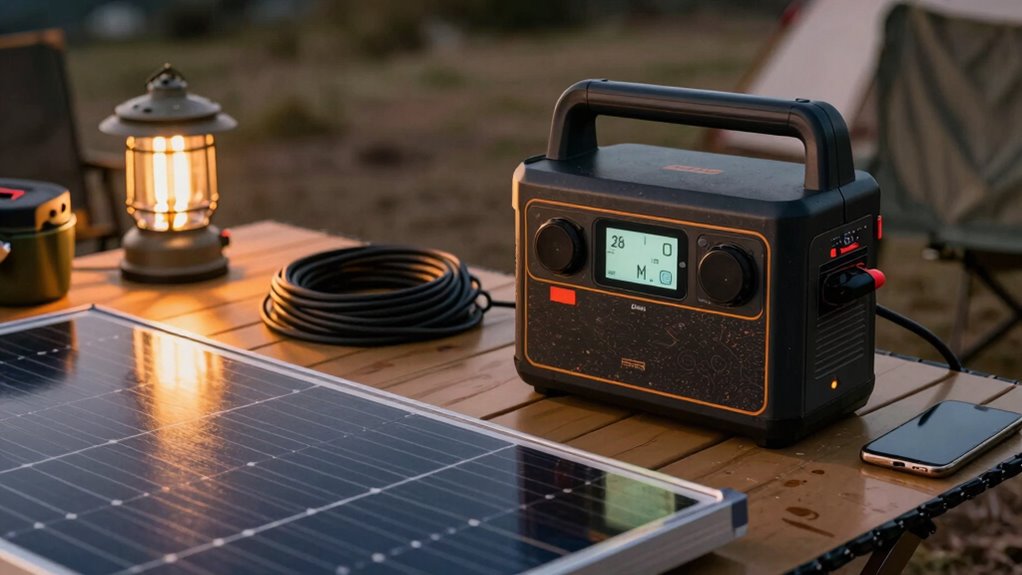

Watt hours show you exactly how much energy your camping devices can store and use, which directly affects how long they’ll run. Knowing this helps you plan better, avoid unexpected power shortages, and choose batteries that work efficiently. If you understand watt hours, you can manage your energy smarter—saving power when needed and extending your device’s run time. Stick around to discover how mastering this simple measurement can make your outdoor adventures smoother and more reliable.
Key Takeaways
- Watt hours measure actual energy capacity, directly impacting how long your devices can run off batteries during camping trips.
- Understanding watt hours helps campers choose batteries that optimize runtime and avoid unexpected power shortages.
- Efficient use of watt hours through power management extends device operation without needing frequent recharges.
- Comparing watt hours across batteries ensures better selection for balancing capacity and efficiency in outdoor equipment.
- Awareness of watt hours enables smarter energy planning, maximizing off-grid power and preventing surprises during outdoor adventures.
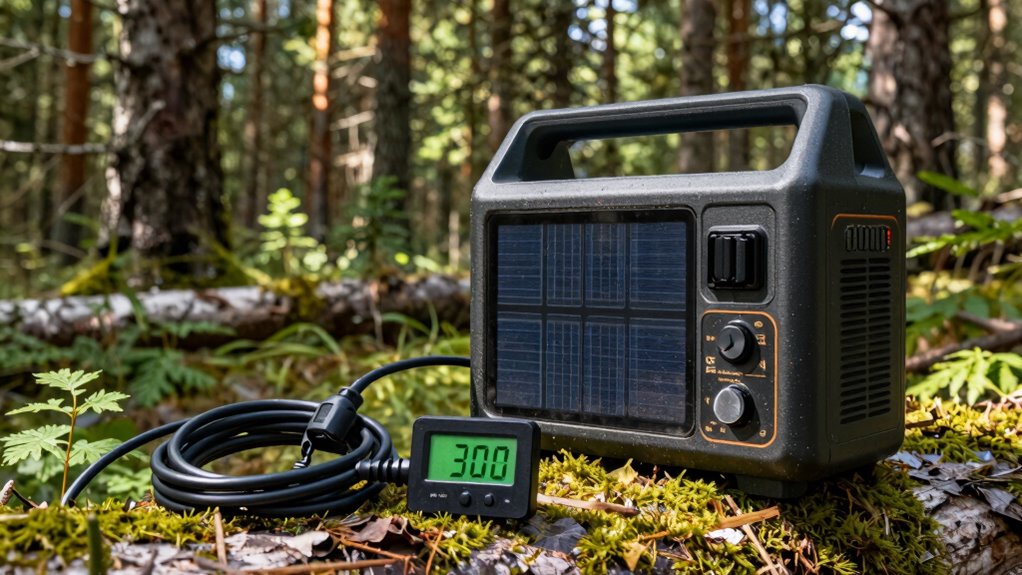
Understanding watt hours is essential because they directly measure how much energy a device can store or use over time. When you’re out in the wild, relying on batteries to keep your gear running, knowing the watt hour rating helps you gauge how long your devices will last. It’s not just about capacity; it’s about how efficiently that capacity is used. Battery efficiency plays a huge role here, because a higher efficiency means you’re getting the most out of every watt hour. If your batteries are inefficient, you’ll find yourself recharging more often, which can be a real hassle when you’re miles from power sources.
Watt hours reveal how efficiently your batteries power your devices in the wild.
Power management becomes your best friend when dealing with watt hours. Smart power management means you’re actively controlling how your devices draw energy, preventing unnecessary drain and extending your battery life. For example, turning off devices when not in use or setting screens to lower brightness can conserve watt hours and keep your gear powered longer. It’s simple, but impactful. When you understand your watt hour capacity, you can plan your energy consumption more precisely, avoiding surprises that could leave you in the dark. Additionally, understanding battery efficiency helps you select batteries that maximize energy output relative to their size.
Knowing the watt hour ratings of your batteries also helps when choosing new equipment or upgrades. You can compare different options accurately, selecting batteries that offer the best mix of capacity and efficiency for your needs. Plus, understanding watt hours allows you to develop better energy management strategies that optimize your power use in real time. If you notice your energy consumption spikes without a clear reason, you can evaluate whether it’s due to device inefficiency or poor power management. Recognizing the importance of power management techniques allows you to extend your battery life even further by optimizing your energy use. Additionally, being aware of your energy consumption habits enables you to make smarter choices that conserve power in the long run.
In the end, watt hours aren’t just a number on a label. They’re a key to understanding how your energy system works, especially when you’re away from reliable power sources. By focusing on battery efficiency and practicing smart power management, you’ll maximize your energy use, stay powered longer, and enjoy your adventures without worrying about running out of juice.

Renogy 72000mAh 266Wh 12v Power Bank with 60W PD, CPAP Battery for Camping, High Capacity Large Camping Power Bank with USB-C DC Wireless Charging & Flashlight, Backup Power Supply for Starlink Mini
- Includes CPAP Cables and Accessories: Compatible with ResMed and DreamStation devices
- High Capacity Power Bank: 72000mAh, 266Wh for extended use
- Portable and Heavy Duty: Brick-sized, 2.8 lbs, compact for capacity
As an affiliate, we earn on qualifying purchases.
As an affiliate, we earn on qualifying purchases.
Frequently Asked Questions
How Do Watt Hours Compare to Amps or Volts?
Watt hours (Wh) measure your battery capacity, showing how much energy it stores, while amps and volts relate to current and electrical potential. To understand power consumption, you need watt hours because they tell you how long your battery can run devices. Amps and volts help calculate watt hours (Watts = Volts x Amps). So, watt hours give a clearer picture of your battery’s overall capacity for your camping needs.
Can Watt Hours Help Improve RV Battery Life?
Watt hours can drastically improve your RV battery life, almost like giving it a superpower. By understanding watt hours, you optimize your power management, preventing overuse and extending battery longevity. You’ll know exactly how much energy your appliances need, avoiding surprises and damaging drain. This precise insight helps you conserve power, reduce strain, and keep your battery healthier longer—meaning more adventures and fewer roadside surprises.
Are Watt Hours Relevant for Small Portable Devices?
Yes, watt hours are relevant for small portable devices because they directly relate to battery capacity and help you understand how long your device can run. By knowing the watt hours, you can estimate power consumption and determine if a device’s battery will last through your use. This information helps you choose the right portable device and manage your power needs effectively, ensuring you don’t run out of juice unexpectedly.
How Do Watt Hours Relate to Energy Efficiency?
Think of watt hours as your energy’s yardstick—more watt hours mean your device can run longer. Battery capacity directly influences energy efficiency because larger capacity batteries store more energy, reducing the need for frequent recharges. Monitoring energy consumption helps you optimize usage, making sure you’re not wasting power. Fundamentally, understanding watt hours lets you get the most out of your devices without draining your resources faster than necessary.
Is Watt Hour Measurement Standardized Across Devices?
Watt hour measurement isn’t fully standardized across devices, so you should always check the battery capacity listed. Different devices may measure or label power consumption differently, which can make comparisons tricky. When evaluating a device, look at its watt hours to understand its total energy capacity, helping you assess how long it’ll last. This way, you get a clearer picture of the battery’s capacity and how it suits your power needs.
Conclusion
Understanding watt hours is like having a map to your power needs—you navigate your camping trip with confidence, knowing exactly how much energy you’ve got. When you pay attention to watt hours, you’re preventing surprises, ensuring your devices stay powered and your adventure stays smooth. Think of it as packing the right amount of fuel for a long journey—you wouldn’t leave without enough, and neither should you overlook watt hours when planning your camping power.