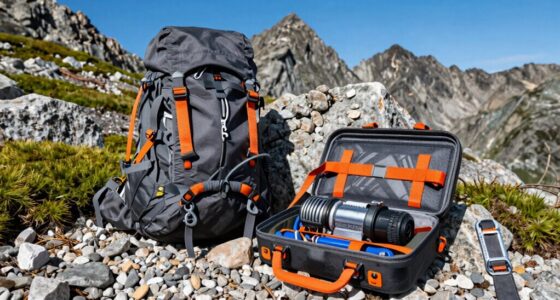


When trail running during camping adventures, choose routes that match your skill level and terrain conditions, sticking to well-marked, moderate trails for safety. Prepare by checking weather and trail info, and wear proper footwear for grip and support. Always warm up, stay hydrated, and pace yourself to prevent injuries. Keeping mindful of your surroundings helps avoid hazards and ensures an enjoyable, safe experience—continue exploring to discover more expert tips for trail success.
Key Takeaways
- Match trail difficulty to your skill level and fitness to prevent overexertion.
- Evaluate trail conditions beforehand, including weather and hazards, for safe running.
- Use maps, GPS, or trail apps to stay oriented and avoid getting lost.
- Choose well-marked, moderate terrain suitable for beginners and avoid risky, technical paths.
- Wear proper footwear with good grip and support to reduce injury risk during runs.
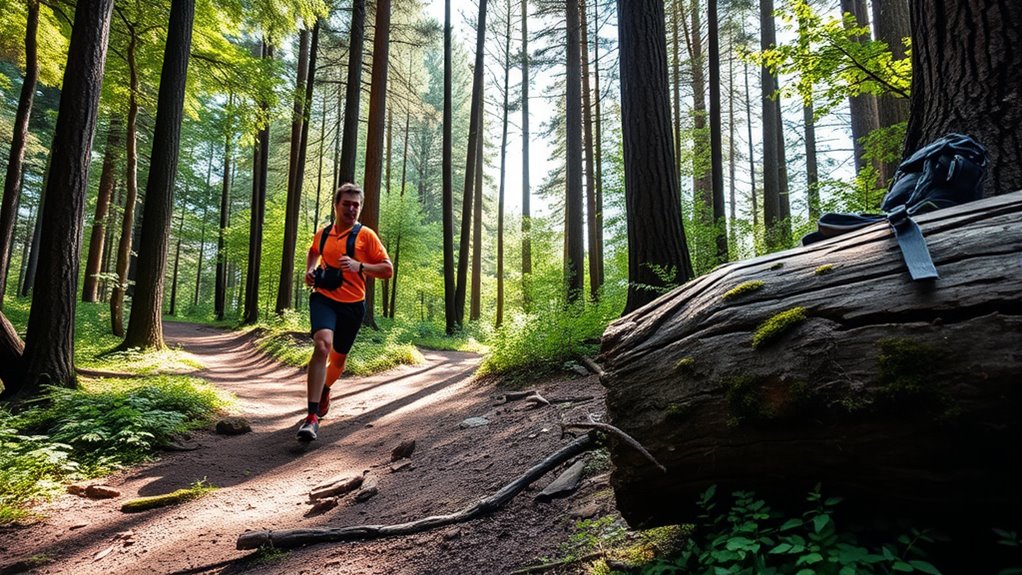
Have you ever considered how trail running can enhance your camping experience? It’s a dynamic way to explore the wilderness, boost your fitness, and deepen your connection with nature. But to maximize these benefits, you need to select the right routes and practice proper safety measures. Knowing how to choose suitable trails and avoid injury is vital, especially when balancing adventure with responsibility. Your first priority should be understanding hydration strategies. Trail running demands more than just physical effort; it depletes your fluids quickly, particularly in remote environments where water sources may be scarce. Carry lightweight, high-quality hydration packs or bottles, and plan your route around accessible water points. Drink consistently, even before you feel thirsty, to maintain ideal hydration levels. Keep an eye on the weather, as excessive heat can accelerate dehydration, while cooler conditions may deceive you into drinking less. Proper hydration prevents cramps, fatigue, and more severe health issues, guaranteeing you stay energized for your entire adventure. Equally important is mastering trail etiquette. Respect the environment and fellow trail users by staying on designated paths and yielding appropriately. If you encounter other runners, hikers, or wildlife, communicate clearly and courteously—step aside or slow down to pass safely. Avoid loud noises, which can disturb wildlife and detract from the serenity of your surroundings. Additionally, pack out all trash and minimize your impact by following Leave No Trace principles. These practices preserve the trails and guarantee that future campers and runners can enjoy the same pristine experience. When choosing routes, look for trails that match your skill level and fitness. Beginners should opt for well-marked, moderate terrain with fewer technical features. Experienced runners can challenge themselves with more rugged, varied landscapes, but always evaluate trail conditions before setting out. Stay informed about trail restrictions, closures, and potential hazards like loose rocks or narrow pathways. Use a map, GPS device, or trail app to stay oriented and avoid getting lost. Injury prevention begins with a proper warm-up and cool-down, along with consistent pacing. Don’t push beyond your limits; listen to your body and take breaks when needed. Proper footwear is vital—invest in trail runners with good grip and support to prevent slips and strains. Remember, the goal isn’t just speed but a safe, enjoyable adventure that leaves you energized rather than exhausted. Incorporating skincare innovation such as quality eye patches can help you recover faster after long runs. By integrating sound hydration strategies and practicing trail etiquette, you’ll elevate your trail running experience and guarantee it remains a sustainable, thrilling part of your camping journey.

Lightweight Hydration Backpack, Running Backpack with 2L Water Bladder, Hydro Water Daypack for Cycling Hiking Rave for Men Women
- Lightweight Design: Only 8.5 oz with 2L bladder
- Durable Waterproof Material: Tear-resistant, PU coated nylon fabric
- Leakproof Water Bladder: BPA-free, food-grade PEVA, secure hose clamp
As an affiliate, we earn on qualifying purchases.
As an affiliate, we earn on qualifying purchases.
Frequently Asked Questions
What Gear Is Essential for Trail Running in Remote Areas?
You need trail running shoes with solid grip and support to handle rugged terrain. Carry a hydration pack to stay hydrated during your adventure. Include a lightweight first aid kit, a map or GPS device, and a whistle for emergencies. Don’t forget energy gels or snacks for stamina. With this gear, you’re prepared to tackle remote trails confidently, ensuring safety and endurance for an unforgettable trail running experience.
How Can I Identify and Avoid Dangerous Wildlife on Trails?
Imagine a silent trail suddenly alive with movement—your best defense is wildlife detection. Stay alert, make noise, and carry a whistle to alert animals of your presence. Keep your distance if you see wildlife, and never approach or feed them. Follow safety precautions like staying on marked paths and avoiding dawn or dusk runs. With vigilant awareness, you turn potential danger into a safe, exhilarating adventure, respecting nature’s boundaries.
What Should I Do if I Get Lost During a Run?
If you get lost during a run, stay calm and use your navigation skills to find your way. Stop and assess your surroundings, retrace your steps if possible, and look for familiar landmarks. If you’re unable to find your route, establish your location and create a signal for rescue—use a whistle or mirror for emergency signaling. Keep your phone charged, conserve energy, and wait in a safe, visible spot until help arrives.
How Can I Improve My Trail Running Endurance Quickly?
Think of your endurance as a mighty river ready to surge. To quicken its flow, embrace interval training—alternate intense sprints with recovery. Cross training adds new currents, strengthening muscles and preventing fatigue. Push your limits with consistent, adventurous effort, fueling your progress like a seasoned explorer. With dedication, you’ll expand your trail-running horizon, conquering longer distances with agility and strength, transforming your stamina into an unstoppable force.
Are There Specific Nutrition Tips for Long Trail Runs?
For long trail runs, prioritize nutrition with trail snack ideas like energy gels, nuts, or dried fruit to maintain stamina. Hydration strategies are essential—sip water regularly and consider electrolyte drinks to replenish minerals lost through sweat. Fuel your adventure with consistent intake, avoiding stomach issues. Keep your nutrition simple, portable, and efficient, so you stay energized and ready to conquer rugged terrains without hitting the wall.
Conclusion
By choosing the right trails and prioritizing safety, you open a world of adventure and discovery. Imagine Sarah, a seasoned camper who ignored her training plan and pushed too hard on uneven terrain. She ended up sidelined with a twisted ankle, missing out on the breathtaking sunrise. Stay vigilant, plan your routes carefully, and listen to your body. With preparation and caution, you’ll forge unforgettable memories while keeping injuries at bay—ready for tomorrow’s next adventure.