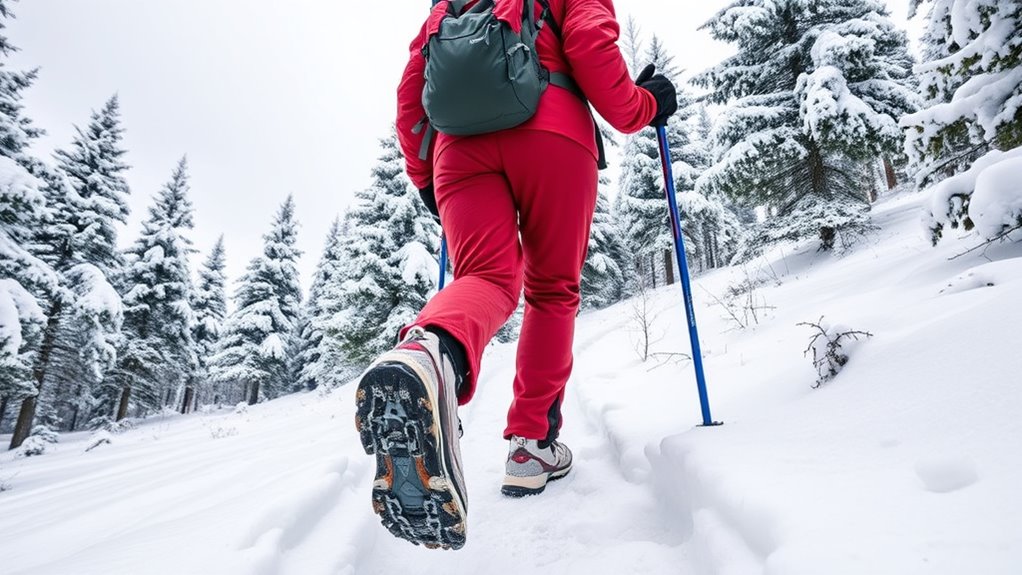

When hiking in winter, gear up with moisture-wicking base layers, insulated mid-layers, and waterproof shells to stay warm and dry. Equip waterproof boots with traction aids like crampons to navigate icy patches safely. Always check weather forecasts and stick to well-marked trails to avoid dangerous conditions. Carry emergency supplies, and inform someone of your plans. For a safer, more enjoyable adventure, exploring tips on gear, safety, and trail choices can make all the difference.
Key Takeaways
- Wear layered, moisture-wicking clothing, waterproof outer shells, and insulated accessories to stay warm and dry during winter hikes.
- Use waterproof hiking boots with traction devices like crampons or microspikes for stability on icy or snowy terrain.
- Carry navigation tools, extra food and water, and emergency gear, and inform someone of your plans for safety.
- Check weather forecasts, avoid severe conditions, and stick to well-marked trails to reduce risks.
- Adjust clothing layers based on exertion, slow down on icy patches, and prioritize safety over completing the hike.
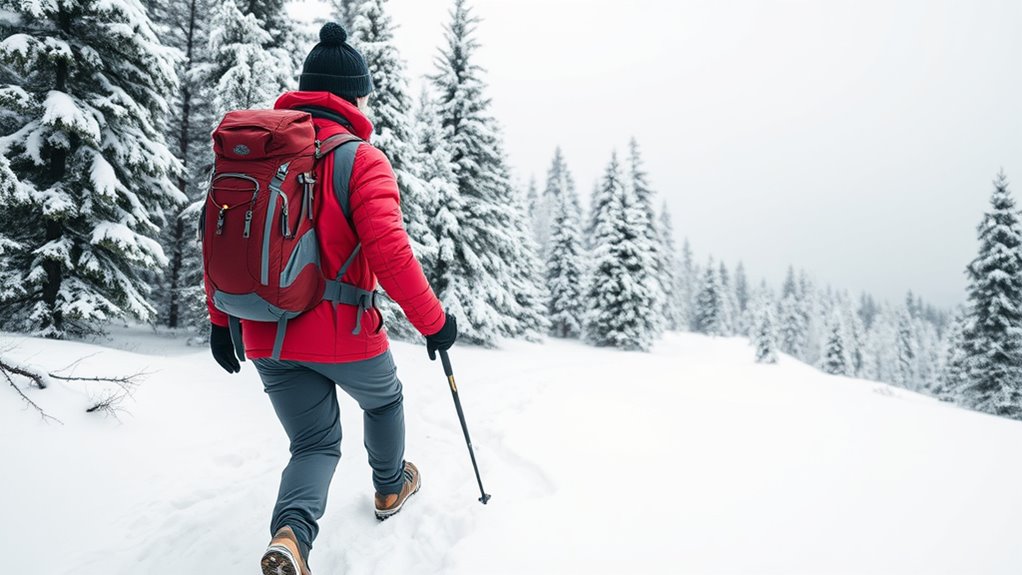
Hiking in winter offers a unique adventure that transforms familiar trails into a shimmering wonderland. As you step onto snow-covered paths, the landscape sparkles with icy brilliance, inviting you to explore a quieter, more serene world. But to fully enjoy this season’s beauty, you need the right winter hiking gear. Proper clothing is essential—think moisture-wicking base layers, insulating mid-layers, and waterproof outer shells that keep you warm and dry. Don’t forget insulated gloves, a hat, and thermal socks to prevent frostbite. Footwear is equally important; choose waterproof hiking boots with good traction, or add crampons or microspikes to your shoes for icy patches. These additions give you confidence on slick surfaces and help prevent slips and falls.
Equipping yourself with the right winter hiking gear isn’t just about comfort; it’s about safety. Pack essentials like a map, compass, and a fully charged phone, but don’t rely solely on technology—winter conditions can interfere with signals. Carry extra food and water, as cold temperatures can dehydrate you, and your energy needs increase. A headlamp or flashlight is a must, even if you plan to finish your hike before dark, since winter days are shorter. An emergency kit with a space blanket, first aid supplies, and a multi-tool can be lifesavers if things go wrong. Layering is key—dress in a way that allows you to adjust your clothing as your exertion level fluctuates, preventing overheating or chilling. Additionally, choosing HEPA filtration air purifiers can improve indoor air quality during your recovery rest, especially if you suffer from allergies that may be exacerbated by winter indoor air.
When planning your winter hike, trail safety tips are essential. Always check the weather forecast before heading out, and avoid hiking in severe storms or blizzards. Stick to well-marked trails that are easier to navigate in snow, and tell someone your plans, including your expected return time. If you encounter icy patches or deep snow, slow down and take deliberate steps to maintain balance. Be aware of signs of hypothermia and frostbite, and turn back if conditions worsen or if you’re feeling overly cold, tired, or disoriented. Keep your trail access in mind—some routes may be closed or unsafe during winter months—so research ahead. Most importantly, trust your instincts; if something doesn’t feel right, it’s better to retreat than risk injury. With the right gear and safety precautions, winter hiking can be an exhilarating experience that rewards you with breathtaking scenery and a profound sense of accomplishment.

BAGAIL 8 Set Packing Cubes Luggage Packing Organizers for Travel Accessories-Cream
- Premium Durable Fabric: Resists wrinkles, stains, and wear
- Water-Repellent Material: Protects clothes from spills and leaks
- Lightweight Design: Reduces luggage weight and easy to carry
As an affiliate, we earn on qualifying purchases.
Frequently Asked Questions
How Do I Prevent Frostbite During Winter Hikes?
To prevent frostbite during winter hikes, you should use layering techniques to keep your skin warm and dry. Regularly check for frostbite symptoms like numbness, tingling, or pale skin, and act quickly if you notice them. Keep your extremities covered with insulated gloves and warm socks, and stay active to promote circulation. Staying dry and sheltered from the wind also helps you stay safe in cold conditions.
What Are the Best Trail Conditions for Winter Hiking?
Imagine a winter trail as a glassy mirror, crisp and inviting, but only if it’s well-maintained and safe. Opt for trails with clear, packed snow and minimal ice, avoiding sections prone to avalanches or unstable ice. Good trail maintenance guarantees safe footing, while staying alert for wildlife encounters keeps your hike lively. Choose routes that are well-traveled, marking the path through winter’s silence, for a safe, scenic adventure.
How Should I Plan for Emergency Shelter?
You should always pack emergency supplies like a thermal blanket, extra clothing, and a headlamp. For shelter alternatives, consider carrying a lightweight tent or bivvy bag, and know how to build a snow shelter if needed. Plan your route carefully, check weather forecasts, and inform someone of your plans. Being prepared means you can quickly create a safe refuge if unexpected weather or injury strikes, keeping you warm and protected.
What Are Signs of Hypothermia to Watch For?
You’ll notice signs of hypothermia like shivering, confusion, and sluggish movements. Your layered clothing helps keep you warm, but if you see someone acting disoriented or unusually tired, it’s crucial to respond quickly. Keep an eye out for pale skin and numb extremities—these indicate frostbite prevention is essential. Recognizing these signs early can make all the difference in keeping you safe and warm during winter hikes.
How Can I Navigate in Snow-Covered Landscapes?
Think of yourself as a snow explorer, charting icy seas with trusty navigation tools like a compass and GPS. Master snowshoe techniques to glide smoothly, avoiding getting lost in the white wilderness. Keep track of landmarks, use trail markers, and stay aware of subtle changes in terrain. With sharp navigation skills and proper snowshoeing, you’ll confidently traverse snow-covered landscapes, turning winter’s blank canvas into your adventure playground.
Conclusion
So, as you lace up your boots and step into the winter wonderland, remember you’re carving your own story through icy trails and shimmering snow. With the right gear and cautious heart, you become a brave explorer dancing on a frozen canvas. Embrace the quiet magic around you, let the crisp air fuel your spirit, and trust your instincts—each step is a brushstroke in your winter adventure masterpiece. Happy hiking!