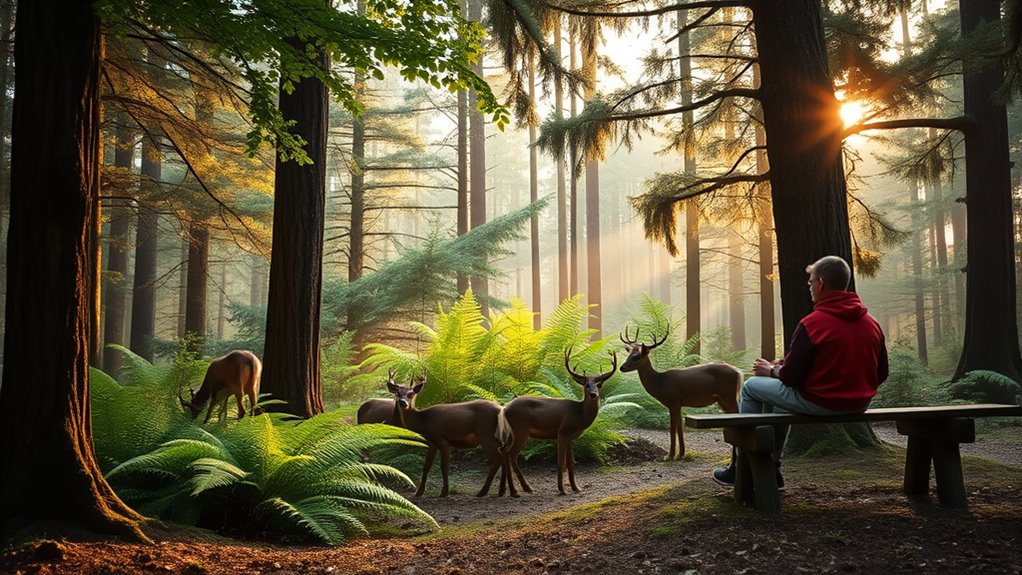

When wildlife viewing, keep a safe distance and avoid sudden moves or loud noises that could startle animals. Respect their space and observe quietly, ensuring your presence doesn’t disturb their routines or habitats. Use a telephoto lens instead of chasing or approaching animals closely. Leave no trace by staying on trails and disposing of trash responsibly. By acting responsibly, you help preserve these creatures and their environment—discover more ways to enjoy nature ethically as you continue your journey.
Key Takeaways
- Keep a safe, respectful distance from animals and avoid sudden movements or loud noises.
- Use binoculars or telephoto lenses to observe wildlife without disturbing them.
- Stay on designated trails and do not attempt to approach or feed animals.
- Refrain from using flash photography and do not chase or follow wildlife for better shots.
- Leave no trace by packing out trash and maintaining the natural habitat for future visitors.

Camping offers a unique opportunity to observe wildlife in their natural habitat, but it requires respectful awareness and responsible behavior. As a camper, you play a essential role in ensuring that your presence does not disturb the animals or alter their natural animal behavior. When approaching wildlife, maintain a safe and respectful distance, avoiding sudden movements or loud noises that could startle animals or cause them to flee. Observing animals quietly and patiently allows you to witness genuine behaviors without interference, fostering a deeper understanding of their natural routines.
Respect for animal behavior is central to ethical wildlife viewing. Remember, animals are not exhibits or entertainment; they are living beings with instincts and needs. Your actions should never cause stress, disruption, or danger to the creatures you’re observing. For example, approaching too closely or making direct eye contact can be perceived as threatening, leading animals to hide or become aggressive. By respecting their space, you help preserve their natural behavior and ensure they remain undisturbed in their environment.
Photography ethics are equally important in responsible wildlife viewing. While capturing images can be rewarding, it’s essential to prioritize the well-being of the animals over your desire for a perfect shot. Use a telephoto lens to maintain a safe distance, and avoid using flash photography, which can startle or disorient animals. Never chase or follow animals to get a better shot; instead, be patient and wait for natural moments to unfold. Remember, your goal is to observe and document without causing harm or disturbance.
Practicing responsible photography also involves respecting habitat integrity. Stay on designated trails to prevent trampling vegetation or disturbing the landscape. Avoid leaving behind trash or food scraps that could attract animals inappropriately or introduce invasive species. By leaving no trace, you help maintain the habitat’s health and ensure future visitors can enjoy observing wildlife in a pristine environment.
Additionally, understanding risk assessment when viewing wildlife can help you recognize potential dangers and respond appropriately, ensuring both your safety and theirs.
Ultimately, ethical wildlife viewing hinges on your awareness and respect for the animals and their environment. By understanding their behavior, adhering to photography ethics, and practicing responsible trail use, you foster a positive relationship with nature. Your mindful approach not only enriches your experience but also contributes to the conservation of wildlife and their habitats, ensuring they thrive for generations to come.

Canon EF 75-300mm f/4-5.6 III Telephoto Zoom Lens for Canon SLR Cameras
- Focal Length Range: 75-300mm telephoto zoom
- Maximum Aperture: f/4-5.6
- Compatibility: For Canon SLR cameras
As an affiliate, we earn on qualifying purchases.
As an affiliate, we earn on qualifying purchases.
Frequently Asked Questions
How Can I Identify Which Animals Are Safe to Observe?
You can identify safe animals to observe by watching their behavior and habitat indicators. Look for animals that seem calm, curious, and unthreatening, avoiding aggressive or defensive actions. Pay attention to their habitat, choosing areas where animals appear comfortable and undisturbed. Respect their space and avoid sudden movements. Always remember, observing from a distance guarantees both your safety and the well-being of the animals, fostering responsible wildlife viewing.
What Should I Do if I Encounter a Distressed or Injured Wildlife?
Imagine you’re in a wildlife rescue movie—what do you do? First, keep your distance and avoid touching the animal to prevent injury and stress. If it appears injured, contact a local wildlife rescue organization immediately. Do not attempt to treat it yourself. Your goal is injury prevention and ensuring the animal gets proper care. Respect their space, minimize disturbance, and let professionals handle the situation responsibly and compassionately.
Are There Specific Times of Day Best for Ethical Wildlife Viewing?
The best viewing times align with wildlife activity patterns, typically dawn and dusk. During these periods, animals are most active and less disturbed by human presence. To observe responsibly, arrive early or stay late, avoiding midday when many species rest. Respect their space, move quietly, and use binoculars. By choosing these times, you support ethical viewing and minimize disruption to wildlife’s natural routines.
How Can I Minimize My Environmental Impact While Watching Animals?
Ever wonder how you can enjoy wildlife responsibly? To minimize your impact, follow eco-friendly practices like keeping a safe distance, staying on designated trails, and avoiding loud noises. Support wildlife conservation efforts by not feeding animals or leaving trash behind. By acting responsibly, you help preserve their natural habitats and ensure future generations can experience these wonders too. Isn’t protecting nature something we all should endeavor for?
What Are the Legal Restrictions on Wildlife Photography in Protected Areas?
In protected areas, you need to follow wildlife photography regulations and obtain necessary protected area permits. These rules help preserve habitats and animals, so always check with park authorities before photographing wildlife. Avoid using flash or intrusive equipment, and respect wildlife distances. By adhering to these guidelines, you guarantee responsible photography that supports conservation efforts and minimizes disturbance, helping you enjoy and share nature responsibly.
Conclusion
By observing wildlife responsibly, you honor both the animals and their habitat, understanding that true connection comes with respect. While capturing fleeting sights, remember that your presence can disturb delicate ecosystems, just as silence and patience can reveal their secrets. Respecting nature isn’t just about avoiding harm; it’s about acknowledging that you’re a guest in their world. When you choose ethical viewing, you preserve these wonders for others—and yourself—to cherish, fostering a deeper, more meaningful bond with the wild.