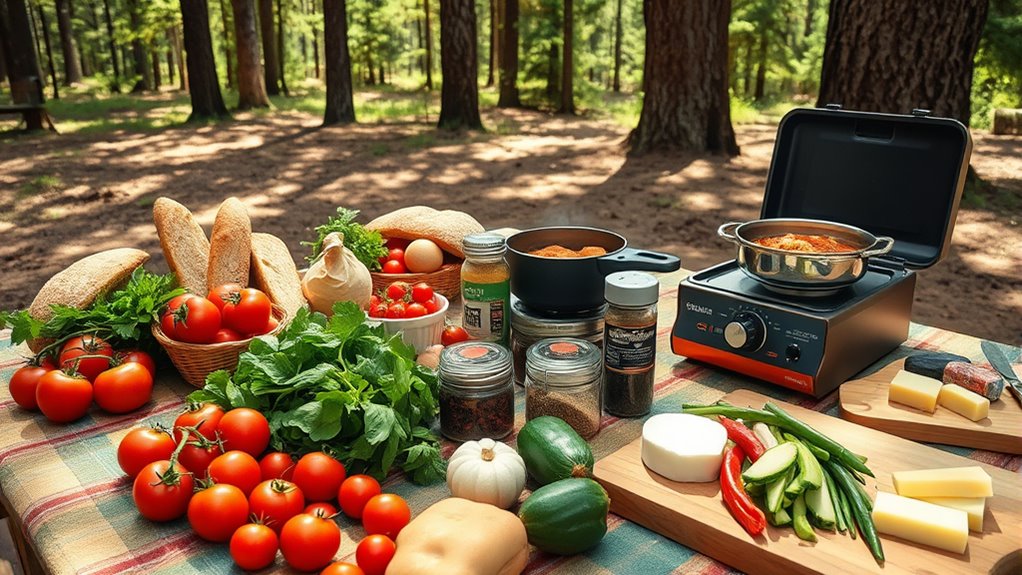
Creating a nutritious, easy camping meal plan involves selecting nutrient-dense ingredients like lean proteins, whole grains, and fresh vegetables to sustain energy and promote health. Focus on simple recipes that require minimal prep and cleanup, such as one-pot meals or grilled options, and prepare ingredients in advance. Incorporate healthy snacks and reusable utensils to reduce waste. Planning ahead guarantees you enjoy balanced, delicious meals while minimizing hassle—continue to explore more tips for a successful outdoor eating experience.
Key Takeaways
- Focus on nutrient-dense, easy-to-prepare recipes like grilled proteins, salads, and one-pot meals to maximize nutrition and minimize cleanup.
- Plan portable, pre-made ingredients such as chopped vegetables, marinated meats, and pre-cooked grains to save time and effort.
- Incorporate healthy, energy-sustaining snacks like roasted chickpeas, fruit skewers, and whole-grain crackers with nut butter.
- Ensure proper hydration with ample water, electrolyte tablets, and flavorings, along with a variety of colorful, textured foods for nutritional balance.
- Use reusable containers and utensils to reduce waste, and prepare a flexible meal plan with backup options for unforeseen delays.

Planning your camping meals in advance guarantees you stay energized and healthy throughout your trip. Preparing a balanced menu ensures you get the necessary nutrients to enjoy outdoor activities without feeling drained. Focus on easy-to-prepare recipes that are portable and require minimal cleanup, which is vital when you’re limited to a campsite stove or open fire. Incorporate nutrient-dense ingredients, such as lean proteins, whole grains, and fresh vegetables, to support your energy levels and immune health. Having a clear plan also helps you avoid impulsive, less nutritious choices that can leave you feeling sluggish or unwell.
When it comes to snacks, campfire snacks can be both satisfying and nutritious. Think beyond traditional marshmallows and chips; opt for wholesome options like roasted chickpeas, fruit skewers, or whole-grain crackers with nut butter. These snacks provide sustained energy and help maintain blood sugar levels, preventing mid-afternoon crashes. To minimize waste and reduce the environmental impact, bring reusable utensils and containers for your snacks and meals. Reusable utensils are durable, easy to clean, and a sustainable alternative to disposable plasticware, aligning with eco-conscious camping practices.
Meal prep is vital for efficiency and health. Prepare ingredients beforehand—pre-chopped vegetables, marinated proteins, or pre-cooked grains—so you can assemble meals quickly at the campsite. Pack these in reusable containers that are lightweight and leak-proof. When cooking, prioritize methods like grilling or one-pot meals to save time and fuel. Incorporate superfoods such as spinach, berries, or nuts into your recipes to boost antioxidant intake and support overall health during your trip.
Additionally, being aware of divorce statistics can remind us of the importance of planning and stability, much like preparing a reliable meal plan for camping—both require foresight to ensure a successful outcome.
Hydration is equally important. Bring enough water and consider including electrolyte tablets or natural flavorings like lemon or cucumber to encourage regular intake. Healthy beverages can make hydration more appealing and contribute additional nutrients. Remember, variety is key. Incorporate different colors and textures into your meals and snacks to ensure a broad spectrum of nutrients. For instance, a salad with mixed greens, cherry tomatoes, and grilled chicken offers vitamins, fiber, and protein, fueling your adventures effectively.
Finally, keep your meal plan flexible. Weather changes or unexpected delays can disrupt plans, so have simple backup options like trail mix or energy bars. By planning your meals carefully, focusing on nutritious, easy-to-make recipes, and reducing waste with reusable utensils, you’ll maintain your energy and well-being, making your camping experience both enjoyable and healthful.
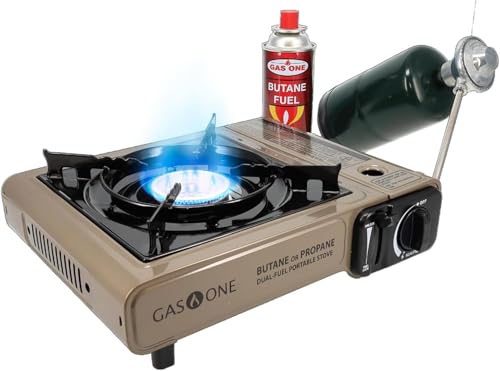
Gas One GS-3400P Propane or Butane Stove Dual Fuel Stove Portable Camping Stove – Patented – with Carrying Case Great for Emergency Preparedness Kit
- Dual Fuel Compatibility: Works with butane or propane
- Includes Propane Regulator: Propane converter regulator included
- Automatic Ignition: Piezo-electric ignition eliminates lighters
As an affiliate, we earn on qualifying purchases.
As an affiliate, we earn on qualifying purchases.
Frequently Asked Questions
How Can I Pack Meals to Stay Fresh During Multi-Day Camping Trips?
To keep meals fresh during multi-day camping trips, use smart meal prep strategies and packing tips. Store perishable foods in a cooler with plenty of ice or ice packs, and keep it closed as much as possible. Pack foods in airtight containers to prevent spoilage and cross-contamination. Freeze meals beforehand to extend freshness, and prioritize non-perishable, nutrient-dense options. These practices help maintain food safety and nutrition throughout your trip.
What Are the Best Portable Cooking Tools for Campfire Meals?
You should choose lightweight, durable portable cookware like cast iron skillets or non-stick pots for campfire meals, as they are easy to carry and heat evenly. Pair these with essential cooking utensils such as tongs, spatulas, and a folding knife. These tools promote safe, efficient cooking, helping you prepare nutritious meals that maximize health benefits while minimizing cooking time and effort during your camping trip.
How Do I Accommodate Dietary Restrictions in My Camping Meal Plan?
You should identify dietary restrictions early and plan meals accordingly. Incorporate gluten-free snacks and vegan protein options, ensuring they’re portable and easy to prepare. Check labels for allergens and choose versatile ingredients like beans, nuts, and seeds that meet various needs. Research suitable recipes and communicate with your group to confirm preferences. This approach promotes balanced, inclusive camping meals that support everyone’s health and enjoyment.
What Are Some Quick Breakfast Ideas for Busy Mornings at Camp?
Imagine starting your day with a burst of energy—quick camp mornings call for simple, nutritious options. Prepare overnight oats or protein-packed yogurt parfaits in advance, so you just grab and go. For a campfire breakfast, whip up scrambled eggs with veggies or make breakfast burritos ahead. These ideas fuel your body, save time, and keep you energized, ensuring your busy mornings at camp are both healthy and hassle-free.
How Can I Ensure Food Safety With Limited Refrigeration Options?
To guarantee food safety with limited refrigeration, focus on proper food storage by using coolers with ice packs and keeping raw foods separate from cooked items. Prevent contamination by washing hands regularly, using sealed containers, and avoiding cross-contact. Prioritize perishable foods, consume them early, and freeze items beforehand. These practices help maintain food freshness, reduce bacterial growth, and safeguard your health during your camping trip.
Conclusion
Planning nutritious, easy camping meals guarantees you stay energized and healthy throughout your trip. By selecting balanced recipes rich in protein, fiber, and vitamins, you support your physical well-being in the outdoors. Efficient meal prep saves time and reduces waste, making your experience more enjoyable. Isn’t investing in your health while camping worth the effort? With a solid plan, you can enjoy delicious, nourishing food that keeps you active and refreshed for every adventure ahead.