
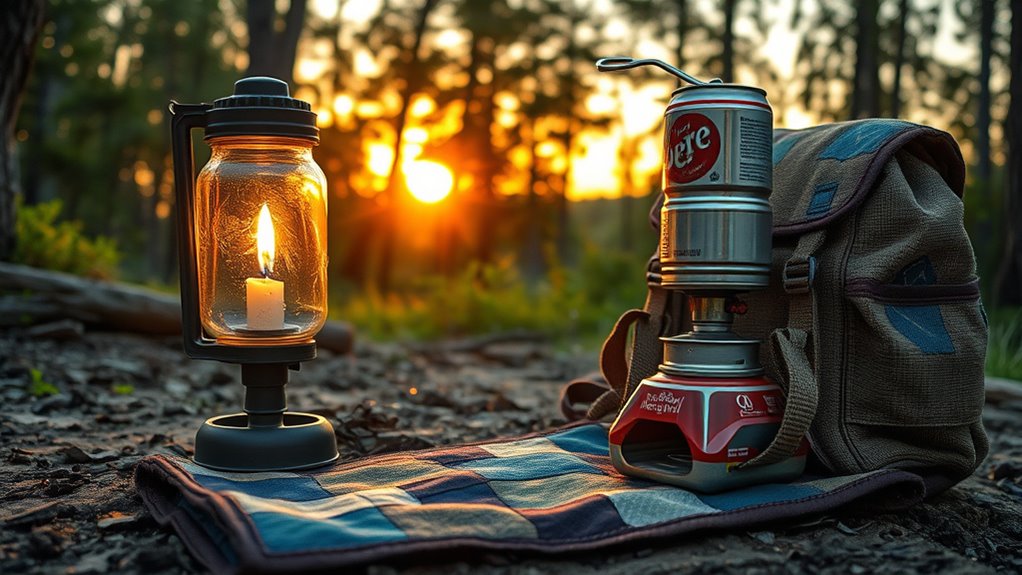

You can turn household waste into practical outdoor tools by upcycling everyday items. For example, use old glass jars or plastic bottles as solar lanterns to reduce battery waste, or craft utensils from bamboo or cornstarch to cut plastic pollution. Repurposing household objects like tin cans or fabric scraps into camping gear extends their life and minimizes waste. Embracing eco-conscious upcycling practices helps you enjoy the outdoors sustainably—keep exploring to discover more innovative ways to create with what you have.

Get travel and outdoor gear delivered free — and shop member deals
- Fast, free delivery on millions of items
- Access to Prime Big Deal Days deals on October 6–7
- Prime Video, Amazon Music and more included
Key Takeaways
- Repurpose household items like tin cans and jars into lanterns, storage containers, or cooking utensils for eco-friendly camping.
- Create biodegradable utensils from household bamboo, cornstarch, or wheat to reduce plastic waste during outdoor trips.
- Upcycle fabric scraps into reusable napkins or organizers, extending their utility and reducing waste.
- Repair or modify old gear, such as turning broken tents into picnic mats or plastic containers into tool holders.
- Incorporate renewable energy solutions like solar-powered lanterns made from repurposed materials to light up campsites sustainably.
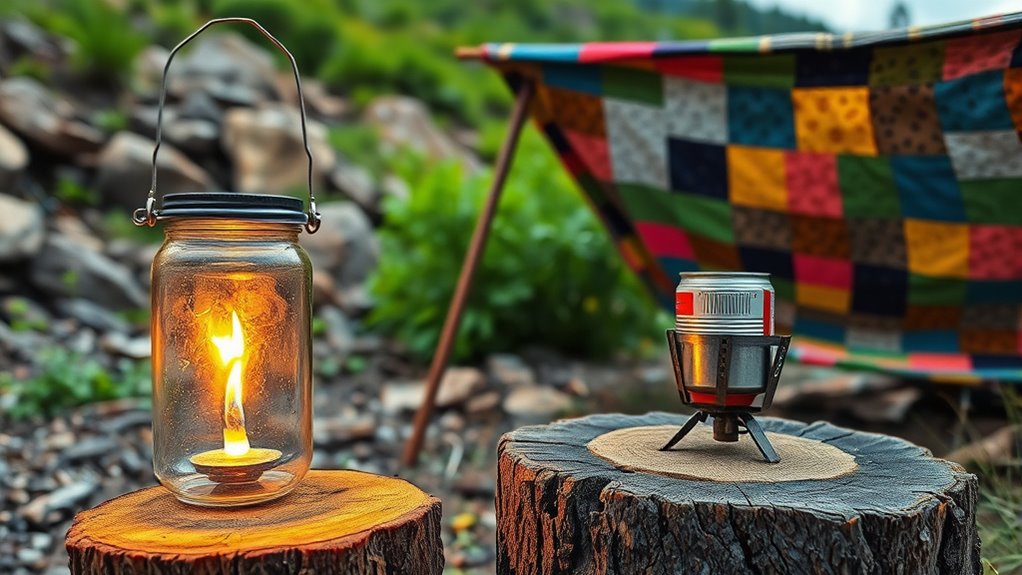
If you’re looking to reduce your environmental impact while enjoying the outdoors, upcycled camping gear offers a sustainable solution. By transforming household items into functional outdoor tools, you can minimize waste and lower your ecological footprint. One popular way to do this is by creating or sourcing solar-powered lanterns made from repurposed materials. These lanterns harness solar energy during the day, providing eco-friendly illumination at night without relying on disposable batteries or fossil fuels. You might repurpose old glass jars or plastic bottles as the casing for solar-powered lights, adding a small solar panel and LED bulb inside. Not only does this reduce plastic waste, but it also ensures you have reliable lighting that won’t harm the environment. Using solar-powered lanterns means you won’t need to carry extra batteries or worry about disposing of battery waste, making your camping experience greener and more sustainable. Additionally, utilizing renewable energy sources like solar power helps reduce reliance on fossil fuels, further benefiting the environment.
Similarly, biodegradable utensils can be crafted from household items or purchased as eco-friendly alternatives. Traditional plastic utensils take hundreds of years to decompose, polluting ecosystems and harming wildlife. Instead, consider repurposing bamboo chopsticks or using utensils made from biodegradable materials like cornstarch or wheat. If you’re a DIY enthusiast, you might even craft utensils from natural materials such as wood or biodegradable composites, ensuring they break down quickly after use. These utensils are lightweight, durable, and completely compostable, helping you reduce plastic waste considerably. When you bring biodegradable utensils on your camping trips, you’re making a conscious choice to minimize your environmental impact and promote sustainability.
Upcycling isn’t just about repurposing items; it’s about rethinking how you approach your outdoor gear. You can turn old fabric scraps into reusable cloth napkins or repair and reuse broken camping gear instead of throwing it away. By doing so, you extend the life of items and avoid unnecessary waste. With a little creativity, household items like tin cans, old clothing, or plastic containers can be transformed into storage solutions or cooking tools. Incorporating these eco-conscious practices into your camping routine not only benefits the planet but also encourages a more mindful and resourceful approach to outdoor adventures. Upcycled gear demonstrates that you don’t need to buy new, expensive equipment to enjoy the outdoors; instead, you can innovate with what you already have, making your camping experience both sustainable and rewarding.
solar lanterns made from glass jars
As an affiliate, we earn on qualifying purchases.
As an affiliate, we earn on qualifying purchases.
Frequently Asked Questions
Can Upcycled Camping Gear Withstand Extreme Weather Conditions?
Upcycled camping gear can withstand extreme weather if made from weather-resistant materials and built with durability in mind. You should look for sturdy, eco-friendly materials like repurposed metal, high-quality plastics, or treated fabrics that resist water, wind, and temperature changes. While some upcycled gear offers decent durability, it’s essential to assess each item’s material quality. Proper maintenance and cautious use will help guarantee your gear remains reliable in harsh conditions.
Are There Safety Concerns With Using Household Items Outdoors?
Did you know over 60% of outdoor injuries relate to fire hazards or material safety issues? When using household items outdoors, safety concerns are real. You must guarantee materials won’t ignite easily or release harmful fumes. Always check for weather resistance and proper insulation. Eco-conscious campers prioritize safe, sustainable choices, so double-check your upcycled gear’s durability and safety before venturing out, reducing risks and protecting both yourself and the environment.
How Durable Is Upcycled Camping Equipment Compared to Store-Bought Gear?
Upcycled camping gear can be surprisingly durable, especially when you perform DIY repairs and reinforce weak points. While it might not match store-bought equipment in longevity, its aesthetic appeal adds a unique, eco-conscious charm. You’ll find that with proper care, upcycled items can withstand outdoor conditions, making them a sustainable choice. Just remember to regularly inspect and maintain your gear to make certain of safety and durability on your adventures.
What Are the Best Household Items to Repurpose for Camping?
You can repurpose household items like old jars for storage, tin cans for cooking, and soft drink bottles as water containers. DIY solutions and creative ideas like turning a sturdy cardboard box into a makeshift table or using fabric scraps for insulation promote eco-conscious camping. These upcycled tools reduce waste, lower costs, and add a personal touch to your outdoor experience. Embrace resourcefulness and minimize your environmental impact with these sustainable alternatives.
Is Upcycling Camping Gear Environmentally Friendly?
Yes, upcycling camping gear is environmentally friendly. When you recycle benefits like reducing waste and conserving resources, you’re making a real difference. Plus, it offers significant cost savings, so you can enjoy the outdoors without harming the planet. By repurposing household items, you reduce dependence on new products, cutting down on pollution and energy use. It’s a simple, impactful way to stay eco-conscious while exploring nature.
Conclusion
By choosing to upcycle household items into camping gear, you become a steward of the Earth, transforming waste into adventure. Every repurposed tool is like planting a seed of sustainability in your outdoor journey, blooming into a greener future. Imagine your campsite as a lush forest, thriving because of your mindful choices. Embrace these eco-friendly hacks, and let your outdoor adventures leave only footprints of positive change, inspiring others to see trash as treasure.
Fall Picks
fall essentials
As an affiliate, we earn on qualifying purchases.