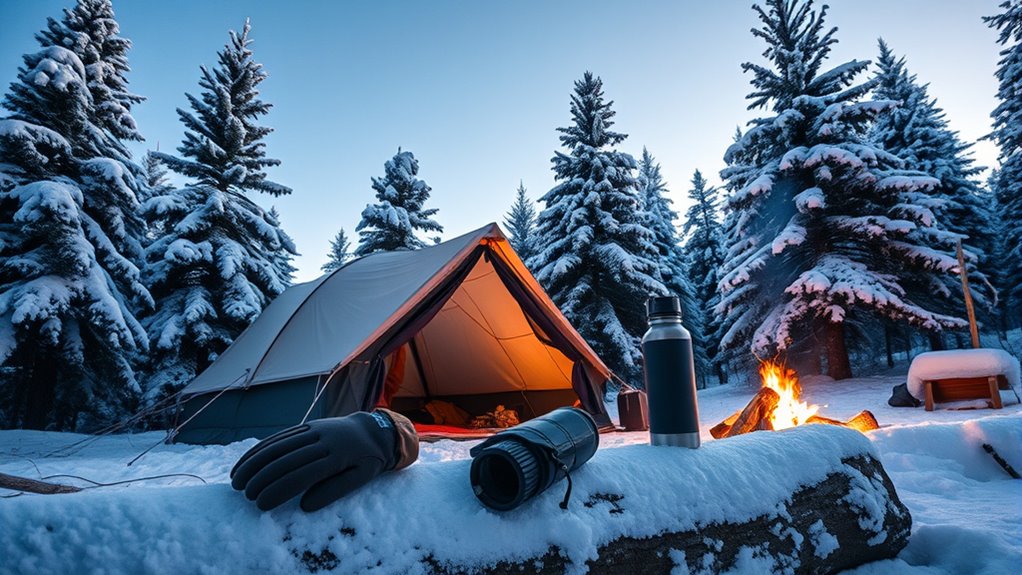

To stay warm and safe during winter camping, dress in layered, moisture-wicking, insulated, and waterproof gear. Build safe campfires on non-flammable ground and fully extinguish them when finished. Use high-quality, cold-rated sleeping bags and winter tents, and carry insulated bottles to prevent liquids from freezing. Monitor weather conditions and plan your route carefully. Implement all safety routines diligently—proper preparation is key. Keep careful strategies in mind to ensure your safety in harsh environments. Continue to learn how to enhance your winter camping safety.

Get travel and outdoor gear delivered free — and shop member deals
- Fast, free delivery on millions of items
- Access to Prime Big Deal Days deals on October 6–7
- Prime Video, Amazon Music and more included
Key Takeaways
- Layer clothing with moisture-wicking base layers, insulating mid-layers, and waterproof outer shells to retain heat and stay dry.
- Use high-quality, winter-rated sleeping bags and tents designed for cold conditions to ensure proper insulation and protection.
- Keep campfires small, controlled, and built on non-flammable ground; fully extinguish fires before leaving to prevent wildfires.
- Stay hydrated with insulated bottles, and avoid dehydration which can impair body heat regulation in cold environments.
- Monitor weather forecasts and environmental conditions regularly to adjust plans and avoid storms or extreme cold exposure.

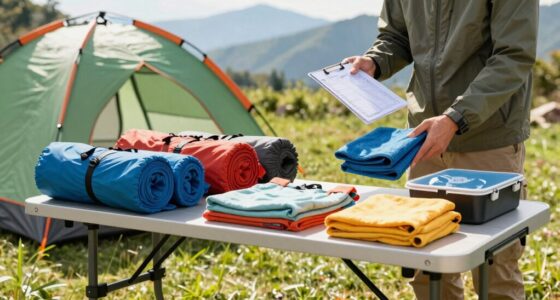
Winter camping requires careful preparation and awareness of unique hazards to guarantee safety in cold, unpredictable conditions. Your success hinges on selecting the right winter gear, understanding specific safety protocols, and managing environmental risks effectively. Proper winter gear is essential; it must be layered, moisture-wicking, insulating, and waterproof. Base layers should be breathable and snug, while insulating layers trap heat, and waterproof outer shells shield you from snow and wind. Don’t forget thermal gloves, insulated boots, and a warm hat—exposed skin rapidly loses heat in freezing temperatures. Assuring your gear is in top condition before heading out minimizes the risk of frostbite and hypothermia.
Proper layered gear and insulation are key to safe winter camping.
Campfire safety is a vital component of winter camping. A campfire provides warmth, a means to cook, and psychological comfort, but it must be managed with precision to prevent accidents. Always build your fire on bare, non-flammable ground away from overhanging branches and snowdrifts. Keep it small and controllable; large fires can quickly become unmanageable, especially in windy conditions. Use designated fire rings if available, or construct a fire pit with rocks to contain the flames. Never leave your campfire unattended, and verify it’s fully extinguished before sleeping or leaving the site. Use water and dirt to douse the flames, and stir the ashes thoroughly to confirm no embers remain hot. Proper campfire safety minimizes the risk of wildfires and accidental injuries.
In addition, your winter gear should include essentials like a high-quality sleeping bag rated for sub-zero temperatures, a reliable tent designed for winter conditions, and emergency supplies, such as a first aid kit, extra blankets, and a headlamp. Always check weather forecasts before departure, and plan routes that account for potential snowstorms or rapid temperature drops. Navigation tools like GPS and a compass are indispensable in snowy terrain where landmarks can be obscured. Hydration remains vital, even in cold weather; carry insulated bottles to prevent liquids from freezing and avoid dehydration, which can impair your ability to stay warm. Being familiar with best arcade machines for home game rooms can help pass the time during long winter nights.
Ultimately, your safety depends on disciplined preparation and cautious decision-making. Respect the environment and understand that winter conditions are unforgiving. With the right winter gear, vigilant campfire safety, and prudent planning, you can enjoy the winter wilderness while minimizing hazards. Remember, staying warm and safe requires active engagement and respect for the power of nature—never underestimate the severity of winter camping environments.
winter camping sleeping bag rated for sub-zero temperatures
As an affiliate, we earn on qualifying purchases.
As an affiliate, we earn on qualifying purchases.
Frequently Asked Questions
How Do I Prevent Hypothermia During Winter Camping?
To prevent hypothermia during winter camping, you should monitor for symptoms like shivering, confusion, or fatigue. Use effective warming techniques such as layering clothing, keeping dry, and using insulated sleeping bags. Keep your core warm with heated packs and avoid alcohol or caffeine. Stay active to generate body heat, and know when to seek shelter and medical help if symptoms worsen. Staying vigilant guarantees you remain safe and warm.
What Are the Best Fabrics for Cold-Weather Camping Gear?
When it comes to cold-weather camping gear, you need fabrics that keep you warm and dry. Thermal fabrics like fleece and down are excellent insulators, trapping heat effectively. Moisture-wicking materials such as merino wool and synthetic blends draw sweat away, preventing chills. Don’t put all your eggs in one basket; layering with these fabrics guarantees you stay warm as toast and dry as a bone, even in freezing conditions.
How Can I Tell if My Shelter Is Insulated Enough?
You can tell if your shelter is insulated enough by checking for proper insulation materials like foam, sleeping pads, or insulating blankets, which trap heat effectively. Make certain your shelter has adequate ventilation to prevent condensation and maintain airflow. If you notice drafts or cold spots, add insulation layers or reseal gaps. Regularly monitor your body warmth and moisture levels inside to confirm your shelter’s insulation and ventilation are balanced for safe winter camping.
What Are Emergency Signals to Use in Winter Conditions?
Think of winter signaling as your lifeline through a frozen sea of silence. Use bright, reflective materials or a mirror to catch sunlight, creating flashes that cut through snow and ice. Whistle blasts can pierce the cold air, while fires or ground signals like SOS in the snow serve as emergency communication beacons. Mastering these signals guarantees rescue teams hear your call and find you when every second counts.
How Do I Safely Manage Food and Water in Freezing Temperatures?
To safely manage food and water in freezing temperatures, you should store food properly in insulated containers to prevent freezing and spoilage. Use reliable water purification techniques like boiling or portable filters to guarantee safety. Keep water sources from freezing by carrying insulated bottles or keeping them close to your body heat. Regularly check your supplies, and avoid leaving food or water exposed to extreme cold to maintain their integrity.
Conclusion
Remember, winter camping demands respect for nature’s harshest elements. As night falls and temperatures plummet, your readiness becomes critical. Stay vigilant, keep your shelter secure, and never underestimate the power of cold. One overlooked detail, one moment of distraction, could turn your adventure into a danger you didn’t foresee. Stay alert, trust your skills, and prioritize safety—because the next sunrise depends on it. Prepare thoroughly, and you’ll conquer the cold with confidence.
Evergreen bestsellers Picks
bestsellers
As an affiliate, we earn on qualifying purchases.