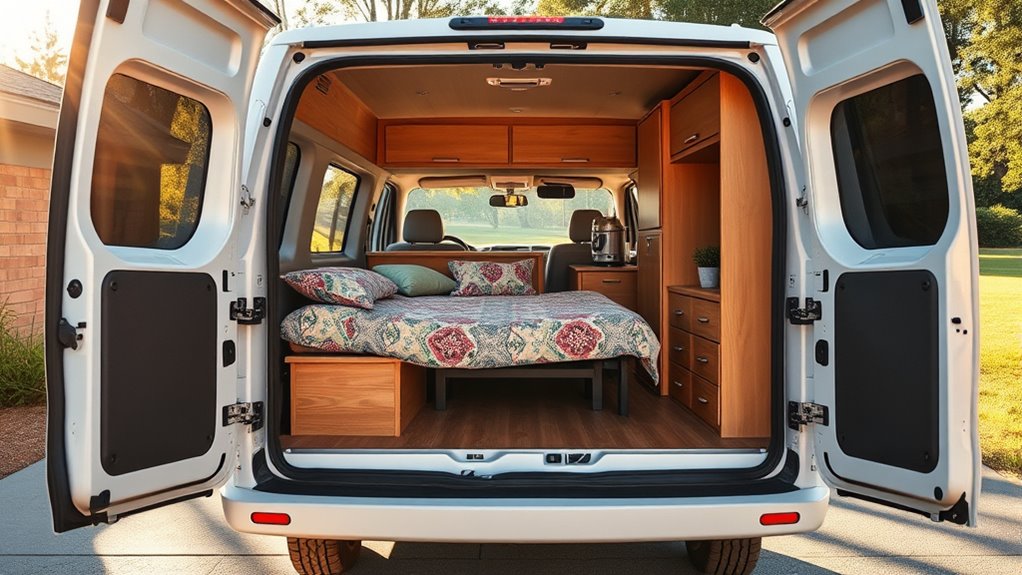

To convert your cargo van into a cozy camper, start by insulating thoroughly with spray foam, foam boards, or wool to keep it comfy year-round. Then, install a solar power system with panels, batteries, and a charge controller to stay off-grid. Finish with custom interior touches like a bed, storage, and lighting. Proper insulation and solar setup make a big difference in comfort and efficiency—stick around to discover all the essential steps for your van transformation.
Key Takeaways
- Insulate the van thoroughly with materials like spray foam or sheep’s wool to ensure year-round comfort.
- Plan and install a solar power system for off-grid energy, connecting panels, charge controller, and batteries securely.
- Optimize interior layout with efficient storage, comfortable sleeping, and accessible cooking and seating areas.
- Seal all gaps and seams to prevent drafts and moisture, enhancing insulation effectiveness and interior durability.
- Add ventilation and climate control options, such as roof vents or small fans, for improved airflow and temperature regulation.
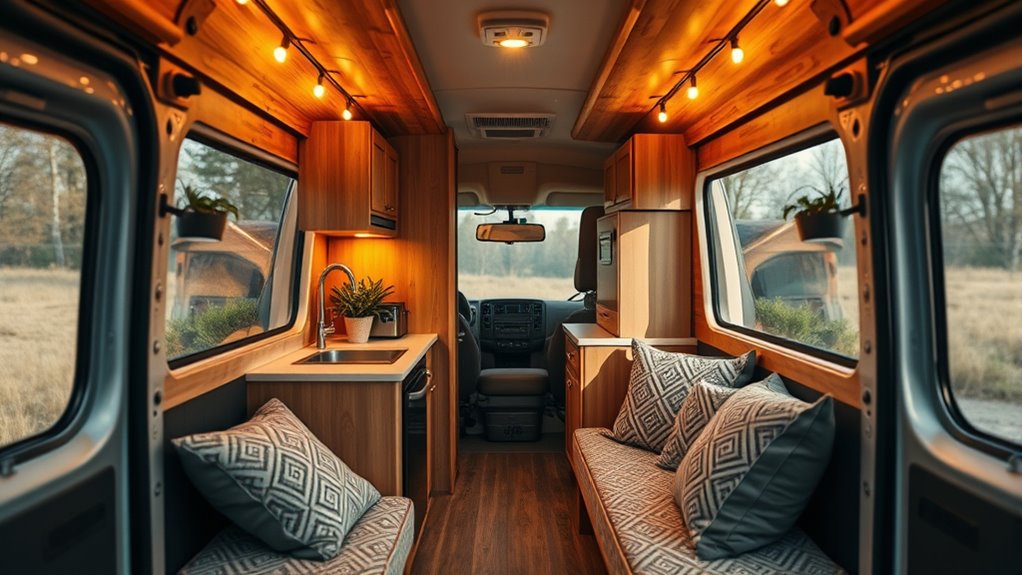
Turning a plain cargo van into a cozy camper is an achievable project that combines creativity with practical skills. The first step in transforming your van into a comfortable living space is prioritizing van insulation. Proper insulation keeps the interior warm during chilly nights and cool during hot days, making your van livable year-round. You’ll want to carefully choose insulation materials such as spray foam, foam boards, or sheep’s wool, depending on your budget and insulation needs. Measure and cut the insulation to fit between the van’s metal framing, ensuring you fill every gap without compressing the material, which reduces effectiveness. Once installed, seal all seams with reflective tape or spray foam to prevent drafts and moisture intrusion. This step not only improves comfort but also enhances energy efficiency, especially when you start planning your solar power setup.
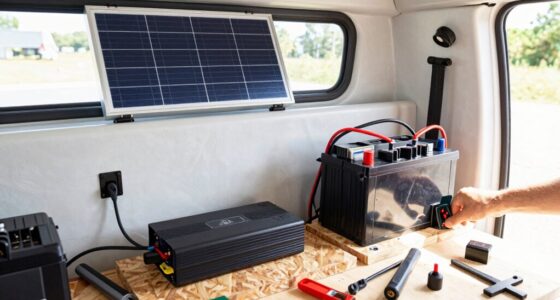
Speaking of energy, establishing a solar power system is essential for off-grid independence. A simple solar setup typically involves installing a solar panel on the van’s roof, connecting it to a charge controller, and wiring it to a deep-cycle battery. First, select a solar panel size based on your power needs—more panels generate more energy but require additional mounting space. Carefully mount the panel on the roof, ensuring it’s securely fastened and angled ideally toward the sun. Next, connect the panel to a charge controller, which regulates voltage and prevents batteries from overcharging. From there, wire the system to a deep-cycle battery or batteries stored inside the van. This setup allows you to power LED lights, charge devices, and run small appliances without relying on shore power or generators. Proper insulation enhances the efficiency of your solar power system by keeping the interior temperature stable, reducing energy consumption, and maximizing the lifespan of your batteries.
Additionally, selecting keto friendly ingredients for your meals during your travels can help support your health and energy levels, making your adventures more enjoyable. As you move through these initial steps, keep in mind the importance of planning ahead. Good insulation combined with a reliable solar power setup creates a self-sufficient, comfortable environment. When installing van insulation, pay attention to detail—this prevents heat loss and condensation, which can damage your van over time. Similarly, a well-placed solar panel and a properly wired system ensure you have consistent power whenever you need it. Each step might seem technical, but with patience and precision, you’ll set a solid foundation for the rest of your camper conversion. These foundational improvements will make your van not only more livable but also more energy-efficient, helping you enjoy your adventures with comfort and confidence.

BEEST FullStop Spray Foam Insulation Kit – 240 Board ft/sq.ft. Fire Rated Spray Insulation Foam for Walls & Attics with Thermal & Soundproofing – Includes 12x Cans, 1 Cleaner, Pro X Gun, Safety Gear
- Fire-Rated Safety: Class A fire-rated, meets ASTM E84 standards
- High Thermal & Sound Insulation: R-8.24 at 2 inches thickness
- Complete Insulation Kit: Includes 12 cans, gun, cleaner, safety gear
As an affiliate, we earn on qualifying purchases.
As an affiliate, we earn on qualifying purchases.
Frequently Asked Questions
How Much Does It Cost to Convert a Cargo Van Into a Camper?
Converting a cargo van into a camper typically costs between $5,000 and $15,000, depending on your choices. You’ll spend on van insulation to keep it cozy, solar panels for off-grid power, and interior upgrades like a bed and kitchenette. Budget for materials, tools, and potential professional help. Planning carefully helps you stay within budget while creating a comfortable, energy-efficient camper that suits your adventure needs.
What Tools Are Essential for the Conversion Process?
Think of your conversion as crafting a sturdy ship; essential tools are your compass and anchor. You’ll need DIY tools like a cordless drill, saw, and measuring tape to cut and assemble. Don’t forget safety gear—gloves, goggles, and masks—to protect you from splinters and fumes. With these, you steer your project confidently, turning your van into a cozy haven and ensuring your journey stays smooth and safe from start to finish.
How Long Does the Entire Conversion Typically Take?
The entire conversion typically takes between 2 to 4 weeks, depending on your project milestones and available time. You’ll spend the first week on planning and demolition, followed by a few days for insulation and wiring. Installing furniture and finishing touches usually takes the rest of the time. Stay organized, set clear milestones, and expect some flexibility; this helps you stay on track and enjoy the process.
Can I Convert a Cargo Van Myself Without Prior Experience?
You can definitely convert a cargo van yourself even if you lack prior experience, but focus on developing your DIY skills first. Follow safety precautions closely, especially when working with electrical or plumbing systems. Start with simple projects, watch tutorials, and gather the right tools. Patience and careful planning are key. With dedication, you’ll enjoy transforming your van into a cozy camper, gaining new skills along the way.
What Are the Legal Requirements for Campervan Conversions?
You need to check van regulation and insurance requirements before converting your campervan. Regulations vary by location, often requiring safety features like proper ventilation, fire extinguishers, and seat belts. You should inform your insurance provider about your conversion to guarantee coverage. Failing to meet legal standards could lead to fines or denied claims. Always research local laws and update your insurance to keep your adventure safe and legal.
Conclusion
Transforming your cargo van into a cozy camper not only offers adventure but also saves you money—studies show that vanlifers save an average of 30% on travel costs. With a little effort, you can create a personalized space that feels just like home on wheels. Imagine waking up to scenic views, your favorite coffee brewing nearby, all thanks to your DIY skills. So, hit the road and turn your van into your perfect, cozy retreat!