


Understanding whitewater rafting classes and safety protocols is vital for a safe adventure. You need to know that Class I and II rapids are suitable for beginners, while Classes III and IV demand experience, strict safety adherence, and proper gear. For Class V, advanced skills and teamwork are essential. Always follow guide instructions, wear appropriate gear like life jackets and helmets, and stay alert. Mastering these principles guarantees your safety—keep exploring to learn how to confidently navigate every rapid.
Key Takeaways
- River classes range from I (easy) to V (extreme), with increasing difficulty and safety requirements.
- Proper safety gear like life jackets, helmets, and appropriate footwear is essential for all classes.
- Safety protocols include following guides’ instructions, staying alert, and maintaining proper paddling techniques.
- Higher-class rapids (III-V) demand advanced skills, teamwork, and thorough pre-ride safety briefings.
- Understanding river hazards and respecting the river’s power are crucial for a safe whitewater rafting experience.
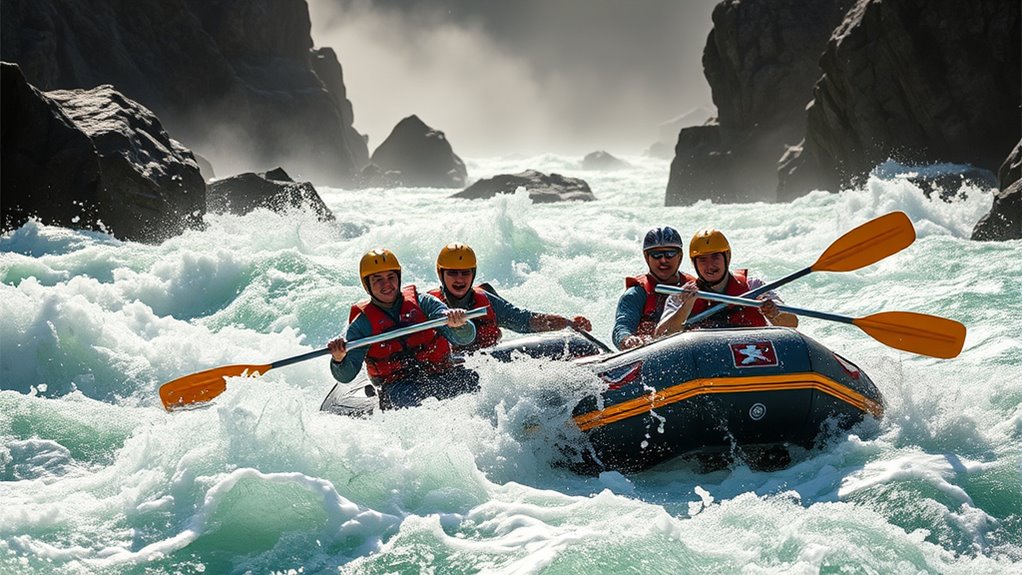
Have you ever wondered what it’s like to navigate the wild, roaring waters of a river? As an experienced rafter, you know that mastering whitewater rafting requires more than just courage; it demands a thorough understanding of river safety and gear essentials. When approaching different river classes, safety protocols become your top priority to minimize risks and ensure an enjoyable, adventure-filled experience. Whether you’re tackling gentle Class I rapids or the intense, technical Class V, knowing how to respond in each situation is essential. Your journey begins long before you hit the water—preparing with the right gear is fundamental to maintaining safety and comfort.
Your gear essentials are your first line of defense against the unpredictable nature of whitewater. A properly fitted life jacket is non-negotiable; it keeps you afloat and provides buoyancy in case you’re separated from the raft. A helmet is equally important, protecting your head from rocks or other obstacles lurking beneath the surface. Paddles should be sturdy and appropriate for your size; they’re your primary tool for maneuvering through rapid currents. Footwear must be secure, closed-toe shoes with a good grip—flip-flops or sandals won’t suffice—they can slip off or leave you vulnerable to injury. Wetsuits or splash jackets come in handy in colder waters, helping to regulate body temperature and prevent hypothermia. Carrying a dry bag with essentials such as a first-aid kit, waterproof communication device, and a whistle guarantees safety even if conditions change unexpectedly. Additionally, understanding river safety principles and potential hazards can significantly reduce the risk of accidents.
Your essential gear: life jacket, helmet, sturdy paddles, secure footwear, wetsuits, and a dry bag for safety.
Understanding the class of rapids you’re about to encounter influences your safety approach. Class I and II rapids are relatively mild, with small waves and few obstacles, making them suitable for beginners. Still, even at this level, consistently wearing your safety gear and following raft commands matters immensely. As you progress to Class III and IV, rapids become more challenging, with larger waves, irregular obstacles, and complex routes. Your experience, combined with strict adherence to safety protocols, becomes essential. In these conditions, listening carefully to your guide’s instructions, maintaining proper paddling techniques, and staying alert to river signals are necessary. For those venturing into Class V rapids, advanced skills and precise teamwork are non-negotiable. Safety protocols at this level include pre-ride briefings, regular communication, and readiness to execute self-rescue techniques if necessary.
Whitewater rafting is an exhilarating sport that demands respect, preparation, and vigilance. By prioritizing river safety and ensuring you have all gear essentials in place, you set yourself up for a thrilling, safe adventure. The river’s power is awe-inspiring, but it’s your knowledge, discipline, and gear that protect you from its dangers. Trust your training, stay alert, and embrace every rapid with confidence, knowing you’re well-equipped to handle whatever the river throws your way.
Frequently Asked Questions
What Should I Wear for Whitewater Rafting?
You should wear quick-drying, moisture-wicking clothing suitable for water, like a wetsuit or synthetic layers. Don’t forget river footwear—closed-toe shoes with good grip to protect your feet and prevent slipping. Bring sun protection—wear a hat, sunglasses, and waterproof sunscreen to guard against UV rays. Always secure your gear, and avoid loose items. Prioritize safety and comfort, ensuring you’re fully prepared to enjoy your whitewater adventure confidently.
How Do I Choose the Right Class of Rapids?
To choose the right class of rapids, start by evaluating your skill level and comfort with challenging water. Don’t underestimate river difficulty—higher classes mean more danger and require advanced safety considerations. As an experienced rafter, I advise beginners to stick with Class I or II for safety and confidence-building. For thrill-seekers, Class III or IV can be exhilarating, but always prioritize safety protocols and listen to guides to prevent accidents.
Can Beginners Participate in Advanced Rapids?
Beginners should avoid advanced rapids due to higher risks and skill requirements. As an experienced rafter, you must perform a thorough risk assessment before attempting such levels. Advanced rapids demand precise paddling, quick decision-making, and strong teamwork, which beginners typically haven’t developed. Prioritize safety, and only progress once you’ve mastered lower classes and received proper training. Remember, pushing limits without proper preparation increases the chance of accidents.
What Safety Equipment Is Essential?
Think of your safety gear as your lifeline on raging waters. You must wear a personal flotation device at all times, as it keeps you afloat and protected. A helmet is equally vital, shielding your head from rocks and impacts. As an experienced rafter, I emphasize that proper safety equipment isn’t optional—it’s indispensable. Always double-check your gear before tackling any rapids, regardless of your skill level, to make certain of a safe adventure.
How Do Weather Conditions Affect Rafting Safety?
Weather conditions greatly impact your rafting safety. You should always check river temperature and be cautious of storm warnings before heading out. Cold water increases the risk of hypothermia, while storms can cause sudden water surges and dangerous currents. As an experienced rafter, you know to postpone trips during storms and dress appropriately for cold temperatures. Staying alert to weather updates guarantees you and your team stay safe on the water.
Conclusion
Ultimately, whitewater rafting demands respect, skill, and strict adherence to safety protocols. As the saying goes, “Forewarned is forearmed.” By understanding the different river classes and following expert guidance, you guarantee an exhilarating yet secure adventure. Trust in the training, listen to your guides, and always prioritize safety. With preparation and vigilance, you’ll navigate the rapids confidently, making memories that last while minimizing risks. Safety isn’t just a rule; it’s your best raft mate.