
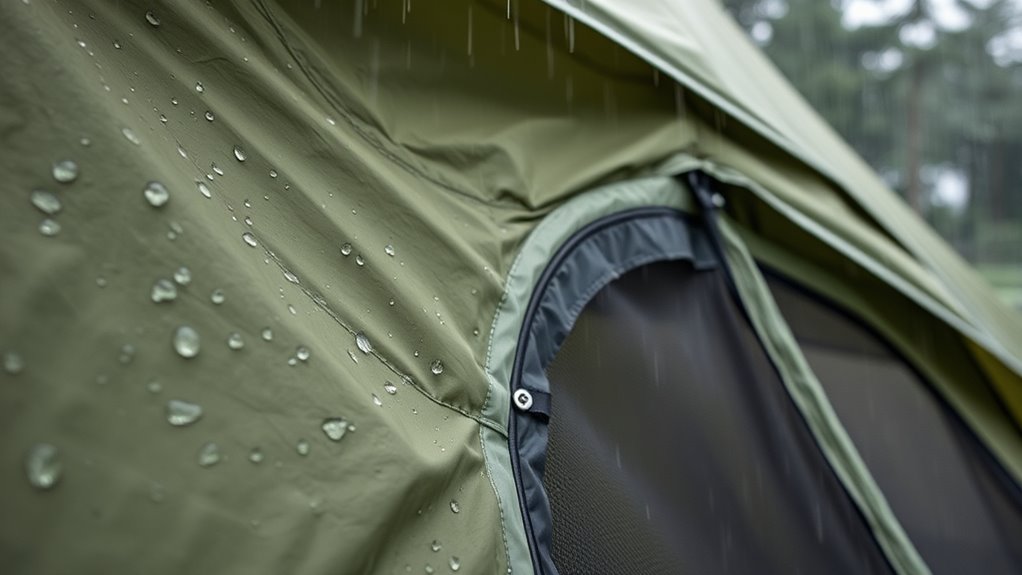

To stay dry and warm in your tent, inspect fabric and seams regularly for wear or leaks, then clean with a gentle brush and mild soap to preserve waterproof coatings. Seal any deteriorated seams with a dedicated seam sealer and reapply waterproof spray to restore DWR protection. Guarantee proper tension during setup to prevent pooling, and maintain all components to optimize waterproofing. With consistent care, you’ll create a weather-resistant shelter that keeps moisture out and warmth in—further techniques await your attention.
Key Takeaways
- Regularly inspect and clean your tent to maintain fabric integrity and waterproof coatings.
- Seal seams with a specialized seam sealer to prevent water leaks.
- Reapply waterproof spray or DWR coating to restore water resistance.
- Use a quality ground tarp and proper tension during setup to prevent water pooling.
- Keep all tent components dry and perform routine maintenance for optimal weatherproofing.

Weatherproofing your tent is essential to guarantee a dry and comfortable outdoor experience, especially when facing unpredictable weather conditions. Proper tent maintenance and gear waterproofing are critical components of this process, ensuring your shelter can withstand rain, wind, and moisture infiltration. To achieve this, start with a thorough inspection of your tent’s fabric and seams. Look for any signs of wear, tears, or areas where water might seep through. Maintaining your tent involves regular cleaning to remove dirt, mud, and debris that can compromise waterproof coatings. Use a gentle brush and mild soap, avoiding harsh chemicals that could degrade the fabric or existing waterproof layers.
Regularly inspect and clean your tent’s fabric and seams for optimal waterproofing and durability.
Once cleaned, inspect the seams carefully. Seams are often the weakest points where water can penetrate. Many tents have factory-sealed seams, but over time, these seals can degrade or become damaged. Applying a seam sealer specifically designed for tents can restore waterproof integrity. Use a high-quality seam sealer, applying it evenly with a small brush or squeeze bottle, and allow it to cure fully before packing up or exposing the tent to adverse weather. This step is an integral part of tent maintenance and prolongs the lifespan of your gear waterproofing.
In addition to sealing seams, the tent’s fabric itself may need re-coating with a waterproofing spray. Modern tents are often coated with durable water repellent (DWR), which causes water to bead and roll off the surface. Over time, this coating can wear thin, especially after repeated use and cleaning. To restore water resistance, apply a dedicated tent waterproofing spray, following the manufacturer’s instructions. Spray evenly over all exterior surfaces, paying particular attention to the rainfly and vestibules. Allow sufficient drying time, and ensure the tent is completely dry before packing it away to prevent mold or mildew.
Gear waterproofing extends beyond the tent fabric to accessories like ground tarps, stakes, and poles. Waterproofing these elements can prevent moisture from seeping through the base of your shelter. Use water-resistant sprays or sealants on these components as needed. When setting up your tent, ensure proper tension to prevent sagging, which can create pockets where water pools and leaks occur. Proper tension and regular maintenance of all components contribute considerably to overall weatherproofing.
Additionally, investing in a quality tent footprint can provide an extra layer of protection against ground moisture and abrasion, further enhancing your overall waterproofing strategy. Consistent tent maintenance and proactive gear waterproofing are your best defenses against moisture intrusion. By inspecting, cleaning, sealing seams, reapplying waterproof coatings, and ensuring tension during setup, you create a robust barrier against the elements. This meticulous approach guarantees your tent remains dry and warm, no matter what weather conditions you encounter, allowing you to focus on enjoying your outdoor adventure.
Frequently Asked Questions
How Often Should I Reapply Waterproofing Treatments?
You should reapply waterproofing treatments every 2 to 6 months, depending on usage and exposure to weather conditions. Regular tent maintenance involves inspecting seams, fabric, and waterproof coatings for wear or damage. When you notice water pooling or seepage, it’s time for reapplication. Clean the tent thoroughly before applying a new waterproofing layer, ensuring peak adhesion and longevity. Frequent maintenance keeps your tent reliably weatherproof, especially after heavy rain or prolonged outdoor use.
What Are the Best Materials for Weatherproof Tent Seams?
For weatherproof tent seams, high-quality seam sealing tapes like polyurethane or acrylic-based tapes work best. When working with tent fabric types such as polyester or nylon, verify you use seam sealing techniques like applying a durable seam sealer or tape along all stitched areas. This creates a waterproof barrier, preventing leaks during heavy rain. Proper surface preparation and sealing both the interior and exterior seams enhance overall water resistance and durability.
How Do I Prevent Condensation Inside the Tent?
Think of your tent as a breathing organism; to prevent condensation, you must manage its moisture. Use ventilation tips like opening vents or doors slightly to promote airflow, which helps moisture escape. Confirm your tent’s moisture control by avoiding overpacking, which traps humidity, and using a ground tarp to reduce dampness. Regularly wipe down interior surfaces and pack wet gear outside to maintain a dry, comfortable environment inside.
Can I Weatherproof a Tent Without Specialized Products?
Yes, you can weatherproof a tent without specialized products by enhancing its fabric and applying basic weatherproofing techniques. Start by inspecting your tent fabric for tears or leaks, then seal any seams with a DIY seam sealer or waterproof tape. Use a clear, water-based fabric protector spray to reinforce the tent fabric’s water resistance. These methods improve weatherproofing, helping your tent withstand rain and moisture without relying on commercial products.
What Adjustments Can I Make for Winter Camping?
You should add extra tent insulation using foam pads or reflective blankets to trap heat, and don’t forget to improve snow anchoring—use snow stakes or bury your stakes for stability. Irony aside, these adjustments guarantee your tent withstands winter’s chill and gusts. Proper insulation keeps warmth in, while secure snow anchoring prevents the tent from shifting or collapsing under heavy snow. Stay prepared, and winter camping becomes more manageable.
Conclusion
By properly weatherproofing your tent, you create a fortress against the elements, ensuring comfort and safety in any conditions. Remember, neglecting these precautions leaves you vulnerable—your shelter is only as strong as its weakest point. Think of your tent as a shield; with meticulous attention to sealing seams, waterproofing fabrics, and managing ventilation, you harness control over unpredictable weather. Invest in these techniques, and your camping experience transforms from risky to resilient—because preparedness is the ultimate safeguard.