
You might not realize how much tent shapes have transformed camping. Traditional designs like cones and rectangles focused on stability and simplicity, while innovations like geodesic and semi-geodesic shapes greatly improved weather resistance and durability. Modern aerodynamic tents are easier to set up and pack, making outdoor adventures more accessible. Advanced materials work hand-in-hand with these shapes to boost durability, comfort, and safety. Keep exploring to discover how these innovations continue to shape your outdoor experiences.

Get travel and outdoor gear delivered free with Prime
- Fast, free delivery on millions of items
- Prime Video, Amazon Music and more included
- Member-only deals all year
Key Takeaways
- Early tent shapes like cones and rectangles established the foundation for stable, easy-to-assemble shelters.
- Rounded dome and geodesic designs significantly improved weather resistance and durability in extreme conditions.
- Modern shapes optimize internal space, stability, and ease of setup, enhancing overall camping safety and comfort.
- Material advancements synergized with shape innovations to create lightweight, weatherproof, and quick-assembly tents.
- Shape innovations have expanded camping accessibility, enabling safer, more durable, and more enjoyable outdoor adventures.
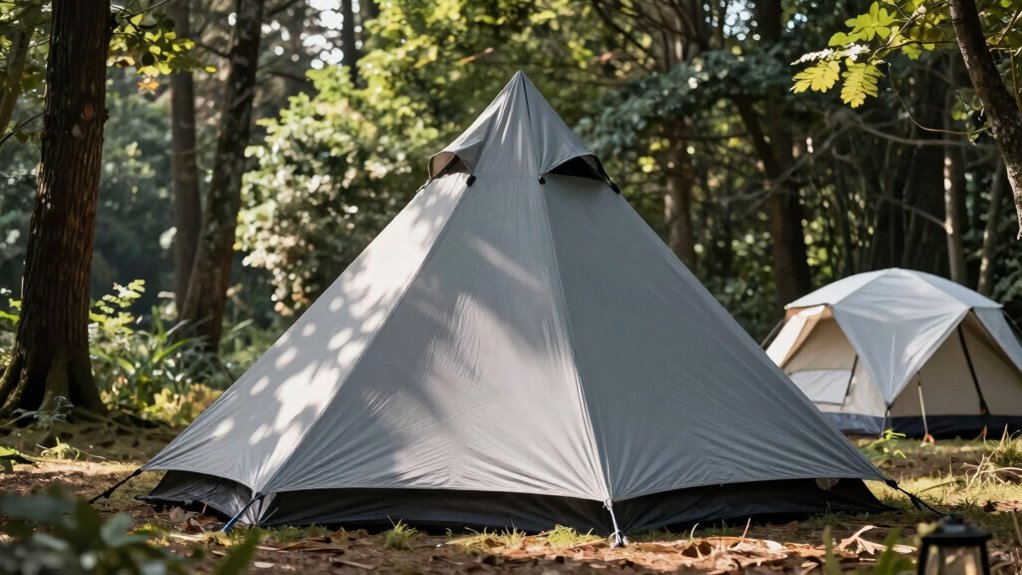
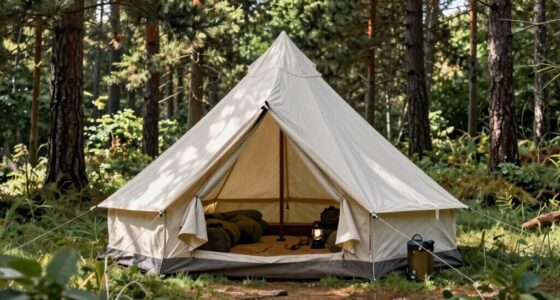
Throughout history, the shape of tents has evolved dramatically, revolutionizing the way people camp and explore the outdoors. These changes are more than just aesthetic—they reflect significant camping innovation and tent material advancements that have made outdoor experiences safer, more comfortable, and more accessible. When you think about classic bell tents or simple A-frames, you might not realize how their designs influenced modern camping gear and the way you set up your shelter today.
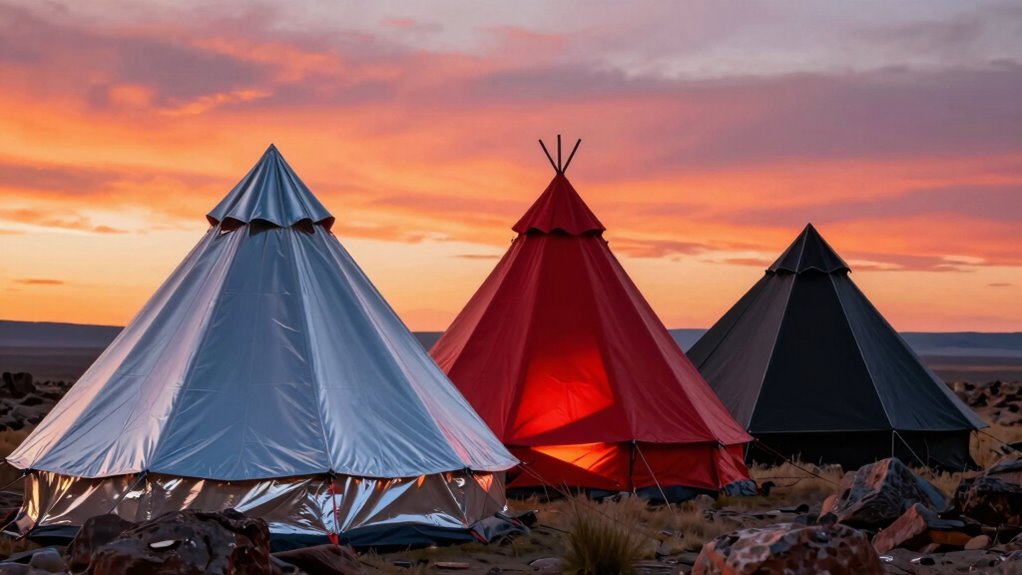
Early tent shapes, like the traditional cone-shaped or rectangular designs, were primarily driven by the need for stability and ease of construction. As camping innovation progressed, engineers and outdoor enthusiasts began experimenting with new shapes that improved wind resistance and weather protection. The dome tent, for example, became a game-changer because its rounded shape distributes stress evenly, making it more durable against strong gusts. This design, combined with advancements in tent material technology—such as lightweight nylon and waterproof coatings—allowed you to venture into harsher conditions without sacrificing comfort or safety. Tent shape evolution has also played a crucial role in enhancing the overall durability of shelters.
The dome tent’s rounded shape distributes stress evenly, improving durability in strong gusts and harsh weather conditions.
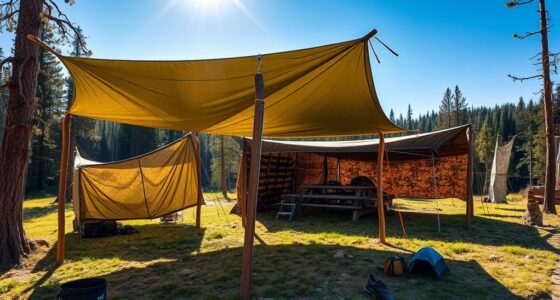
The evolution of tent shapes also paved the way for more portable and quick-setup options. The invention of geodesic and semi-geodesic tents, with interconnected poles forming a resilient framework, meant you could now pitch your shelter rapidly in challenging environments. These shapes aren’t just about aesthetics—they optimize internal space while maintaining structural integrity, even in extreme weather. Thanks to tent material advancements, like ripstop fabrics and breathable mesh, you experience better airflow and moisture control, keeping you dry and comfortable regardless of the climate. Additionally, innovations in shelter design have contributed to increased versatility and adaptability in various outdoor settings.
You might not realize it, but these shape innovations have directly impacted your camping experience. The lightweight, compact designs you see today owe their existence to earlier tent shapes that prioritized efficiency and protection. Modern backpacking tents, with their aerodynamic forms and high-performance materials, are the result of decades of camping innovation. They allow you to travel farther and lighter, knowing your shelter is both strong and easy to carry. The continuous refinement of tent shapes and materials means you benefit from increased durability, weather resistance, and ease of setup—making outdoor adventures more enjoyable and less stressful.
In addition, the development of these innovative tent shapes has significantly contributed to improving safety features, such as enhanced stability during storms and better insulation against the cold. The shapes of tents have done more than just provide shelter; they’ve driven a series of innovations that have transformed camping into a more accessible and reliable activity. From the simple innovations of the past to today’s cutting-edge designs, these shape evolutions have shaped your outdoor experiences, making every trip more comfortable, safe, and memorable.
Products Worth Considering

Bose QuietComfort Wireless Bluetooth Headphones, Cypress Green

Bose QuietComfort Wireless Noise Cancelling Headphones, Black

GoPro Fluid Pro AI 3-Axis Gimbal Stabilizer
As an affiliate, we earn on qualifying purchases.
Frequently Asked Questions
How Do Tent Shapes Affect Weather Resistance?
You’ll find that tent shapes considerably impact weather resistance by enhancing tent stability and wind resistance. Dome-shaped tents, with their rounded edges, naturally deflect wind and improve stability during storms. A tunnel tent’s elongated shape offers excellent wind resistance but needs secure stakes. Conversely, A-frame tents are simple but less stable in strong winds. Choosing the right shape helps keep you safe and comfortable in unpredictable weather.
Are Certain Tent Shapes Better for Backpacking?
Yes, certain tent shapes are better for backpacking because they balance lightweight design with durability. Dome tents, with their aerodynamic shape, resist wind and are easy to pack, making them ideal for backpackers. Additionally, their aesthetic appeal and color visibility help you spot your tent in the wilderness quickly. Opt for a shape that offers good stability, packs down small, and stands out visually for safer, more convenient backpacking adventures.
Which Tent Shape Offers the Most Interior Space?
Think of a geodesic dome as the heart of camping comfort—its rounded shape maximizes interior space, giving you room to stretch out and move freely. This tent shape offers the most interior space and combines sleek tent aesthetics with practicality. It feels like camping in a cozy, open sanctuary, making every night beneath the stars more comfortable. If space is your priority, this shape truly stands out in both form and function.
Do Tent Shapes Influence Ventilation and Airflow?
Yes, tent shapes influence ventilation efficiency and airflow dynamics. For example, dome-shaped tents promote better airflow because they allow air to circulate freely around the structure, reducing condensation. A tent with multiple vents or awnings enhances ventilation even further. When you choose a tent with thoughtful shape design, you’ll experience improved airflow, keeping the interior cooler and more comfortable, especially in warm or humid conditions.
How Have Tent Shapes Evolved Over the Decades?
You’ve seen how tent shapes have evolved, driven by historical innovations and cultural influences. Over decades, designs shifted from simple, pole-based structures to more aerodynamic, lightweight forms that improve airflow and ease of transport. Cultural needs, like climate adaptation and social customs, shaped features like domes, geodesic forms, and tunnel tents. These changes made camping more comfortable, efficient, and accessible, reflecting both technological progress and cultural diversity.
Conclusion
You’ve seen how tent shapes have evolved, transforming the camping experience in ways you might not have noticed. From simple shelters to innovative designs, each change has pushed boundaries and opened new adventures. Remember, sometimes it’s the little things—like a clever tent shape—that make all the difference. Don’t overlook the power of innovation; it’s often the key to turning a good trip into a great one. The more things change, the more they stay exciting.