
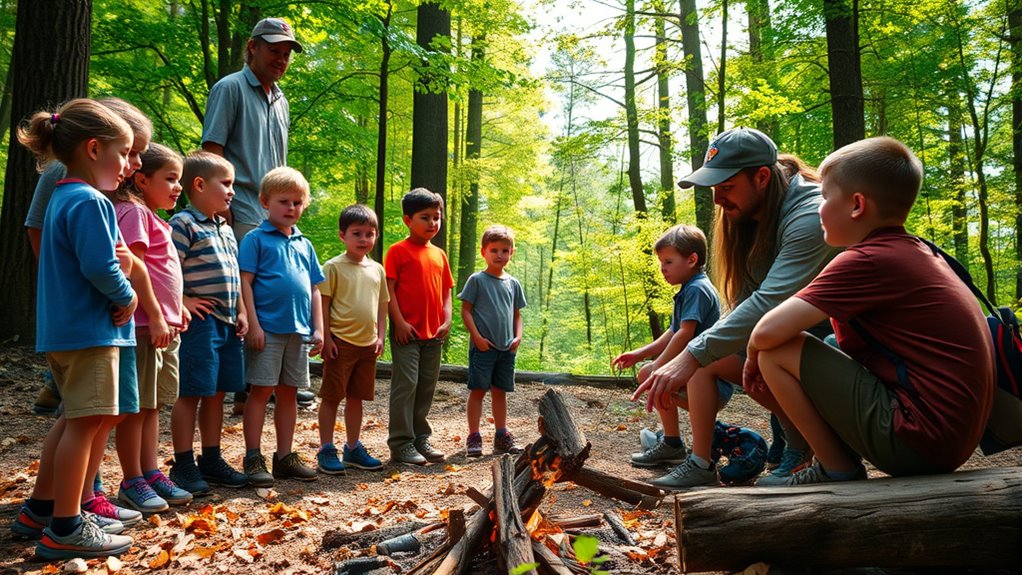

To teach kids about Leave No Trace and environmental stewardship, make lessons engaging with relatable examples of how actions impact wildlife and ecosystems. Use fun activities like scavenger hunts and nature walks to instill a love for preservation. Emphasize outdoor safety and responsible behavior, showing kids how small efforts make a big difference. By fostering curiosity and responsibility, you help shape future conservation champions—continue exploring how to inspire these young environmental stewards.
Key Takeaways
- Use engaging activities like scavenger hunts and nature walks to teach kids about environmental awareness and Leave No Trace principles.
- Relate actions such as littering to tangible consequences for wildlife and ecosystems to foster responsibility.
- Emphasize outdoor safety practices, including hazard recognition and proper gear, to protect both children and wildlife.
- Encourage children to see themselves as explorers and stewards, fostering a genuine passion for wildlife preservation.
- Highlight that small efforts, like packing out trash and staying on trails, significantly contribute to conservation goals.
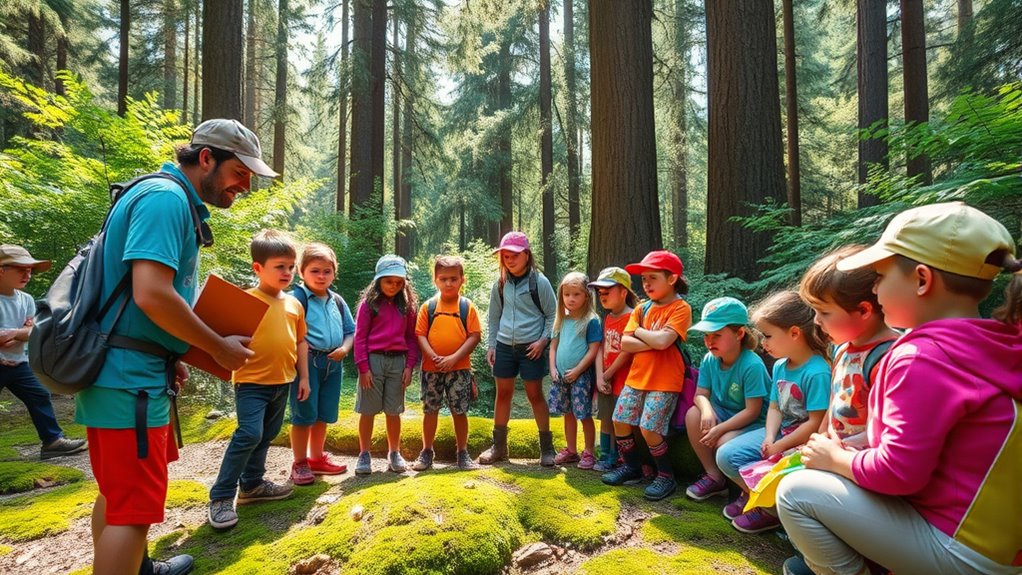
Have you ever wondered how you can inspire the next generation to protect our natural world? Teaching kids about Leave No Trace isn’t just about preserving the environment; it’s about instilling a lifelong respect for wildlife preservation and outdoor safety. When children learn to minimize their impact on the outdoors, they become stewards of the land, ensuring these precious ecosystems thrive for generations to come. The key is making the lessons engaging and relatable, so they understand that their actions matter.
Start by showing them that every footprint counts. Explain that wildlife preservation depends on how we treat animals and their habitats. Kids quickly grasp that leaving trash behind can harm animals seeking food or shelter, and that even small disturbances can have ripple effects throughout ecosystems. Encourage them to see themselves as protectors of wildlife, emphasizing that respecting animals’ space and avoiding unnecessary noise or intrusion helps keep ecosystems balanced. When children understand their role in maintaining wildlife preservation, they’ll develop a sense of responsibility that goes beyond just following rules—it becomes part of who they are.
Every footprint matters—respect wildlife and their habitats to protect ecosystems for future generations.
Outdoor safety is another critical component. When kids are taught how to stay safe in natural settings, they’re more confident and less likely to engage in risky behaviors. This includes understanding how to identify safe trails, recognizing hazards like unstable ground or dangerous plants, and knowing what to do if they encounter wildlife. Teaching them about outdoor safety also involves emphasizing the importance of packing the right gear, staying hydrated, and informing someone about their plans. When children see outdoor safety as a way to protect themselves and their friends, they’re more likely to internalize these practices and carry them into future adventures.
Incorporating fun activities, like scavenger hunts or nature walks, makes learning about Leave No Trace memorable. Use these opportunities to demonstrate how simple actions—picking up litter, sticking to established trails, or observing wildlife from a distance—have a profound impact. Reinforce that caring for the environment isn’t just a responsibility but an exciting adventure. When kids see themselves as explorers and protectors, they develop a genuine passion for wildlife preservation and outdoor safety. It’s about creating a sense of connection—helping them understand that every small effort contributes to a larger good.
Frequently Asked Questions
How Can Parents Reinforce Leave No Trace Lessons at Home?
You can reinforce Leave No Trace lessons at home by engaging your kids in nature journaling and eco-friendly crafts. Encourage them to observe and sketch local nature, emphasizing respect for the environment. Use eco-friendly materials for crafts, showing them how to minimize waste. Discuss how their actions, like picking up litter or respecting wildlife, mirror Leave No Trace principles. These activities make environmental stewardship fun and memorable, fostering lifelong respect for nature.
What Age Is Appropriate to Start Teaching Leave No Trace Principles?
You can start teaching leave no trace principles at age three, as early education sparks curiosity and instills good habits. Children at this age are enthusiastic to explore, making it an ideal time to introduce simple concepts like picking up trash and respecting nature. By engaging them early, you foster a lifelong sense of environmental stewardship, ensuring they understand the importance of caring for our planet from a young age.
Are There Any Fun Activities to Teach Kids About Environmental Impact?
You can make learning about environmental impact exciting with a nature scavenger hunt, where kids find items that showcase nature’s beauty and fragility. Follow this with eco-friendly crafts, like creating art from recycled materials, to boost their creativity while emphasizing sustainability. These activities blend fun and education, helping children understand their role in preserving the environment. Engaging hands-on experiences foster passion and responsibility for our planet’s future.
How Do I Handle Kids Who Want to Leave a Mark or Collect Souvenirs?
When kids want to leave a mark or collect souvenirs, gently explain that marking territory or taking natural items can harm ecosystems. Encourage them to leave no trace by capturing memories through photos or drawing, rather than collecting souvenirs. Show excitement for their creativity and help them understand how respecting nature preserves its beauty for everyone. Empower them to be eco-friendly explorers who cherish experiences over possessions.
What Are Common Misconceptions Children Have About Environmental Conservation?
Many kids believe that conservation myths like “collecting souvenirs helps preserve nature” or “leaving a mark shows respect” are true. You can myth bust these misconceptions by showing them how leaving no trace protects ecosystems for future generations. Kids often think they’re helping, but in reality, they might unintentionally harm wildlife. By sharing facts passionately, you inspire them to become true conservation champions, understanding that caring for nature means leaving it as they found it.
Conclusion
By teaching kids about Leave No Trace, you’re shaping eco-conscious adults who respect nature. Did you know that children who learn outdoor ethics are 50% more likely to protect the environment as they grow? Your efforts inspire a new generation to keep our planet pristine. Every lesson you share fosters responsibility and passion for conservation. Together, you can guarantee that future explorers leave only footprints and take only memories.