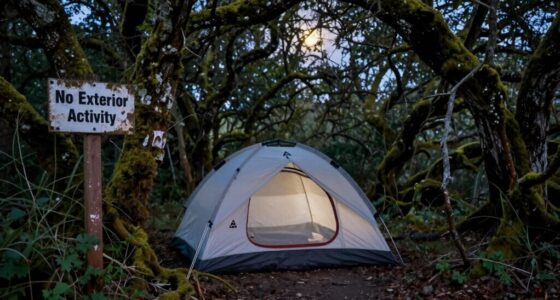
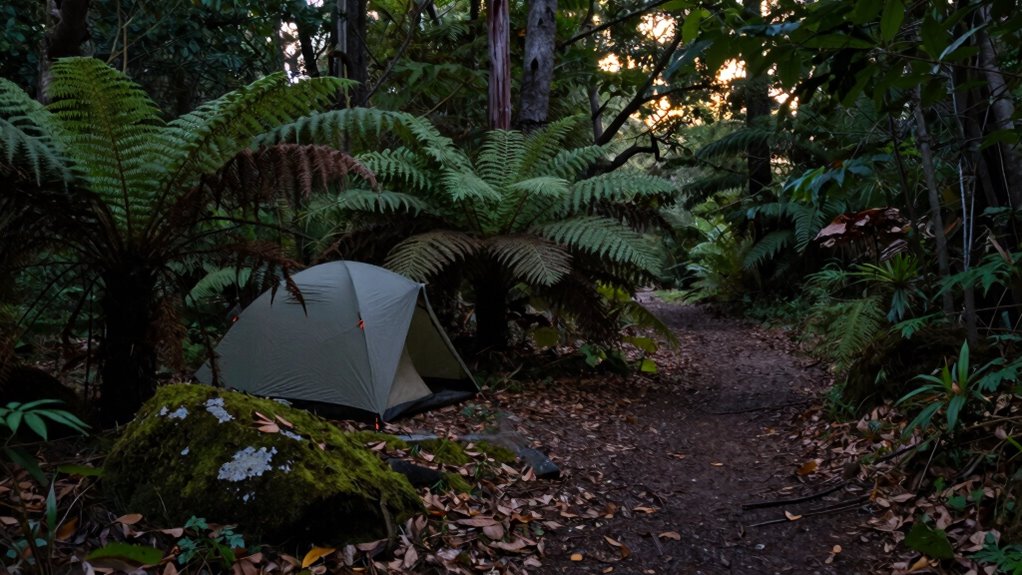

To practice stealth camping responsibly, you should arrive late and leave early, helping you stay unnoticed while respecting the environment. Timing is key; arrive after sunset and depart before dawn, minimizing your footprint. Keep noise and lights to a minimum, and avoid signs of your presence. Planning your schedule and gear carefully guarantees you blend in smoothly. Continuing this guide will provide you with essential tips to master this discreet approach perfectly.
Key Takeaways
- Arrive after peak activity hours to blend in and avoid drawing attention.
- Leave early before dawn to minimize your footprint and maintain discretion.
- Use minimal lighting and noise during late arrival and early departure to stay unnoticed.
- Pack up quietly and leave no visible traces to respect the environment.
- Timing your presence carefully helps maintain good relations with landowners and other campers.
What Is the ‘Arrive Late, Leave Early’ Rule in Stealth Camping?
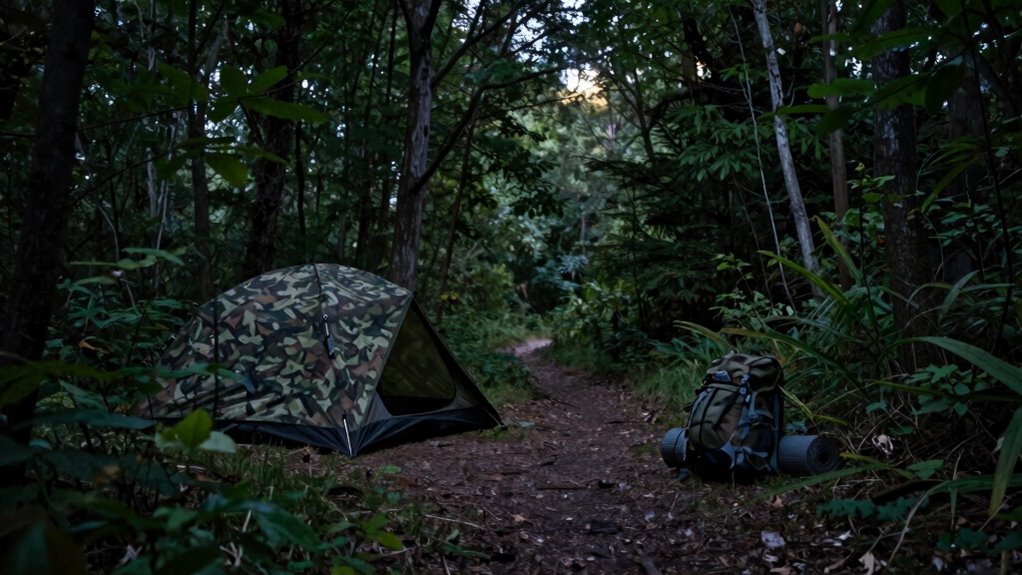
If you want to stay discreet while stealth camping, the ‘Arrive Late, Leave Early’ rule is essential. This camping stealth tactic helps you blend into your surroundings and minimizes your footprint. By arriving late, you avoid drawing attention during peak hours, and leaving early ensures you’re gone before anyone notices. Following this etiquette rule shows respect for the land and local residents, reducing the risk of issues. It also helps preserve access for future stealth campers. Remember, your goal is to be unobtrusive, so keep a low profile and avoid lingering. Staying mindful of these etiquette rules not only keeps you safe but also maintains the trust of landowners and communities, making stealth camping a more sustainable activity. Additionally, using indoor air quality awareness can help you stay comfortable and healthy during extended stays outdoors.
Why Timing and Quiet Hours Are Critical for Stealth Campers
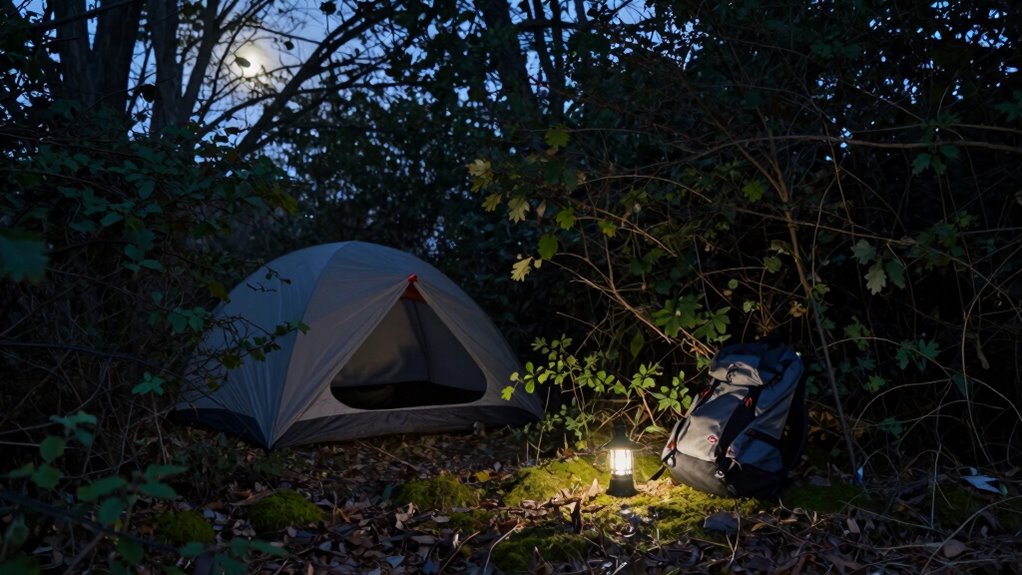
Timing and quiet hours play a vital role in successful stealth camping because they directly influence your ability to remain unnoticed. By practicing noise discipline, you minimize sounds that could draw attention to your site. Choosing the right spot during quieter times ensures you’re less likely to be spotted or disturb others. Site selection is key; look for locations away from trails, roads, or busy areas, especially during late hours. Keep noise levels low when setting up and moving around your campsite, and avoid unnecessary activity during the quiet period. Staying mindful of timing and respecting quiet hours helps you blend into the environment, reducing the risk of detection. Proper drying and cleaning of your gear and surroundings also contribute to maintaining a low profile. Ultimately, disciplined timing and sound control are essential for stealth camping success.
How to Plan Your Arrival and Departure to Stay Undetected

Planning your arrival and departure carefully is essential to avoid drawing attention to your stealth campsite. Arrive late enough to blend in with other activities and leave early, minimizing your footprint. Before setting up, check local regulations to verify campfire safety; keep fires small or avoid them altogether to prevent smoke and noise. Be mindful of wildlife awareness—avoid making loud noises or leaving food behind that could attract animals or suspicion. When packing up, do so quietly and efficiently, leaving no visible traces of your stay. Moving discreetly reduces the risk of detection and respects the environment. Ensuring proper campfire safety and adhering to sustainable practices can make your stealth camping experience more responsible and low-impact. Thoughtful planning of your timing and actions helps you stay hidden and ensures a responsible, low-impact stealth camping experience.
Practical Tips to Arrive Late and Leave Early Without Issues
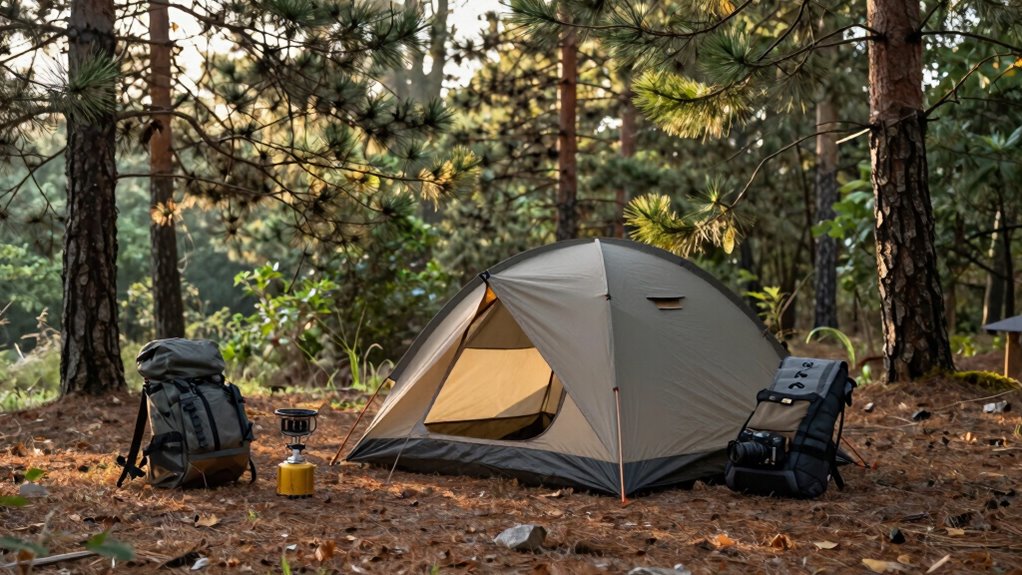
Arriving late and leaving early can considerably reduce your chances of detection, but it requires practical execution to avoid issues. First, make sure your campground reservations are made in advance and checked quietly upon arrival to avoid drawing attention. Use minimal lighting and noise during your late arrival to stay unnoticed. When leaving early, pack up discreetly, ensuring no signs of your presence remain. Be mindful of wildlife interactions; avoid disturbing animals by keeping noise down and maintaining distance. Stick to well-traveled paths and stay out of sight from other campers. Timing is essential—arrive after sunset and depart before dawn to blend into the environment. Additionally, understanding the horsepower of electric dirt bikes can help you choose the right equipment if you plan to incorporate bikes into your stealth camping trips. With careful planning, you can enjoy your stealth camping experience without drawing unwanted attention or causing ecological disruptions.
Common Mistakes to Avoid When Practicing Stealth Camping Etiquette
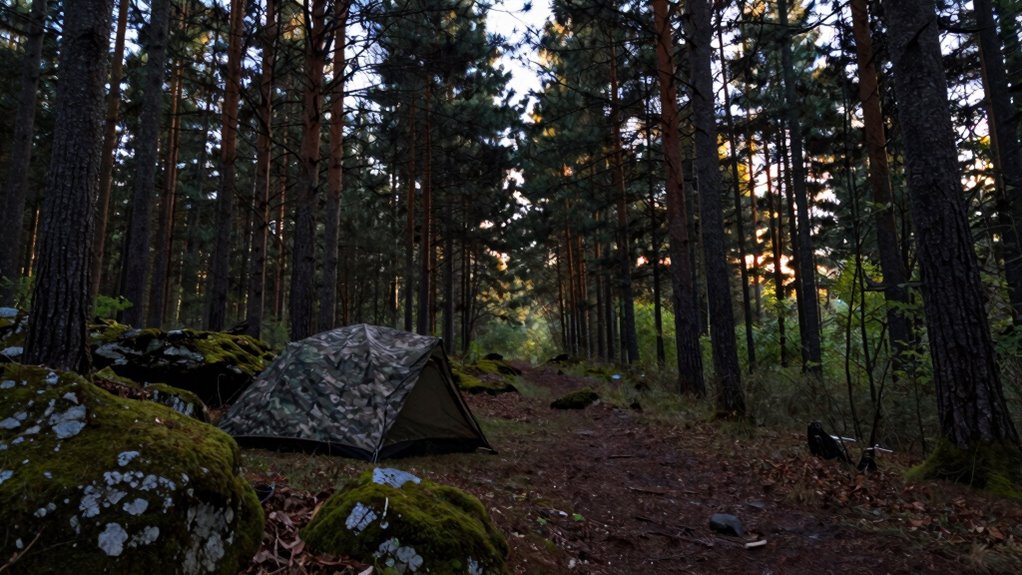
One of the most common mistakes in stealth camping is drawing attention by leaving obvious signs of your presence. Avoid creating large campfires, as they attract notice and can threaten campfire safety. If you do light a fire, keep it small, controlled, and fully extinguish it before leaving. Additionally, don’t disturb wildlife by making loud noises or leaving trash behind, which can cause wildlife disturbance and alert others to your location. Always be discreet with your campsite setup—hide gear and avoid bright lights. Remember, your goal is to blend in seamlessly. Respect the environment, prioritize campfire safety, and minimize disturbances to wildlife to ensure your stealth camping remains unnoticed and responsible. Being aware of ethical considerations can help you make better decisions that respect both the environment and other outdoor enthusiasts.
Frequently Asked Questions
Is It Legal to Practice Stealth Camping in All Areas?
You can’t assume stealth camping is legal everywhere. Legal restrictions and zoning laws vary by area, and many places prohibit camping on public or private land without permission. Always check local regulations before camping secretly, as penalties can be severe. In some areas, you might be allowed to stealth camp, but in others, it’s strictly forbidden. Respect property rights and stay informed to avoid legal trouble.
How Can I Minimize Noise When Arriving or Leaving Late?
To minimize noise when arriving late or leaving early, you’ll want to channel your inner ninja. Use quiet gear like silent footsteps and soundproofing techniques—think foam mats or thick blankets—to absorb sound. Move slowly, avoid loud radios, and keep your engine running smoothly. The goal? Sound like a whisper in the night, so your stealth camping remains unnoticed, even if your arrival feels more like a stealthy footstep.
What Should I Do if I Encounter Other Campers or Locals?
When you encounter other campers or locals, practice respectful communication by greeting them politely and listening carefully. Respect local customs by observing their behaviors and boundaries, avoiding intrusive questions or actions. Keep your demeanor friendly and considerate, and if tensions arise, remain calm and polite. Showing respect fosters good relationships, helps you blend in better, and ensures everyone has a positive experience during your stealth camping adventure.
Are There Specific Times Considered Best for Stealth Camping?
You should aim for stealth camping during quiet hours, typically late evening and night, when activity is minimal. Plan to arrive late and leave early, often around dawn, to avoid drawing attention. By respecting quiet hours and making dawn departures, you minimize disturbance and reduce the risk of being noticed, ensuring a discreet and respectful stay. Always stay aware of local rules and community norms to keep stealth camping safe and unobtrusive.
How Do Weather Conditions Affect Stealth Camping Practices?
Did you know that rain can reduce stealth camping success by up to 60%? Weather impact plays a big role in your plans. Seasonal considerations matter too; summer’s warmth might invite more campers, while winter demands extra gear and caution. Wind, rain, and snow can make it harder to stay unnoticed and comfortable. Always check forecast updates, pack accordingly, and adapt your stealth camping tactics to weather conditions for a safer, more discreet experience.
Conclusion
By following the ‘arrive late, leave early’ rule, you respect both the environment and local communities. Did you know that over 70% of stealth campers report fewer issues when they stick to this etiquette? Staying discreet not only keeps you safe but also preserves the spots you love. So, plan your timing carefully, keep noise to a minimum, and leave no trace—your respectful approach guarantees more adventures ahead.