
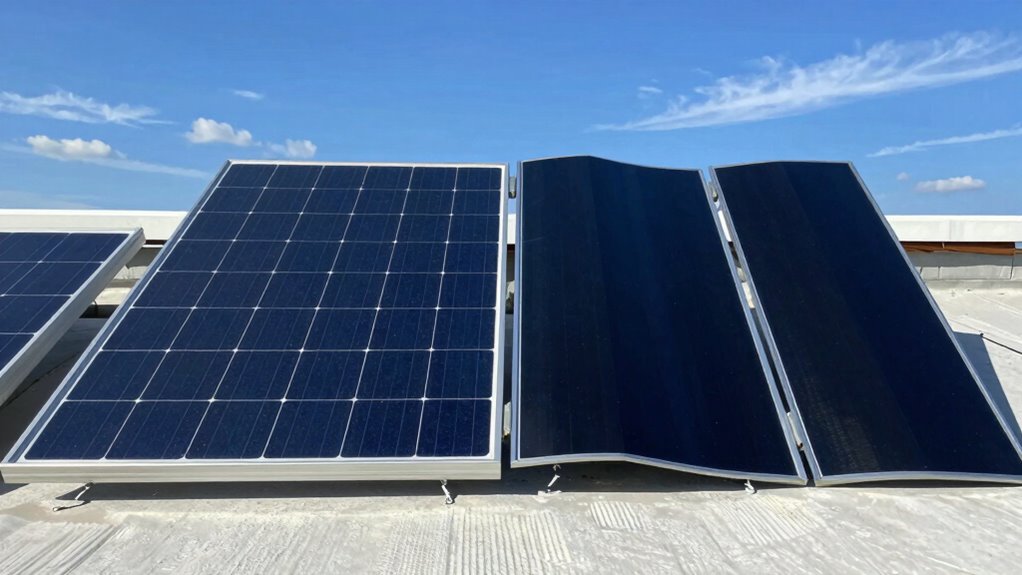
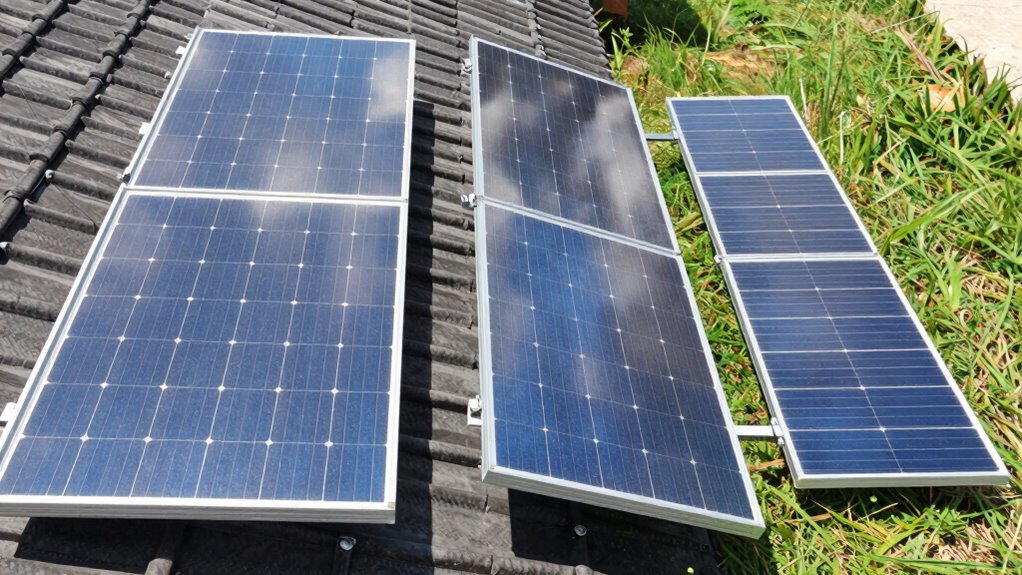
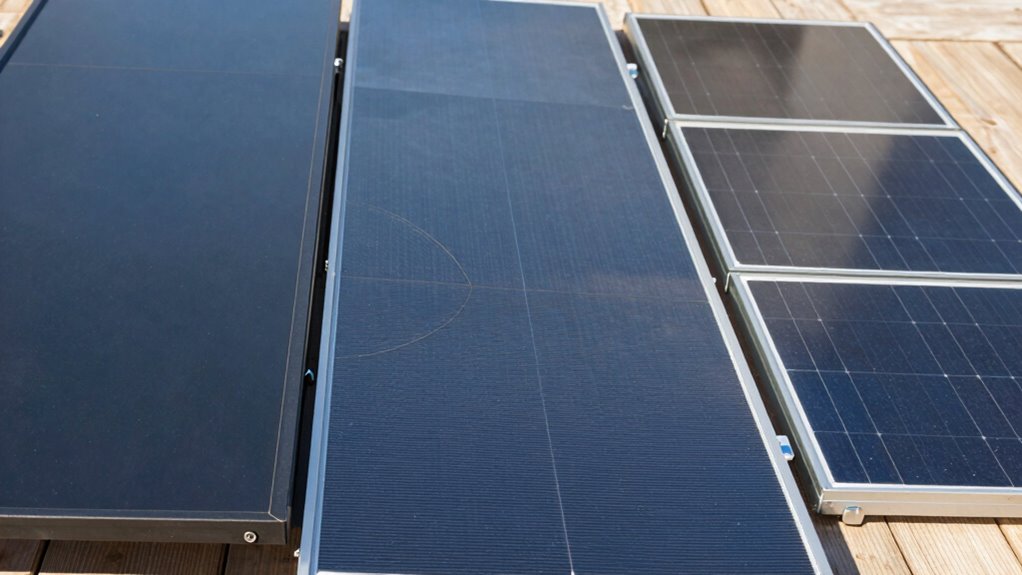
If you’re choosing solar panels, you’ll find three main types: rigid, flexible, and folding. Rigid panels are sturdy and great for long-term, permanent installs like rooftops. Flexible panels are lightweight and bend easily, making them perfect for outdoor use and uneven surfaces. Folding panels are portable, easy to carry, and ideal for busy outdoor activities. Knowing which suits your needs can help you make the best choice—learn more to find out which is right for you.
Key Takeaways
- Rigid panels are sturdy, efficient, and designed for permanent installations like rooftops, while flexible panels are lightweight and suited for outdoor activities.
- Folding panels combine portability with decent efficiency, making them ideal for temporary or mobile solar needs.
- Rigid panels last longer (25+ years) and withstand harsh weather, whereas flexible and folding types tend to have shorter lifespans.
- Flexible panels are easier to install and maintain, but generally less efficient and durable than rigid panels.
- Choose panel type based on your need for durability, portability, installation ease, and budget considerations.
What Are the Main Types of Solar Panels and How Do They Differ?
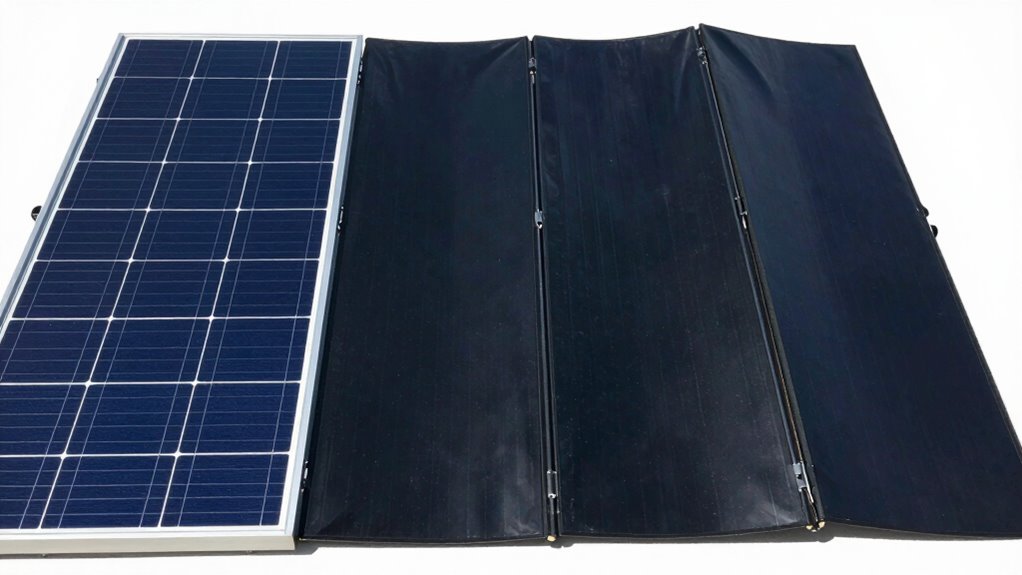
Have you ever wondered what sets different types of solar panels apart? The main types vary mainly due to their solar panel materials and manufacturing processes. Rigid panels typically use crystalline silicon, either monocrystalline or polycrystalline, created through precise manufacturing processes that produce durable, efficient panels. Flexible panels, on the other hand, often use thin-film solar cells made from materials like amorphous silicon or cadmium telluride, which are lightweight and adaptable. These manufacturing processes allow for more versatile applications, such as curved surfaces. Folding solar panels combine features of both, using lightweight materials and flexible substrates. Understanding these differences helps you choose the right type based on your needs, whether for permanent installation or portability. Additionally, craft and design tools such as specialized mounting hardware and customized enclosures can enhance the installation and functionality of your solar setup.
How Do Rigid Solar Panels Work, and Are They the Best for Permanent Installations?
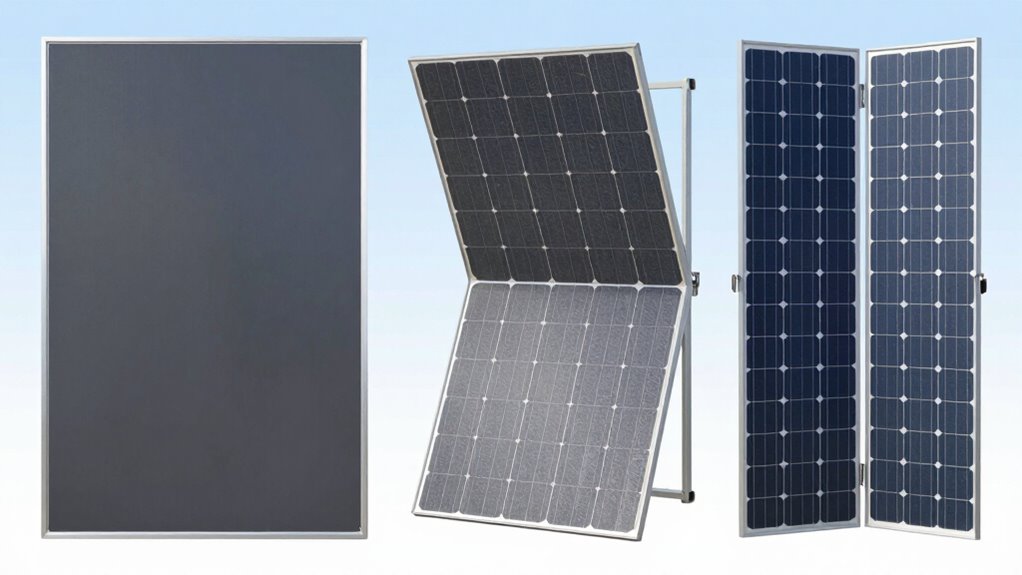
Rigid solar panels are known for their durability and stability, making them a popular choice for long-term setups. They also offer high efficiency and power output, which can maximize your energy production. When considering installation and maintenance, rigid panels tend to be straightforward and reliable for permanent installations. Additionally, their high static contrast ratio enhances the clarity and depth of the generated images, ensuring consistent performance over time.
Durability and Stability
Because of their sturdy construction, rigid solar panels are known for their durability and stability, making them a popular choice for permanent installations. Their material strength guarantees they withstand harsh weather conditions, such as wind, rain, and snow, over many years. These panels are designed with durable glass and robust frames that resist cracking and warping. To visualize their resilience, consider this table:
| Weather Resistance | Material Strength | Longevity |
|---|---|---|
| High resistance to wind | Strong aluminum frames | Lasts 25+ years |
| Waterproof design | Impact-resistant glass | Maintains stability |
| Snow load capacity | Corrosion-resistant materials | Reliable over time |
This combination of weather resistance and material strength makes rigid panels a dependable, long-term power solution for your home. Rigid panels are also typically more efficient at converting sunlight into energy, which further enhances their suitability for permanent setups.
Efficiency and Power Output
Rigid solar panels are designed with highly efficient photovoltaic cells that convert sunlight directly into electricity. Their sturdy construction ensures excellent solar panel durability, allowing them to withstand weather and environmental conditions over time. This stability helps maintain consistent power output, making them reliable for long-term use. While rigid panels typically offer higher efficiency compared to flexible options, their fixed positioning can sometimes lead to power output variability if not properly aligned with the sun’s path. However, once installed correctly, they deliver steady, high-quality energy. Because of their durability and consistent performance, rigid solar panels are commonly considered the best choice for permanent installations, especially where maximizing energy generation and longevity are priorities.
Installation and Maintenance
Installing rigid solar panels involves securely mounting them on a stable structure, typically a roof or ground frame, to guarantee they stay aligned with the sun’s path. You have multiple mounting options, such as flush mounts or tilt mounts, depending on your space and goals. Once installed, regular cleaning routines are essential to maintain efficiency; dirt, dust, and debris can reduce power output. Rigid panels are generally low-maintenance but benefit from periodic inspections to check for loose bolts or damage. Ensuring proper ventilation and avoiding shading will prolong their lifespan and maximize performance. Because of their durability and straightforward installation, rigid panels are often the best choice for permanent setups, especially on rooftops or ground-mounted systems designed for long-term use.
What Are Flexible Solar Panels, and When Should You Use Them?
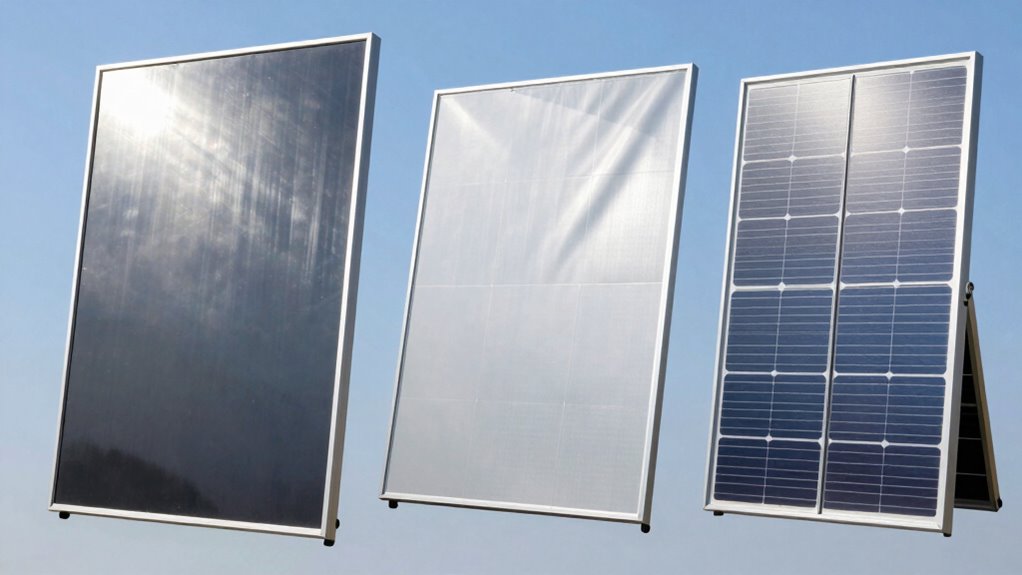
Flexible solar panels are a versatile option that can bend and conform to uneven surfaces, making them ideal for a variety of applications. Their flexible materials and lightweight design allow you to install them on curved roofs, backpacks, boats, or RVs where rigid panels wouldn’t fit. You should consider flexible panels when weight and adaptability are priorities, especially in tight or unconventional spaces. Additionally, their power quality can be optimized for off-grid or backup setups, ensuring reliable energy supply in diverse environments.
Why Are Folding Solar Panels Popular for Portable Solar Power?
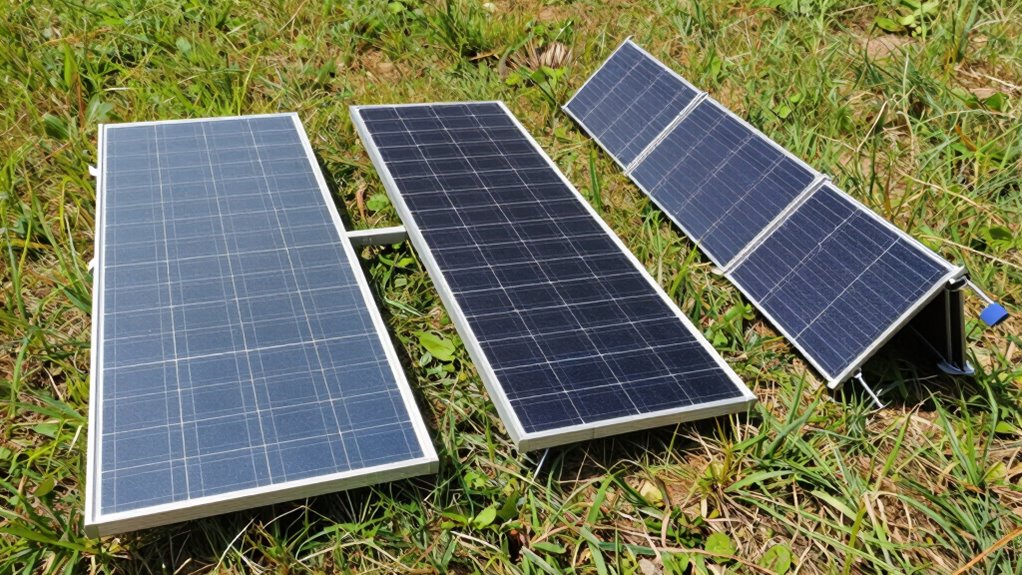
Folding solar panels have gained popularity for portable solar power because they combine convenience with high efficiency. Their portable convenience makes them ideal for camping, hiking, or emergency situations where mobility matters most. The lightweight design means you can easily carry them without straining your back or needing heavy equipment. Unlike rigid panels, folding models fold into compact sizes, fitting into backpacks or small storage spaces. This portability allows you to set up and pack away quickly, saving time and effort. Their sturdy hinges and durable materials ensure longevity even with frequent use. Additionally, many folding solar panels incorporate innovative design features that enhance their durability and ease of use. Overall, folding solar panels offer a perfect balance of power and portability, making them the go-to choice for anyone needing reliable, easy-to-transport solar energy on the go.
How Durable Are Different Solar Panel Types: Which Lasts the Longest?
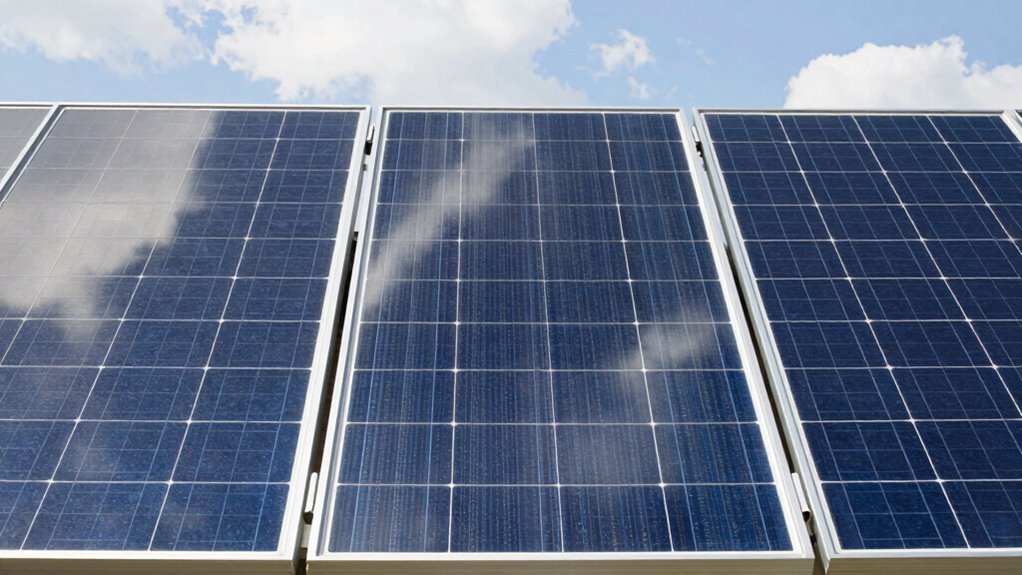
When it comes to durability, different solar panel types vary considerably in how long they last under various conditions. Rigid panels typically offer the highest material longevity because they are built with sturdy, weather-resistant materials like tempered glass and aluminum frames, making them highly resistant to wind, hail, and snow. Flexible panels, while lightweight and portable, tend to have shorter lifespans due to their thinner, more delicate materials that can degrade faster when exposed to harsh weather. Folding panels fall somewhere in between; their durability depends on the quality of their hinges and protective layers. Overall, rigid panels usually last the longest, often 25 to 30 years, thanks to their superior weather resistance and robust construction. Additionally, reliance on cloud services can impact the maintenance and monitoring of solar installations, emphasizing the importance of resilient infrastructure.
How Do Cost and Efficiency Compare Among Rigid, Flexible, and Folding Solar Panels?
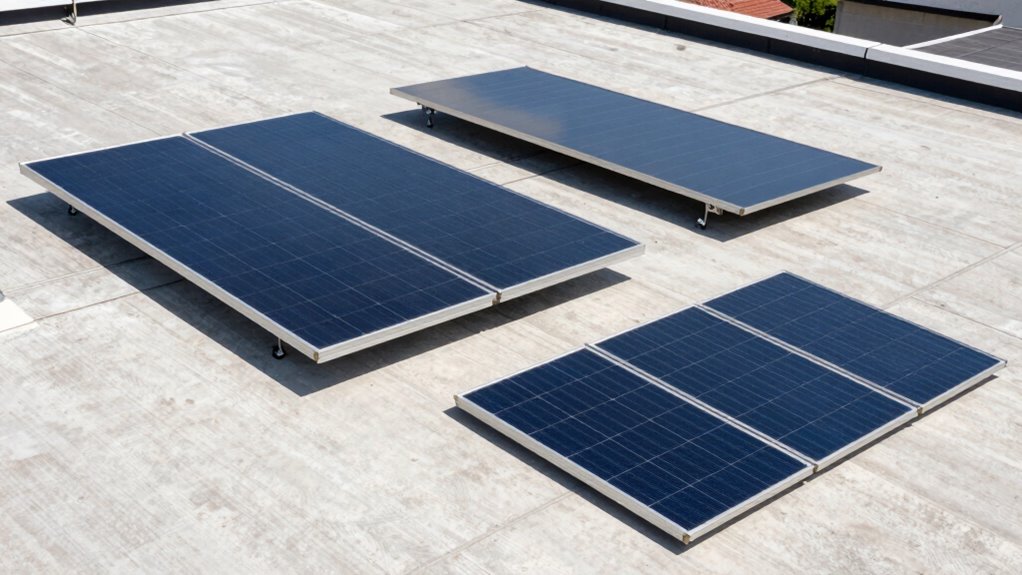
While rigid solar panels tend to be the most expensive upfront, they also offer the highest efficiency ratings, often converting around 15-20% of sunlight into electricity. Their cost comparison reflects this, as the initial investment is higher but generally leads to better energy output over time. Flexible panels are usually less costly and easier to install, making them appealing for temporary or portable setups, but their efficiency ratings are lower, typically around 10-15%. Folding solar panels fall somewhere in between: they’re moderately priced and portable, with efficiency ratings comparable to rigid panels but often slightly lower. Overall, your choice depends on balancing budget with desired efficiency; rigid panels deliver top performance but at a higher upfront cost, while flexible and folding options offer affordability with some trade-offs in efficiency. Additionally, backyard transformation essentials, such as creating comfortable seating and using landscaping, can enhance the overall energy efficiency by maximizing solar exposure.
Which Solar Panel Type Is Easiest to Install and Maintain?
Among the different solar panel types, flexible panels are generally the easiest to install and maintain. If you’re into mountain camping, flexible panels are lightweight and can be easily strapped onto backpacks or tents, making setup quick and hassle-free. For rooftop installations, their adaptability allows you to mount them on uneven surfaces without complicated brackets or heavy equipment. Maintenance is minimal; flexible panels have no moving parts and resist cracking better than rigid options. You won’t need specialized tools or extensive wiring knowledge. This simplicity saves you time and effort, whether you’re setting up in the wilderness or on your home roof. Additionally, their durability in harsh conditions makes them a reliable choice for outdoor use. Overall, flexible solar panels offer a straightforward, low-maintenance solution for various outdoor and rooftop energy needs.
How Do You Choose the Right Solar Panel Style Based on Your Needs?
Choosing the right solar panel style depends on your specific energy needs, budget, and installation environment. Consider factors like durability, flexibility, and ease of mounting. Rigid panels typically use durable solar panel materials like tempered glass, offering long-term warranty considerations, making them ideal for fixed installations. Flexible panels are lightweight and bendable, perfect for curved surfaces or portable setups, but may have shorter warranties. Folding panels provide versatility for temporary or mobile use, balancing portability with moderate durability. When selecting, weigh the importance of warranty coverage and material quality against your installation conditions. Understanding the regional climate and sunlight exposure can also influence the optimal choice of panel type and orientation.
Frequently Asked Questions
Are Flexible Solar Panels Less Efficient Than Rigid Ones?
Flexible solar panels are generally less efficient than rigid ones because their flexible efficiency tends to be lower due to thinner materials and different construction. When you compare flexible to rigid panels, rigid types usually produce more power per square foot. So, if you’re prioritizing maximum energy output, rigid panels are the better choice, but if you need lightweight, versatile options, flexible panels might suit your needs despite the efficiency difference.
Can Folding Solar Panels Handle Harsh Weather Conditions?
Can folding solar panels handle harsh weather? Absolutely. Think of them as the chameleons of the solar world, adapting to tough conditions with impressive weather durability. Their panel resilience guarantees they withstand high winds, rain, and snow better than you might expect. While they might not be as sturdy as rigid panels, modern folding designs are built for durability, making them a reliable choice when weather is unpredictable.
What Are the Environmental Impacts of Manufacturing Each Panel Type?
Manufacturing each panel type impacts the environment differently. Rigid panels often have higher manufacturing emissions due to energy-intensive processes and material use, but they last longer. Flexible panels typically use lighter, more sustainable materials, reducing environmental impact, though they may degrade faster. Folding panels balance portability with eco-friendliness, but their manufacturing still involves emissions. Overall, choosing materials with better sustainability can lower environmental impacts across all panel types.
How Do Shading and Dirt Affect Different Solar Panel Types?
Shading and dust accumulation can substantially impact your solar panels’ performance. Rigid panels are more sensitive to shading effects, which can reduce energy output quickly. Flexible panels handle dust better but may degrade faster if dirt builds up, affecting efficiency. Folding panels are portable, but shading impacts their smaller surface area more. Regular cleaning and proper placement help minimize these effects, ensuring your panels produce maximum power.
Are There Size Limitations for Portable Solar Panels?
You’ll find that portable solar panels do have size restrictions, mainly because of panel portability concerns. Larger panels tend to be heavier and harder to carry, limiting their practicality for outdoor adventures or emergency use. Most portable options are designed to be lightweight and compact, so size restrictions help guarantee you can easily pack, transport, and set them up. Keep in mind, the bigger the panel, the more power you can generate, but convenience may decrease.
Conclusion
Choosing the right solar panel depends on your needs, budget, and environment. Rigid panels suit permanent setups, flexible ones fit tight spaces, and folding options are great for portability—like carrying your solar chariot through the sands of time. Evaluate durability, efficiency, and ease of installation to make the best choice. Remember, even Da Vinci would agree that selecting the right solar panel is a wise step toward harnessing the sun’s boundless energy for generations to come.