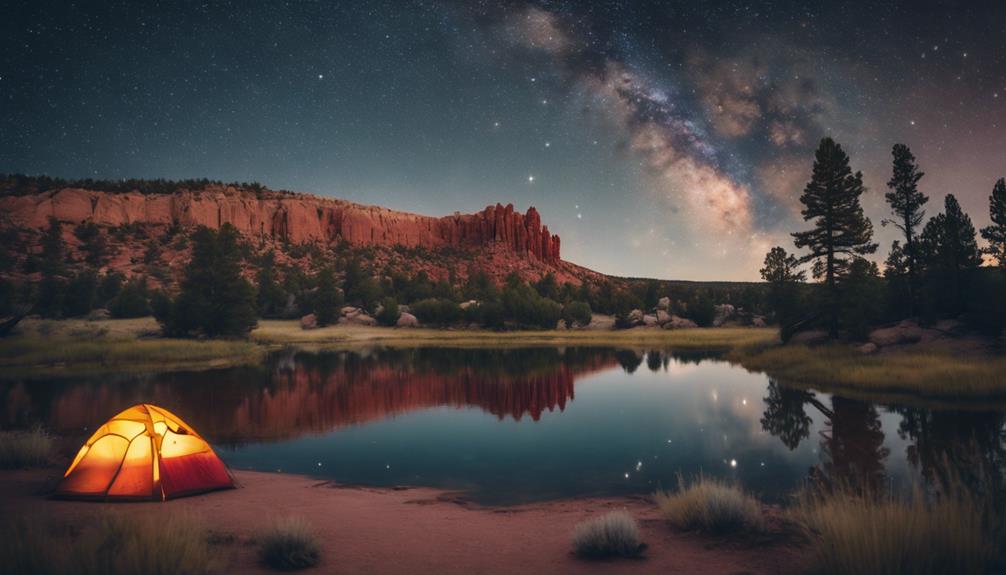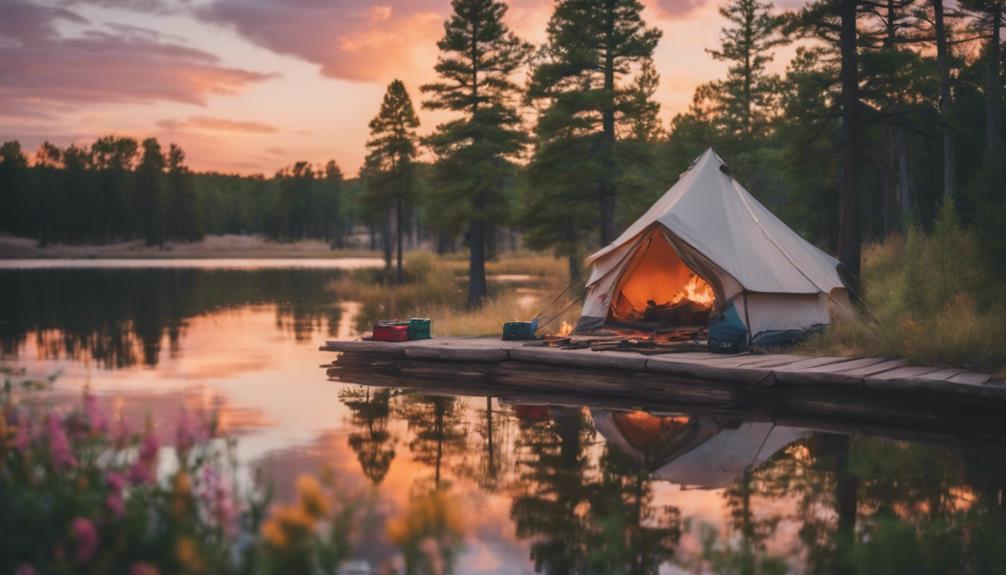
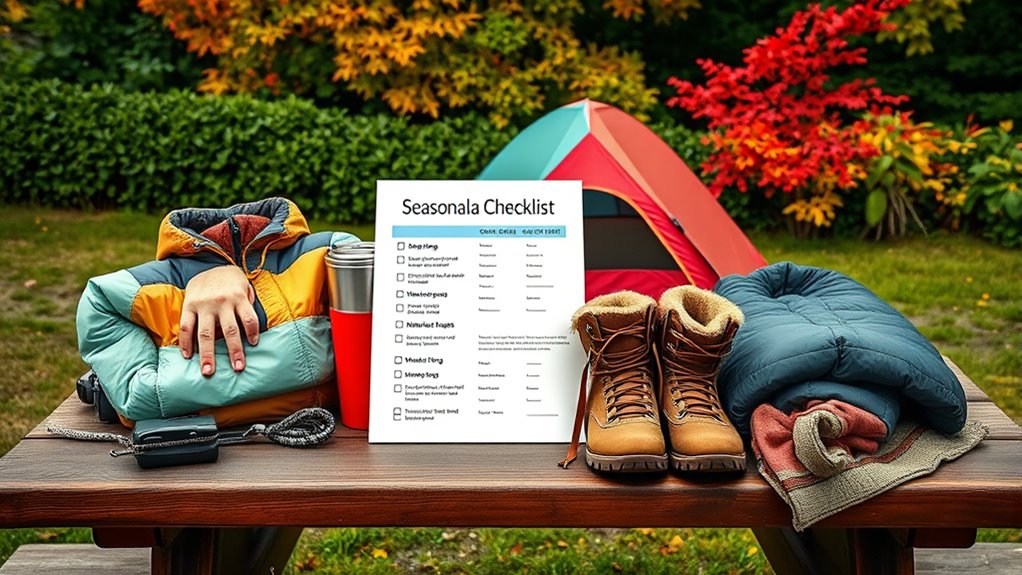

When camping through the seasons, prepare with a thorough checklist tailored to spring, summer, fall, and winter needs. In spring and fall, pack extra clothing, rain gear, and thermal layers to handle unpredictable weather, while summer camping calls for hydration, sun protection, and insect repellent. For winter, prioritize insulation, frostbite prevention, and waterproof gear. Always carry a first aid kit, flashlight, and emergency supplies. Staying aware of weather and wildlife safety guidelines ensures your adventure remains secure—all essential tips you can apply year-round.
Key Takeaways
- Pack weather-appropriate clothing, including rain gear, thermal layers, and sun protection for all seasons.
- Bring essential safety gear like a first aid kit, flashlight, multi-tool, and bear spray if in wildlife areas.
- Prepare for weather variability with waterproof gear, extra bedding, and contingency plans for severe conditions.
- Store food securely in bear-proof containers and dispose of trash properly to prevent wildlife attraction.
- Research specific seasonal risks and safety protocols for spring, summer, fall, and winter camping.
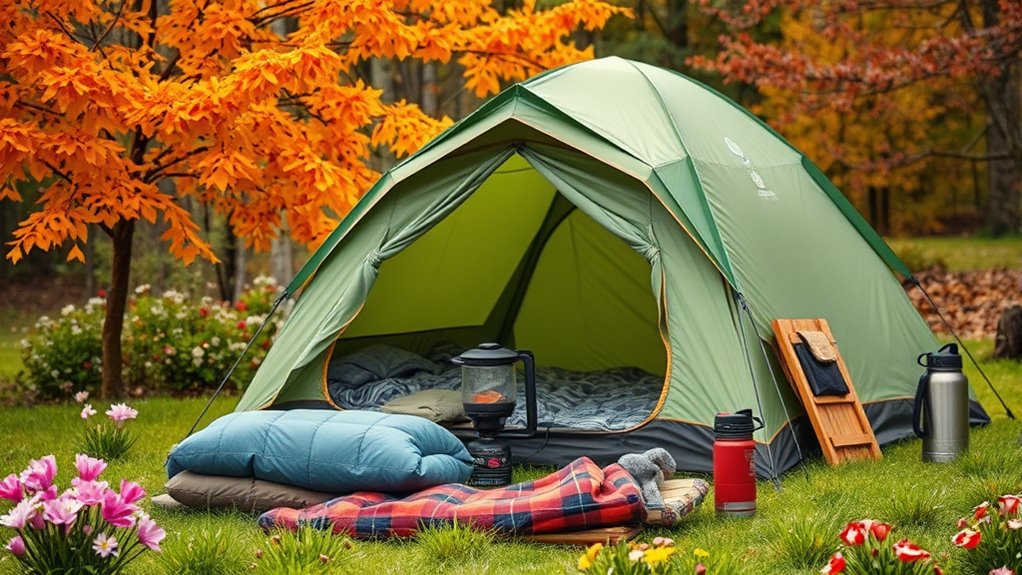
Preparing for seasonal camping requires careful planning and organization to guarantee a safe and enjoyable experience. One of the most critical aspects to cover is campground safety, which encompasses understanding the terrain, weather conditions, and local wildlife. Before arriving, research the area thoroughly—know the park rules, emergency protocols, and the location of the nearest medical facilities. When setting up your campsite, choose a flat, well-drained spot away from potential hazards like falling branches or flood-prone areas. Ensure your tent is properly secured with stakes and guy lines, especially if unpredictable weather is expected.
Wildlife precautions should be a top priority. Many campgrounds are home to various animals, some of which can pose risks if not handled properly. Store all food in bear-proof containers or lockers provided by the campground, and never leave food scraps or scented items outside your tent. Keep your campsite clean, disposing of trash in designated bins—wildlife is often attracted to leftover food or garbage. If you’re camping in bear country, familiarize yourself with the recommended safety measures, such as making noise while hiking to avoid surprising animals and carrying bear spray as a deterrent. Remember, wildlife is generally more interested in avoiding humans, but caution is essential to prevent negative encounters.
Store food securely, keep the campsite clean, and carry bear spray to prevent wildlife encounters.
Prepare for seasonal changes by packing appropriate safety gear. In spring and fall, weather can be unpredictable, so bring extra clothing, rain gear, and thermal layers. During summer, be vigilant about heat exhaustion and dehydration; in winter, prioritize insulation and protection against frostbite. Always have a well-stocked first aid kit accessible, along with a flashlight, multi-tool, and emergency supplies. Additionally, it’s beneficial to understand waterproofing camper canvas and how to maintain it to ensure your shelter stays dry in wet conditions.
Another practical step is to familiarize yourself with the campground’s specific safety guidelines regarding wildlife and environmental hazards. Some parks have designated food storage areas or require specific protocols to minimize animal interactions. Respect wildlife by observing from a distance and never approaching or feeding animals. This helps preserve natural behaviors and reduces the risk of dangerous encounters.
Frequently Asked Questions
How Do I Prepare My Vehicle for Seasonal Camping?
You should start by performing vehicle maintenance, including checking tire pressure, oil levels, and brake function. Conduct seasonal inspections to identify any potential issues like worn belts or leaks. Confirm your battery is in good condition and replace it if needed. Clean and inspect the cooling system, and top off all fluids. Pack an emergency kit, and verify your spare tire is functional. Proper preparation keeps your vehicle reliable and safe for seasonal camping adventures.
What Are the Best Eco-Friendly Camping Products?
You should choose eco-friendly camping products like biodegradable cookware to reduce waste and prevent pollution. Opt for solar-powered gadgets such as lanterns, chargers, and water heaters to minimize reliance on fossil fuels and lower your carbon footprint. These products are practical, durable, and sustainable, ensuring you enjoy your trip responsibly. Incorporating eco-friendly gear not only protects the environment but also enhances your camping experience with innovation and peace of mind.
How Can I Prevent Wildlife Encounters at My Campsite?
To prevent wildlife encounters at your campsite, follow essential wildlife prevention tips like storing food securely in bear-proof containers, keeping your campsite clean, and disposing of trash properly. Practice campsite animal awareness by avoiding leaving scented items out and respecting wildlife habitats. These practical steps help minimize attractants and keep both you and animals safe, ensuring a peaceful outdoor experience. Stay vigilant, and remember, respecting wildlife is key to responsible camping.
What Safety Measures Should I Take During Extreme Weather?
During extreme weather, always monitor weather alerts and heed official warnings. Make certain you have an emergency kit with essentials like first aid supplies, water, and extra clothing. Secure your campsite by anchoring tents and safeguarding loose items. Stay inside a sturdy shelter if severe conditions hit, and avoid risky areas like flood zones or unstable trees. Preparedness and quick response can keep you safe during unpredictable weather.
How Do I Store Perishable Food in Different Seasons?
You should focus on food preservation and refrigeration techniques to store perishable food across seasons. In warmer months, use coolers with ice packs and keep perishables in shaded, insulated containers. During colder seasons, utilize natural refrigeration by storing food in snow or underground, or use portable coolers. Always monitor temperatures, avoid cross-contamination, and consume perishables promptly to prevent spoilage and maintain food safety.
Conclusion
By mastering this seasonal camping checklist, you’re not just preparing for a trip—you’re forging a bond with nature’s timeless rhythm. Your gear becomes a symbol of resilience, adapting through spring blooms, summer heat, autumn leaves, and winter’s chill. Each item guarantees you’re ready to face whatever Mother Nature gifts you, turning every adventure into a chapter of growth and discovery. Embrace these essentials; they’re your guiding stars in the ever-changing tapestry of the wilderness.