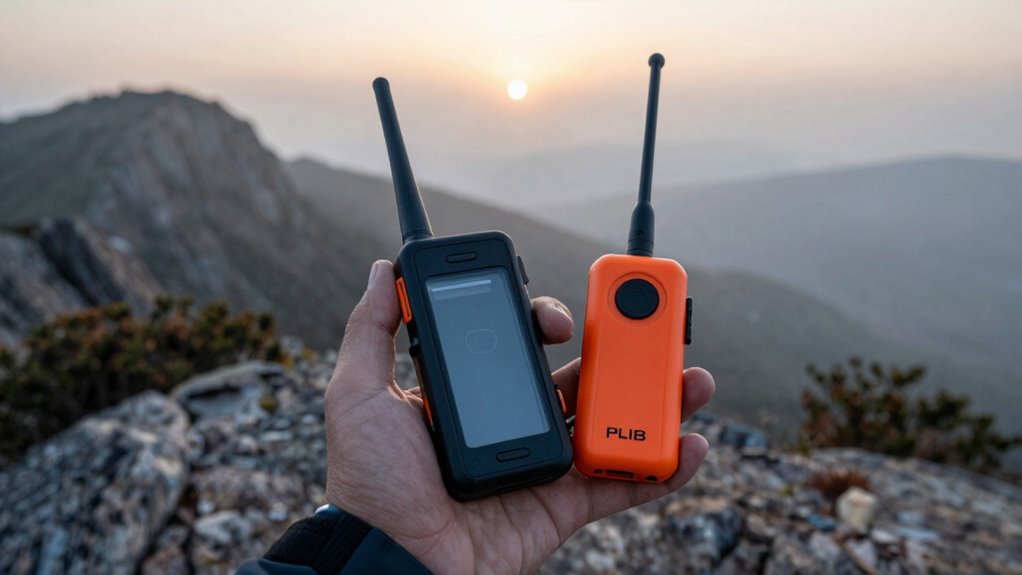

Choosing between a satellite messenger and a PLB depends on your outdoor needs. If you want two-way communication, ongoing safety updates, and can handle a larger device, a satellite messenger is ideal, especially for remote adventures. For quick, reliable emergency alerts with minimal operation, a PLB is better. To decide confidently and discover which device suits your activities best, explore the detailed differences below.
Key Takeaways
- Satellite messengers offer two-way communication and ongoing location sharing, ideal for extended trips and staying connected.
- PLBs provide one-way distress alerts with GPS coordinates, suitable for quick emergency activation in remote areas.
- Durability, weather resistance, and environmental factors impact signal reliability for both devices.
- Satellite devices are larger and more expensive, often requiring subscriptions; PLBs are compact, cost-effective, and simple to activate.
- Choose based on activity length, environmental conditions, need for communication, and budget considerations.
Why You Need Emergency Communication Devices for Outdoor Adventures
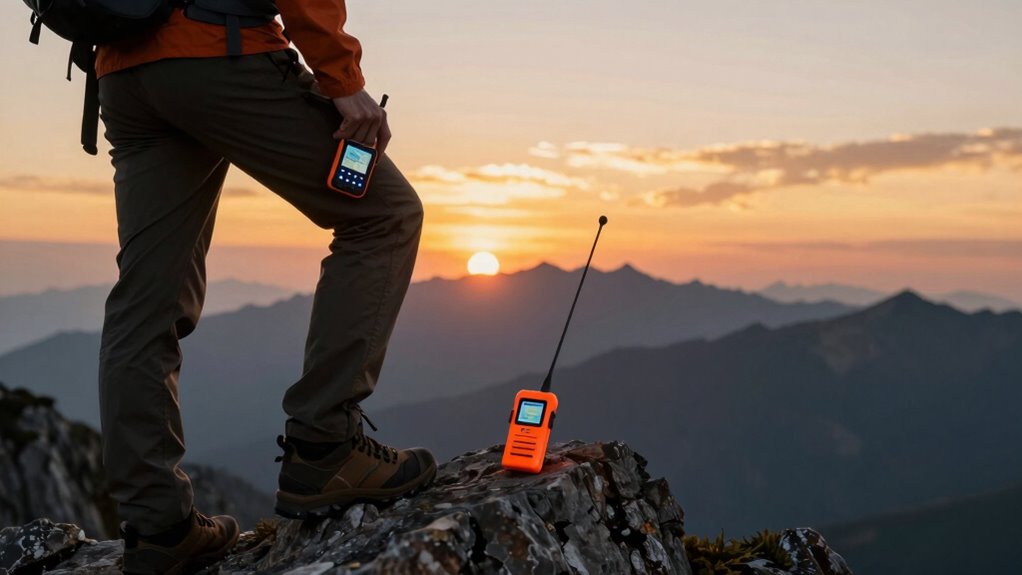
When you’re exploring remote areas, having reliable emergency communication devices is essential. These devices directly impact your personal safety by ensuring help is always within reach, even when cell service isn’t available. A durable device can withstand harsh conditions—like rain, dust, and drops—so you don’t have to worry about it failing when you need it most. Outdoor adventures often take you into unpredictable environments, making ruggedness a crucial feature. Without a dependable device, a simple accident or sudden storm could turn dangerous quickly. Investing in a sturdy, reliable emergency communication tool means you’re prepared for emergencies, giving you peace of mind to enjoy your adventure while knowing help is just a button away if needed. Additionally, selecting devices with appropriate ratings and derating for altitude and temperature ensures consistent performance in challenging outdoor conditions.
What Are Satellite Messengers and PLBs? An Overview

Satellite messengers and PLBs (Personal Locator Beacons) are essential tools for outdoor enthusiasts who need reliable emergency communication in remote areas. These devices use advanced satellite technology to send your location and messages when cellular networks aren’t available. Here’s what sets them apart:
Satellite devices ensure reliable emergency communication when cellular networks fail.
- Satellite Messengers: Offer two-way communication, allowing you to send and receive messages, track routes, and share your location with loved ones.
- PLBs: Focus solely on emergency alerts, transmitting your GPS coordinates directly to rescue services with minimal setup.
- Emergency Protocols: Both devices activate specific protocols to alert authorities, ensuring your safety during a crisis.
- Understanding the technology behind these devices helps users make informed decisions about aerial imaging and safety in their outdoor adventures.
Understanding these tools helps you choose the right device to stay connected and safe in the wilderness.
How Do Satellite Messengers and PLBS Communicate With Emergency Services?
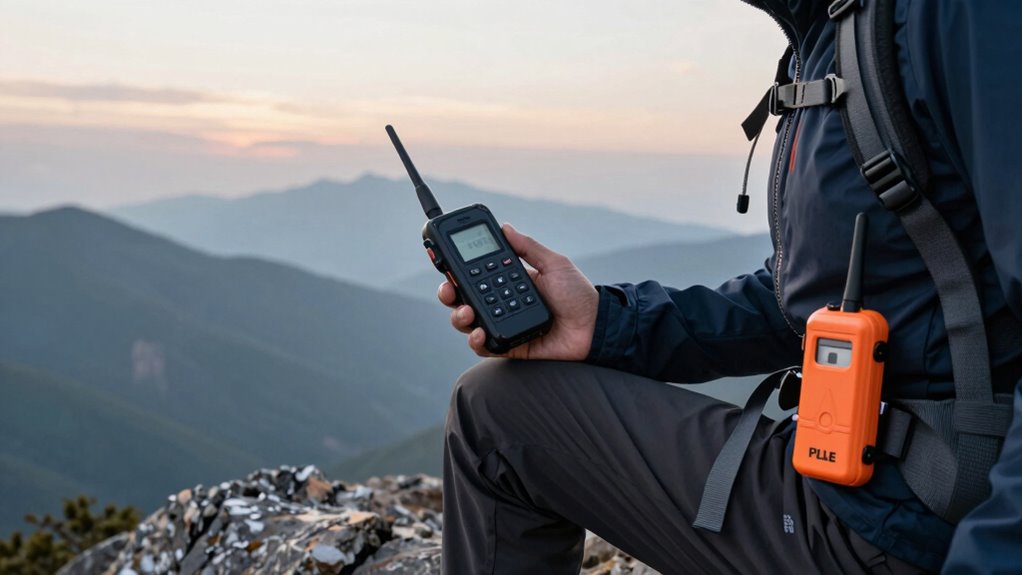
Satellite messengers and PLBs use different communication technologies to connect with emergency services. They transmit signals through satellites, which then relay your location and distress messages. Understanding how these systems work helps you see their role in emergency response and service integration. High reliability is essential for ensuring that distress signals are received promptly and accurately.
Communication Technologies Used
Both satellite messengers and Personal Locator Beacons (PLBs) rely on different communication technologies to connect with emergency services. Satellite messengers typically use satellite technology that sends your distress message via networks like Iridium, Globalstar, or Garmin’s inReach system. This allows you to send pre-set messages or interactive texts, following established emergency protocols. PLBs, on the other hand, use dedicated orbiting satellites to transmit a distress signal when activated. They send a simple, automated alert containing your location to rescue agencies. Here’s how they differ:
- Satellite messengers utilize two-way communication, enabling replies and updates.
- PLBs are one-way devices, solely transmitting distress signals.
- Both rely on satellite networks, ensuring connectivity even in remote areas.
- The communication technologies used are designed to function reliably in harsh environments and challenging terrains.
Signal Transmission Process
When you activate a satellite messenger or a PLB, the device immediately begins transmitting your distress signal via satellite networks. The process depends heavily on your device’s battery life; a fully charged battery guarantees the strongest, most dependable signal. As your device sends out the distress alert, it communicates with orbiting satellites that relay your message to emergency response centers. Signal strength plays an essential role—obstructions like mountains or dense foliage can weaken the connection, possibly delaying help. Satellite messengers often offer two-way communication, allowing you to send and receive messages, while PLBs typically only transmit a one-way alert. Keeping your device’s battery charged and positioning it in an open area can considerably improve the chances of a successful transmission during an emergency.
Emergency Service Integration
Satellite messengers and PLBs directly link to emergency services through different protocols and infrastructure. Your device’s durability and battery life play essential roles in reliable communication during emergencies. Here’s how they connect:
- Satellite messengers use two-way communication via satellites like Iridium or Globalstar, allowing you to send alerts and receive updates, but they depend on ongoing power and robust device durability.
- PLBs transmit a one-way distress signal using the COSPAS-SARSAT system, which is highly reliable but limited in communication options, making battery life vital for prolonged use.
- Both devices activate emergency protocols automatically or manually, ensuring that help is on the way. Proper maintenance of device durability and battery life ensures consistent emergency service integration when you need it most.
- Understanding the life span of batteries and how it impacts device readiness is crucial for ensuring continuous emergency communication in critical moments.
Key Features of Satellite Messengers and PLBs
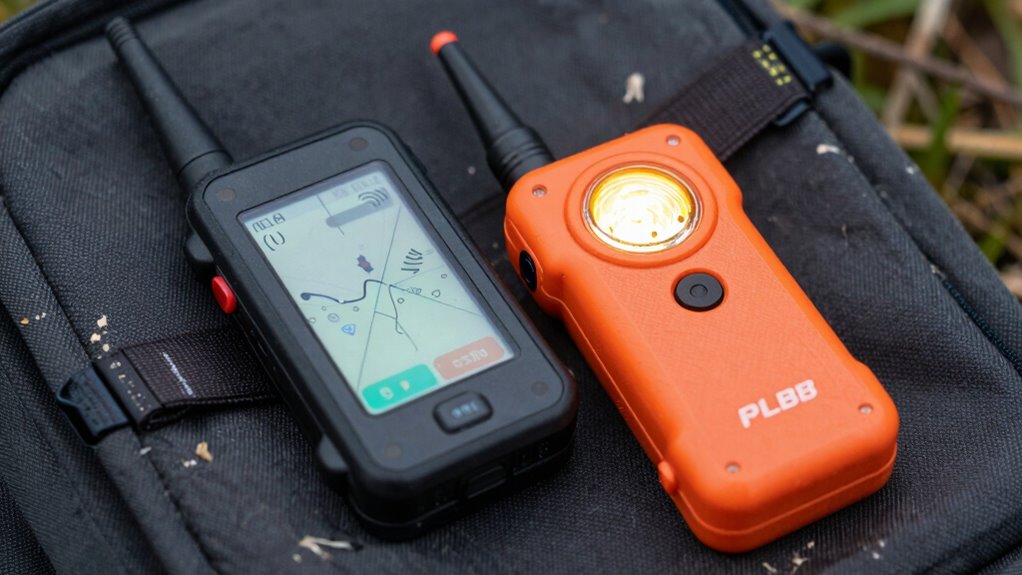
When choosing between a satellite messenger and a PLB, understanding their key features is essential. You’ll want to take into account how well they communicate, how much power they need, and how easy they are to carry and operate. Let’s compare their coverage, size, and user-friendliness to find the best fit for your needs. Additionally, considering cabling and mounting options can ensure proper installation and optimal performance in different environments.
Communication Capabilities and Coverage
Communication capabilities and coverage are crucial factors to consider when choosing between satellite messengers and PLBs. Your decision hinges on how well these devices connect in remote areas.
- Satellite messengers typically offer two-way communication, allowing you to send and receive messages globally, though GPS accuracy can vary based on signal quality.
- PLBs focus solely on distress signaling, transmitting emergency signals via the COSPAS-SARSAT system with reliable coverage over most oceans and remote regions.
- Battery life differs markedly; PLBs usually last 24-48 hours in distress mode, while satellite messengers can operate for days or even weeks, depending on usage and power management. Your choice depends on your need for ongoing communication versus emergency-only alerts.
- The communication coverage of these devices is also impacted by environmental conditions and terrain, which can affect signal strength and reliability.
Power, Size, and Ease of Use
Power, size, and ease of use are essential factors that influence how effectively you can rely on these devices in the field. A compact, lightweight device is easier to carry, while longer battery life ensures you’re covered during extended trips. Durability matters too—your device needs to withstand rough conditions without failing. Here’s a visual comparison:
| Feature | Satellite Messenger | PLB |
|---|---|---|
| Size | Slightly larger, bulkier | Compact, pocket-sized |
| Battery Life | Longer, days of use possible | Limited, typically 24-48 hrs |
| Device Durability | Rugged, weather-resistant | Very rugged, military-grade |
| Ease of Use | User-friendly, with screens | Simple, one-button activation |
| Power | Efficient, rechargeable or replaceable | Battery-powered, single use |
Choosing the right device depends on balancing these factors for your needs. durability standards can significantly impact device longevity in harsh environments.
How to Choose Between a Satellite Messenger and a PLB: Key Factors

Choosing between a satellite messenger and a PLB depends on your specific needs and how you plan to use the device. Key factors to evaluate include:
- Device durability – If you’ll be in rugged environments, prioritize durable devices that withstand water, shock, and dust.
- User interface – Opt for a device with an intuitive interface, especially if you’re not tech-savvy or need quick access during emergencies.
- Functionality – Decide if you need two-way communication (satellite messenger) or just a one-way emergency signal (PLB).
- Compatibility with home automation systems – Consider whether the device can integrate with other safety or smart home devices to enhance your overall safety setup.
Think about how often you’ll use it, environmental conditions, and your comfort with technology. These factors help ensure you choose the device that best fits your outdoor adventures and safety needs.
Comparing Costs and Maintenance of Satellite Devices and PLBs
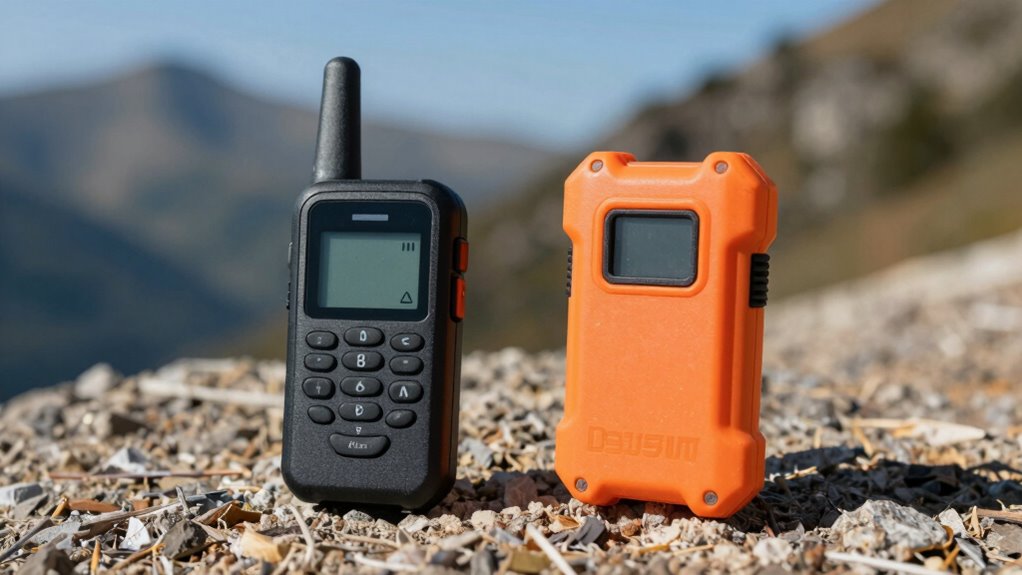
While both satellite devices and PLBs are vital for safety, they differ considerably in upfront costs and ongoing expenses. A satellite messenger typically has a higher initial purchase price but offers more features, such as two-way messaging. Its cost comparison shows monthly or annual subscription fees, which can add up over time. Maintenance requirements are generally minimal but include keeping the device charged and updating firmware. On the other hand, a PLB involves a lower upfront cost and no subscription fees, making it cheaper initially. However, it requires regular battery replacements or recharging, which can incur additional costs. Overall, your choice depends on balancing initial expenses with ongoing maintenance needs, ensuring you select a device aligned with your safety priorities and budget. Understanding the costs involved in these devices can help you make a more informed decision.
When Should You Use a Satellite Messenger or a PLB? Best Use Cases
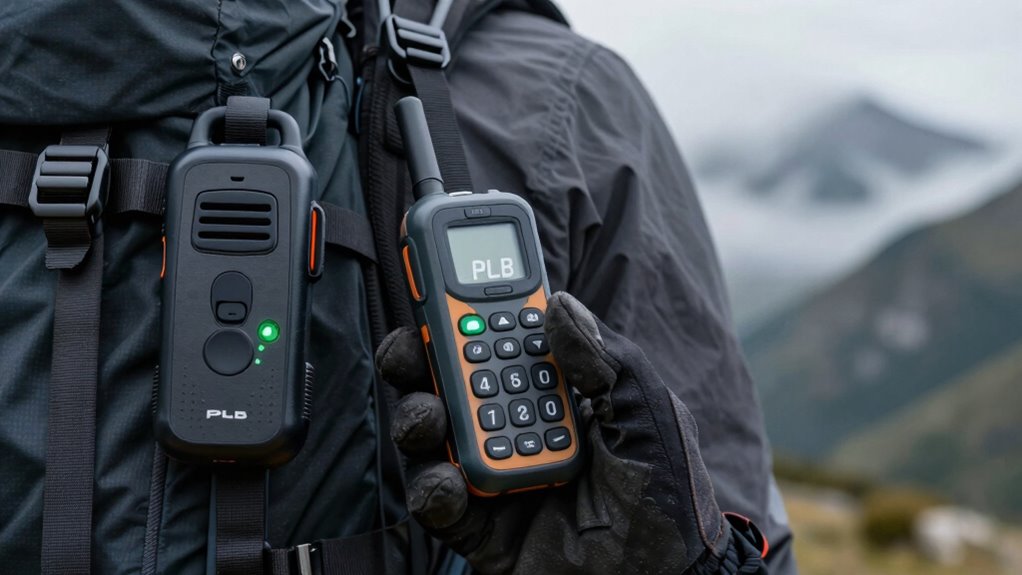
Knowing when to use a satellite messenger or a PLB depends on your specific safety needs and activity types. Consider these best use cases:
- For extended outdoor adventures where personal safety is a concern, a satellite messenger keeps you connected with family and emergency services, offering two-way communication.
- If you’re venturing into remote areas with minimal cell coverage, a PLB provides reliable, one-touch distress signals with high device durability.
- When participating in activities that demand quick, simple emergency alerts, a PLB’s straightforward operation ensures rapid response.
Choose a satellite messenger for ongoing communication and personal safety, especially on longer trips. Opt for a PLB for single, urgent emergencies where device durability and simplicity are critical.
How Reliable Are These Devices in Real Emergencies?
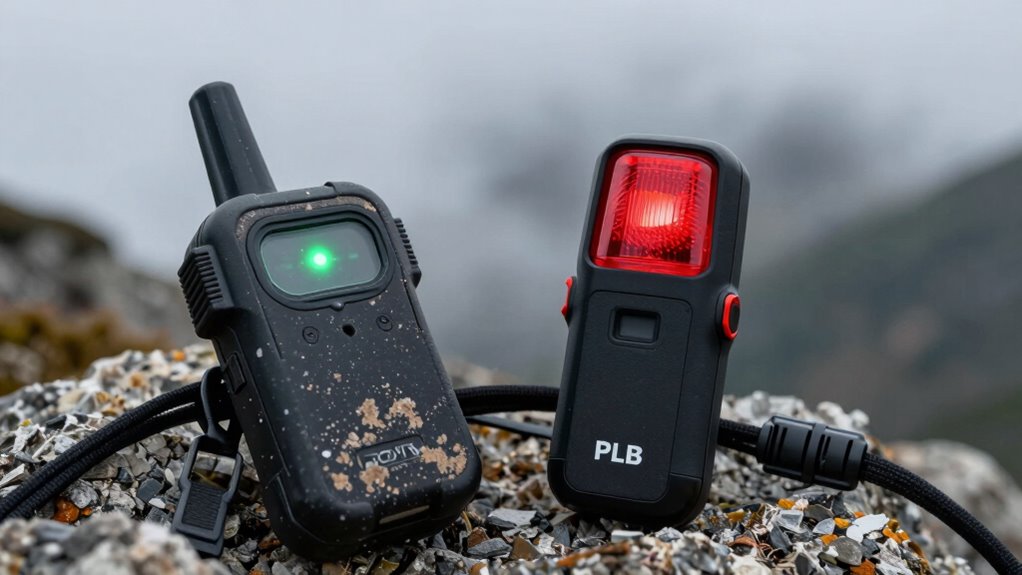
These devices are designed to activate during emergencies, but their reliability can vary depending on conditions. In real situations, device durability and signal reliability are essential. Weather, terrain, and device placement impact performance considerably. A well-maintained device with sturdy build can withstand rough conditions, ensuring it functions when needed most. Signal reliability depends on satellite coverage; dense forests or deep valleys may obstruct signals, delaying rescue. To illustrate, consider the following:
| Condition | Device Durability | Signal Reliability |
|---|---|---|
| Open terrain | High | High |
| Dense forest | Moderate | Low |
| Mountainous areas | Moderate to high | Variable |
| Stormy weather | Varies (protective case helps) | Reduced |
Choose your device based on environment and expected challenges for dependable emergency responses.
Frequently Asked Questions
Can Satellite Messengers Send Non-Emergency Messages?
Yes, satellite messengers can send non-emergency messages, making them great for personal safety and daily communication during outdoor adventures. You can stay connected with friends and family, share your location, or send updates even in remote areas without cell service. This feature guarantees you’re always reachable and safe, providing peace of mind while exploring, without the pressure of emergency use only.
What Is the Battery Life Difference Between Satellite Messengers and PLBS?
Your battery life blows away expectations—some satellite messengers last weeks on a single charge, while PLBs typically power down after 24 hours. This is thanks to their lower power consumption, designed to last longer during extended adventures. Satellite messengers are built for ongoing communication, so they sip power slowly, whereas PLBs prioritize immediate emergency alerts, sacrificing prolonged battery longevity. Choose based on how long your adventures last and your communication needs.
Are Satellite Devices Waterproof and Rugged Enough for Extreme Conditions?
Yes, satellite devices are designed with durability and weather resistance in mind. You can depend on them in extreme conditions, as they are typically waterproof, rugged, and built to withstand harsh environments. Their device durability ensures they won’t easily break or malfunction, even in heavy rain, snow, or rough terrain. This makes satellite messengers ideal for outdoor adventures where weather resistance and resilience are critical.
How Do Registration and Activation Processes Differ for These Devices?
Did you know that over 90% of emergency device users register their devices? You’ll find registration procedures straightforward; satellite messengers often require online registration before use, while PLBs need registration with authorities like the FCC. Activation steps also differ: satellite messengers typically require powering on and sending a message, whereas PLBs activate instantly with a manual distress signal. Understanding these differences helps guarantee you’re prepared when it matters most.
Do These Devices Work Globally or Only in Specific Regions?
You’ll find that many satellite messengers and PLBs offer global coverage, meaning you can use them almost anywhere in the world. However, some devices have regional limitations due to satellite networks or licensing restrictions. It’s essential to verify your device’s coverage area before heading out. If you travel widely, choose a device with global coverage to ensure you’re protected wherever your adventures take you.
Conclusion
Ultimately, choosing between a satellite messenger and a PLB depends on your adventure aspirations. Consider your communication needs, costs, and the convenience you crave. Both devices deliver dependable emergency support when disaster strikes, but your decision should suit your specific safety, security, and style. Stay savvy, select smartly, and stay safe—because preparedness and peace of mind are paramount on every expedition. Your safety is in your hands, so choose the device that best defends and delivers you from danger.