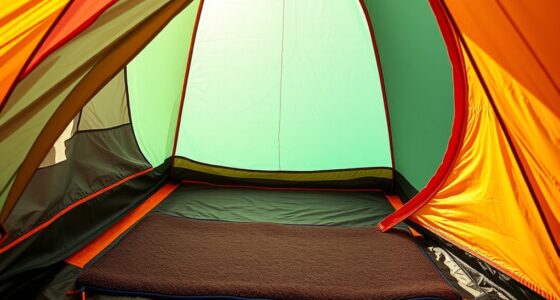


To reduce condensation in your tent, you should optimize ventilation by incorporating adjustable vents and mesh panels that facilitate cross-flow airflow. Opening vents at night helps release moist air while maintaining a comfortable temperature, consequently lowering humidity levels inside. Combining proper ventilation with breath control techniques — like steady breathing — further diminishes internal moisture buildup. Selecting tents with breathable fabrics and moisture management features enhances these efforts. Continuing to explore ventilation strategies will provide deeper insights on maintaining a dry, comfortable shelter.
Key Takeaways
- Use adjustable vents and mesh panels to promote cross-flow airflow inside the tent.
- Open vents during the night to allow humid air to escape and reduce internal humidity.
- Ensure proper positioning of vents to maximize airflow and prevent stagnant, moist air buildup.
- Combine ventilation with breath control techniques to minimize internal moisture sources.
- Maintain consistent airflow throughout the tent to prevent condensation from forming on surfaces.

Condensation inside tents occurs when warm, moist air comes into contact with cooler surfaces, leading to water droplets forming on the interior fabric. To combat this, effective breath control is essential. As you breathe, you release moisture into the tent’s internal environment. If this moist air isn’t managed properly, it condenses on the cooler fabric surfaces. Controlling your breath helps reduce the volume of moist air accumulating inside, minimizing the potential for condensation. Techniques such as breathing steadily and avoiding rapid, shallow breaths can help control moisture levels. Additionally, maintaining a steady airflow reduces the buildup of humid air, which is imperative for preventing condensation.
Another indispensable aspect is the implementation of moisture barriers within your tent setup. Moisture barriers act as physical barriers that prevent external moisture from penetrating the interior fabric or limit internal moisture migration. For example, using a tent with a high-quality, waterproof rainfly and sealed seams helps prevent external humidity or dew from infiltrating the living space. Inside the tent, a ground tarp or moisture-resistant bivvy bag creates an additional barrier against ground moisture, which is a common source of interior humidity. These barriers are especially important in damp environments or during cold nights when temperature differentials are greatest.
Proper ventilation strategies complement breath control and moisture barriers by actively removing humid air from inside the tent. Ventilation openings, such as adjustable vents or mesh panels, should be positioned to promote cross-flow airflow. Opening vents during the night allows moist air to escape and replaces it with drier air from outside, reducing the overall humidity level inside the tent. It’s essential to use vents in conjunction with your breath control efforts; even with good ventilation, excessive moisture from breathing can still cause condensation if not managed properly.
The choice of tent fabric also influences condensation management. Fabrics with advanced breathability features, such as those with microporous membranes, facilitate the transfer of moisture from the interior to the exterior, reducing internal humidity. When selecting your tent, consider models that incorporate moisture management technologies, as these are designed to work synergistically with your breath control and ventilation efforts. Enhanced breathability in tent fabrics is a key factor in managing internal humidity and preventing condensation buildup.
Frequently Asked Questions
Can Using a Dehumidifier Inside a Tent Prevent Condensation?
Using a dehumidifier inside a tent can help reduce condensation by lowering indoor humidity levels, but its effectiveness depends on the size of the tent and moisture sources. Dehumidifiers remove excess moisture from the air, preventing it from reaching saturation and forming condensation. However, they require power and generate heat, which might be impractical in camping scenarios. Proper ventilation remains essential for best moisture control and overall comfort.
How Does Tent Material Affect Condensation Levels?
You’ll notice that tents made from breathable fabrics, like ripstop nylon with mesh panels, markedly reduce condensation—up to 50% less than non-breathable materials. Fabric insulation impacts breathability issues because thicker or coated fabrics trap moisture more easily, increasing condensation. Technical differences, such as fibers’ permeability, determine how well the material allows moisture to escape, helping you stay dry and comfortable during your camping trip.
Are There Specific Ventilation Products Recommended for Tents?
You can improve ventilation by using portable fans designed for tents, which circulate air effectively. Additionally, vent accessories like adjustable vents or mesh panels help maintain airflow and reduce moisture buildup. Choose products with adjustable features for ideal control, ensuring proper moisture escape without letting in drafts. Properly positioned fans and vent accessories work together to promote cross-ventilation, considerably decreasing condensation and ensuring a more comfortable, dry interior environment.
How Does Outdoor Temperature Influence Tent Condensation?
When outdoor temperature drops dramatically, it can turn your tent into a tiny swamp, thanks to intense condensation. Low temperatures reduce air’s capacity to hold moisture, while outdoor humidity and temperature fluctuations cause your tent’s interior to continually release and collect moisture. To combat this, increase ventilation during temperature swings, allowing moist air to escape and preventing water buildup, which keeps your tent dry and comfortable.
Can Condensation Cause Long-Term Damage to Tents?
Condensation can cause long-term damage to your tent by weakening the tent material, leading to mold, mildew, and fabric deterioration. Persistent moisture accelerates the breakdown of synthetic fibers and waterproof coatings, compromising structural integrity and water resistance. Over time, this damage reduces your tent’s lifespan and effectiveness, making proper ventilation vital to prevent moisture buildup, protect the fabric, and guarantee durability for future use.
Conclusion
By implementing proper ventilation strategies, you can substantially reduce condensation inside your tent, even in humid conditions. While some might think opening vents causes heat loss, the benefits of moisture control and improved air quality outweigh the minor temperature drop. Ensuring consistent airflow prevents dampness buildup and maintains a comfortable environment. Ultimately, integrating these ventilation techniques is essential for preserving your gear and ensuring a dry, healthy camping experience, regardless of external weather variations.