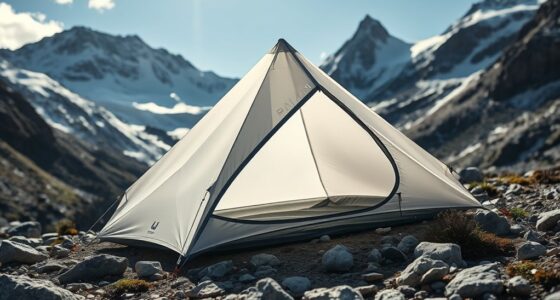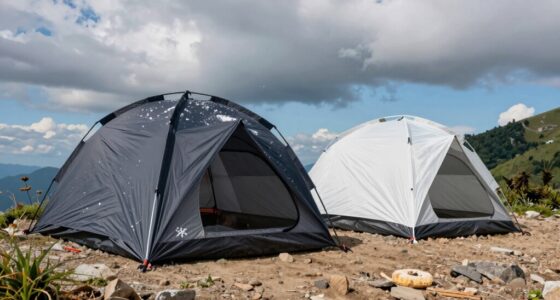
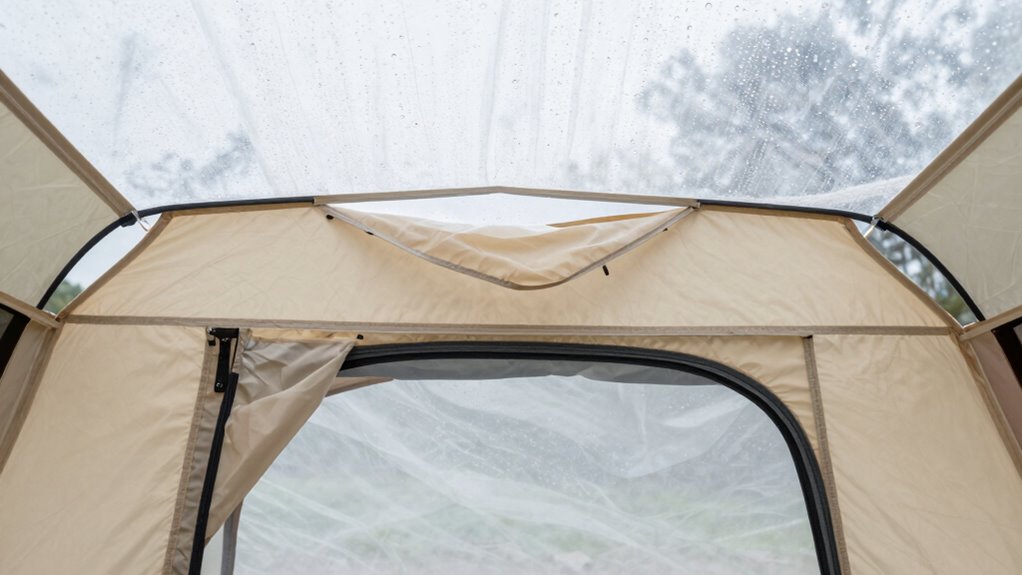
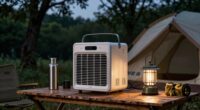
To fix tent condensation with simple ventilation moves, guarantee your tent’s vents and windows are kept slightly open, especially during high humidity or after cooking. Position vents to face prevailing winds for better airflow and avoid sealing all openings tight. Elevate your tent and keep interior gear away from walls to promote air circulation. Using mesh panels and creating small vents with breathable covers can also improve airflow. Keep exploring for more effective tips to stay dry during your trip.
Key Takeaways
- Keep tent vents and windows slightly open at all times to promote continuous airflow.
- Position vents to face prevailing winds for effective cross-ventilation.
- Elevate the tent and its entrances to improve air circulation and reduce ground moisture buildup.
- Use breathable fabrics and mesh panels to enhance moisture escape.
- Avoid sealing all vents or blocking airflow with gear to prevent humidity from accumulating inside.
Why Does My Tent Get So Wet? Understanding Condensation and Its Effects
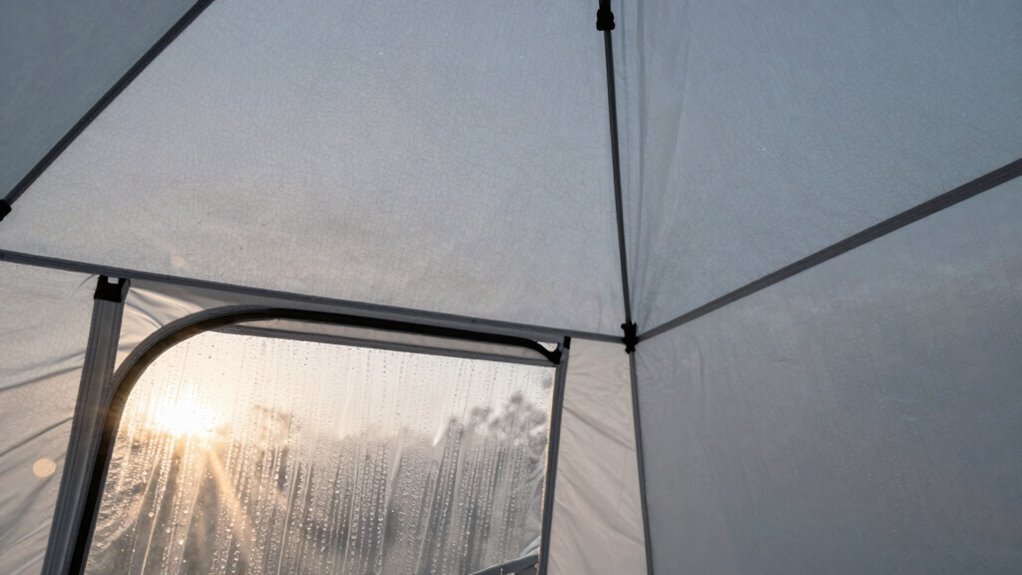
If you’ve ever woken up to a damp tent, you’re not alone—condensation is a common issue for campers. It happens when moisture sources inside and outside your tent interact with environmental factors. Inside, activities like breathing, sweating, or cooking release moisture into the air. Outside, environmental factors like high humidity, dew, or rain increase moisture levels around your tent. When warm air inside your tent meets cooler surfaces, like the walls or ceiling, the moisture condenses into tiny water droplets. This process is natural but can lead to a wet, uncomfortable sleeping environment. Understanding these moisture sources and environmental influences helps you better grasp why your tent gets so wet and prepares you to take steps to reduce condensation. Additionally, exploring new content formats can provide innovative ways to share tips and insights on managing condensation effectively.
How to Set Up Your Tent for Better Airflow
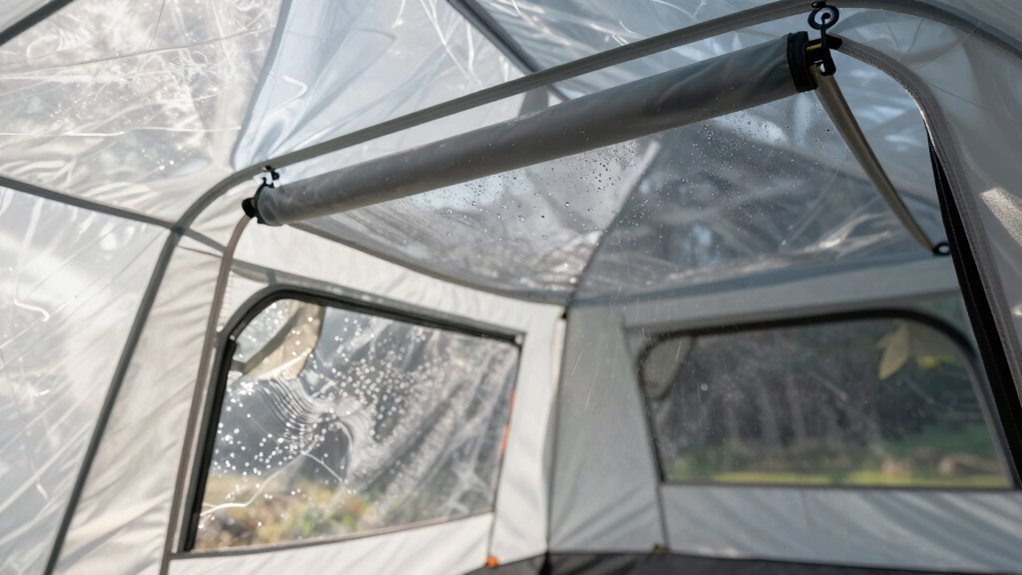
Setting up your tent to promote better airflow can considerably reduce condensation and keep your sleeping area dry. Proper tent placement is vital—choose a spot with natural ventilation, avoiding low-lying areas prone to dampness. Gear selection also matters; opt for lightweight, breathable materials that facilitate air movement. To improve airflow:
- Position your tent with vents or doors facing prevailing winds for natural cross-ventilation
- Elevate your tent slightly using rocks or stakes to prevent ground moisture from seeping in
- Use a tent with adjustable vents or mesh panels to control airflow as needed
- Incorporate projector technology features like adjustable vents or mesh panels to optimize airflow and reduce humidity
These simple steps ensure fresh air circulates, minimizing moisture buildup and making your camping experience more comfortable. Good airflow is your best defense against unwanted condensation inside your tent.
Tent Ventilation Tips to Prevent Moisture Build-Up
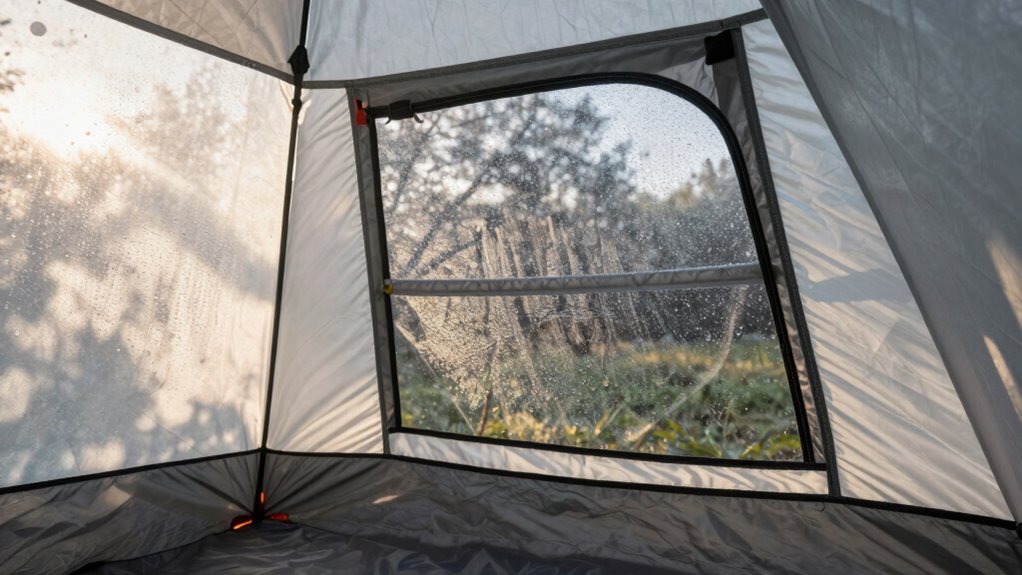
Maintaining proper ventilation is essential to prevent moisture from building up inside your tent. Your tent material plays a role, as breathable fabrics like nylon or polyester help moisture escape more effectively than non-vented materials. Consider your weather conditions: if it’s humid or rainy, keep vents open or slightly ajar to promote airflow without letting in too much rain. During warmer nights, open windows and roof vents to allow moist air to escape and fresh air to circulate. Avoid sealing all vents, as this traps humidity inside. Adjust your ventilation based on the forecast, and always verify airflow pathways are clear of obstructions. Strategic regionally-inspired flavors and consistent, strategic ventilation is key to reducing condensation and keeping your tent dry.
DIY Ventilation Hacks to Keep Your Tent Dry
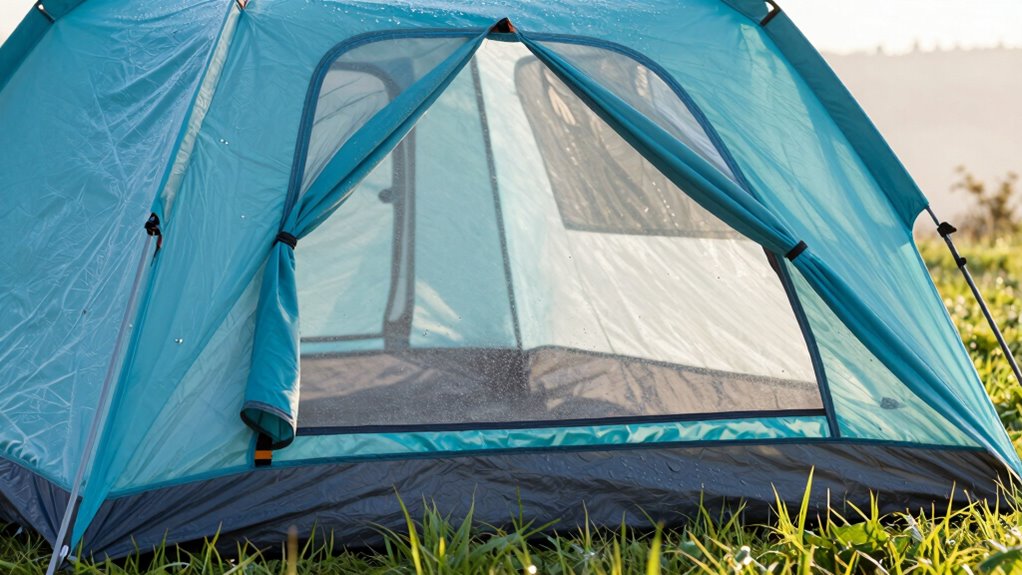
Looking for simple ways to boost your tent’s ventilation? Small tweaks can make a big difference in managing humidity buildup and protecting your tent material. Try these DIY hacks:
- Create small vents by carefully cutting tiny openings on opposite sides, then cover them with breathable fabric for airflow.
- Use a fan or battery-operated vent to circulate air inside, reducing moisture stagnation.
- Elevate your tent’s entrance with a makeshift barrier or tarp to encourage better airflow and prevent trapped humidity.
- Ensure proper air exchange by opening your tent periodically to allow moist air to escape and fresh air to enter.
These quick fixes help keep your tent dry and comfortable, especially during humid nights. Proper ventilation prevents moisture from settling on your tent material, reducing condensation and prolonging its lifespan. With a little ingenuity, you can stay dry and enjoy your outdoor adventures more fully.
Common Mistakes That Make Tent Condensation Worse: And How to Avoid Them
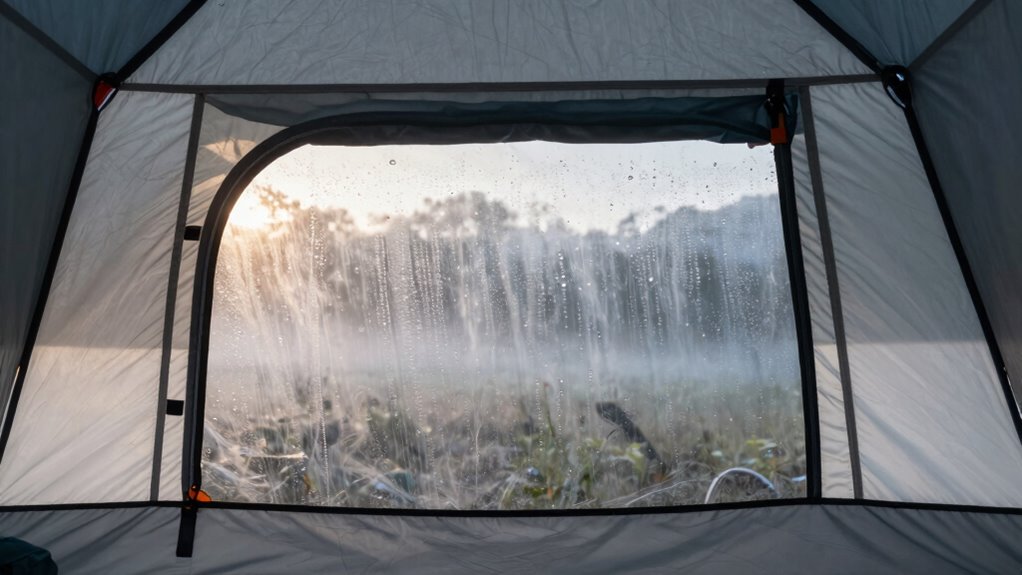
Blocking ventilation paths and ignoring proper air circulation can trap moisture inside your tent. When airflow is restricted, condensation worsens instead of facilitating. To avoid this, keep vents clear and ensure good circulation during your stay. Additionally, understanding effective ventilation techniques can help you maintain a dry and comfortable tent environment.
Blocking Ventilation Paths
When you seal off ventilation paths in your tent, you trap moist air inside, making condensation worse. Ventilation blockers and airflow obstructions prevent fresh air from replacing moist interior air, causing humidity to build up. This can lead to damp bedding, mold, and an uncomfortable sleeping environment. To avoid this, guarantee your tent’s vents are unobstructed and open during use. Be cautious of:
- Blocking vents with gear or clothing
- Zipping or closing windows completely
- Using heavy fabrics that seal vents shut
These mistakes trap moisture and inhibit proper airflow. Instead, keep vents clear and slightly open to promote continuous air exchange. Proper ventilation reduces humidity, minimizes condensation, and keeps your tent dry and comfortable overnight. Understanding ventilation helps prevent moisture buildup and enhances your camping experience.
Overlooking Air Circulation
Neglecting proper air circulation inside your tent can quickly worsen condensation issues, even if vents are open. Without good airflow, moisture lingers, forming droplets on walls. Be mindful of airflow barriers like gear or fabric that block ventilation placement. Properly positioning vents allows fresh air to replace humid air effectively. To improve circulation, consider the following:
| Airflow Barrier | Ventilation Placement | Effect on Condensation |
|---|---|---|
| Large gear | Vents at opposite ends | Promotes cross-ventilation |
| Wet clothing | Keep away from vents | Reduces localized moisture |
| Blocking fabric | Use mesh panels | Prevents airflow obstruction |
Avoid blocking vents or creating barriers that restrict airflow, ensuring consistent circulation inside your tent.
Extra Tips for a Dry, Cozy Camping Trip
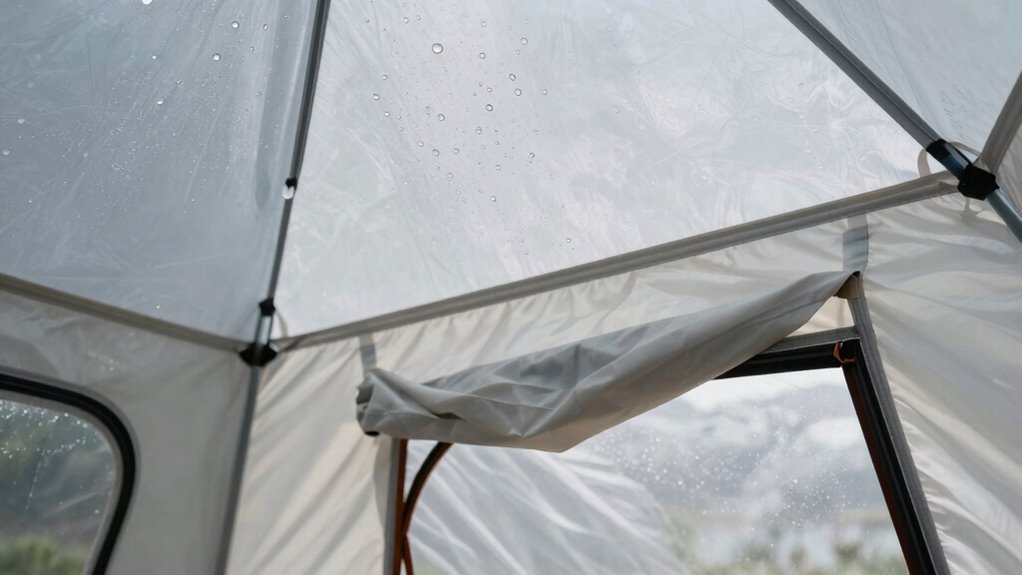
Looking for simple ways to keep your tent dry and comfortable? Focus on enhancing tent insulation and rainfly ventilation. Proper tent insulation traps warmth, reducing condensation buildup inside. Meanwhile, maximizing rainfly ventilation allows moist air to escape, keeping the interior dry.
To boost comfort, consider these tips:
- Use a reflective ground tarp to insulate against dampness
- Keep rainfly vents open to promote airflow
- Elevate your tent slightly on uneven ground for better drainage
- Select a tent with built-in ventilation features to improve airflow and reduce moisture
These small adjustments make a big difference in preventing condensation. Adequate ventilation and insulation create a cozy, dry environment, even in wet conditions. With careful setup, you’ll enjoy a more comfortable, condensation-free camping trip.
Frequently Asked Questions
Can Using a Fan Inside the Tent Reduce Condensation?
Using a fan inside your tent can help reduce condensation, but it’s often more effective with portable dehumidifiers or moisture absorbers. Fans improve airflow, which minimizes moisture buildup, while dehumidifiers actively remove excess humidity from the air. Moisture absorbers are a simple, chemical-based option. Combining these methods with proper ventilation guarantees your tent stays dry and comfortable, preventing condensation from becoming a persistent problem during your trip.
What Materials Are Best for Ventilation in Tents?
You should choose lightweight, breathable tent fabrics like polyester or nylon with mesh panels to maximize airflow. Ventilation vents made from durable, mesh-covered openings help air circulate, reducing condensation. Imagine fresh air flowing freely through your tent, preventing moisture buildup. By combining these materials and vents, you create a well-ventilated space that stays dry and comfortable, even during humid nights.
Does Placing a Tarp Under the Tent Help With Moisture?
Placing a tarp under your tent can help with moisture absorption by creating a barrier against ground moisture, preventing it from seeping into your tent floor. Proper tarp placement guarantees water doesn’t accumulate underneath, which reduces condensation buildup inside. Make sure the tarp is slightly elevated at the edges to allow water runoff. This simple move enhances ventilation and keeps your tent drier, making your camping experience much more comfortable.
How Do Weather Conditions Influence Tent Condensation?
Weather conditions dramatically impact moisture control inside your tent. When humidity is high or temperatures fluctuate, condensation forms more easily, soaking your gear and making sleep uncomfortable. Climate impact plays a key role, with cold, damp air increasing condensation. You stay dry by increasing ventilation, using vents, or adjusting your tent’s position. Keep an eye on the weather, and adapt your moisture control tactics to stay comfortable no matter the forecast.
Are There Specific Tent Designs Better at Preventing Moisture Buildup?
You’ll find that tents with breathable materials like polyester or nylon help prevent moisture buildup better. Smaller tents tend to trap less humidity, making condensation less likely. Look for designs with multiple vents or adjustable airflow features, as these actively promote better ventilation. Choosing the right tent material and size, along with proper setup, considerably reduces moisture, keeping your camping experience dry and comfortable.
Conclusion
Now that you know these simple ventilation tricks, your tent can stay dry and cozy, no matter the weather. But don’t let your guard down—there’s one more secret to truly preventing condensation that most campers overlook. Are you ready to uncover this game-changing tip that could transform your camping experience forever? Stay tuned, because the next move might just be the key to never waking up damp again. The best camping nights are just one step away.