
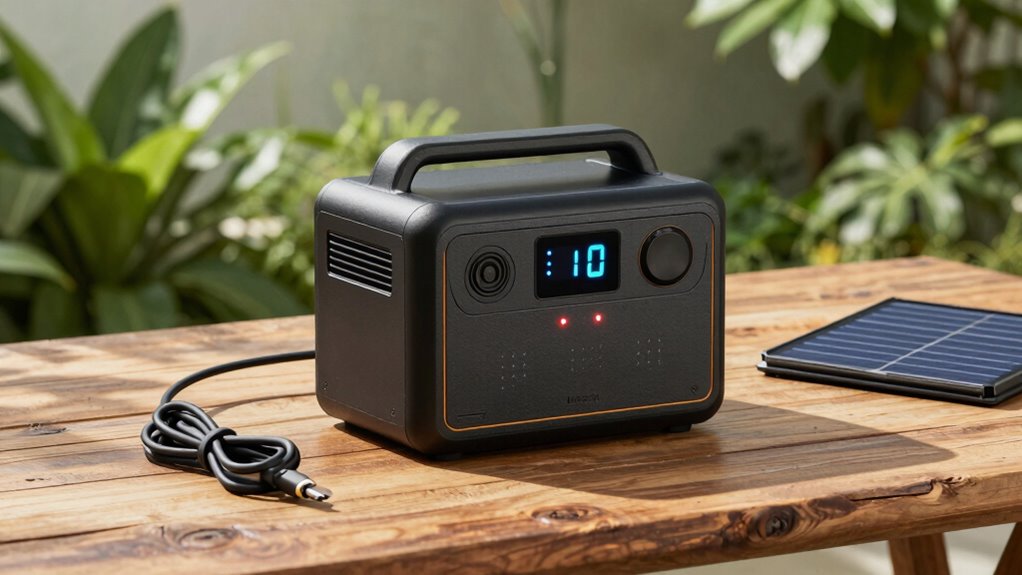
Stop guessing your portable power station size—use a reliable size calculator to match your device needs accurately. First, list all your devices and their wattages. Then, determine how long you’ll need power and consider features like portability and charging options. A good calculator factors in these details, helping you pick the right capacity without overspending or carrying excess weight. Keep going, and you’ll discover how to confidently choose the perfect power station for any situation.
Key Takeaways
- List all devices with wattage and usage duration to accurately estimate total energy needs.
- Use a size calculator that considers battery capacity, inverter wattage, and port options for precise sizing.
- Balance capacity and portability by evaluating weight, size, and power requirements to find the optimal station.
- Incorporate recharging methods like solar compatibility to ensure sustainable and flexible energy replenishment.
- Avoid common pitfalls by matching device demands with station features, preventing over- or under-sizing your power station.
Why Choosing the Right Portable Power Station Size Matters
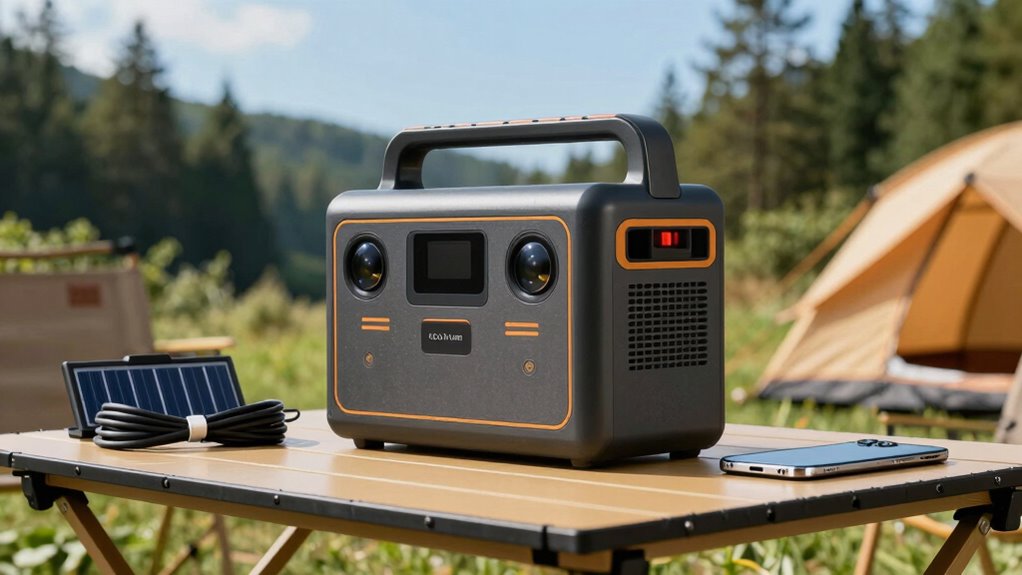
Choosing the right size for your portable power station is essential because an undersized unit may not meet your power needs, while an oversized one can be unnecessarily heavy and expensive. Battery life is a key factor—you want a device that can sustain your devices for as long as needed without frequent recharges. A larger power station typically offers longer battery life, reducing downtime during outings. Charging speed also matters; a bigger unit might take longer to recharge, which could delay your plans. Conversely, a smaller station may charge quickly but won’t last through extended use. Selecting the right size ensures you balance battery life and charging speed, so you have reliable power without carrying unnecessary weight or spending extra. Considering the power requirements of your devices can help you choose the optimal size for your needs. This choice keeps your outings efficient and stress-free.
How Much Power Do You Need for Your Activities?
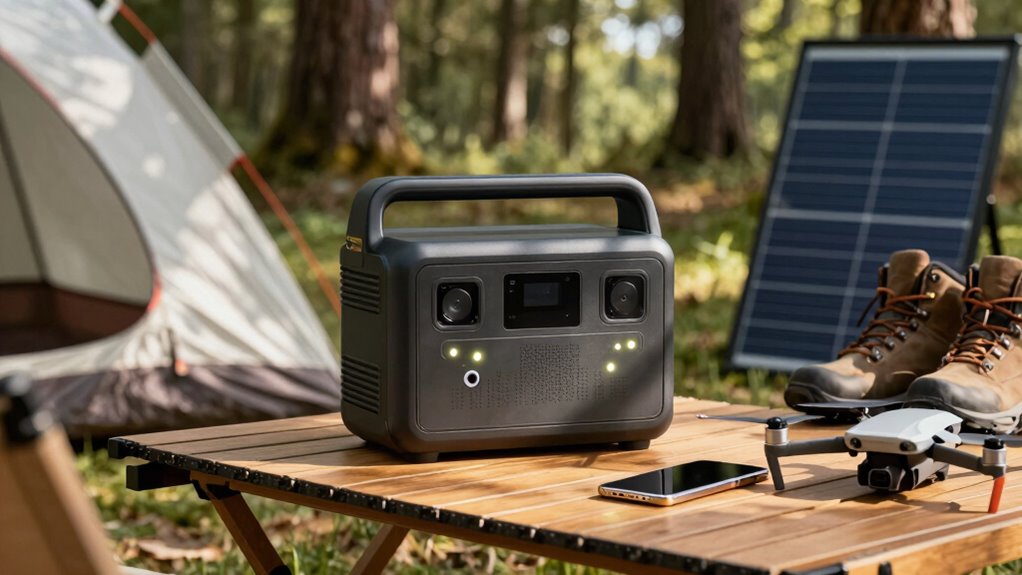
To determine how much power you need, start by listing all the devices you’ll use during your outing and noting their wattage or power requirements. This helps guarantee your portable power station can handle your needs and supports battery longevity. Think about devices like lights, phones, or small appliances, and consider their startup surges. To simplify, compare your total wattage with your station’s capacity, keeping in mind future expansion for renewable integration like solar panels. Here’s a quick overview:
| Device | Power Requirement | Usage Duration |
|---|---|---|
| Smartphone Charger | 10W | 4 hours |
| LED Light | 5W | 6 hours |
| Small Fan | 20W | 3 hours |
| Laptop | 60W | 2 hours |
| Mini Fridge | 80W | 5 hours |
Matching these ensures you select a station that balances power needs and longevity. Additionally, understanding your power consumption can help optimize your setup for efficiency and longer usage times.
What Factors Affect Your Portable Power Station Size?
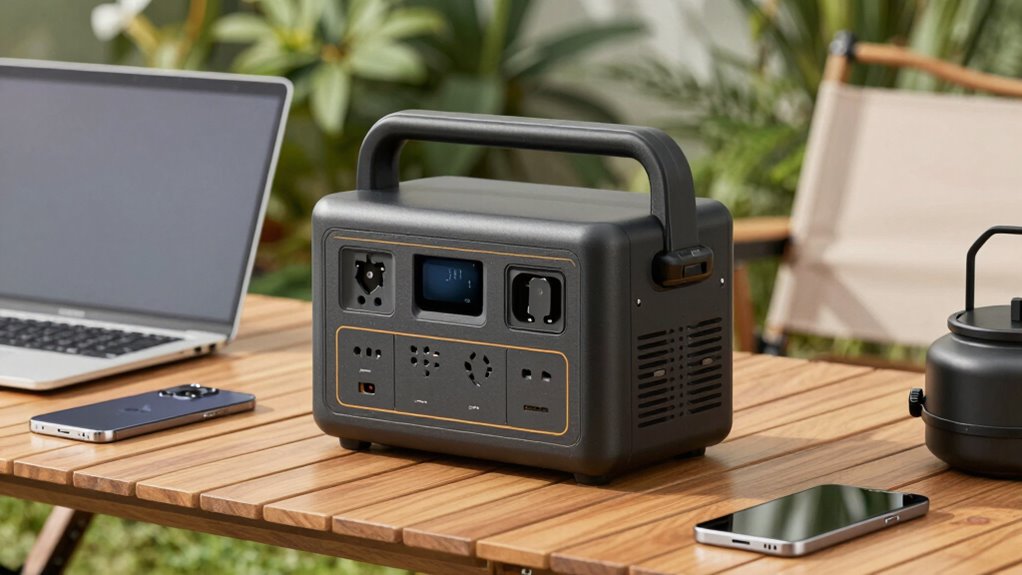
Several factors influence the size of the portable power station you need, and understanding them helps make certain you select the right one. One key factor is battery capacity, which determines how much energy your station can store and supply. Larger capacity means longer usage but also increases size and weight. Port selection is another vital aspect; consider how many outlets and types you need to run your devices simultaneously. If you plan to charge multiple gadgets or larger appliances, you’ll want a station with more and diverse ports. Additionally, think about the power output needed for your devices. Balancing battery capacity with port selection ensures you get a portable power station that meets your needs without unnecessary bulk. Understanding energy storage can help you better assess the ideal size for your setup.
How to Estimate Your Device Power Consumption

To estimate your device power consumption, start by identifying each device’s power needs. Check their power specifications, usually listed in watts or amps. Understanding breed characteristics can help determine the energy needs for certain types of devices. Then, add up the total to understand how much energy your devices will use over time.
Identify Device Power Needs
Wondering how much power your devices actually need? To determine this, you’ll want to identify each device’s power consumption, focusing on battery capacity and inverter wattage. First, check the device’s label or manual for wattage info. If unavailable, use a wattmeter to measure real-time power use. Keep in mind:
- Larger devices require higher inverter wattage
- Battery capacity determines how long your device runs
- Continuous wattage needs differ from startup surge wattage
- Prioritize devices with high power demands to size your station accurately
- Understanding projector specifications helps ensure your portable power station can support home theater setups effectively.
Read Power Specifications
How can you accurately estimate your device’s power consumption? Start by reading its power specifications, usually found on labels or manuals. Look for wattage (W), voltage (V), and current (A). Use this info to calculate average usage and avoid guessing. Keep in mind that higher power draws impact your battery lifespan and reduce charging cycles over time. To help, here’s a quick reference:
| Device Type | Typical Power Use |
|---|---|
| Smartphone | 5-10W |
| Laptop | 50-100W |
| Small Appliances | 100-300W |
| Power Tools | 300W+ |
Knowing these details guarantees you select a power station that matches your device needs, prolongs battery lifespan, and maximizes charging cycles. Understanding power specifications is essential for making informed decisions and ensuring your devices operate efficiently with your portable power station.
Calculate Total Consumption
Once you have your device’s power specifications, the next step is to estimate its total energy consumption. To do this, consider the device’s power output and how long you plan to use it. Multiply the power output (in watts) by the expected usage time (in hours) to get watt-hours. This helps you determine the required battery capacity for your portable power station. Keep in mind:
- Devices with higher power output demand more energy
- Longer usage times increase total consumption
- Battery capacity should comfortably cover your needs
- Accurate estimates prevent over- or under-sizing your power station
Understanding energy requirements is essential for effective planning and ensuring your devices stay powered when needed.
How to Use a Power Station Size Calculator : Step-by-Step
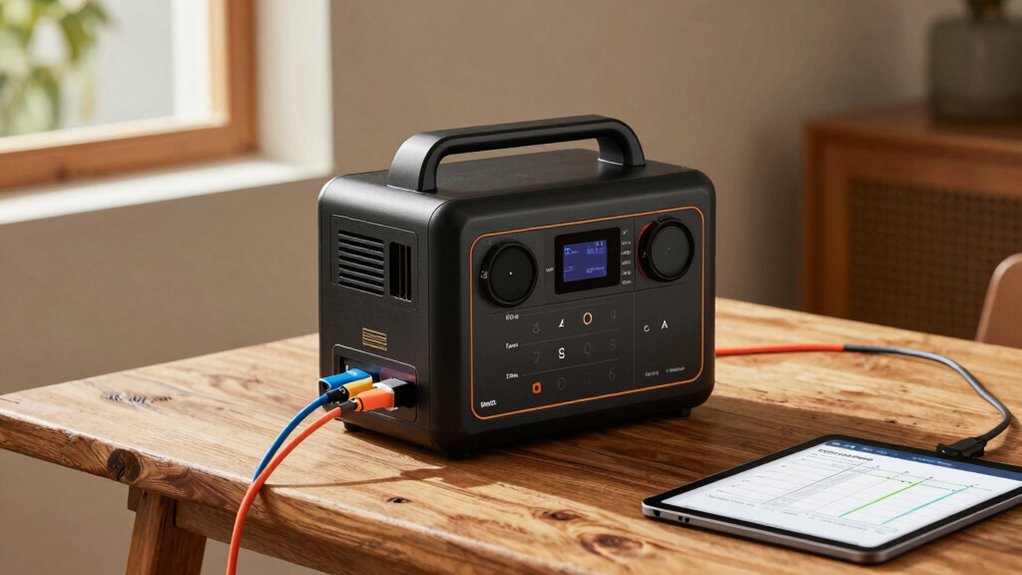
Using a power station size calculator is a straightforward process that helps you determine the right capacity for your needs. First, list all the devices you plan to power, noting their wattage and estimated usage time. This helps you calculate the total energy consumption. Next, consider the battery capacity needed to store enough energy for your usage, making certain it can handle your devices’ power demands. Don’t forget the inverter size, which must be capable of supporting the maximum wattage your devices require simultaneously. Input these figures into the calculator to get an accurate recommendation for the portable power station size. This step ensures you select a unit with sufficient battery capacity and inverter size, so your devices run smoothly without overloading or underperforming. Additionally, understanding the importance of system efficiency can help optimize your power station choice and extend usage time.
Common Mistakes to Avoid When Picking a Power Station
Many people make the mistake of choosing a power station without fully understanding their device needs or overestimating their energy requirements. This can lead to buying a unit that’s either too large or too small, wasting money or risking power shortages. To avoid this, consider the following:
- Ignoring battery maintenance tips, which can shorten your power station’s lifespan
- Overlooking the importance of warranty coverage for repairs or replacements
- Not calculating peak power demands, risking overloads
- Focusing solely on capacity without considering recharging options
- Failing to stay updated on U.S. tax law changes, which can impact the overall cost-effectiveness of your purchase and maintenance decisions.
Comparing Portable Power Station Size Calculators : Features & Benefits
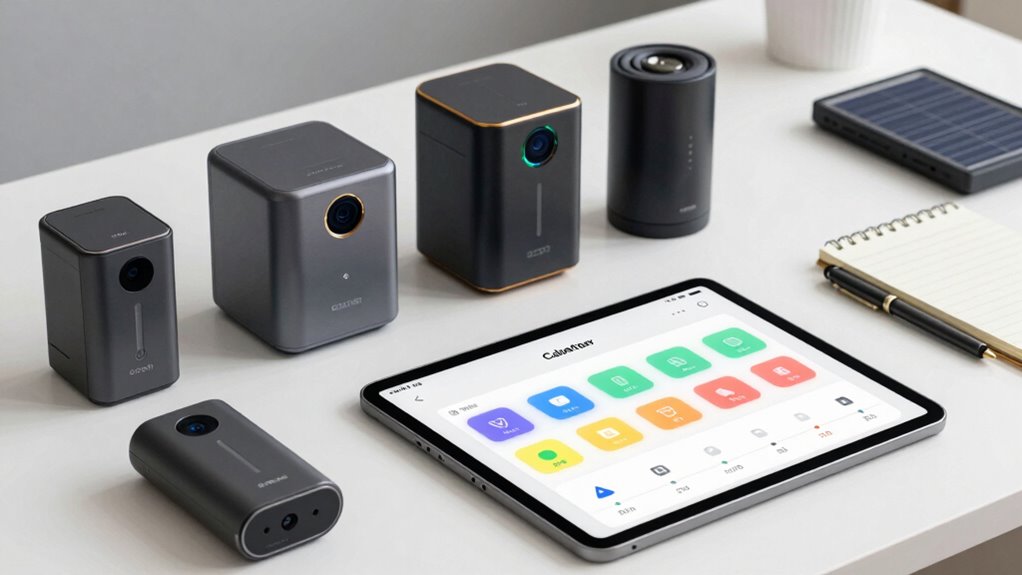
When comparing portable power station size calculators, you’ll notice key features that help determine the right fit for your needs. These tools highlight practical benefits, like how well a station can power your devices and its portability. Understanding these aspects makes choosing a suitable station much easier and more effective. Additionally, considering factors such as Free Floating can assist in optimizing your selection process for outdoor and versatile usage scenarios.
Feature Comparison Highlights
Ever wondered how different portable power station size calculators compare regarding features and benefits? They focus on key aspects like battery life and portability features, helping you find the right fit. Some calculators prioritize high battery capacity for longer usage, while others focus on lightweight, compact designs for easy transport. Here are some highlights:
- Battery life estimates based on power needs
- Portability features like handle design and weight
- Charging options including solar compatibility
- Size and weight specifications for easy storage
These features guarantee you choose a station that balances capacity with convenience, avoiding guesswork. Understanding these differences helps you pick a model tailored to your specific needs, making sure you get the most reliable, portable power for your adventures.
Practical Benefits Overview
Are you wondering how choosing the right portable power station size calculator can make your life easier? The main benefit is maximizing your battery life, ensuring you have enough power for your needs without excess weight. A proper size calculator helps you select a unit that offers ideal capacity, so you won’t run out of power during critical moments. It also boosts portability by guiding you toward compact models that are easy to carry, perfect for camping, travel, or emergency use. By understanding the relationship between size, battery life, and portability, you avoid overpacking or lugging around heavy equipment. Ultimately, a good size calculator streamlines your decision-making, saving you time and effort while providing peace of mind that your power needs are covered.
How to Choose the Perfect Power Station for Camping, Emergencies, or Travel

Choosing the right portable power station depends on understanding your specific energy needs for camping, emergencies, or travel. First, determine the devices you’ll need to power and their wattage. Consider how long you’ll need power and whether you’ll have access to solar panels for recharging, especially for extended trips. Look for a station with a battery lifespan that matches your usage patterns, ensuring it endures over time.
Keep these points in mind:
- Match capacity to your device energy requirements
- Prioritize stations that support solar panel charging
- Check the battery lifespan for long-term use
- Opt for a lightweight, portable design for travel or camping
Final Tips for Picking the Best Size for Your Needs
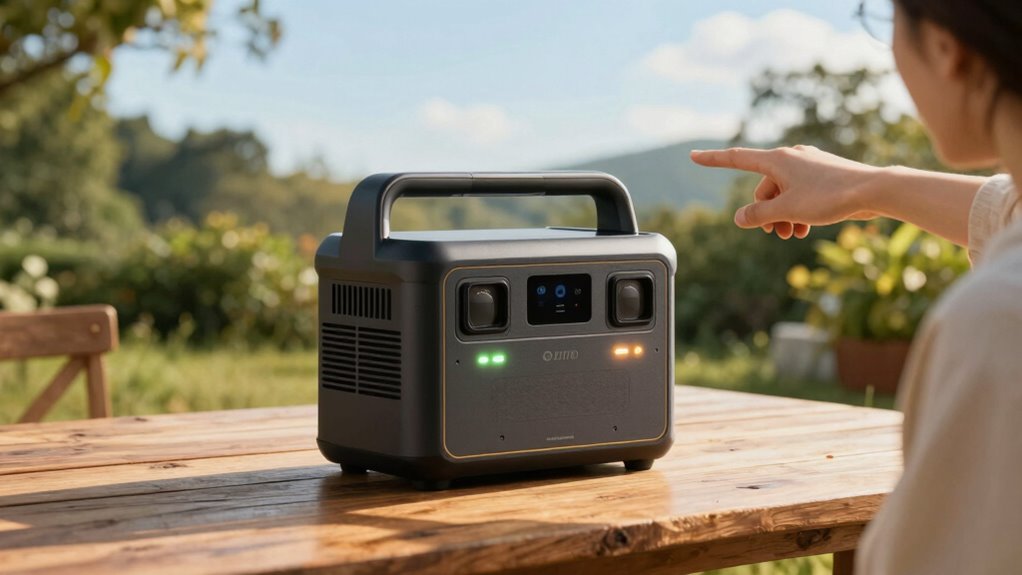
To select the right size for your portable power station, start by accurately evaluating your energy needs and how long you’ll require power. Consider the total wattage of your essential devices and the duration you’ll need them running. This will help you determine the appropriate battery capacity, ensuring you have enough power without excess weight. Keep in mind, larger capacity units tend to be heavier and less portable, so weigh your portability considerations carefully. If you need power on the go for multiple devices or extended periods, opt for a higher capacity station. However, if you prioritize ease of transport, choose a smaller model that still meets your core needs. Balancing battery capacity and portability considerations will help you pick the perfect size for your specific situation.
Frequently Asked Questions
Can I Upgrade My Portable Power Station Later?
You can often upgrade your portable power station later, but it depends on the model and manufacturer. Think of it as a double-edged sword—you might improve battery capacity or add features, yet portability considerations could be affected. Check if your station supports modular batteries or expansion options, and verify compatibility before upgrading. Doing your homework now saves headaches down the road and keeps your device versatile for future needs.
How Does Battery Life Impact Size Selection?
Battery life substantially impacts your size selection because larger battery capacity provides longer device runtime, allowing you to power more devices or run them longer. If you need extended use, opt for a bigger portable power station with higher capacity. Conversely, if you only need short-term power, a smaller size will suffice. Consider your typical usage to balance device runtime and portability effectively.
Are There Portable Power Stations With Adjustable Power Output?
You’ll find portable power stations with adjustable output, giving you real power flexibility. Think of it like a dimmer switch—you control the brightness, or in this case, the power level. For example, some units let you dial down for smaller devices, conserving energy, or boost for larger ones. This feature helps you optimize performance and battery life, making your portable station more adaptable to various needs.
What Safety Features Should I Consider When Choosing Size?
When choosing a size, you should consider safety features like safety certification and overload protection. Safety certification guarantees the power station meets industry standards, giving you peace of mind. Overload protection prevents the device from damage or hazards if you connect too many devices or draw excessive power. These features help keep you safe while ensuring your power station operates reliably, especially when powering multiple or high-demand devices.
How Do I Store My Power Station Long-Term?
To store your power station long-term, keep it in a cool, dry place away from direct sunlight. Make certain it’s partially charged (around 50%) to prevent battery degradation, and check compatibility with solar panels for recharging if needed. Manage weight by storing in an accessible location, avoiding heavy or unstable surfaces, and periodically testing it to maintain ideal performance. Proper storage extends your power station’s lifespan effectively.
Conclusion
Now that you’ve got the tools and know-how, choosing the perfect portable power station becomes a breeze—like finding the right piece of a puzzle. Think of it as tuning a musical instrument, ensuring every note (or device) plays harmoniously. With your newfound knowledge, you’ll confidently pick a size that powers your adventures without skipping a beat. So, go ahead—light up your journey and keep the energy flowing wherever life takes you.