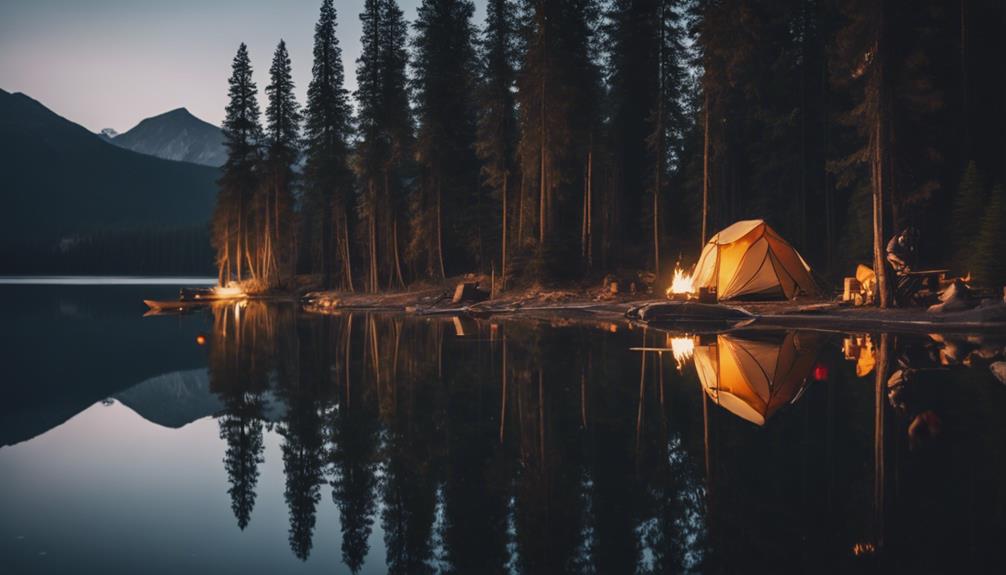


A portable AC can be a game-changer when camping in hot, humid environments or during long stays, helping you sleep comfortably and stay refreshed. However, in mild, shaded, or dry conditions, it’s often unnecessary and may just drain your resources. Consider your campsite, power options, and weather before bringing one. If you want to know the best way to stay cool outdoors, there’s more useful advice ahead.
Key Takeaways
- Portable ACs are effective in hot, dry environments with limited natural ventilation for cooling tents comfortably.
- They may be ineffective or impractical in humid conditions, where evaporative cooling or passive methods work better.
- Consider size, weight, and power sources; heavy units or high power demands are less suitable for remote or hiking camps.
- When natural shade, cross-ventilation, or passive cooling suffices, a portable AC might be unnecessary or a waste of resources.
- Proper ventilation and placement are essential; improper use can lead to noise, power drain, and reduced cooling efficiency.
Do You Really Need a Portable AC When Camping?
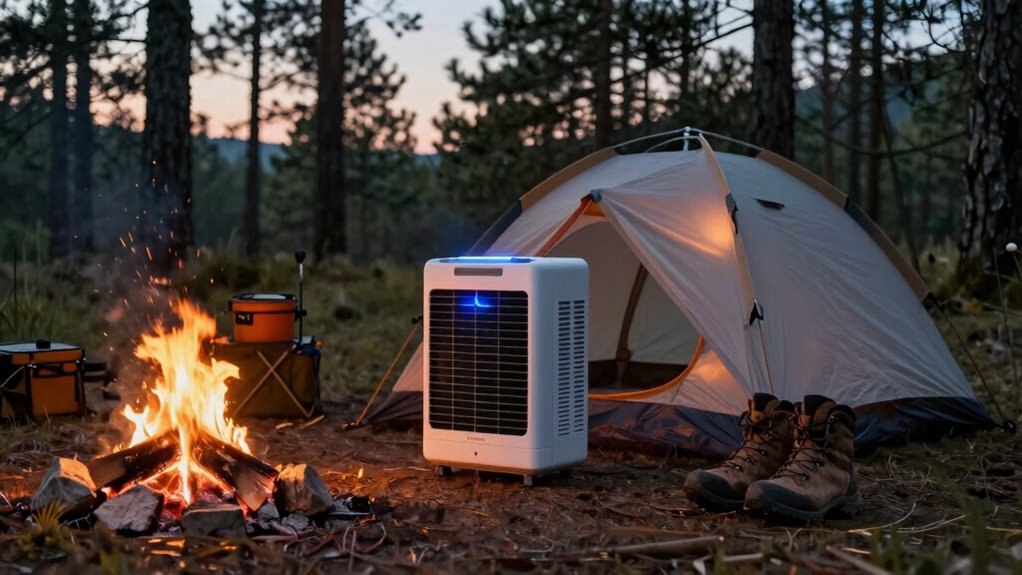
Do you really need a portable AC when camping? It depends on your comfort preferences and the environment. Portable fans can help improve airflow and provide some relief, but they might not cool a tent considerably in very hot weather. If you’re camping in a warm climate, cooling tents with a portable AC can make a big difference, especially if you’re sensitive to heat or plan to stay for several days. However, if your camping spot stays relatively cool at night or if you’re used to warmer conditions, a portable AC may be more of a luxury than a necessity. Consider your needs carefully—sometimes, good ventilation with portable fans is enough, but in extreme heat, a portable AC could be worth it. Additionally, understanding the Free Floating principle can help you decide when cooling solutions are truly necessary versus optional.
Benefits of Using a Portable Air Conditioner While Camping
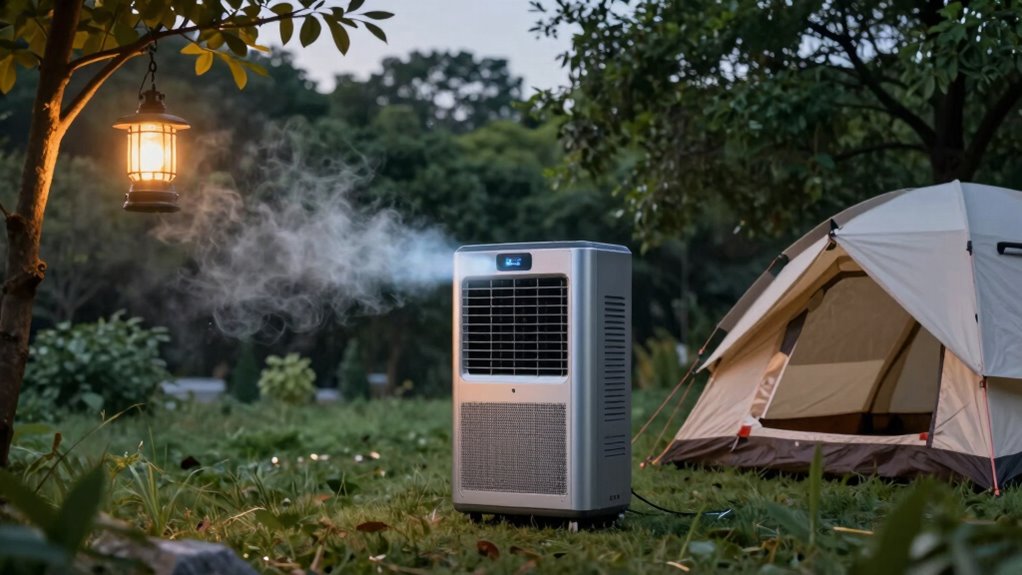
Using a portable AC can make your camping nights much more comfortable by helping you sleep better in warm weather. Its portability means you can set it up wherever you go, adding convenience to your trip. Plus, many models are energy-efficient, saving you power without sacrificing performance. Incorporating proper ventilation can further improve cooling efficiency and comfort during your outdoor adventures.
Enhanced Comfort During Sleep
When you set up a portable air conditioner while camping, you’ll notice a significant boost in sleep quality. Cooler temperatures help your body relax, making it easier to fall asleep and stay asleep through the night. With improved comfort, you wake up feeling more refreshed and energized for the day ahead. Incorporating a portable AC into your camping gear ensures you don’t have to sacrifice comfort for adventure. It creates a more comfortable sleeping environment, especially in warmer weather, reducing night sweats and overheating. Enhanced outdoor comfort means better rest, which is essential when you’re spending days exploring outdoors. Using a portable AC also helps mitigate the effects of tent ventilation issues, ensuring a consistent cool environment. By investing in this gear, you turn your campsite into a cozy retreat, making your camping experience more enjoyable and restful.
Portability and Convenience
The portability and convenience of a portable air conditioner make it an essential addition to your camping gear. With a compact design, you can easily carry it to different spots around your campsite, ensuring you stay cool wherever you set up. However, battery life can be a limiting factor, so plan your outings accordingly—some models offer longer-lasting power, but others may require frequent charging or connection to an external power source. Portability challenges, such as weight and size, can also impact how easily you can transport and set up the unit. Despite these hurdles, a portable AC provides immediate relief from heat, making your camping experience more comfortable and enjoyable, especially during hot summer days. Additionally, understanding energy efficiency can help you select a model that maximizes cooling while minimizing power consumption.
Energy Efficiency Benefits
A portable air conditioner can substantially boost your camping trip’s energy efficiency by cooling only the specific area where you’re staying, rather than cooling the entire campsite or relying on less efficient methods. This targeted cooling helps you conserve energy, reducing overall power consumption and extending your generator’s or battery’s lifespan. By using less power, you also minimize your environmental impact, making your trip more eco-friendly. This efficient use of energy means you’re not wasting resources on unnecessary cooling, which benefits both the environment and your budget. In the long run, choosing a portable AC promotes better energy conservation, helping you enjoy comfort while being mindful of sustainability. It’s a smart way to stay cool without compromising your environmental values. Additionally, understanding tax planning strategies can help offset the costs associated with camping gear and energy-efficient appliances.
When Is a Portable AC Worth Bringing? Key Scenarios
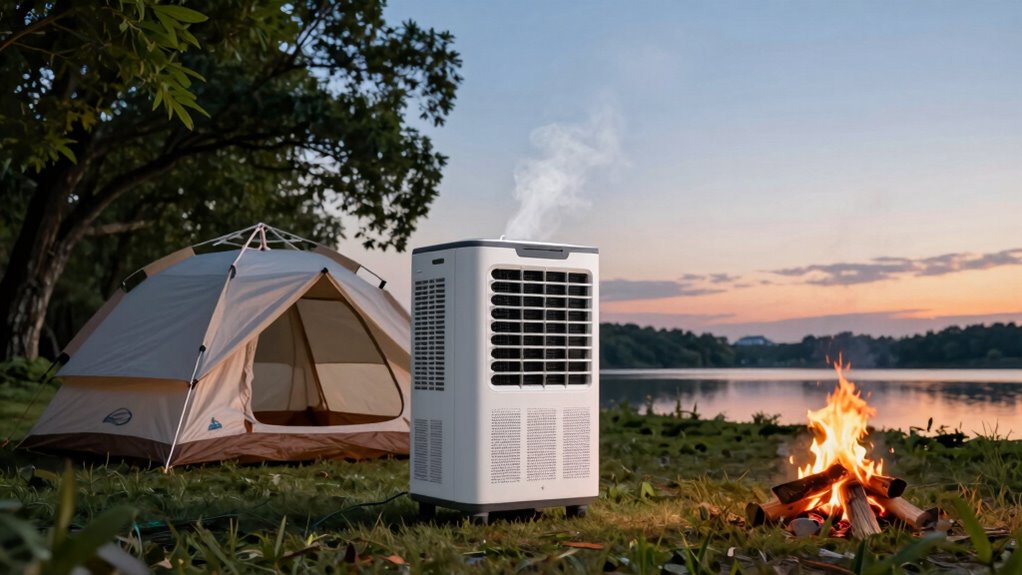
If you’re planning to camp in hot or humid conditions, bringing a portable AC can make a significant difference in your comfort. It’s especially worth considering when your camping gear includes reliable cooling equipment and weather considerations point to high temperatures or humidity levels. You’ll find it beneficial in these scenarios:
- Extended stays in remote areas lacking shade or ventilation
- Camping in regions with consistently high daytime temperatures
- Situations where sleeping comfortably is essential
- Campsites with limited natural airflow or shade
In these key scenarios, a portable AC helps maintain a tolerable temperature, enhancing your overall experience. Just ensure your gear setup supports the AC’s power needs, and your weather considerations justify the extra effort. Additionally, understanding how engine performance upgrades can improve your vehicle’s overall efficiency may inspire you to optimize your camping setup further.
What to Consider Before Bringing a Portable Air Conditioner (Space, Power, Noise)
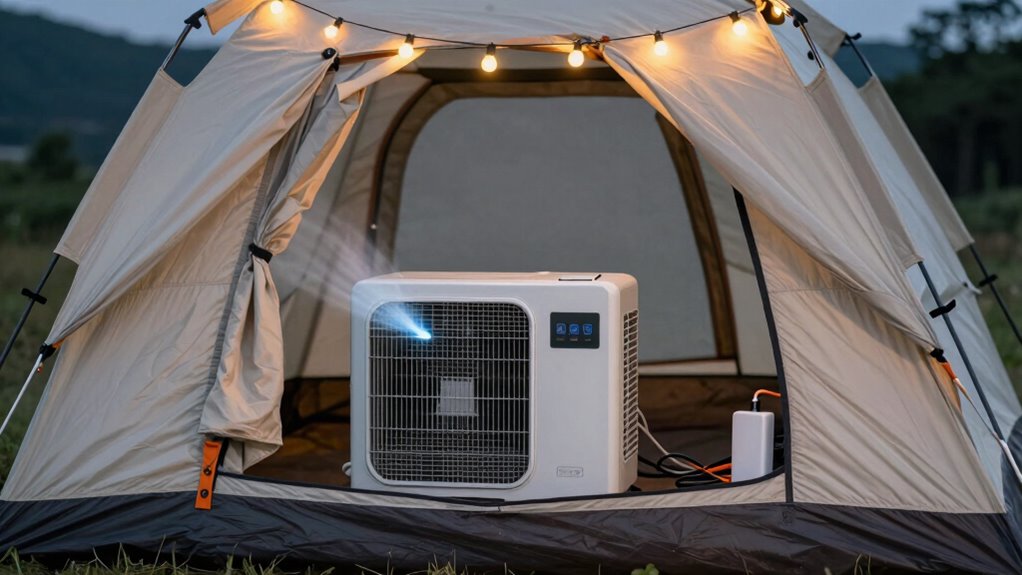
Before packing a portable AC, consider how much space you have and whether the unit will fit comfortably. You also need to think about its power requirements and if your campsite can supply enough electricity. Additionally, be mindful of noise levels, so your camping experience remains enjoyable. Keep in mind that Hartsburg News has recently reported on various events, which might influence your packing decisions depending on your location.
Space and Size Constraints
Considering space and size constraints is vital when selecting a portable AC for camping, as these units need to fit comfortably in your setup without causing clutter or inconvenience. You’ll want to assess how much space the unit occupies and confirm it can be stored easily when not in use. Keep in mind that larger models may offer better cooling but could be impractical for limited campsites. Additionally, consider the unit’s weight and portability, especially if you’re hiking to remote locations. If you’re relying on solar power, size impacts how much energy your setup can handle. Battery life is also essential—smaller units tend to consume less power, extending their operational time in off-grid situations. Carefully balancing size, weight, and power needs helps you choose a practical, efficient portable AC. Energy consumption plays a crucial role in off-grid camping scenarios, affecting both battery life and overall efficiency.
Power Needs and Noise
When choosing a portable AC for camping, understanding its power requirements and noise levels is essential to guarantee it fits your needs. Check the power consumption to ensure your campsite’s power source can handle it without draining batteries or overloading outlets. Higher power consumption often means more cooling capacity but also more energy use. Noise levels are equally important; loud units can disrupt your sleep or disturb nearby campers. Look for models with low decibel ratings if quiet operation matters to you. Keep in mind that some portable ACs are designed to be energy-efficient, reducing both power needs and noise. Additionally, understanding market trends can help you select models that balance cost, performance, and sustainability. Balancing these factors helps you select a unit that provides comfort without causing inconvenience or draining your resources.
Best Ways to Use a Portable AC in the Outdoors
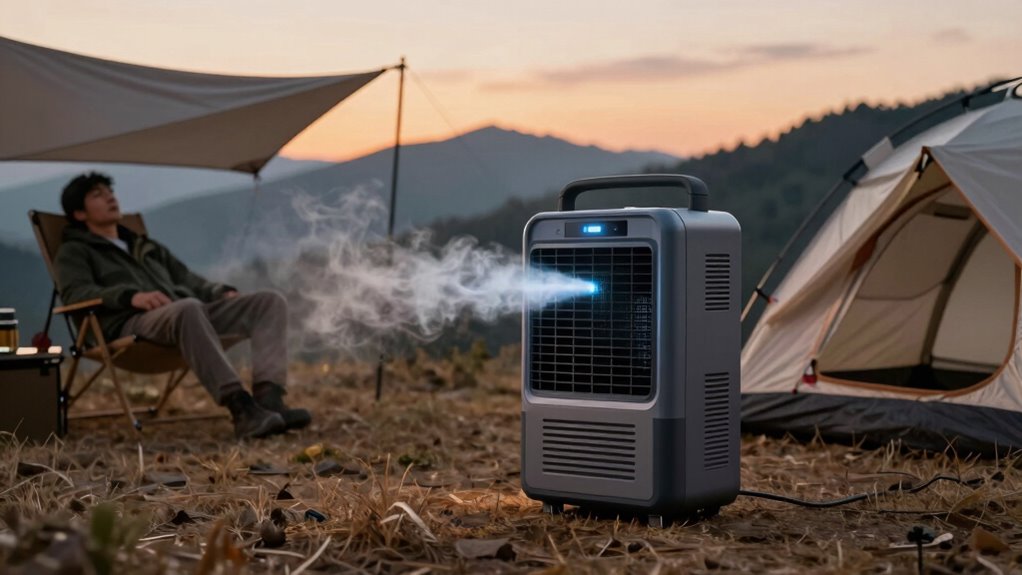
Using a portable AC in the outdoors requires careful planning to maximize its cooling efficiency and guarantee safety. First, choose a shaded, well-ventilated spot to place your unit, avoiding direct sunlight and heat sources. Ensure your camping gear includes a sturdy, level surface to keep the AC stable. When setting up, consider these best practices:
Place your portable AC on a stable, level surface in shaded, well-ventilated outdoor spots for safe, efficient cooling.
- Use a flexible, insulated exhaust hose to vent hot air properly
- Keep windows or vents open nearby for better airflow
- Position the unit away from direct wind or rain to prevent damage
- Monitor power consumption to avoid overloading your generator or battery
- Remember to properly ventilate the unit to prevent heat buildup and ensure safe operation
When Not to Use a Portable AC : Alternatives and Tips
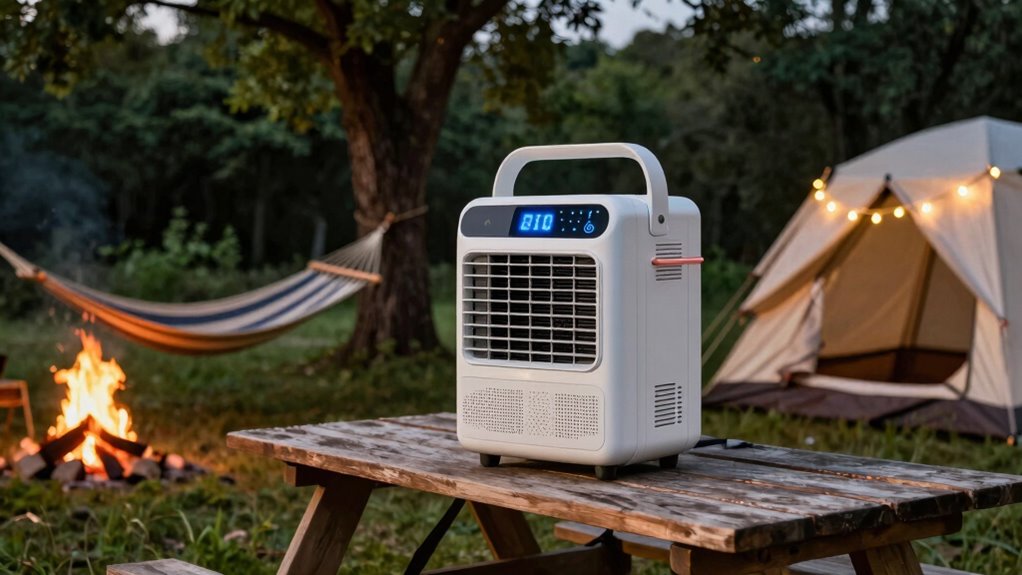
There are times when a portable AC isn’t the best choice, especially in hot, humid conditions where it struggles to cool effectively. In those cases, you might want to contemplate alternative cooling methods like fans or cooling towels. Additionally, using effective ventilation strategies can help keep your camping site comfortable without relying solely on an AC.
Alternative Cooling Methods
Sometimes, a portable AC isn’t the best choice for cooling your campsite, especially in scenarios where energy efficiency, noise, or power sources are concerns. Instead, consider alternative methods like evaporative cooling, which works well in dry climates by adding moisture to the air. Reflective shelters can also reduce heat gain by deflecting sunlight, keeping your space cooler naturally. These options are often quieter, require less power, and are more eco-friendly. You might also try:
- Using shaded or reflective tarps
- Creating cross-ventilation with open flaps
- Employing damp cloths or fans for evaporative effects
- Building windbreaks to block hot breezes
These methods are practical, especially when traditional cooling devices are impractical or unnecessary.
Effective Ventilation Strategies
When outdoor temperatures drop or humidity levels rise, relying on a portable AC isn’t always the best option for cooling your campsite. Instead, focus on effective ventilation strategies to improve airflow naturally. Proper exhaust placement is key—you want to direct warm, stale air away from your tent or shelter. Good ventilation ensures a steady exchange of air, reducing indoor heat without needing an AC. To optimize airflow, consider the following:
| Ventilation Technique | Best Use Case | Tips |
|---|---|---|
| Cross Ventilation | Mild heat, evenings | Open multiple flaps or windows |
| Exhaust Placement | Hot, humid days | Position exhausts to face away from shade |
| Ventilation Fans | When natural airflow is limited | Use fans near exhaust points |
| Airflow Barriers | To control drafts or direct air | Use screens or fabric dividers |
Effective ventilation can cool your space without relying on a portable AC.
How to Stay Cool Without an Air Conditioner While Camping
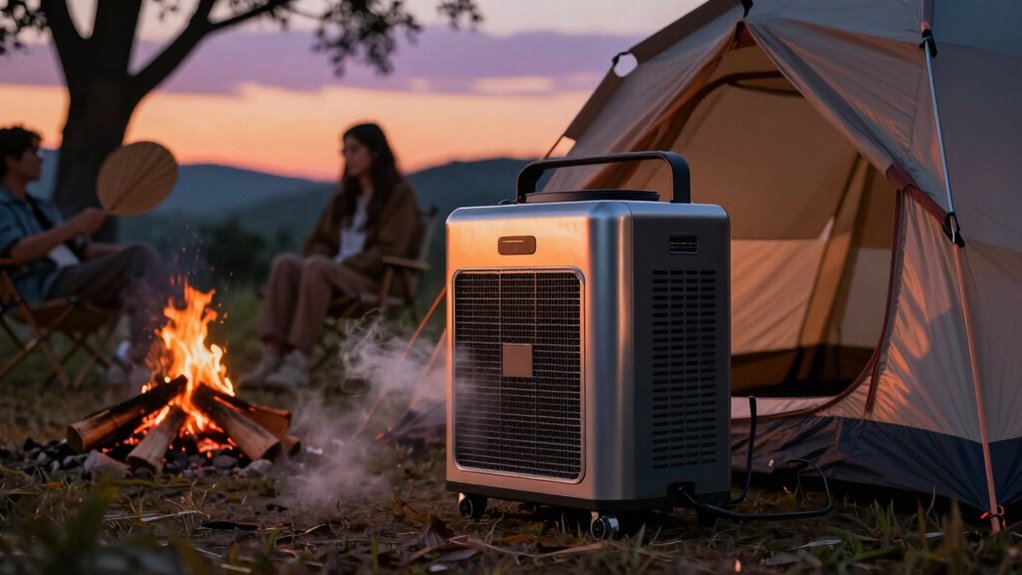
Staying cool while camping without an air conditioner is all about making smart choices and using natural techniques. Your camping gear and understanding weather conditions play key roles. Keep your tent shaded by setting it up in a breezy spot or using reflective covers. Use lightweight, breathable fabrics for your clothing and bedding to promote airflow. Hydrate regularly and avoid strenuous activities during the hottest parts of the day. To maximize cooling, consider these tips:
- Sleep in a hammock or elevated cot to improve ventilation
- Use a damp cloth or bandana on your neck or forehead
- Create cross-ventilation by opening multiple tent windows
- Place a bowl of ice or cold water in front of a fan or breeze
These approaches help you stay comfortable, even without an AC.
Common Mistakes That Waste Power or Reduce Effectiveness
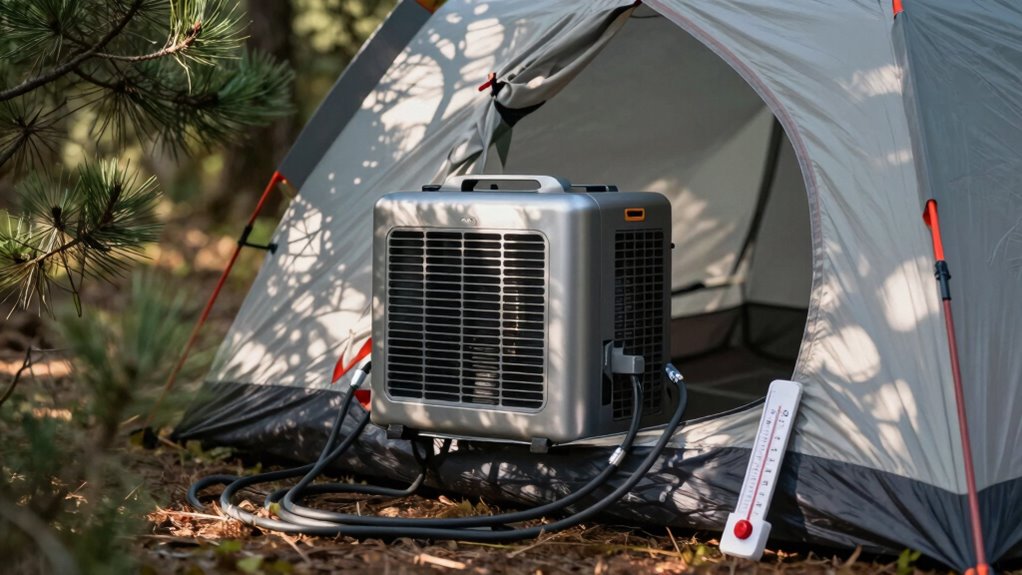
One common mistake that reduces the effectiveness of portable camping fans or AC units is leaving them on continuously without adjusting for actual cooling needs. This habit spikes power consumption unnecessarily, draining your battery faster and risking overheating your device. To optimize efficiency, turn the unit off when not needed or set a timer. Additionally, running your AC at higher power levels than necessary increases noise, making your camping experience less peaceful. For noise reduction, keep the fan speed low if possible, and position the unit away from your tent’s sleeping area. Overusing or mismanaging your portable AC not only wastes power but also diminishes comfort, so be mindful of when and how long you run it to guarantee maximum effectiveness.
How to Power Your Portable AC While Camping Off-Grid
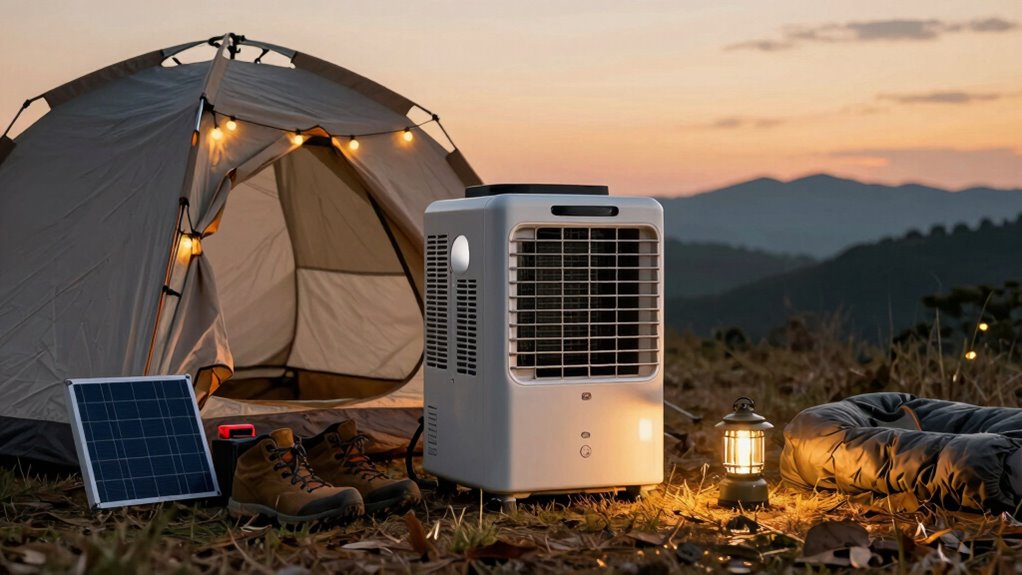
Powering your portable AC off-grid requires careful planning, as traditional power sources aren’t available. To keep it running, consider investing in solar panels to harness sunlight during the day and store energy in batteries. Adequate battery capacity is essential to sustain cooling during the night or overcast days. Here are key points to optimize your setup:
- Choose high-capacity batteries compatible with your AC’s power needs
- Use portable solar panels with sufficient wattage to recharge batteries efficiently
- Monitor your energy consumption to avoid depleting your battery reserve
- Consider a hybrid system combining solar and a backup generator for reliability
Final Tips for Staying Cool and Comfortable in the Wilderness
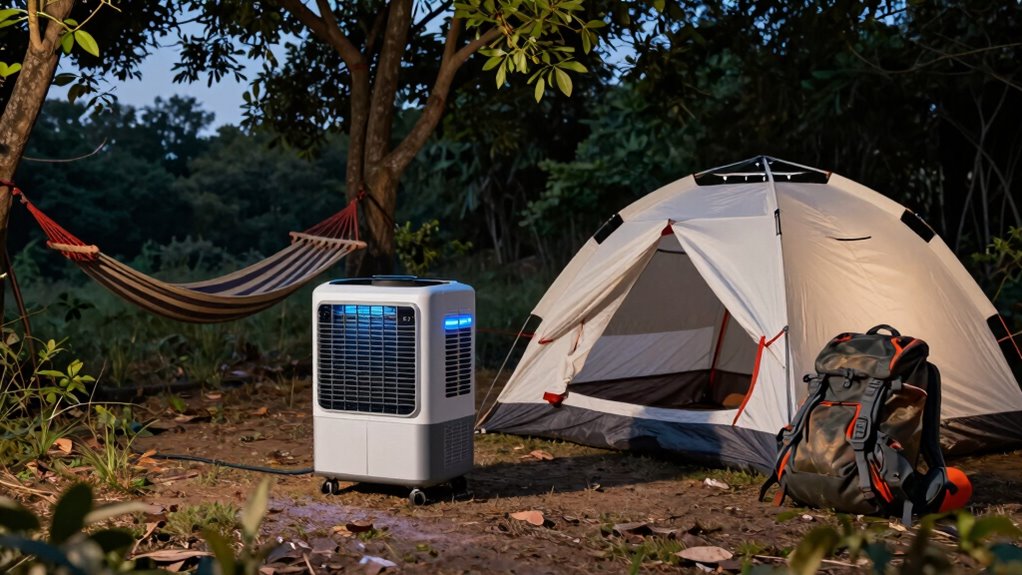
To stay cool and comfortable in the wilderness, you need to be strategic about your gear and habits. Prioritize campfire safety by keeping fires small and monitored, as heat can add to the discomfort of hot days. Use shade and wear lightweight, breathable clothing to reduce heat exposure. Staying hydrated is vital—drink plenty of water and avoid strenuous activity during peak heat hours. Be mindful of wildlife encounters; keep food secured and avoid tempting animals with scents. Respect their space to prevent dangerous surprises. At night, use fans or portable cooling devices cautiously, ensuring they don’t disturb wildlife or create safety hazards. By planning ahead and practicing safety, you’ll maximize comfort without risking safety or the environment.
Frequently Asked Questions
How Much Does a Portable AC Typically Weigh?
A portable AC typically weighs between 20 to 50 pounds, depending on the size and features. When considering weight considerations, think about how easy it is to move and carry, especially for camping trips. Portability factors like handles and compact design make a big difference. You want something lightweight enough to transport comfortably, but also powerful enough to cool your space effectively. Choose wisely based on your camping setup and needs.
Can Portable AC Units Run on Solar Power?
Yes, portable AC units can run on solar power, but it’s not always straightforward. You’ll need a high-capacity solar system with energy efficiency in mind, especially for continuous cooling. The challenge lies in matching the AC’s power demands with your solar setup. If you’re prepared to invest in the right equipment, solar-powered portable ACs can keep you cool sustainably, but be ready for some initial planning and setup.
What Is the Typical Runtime of Portable ACS Off-Grid?
You can expect a portable AC’s runtime off-grid to vary based on battery efficiency and energy consumption, typically lasting 3 to 8 hours. Higher energy-efficient units with larger batteries will run longer, while less efficient models drain batteries faster. To maximize runtime, choose an AC with low energy consumption and confirm your battery capacity is sufficient for your needs. Monitoring power use helps you plan better for off-grid cooling.
Are Portable AC Units Safe for All Types of Tents?
Think of a portable AC as a double-edged sword; it can cool your tent or cause real problems. Not all tents are safe for these units, especially if they lack proper ventilation. You need to contemplate tent safety and ventilation concerns before using one. If your tent has mesh panels and good airflow, it’s safer. Otherwise, using a portable AC could trap heat and moisture, risking damage or discomfort.
How Do Portable ACS Impact Outdoor Environmental Conditions?
Portable ACs impact outdoor environmental conditions mainly through evaporative cooling and air circulation. When you use one, it cools the air by removing humidity, which can increase local dryness. It also circulates air, potentially affecting airflow around your campsite. If overused or placed improperly, it might disrupt natural airflow and local humidity levels, impacting nearby plants and wildlife. Always use these devices responsibly to minimize environmental impact.
Conclusion
In the wilds, a portable AC can feel like summoning a tiny, magical oasis amid a scorching desert—if you choose the right moments and set it up wisely. But ignore the tricks, and it’s more likely to turn your camping trip into a power-hungry, noisy nightmare, draining your battery faster than a wildfire spreads. Stay smart, plan ahead, and keep your cool—literally—so your adventure doesn’t turn into a sweaty, frustrating disaster.