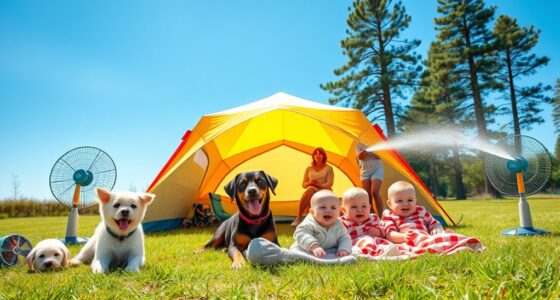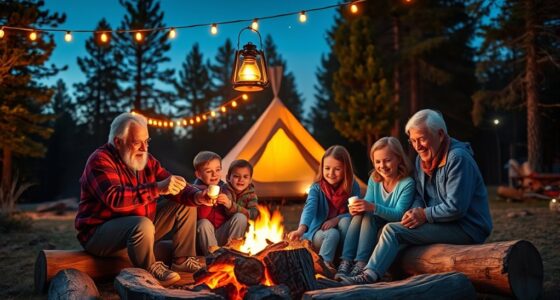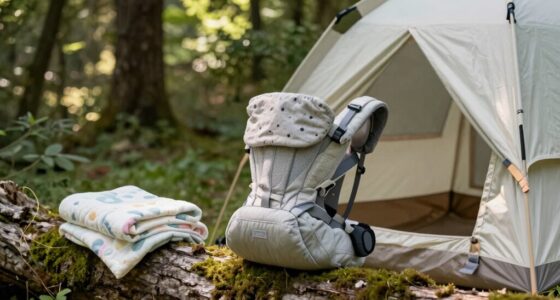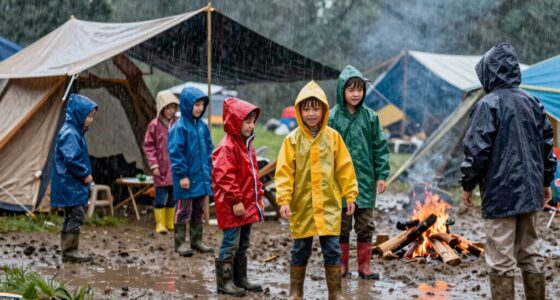
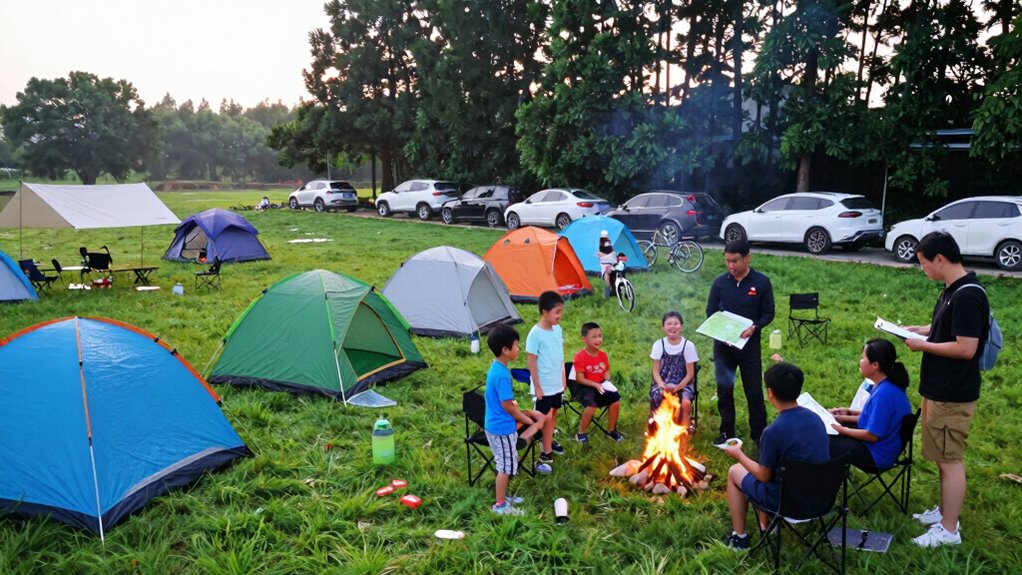
Multi-family camping trips need clearer plans because with more people, there’s a higher chance of confusion, missed essentials, and safety issues. Coordinating gear, fire safety, and communication becomes more complex, making it vital to organize responsibilities and safety procedures upfront. Without detailed planning, small issues can escalate, affecting everyone’s experience. If you keep exploring, you’ll discover how to craft a solid plan that keeps your trip safe, smooth, and enjoyable.

Get travel and outdoor gear delivered free — and shop member deals
- Fast, free delivery on millions of items
- Access to Prime Big Deal Days deals on October 6–7
- Prime Video, Amazon Music and more included
Key Takeaways
- Multiple families increase logistical complexity, requiring detailed plans to coordinate gear, routes, and responsibilities effectively.
- Clear safety protocols prevent accidents and ensure emergency procedures are understood by all participants.
- Shared safety equipment and fire management tools minimize risks and promote fire safety awareness among diverse groups.
- Well-defined communication and designated roles reduce confusion and improve response times during emergencies.
- Organized planning fosters a relaxed environment, preventing conflicts and ensuring everyone enjoys a safe, memorable trip.
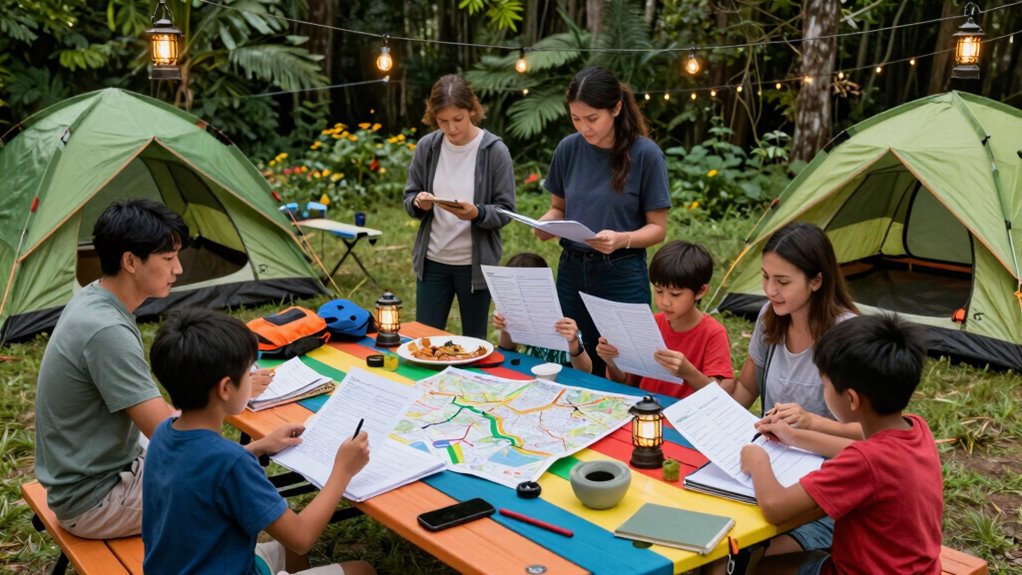
Planning a multi-family camping trip can be a rewarding way to create lasting memories, but it also requires careful coordination to guarantee everything runs smoothly. One key area often overlooked is establishing clear plans for essential safety and logistics, especially around campfire safety and packing the right gear. Without these details, small issues can quickly turn into bigger problems, disrupting your trip and risking safety.
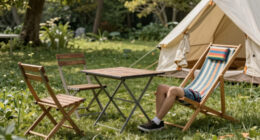
Start by creating a thorough gear checklist that everyone can follow. In a multi-family setting, this is especially important to ensure no one forgets vital items—think tents, sleeping bags, cooking gear, and lighting. Sharing a master checklist beforehand helps prevent duplicate efforts and missing essentials. It also streamlines packing, so everyone arrives prepared. Remember, besides personal gear, include safety equipment like first aid kits, fire extinguishers, and, importantly, items needed for campfire safety. Properly planning for campfire safety includes bringing tools such as shovels and buckets of water, and establishing rules for fire use that everyone understands. This prevents accidents, especially since multiple groups sharing the same space can lead to confusion or neglect. Familiarizing yourself with small wood stoves can also be helpful if you plan to have a safer, more efficient heat source during your trip, as they can serve as a reliable alternative to open fires. Additionally, bringing fire safety equipment like fire blankets or extinguishers can provide extra precautions.
Create a shared gear checklist, include safety tools, and set clear campfire rules to ensure a safe, organized trip for everyone.
Clear communication is essential. Before the trip, gather everyone to discuss plans, including designated fire areas, rules for handling firewood, and procedures if something goes wrong. Make sure everyone knows how to properly build, manage, and extinguish a campfire. Educate your group on campfire safety principles—never leave a fire unattended, keep a safe distance from tents, and ensure the fire is completely out before sleeping or leaving the site. These steps minimize fire hazards and create a safer environment for all. Additionally, emphasizing the importance of fire safety protocols**** helps prevent potential accidents and ensures everyone understands the risks involved. A detailed communication plan can also help in coordinating emergency responses effectively.
Logistics also play a key role. Decide on a central meeting point, assign responsibilities, and plan for emergency contacts and routes. Having a clear plan for how to handle unexpected situations reduces chaos and confusion. For example, designate someone as the point person for troubleshooting gear issues or managing the campfire. This way, everyone knows who to turn to, and responsibilities are evenly distributed. Planning for emergency preparedness can greatly enhance the safety and efficiency of the trip. Moreover, sharing detailed maps and contact information with all families ensures everyone stays informed and connected throughout the trip.
In the end, the success of your multi-family camping trip hinges on detailed planning. By focusing on a thorough gear checklist and strict campfire safety protocols, you ensure that all participants are prepared and safe. These preparations not only prevent mishaps but also foster a relaxed, enjoyable atmosphere where everyone can focus on making memories rather than solving avoidable problems.
multi-family camping gear checklist
As an affiliate, we earn on qualifying purchases.
As an affiliate, we earn on qualifying purchases.
Frequently Asked Questions
How Do You Handle Differing Activity Preferences Among Families?
You handle differing activity preferences among families by communicating openly beforehand to identify everyone’s family activity preferences. You can create a flexible schedule that includes options for all interests, ensuring conflicting interests are balanced. Encouraging compromise and offering optional activities help manage expectations, so everyone feels included. By planning ahead and respecting each family’s preferences, you make the trip enjoyable despite the variety of interests and potential conflicts.
What’s the Best Way to Coordinate Meal Planning for Multiple Families?
Imagine a picnic table with colorful plates and diverse dishes, reflecting everyone’s preferences. To coordinate meal planning, you should assign each family specific meal prep tasks, considering dietary restrictions. Create a shared meal plan beforehand, including snack options and ingredients. This way, everyone knows their responsibilities, reducing confusion and ensuring all dietary needs are met, making the trip enjoyable and stress-free for everyone involved.
How Can You Ensure Safety Protocols Are Followed by Everyone?
You can guarantee safety protocols are followed by clearly establishing emergency procedures and communicating them effectively. Use simple language and visual aids to explain what to do in case of fire, injury, or other emergencies. Implement communication strategies like walkie-talkies or designated signals so everyone stays informed. Regularly review safety plans with all families, and remind everyone to stay vigilant, follow instructions, and look out for each other throughout the trip.
What Gear Is Essential for Large Group Camping Trips?
Think of your gear as the heartbeat of your trip. You’ll need sturdy tents, sleeping bags, and enough cookware to share. Prioritize campfire safety gear—fire extinguishers and spark guards—and master tent setup tips to keep everyone comfortable. An emergency kit, headlamps, and extra batteries guarantee safety and convenience. With the right gear, you build a foundation of trust and adventure, turning a simple trip into lasting memories.
How Do You Manage Budget Differences Between Families?
To manage budget differences, you should start with open discussions about each family’s financial limits. Use clear budget allocation to set spending boundaries, and agree on shared expenses beforehand. Keep everyone accountable with expense tracking throughout the trip, guaranteeing transparency and fairness. This approach helps prevent misunderstandings, keeps costs manageable, and ensures everyone enjoys the trip without financial stress.
Conclusion
So, don’t shy away from planning every detail of your multi-family camping trip. Sure, it might seem like a lot, but clear plans prevent chaos and guarantee everyone has fun. If you’re worried about it feeling too rigid, remember that flexibility is key—you can always adapt as you go. With good preparation, you’ll create a memorable adventure where everyone relaxes and enjoys the great outdoors together.
Fall Picks
fall essentials
As an affiliate, we earn on qualifying purchases.