
To stabilize your tent in high winds, select stakes suited for soil conditions—prefer screw or heavy-duty aluminum stakes for loose or sandy ground—and drive them at roughly 45° away from the tent for maximum resistance. Vertically hammer stakes, then tilt slightly, ensuring they’re embedded deeply. Use guylines tied securely to stable objects and properly tension fabric. Correct orientation, facing the wind’s strongest direction, further enhances stability. Continue exploring these techniques to guarantee a safe, secure shelter.
Key Takeaways
- Use specialized stakes like screw or heavy-duty aluminum for better grip in loose or rocky soil.
- Drive stakes at a 45° angle away from the tent for increased resistance against wind pull.
- Properly tension guylines and orient the tent with the strongest panels facing the wind.
- Choose high wind-rated tents made from ripstop fabrics with reinforced seams for added durability.
- Reinforce the setup with additional anchors like tied-to-trees or rocks to improve stability.
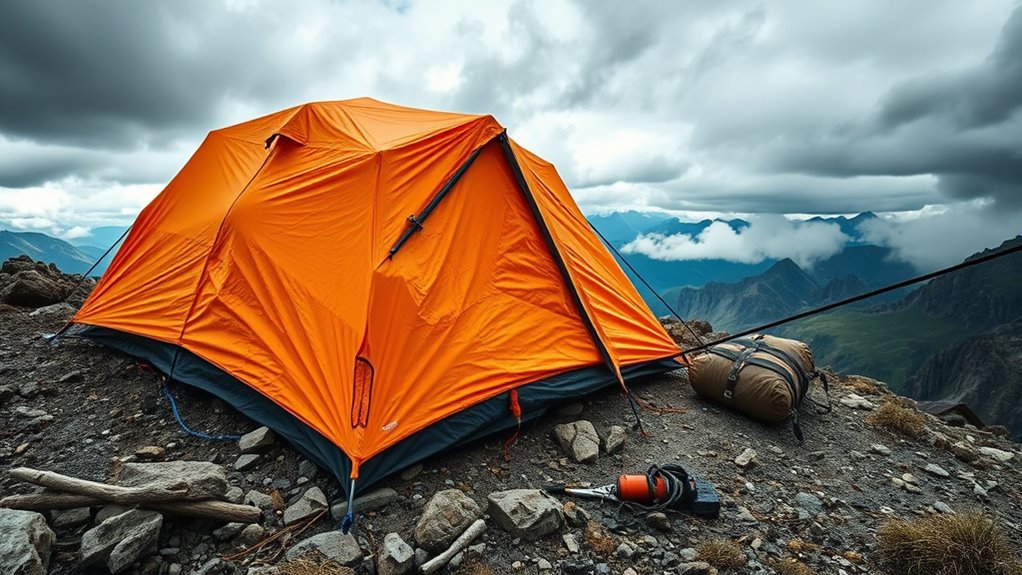
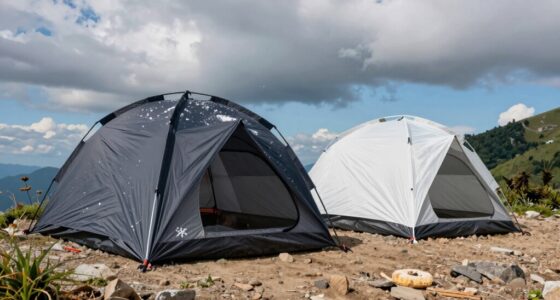
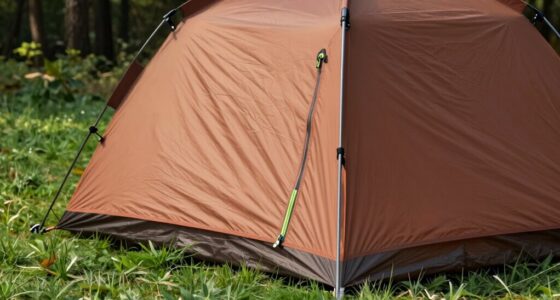
When camping in high winds, proper tent setup is essential to guarantee stability and safety. Achieving this requires a focus on tent stake techniques and the selection of wind resistant fabrics. Your primary goal is to secure the tent firmly to the ground while minimizing the risk of movement or collapse. To accomplish this, you must understand the most effective tent stake techniques, which involve choosing the right stakes for the soil conditions, angling them correctly, and ensuring they are driven deep enough to provide maximum holding power. For loose or sandy soil, consider using specialized stakes like screw or heavy-duty aluminum stakes, which penetrate more effectively and resist pulling out under gusts. In denser, rocky soils, you might need shorter, sturdier stakes reinforced with additional anchoring methods, such as guy lines tied to nearby trees or rocks. When driving stakes, angle them approximately 45 degrees away from the tent to increase resistance against outward pull forces exerted by high winds. Ensure each stake is hammered in vertically and then slightly tilted for *ideal* grip, maintaining consistent tension across all anchor points. Incorporating appropriate stake techniques can significantly improve stability in challenging conditions.
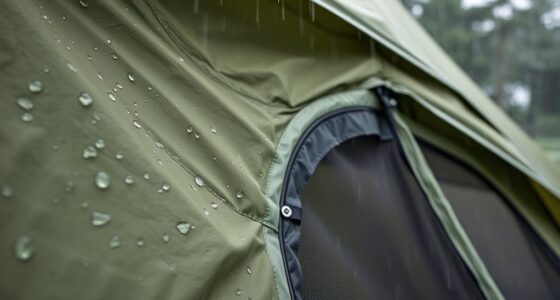
Equally important is the selection of wind resistant fabrics for your tent. Modern materials such as ripstop nylon or polyester with a high denier count and reinforced seams *considerably* enhance wind resistance. These fabrics are designed to withstand turbulent air without tearing or deforming, providing a stable shelter even during severe gusts. When pitching your tent, choose models specifically rated for high wind conditions, as their fabric construction and structural design contribute to overall stability. Proper tensioning of the fabric, achieved through adjustable guylines and tensioners, ensures that the wind-resistant material maintains its shape and minimizes flapping, which can lead to fabric fatigue over time. Additionally, orient the tent with its strongest panels facing the wind, and position vents or openings away from the prevailing gusts to reduce the risk of wind-driven rain or debris entering the shelter. Regularly inspecting and adjusting tension ensures your setup remains resilient throughout changing weather conditions.
Frequently Asked Questions
How Can I Tell if My Tent Is Suitable for High Wind Conditions?
You can tell if your tent is suitable for high winds by examining the tent material and pole strength. Look for durable, ripstop fabrics with a high denier rating, which resist tearing. Confirm the poles are made of strong, flexible materials like aluminum or reinforced fiberglass, capable of withstanding pressure. Check manufacturer specifications for wind resistance ratings, and opt for designs with multiple guy points and a low profile to improve stability in high wind conditions.
What Are Common Mistakes to Avoid When Pitching in Strong Winds?
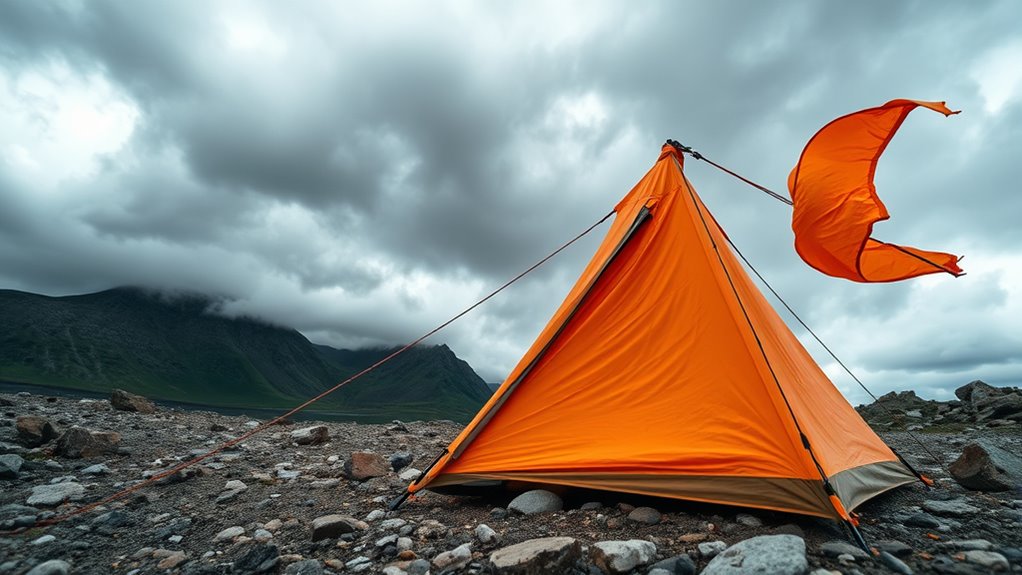
You risk your tent taking flight like a kite if you neglect proper setup. Avoid tent stake failures by choosing high-quality stakes and ensuring they are driven deep into firm ground. An improper guyline setup can turn your shelter into a sail, so tension your guylines correctly and attach them securely. Always double-check all anchoring points before facing high winds, so your tent remains grounded instead of soaring away.
Can Lightweight Tents Withstand High Wind Without Additional Support?
Lightweight tents, made from durable, wind-resistant tent material, can withstand high winds if properly secured. Their low tent weight helps reduce movement, but you must also use sturdy stakes and guy lines for stability. Without additional support, even lightweight tents risk damage in strong gusts. Make certain your tent’s design includes reinforced seams and high-quality materials to improve wind resistance, and always supplement with proper anchoring techniques.
How Do I Choose the Best Location for Wind-Resistant Camping?
You should select a location sheltered by windbreak trees or natural terrain features like ridges or valleys. Position your tent perpendicular to prevailing winds, avoiding open areas and narrow passes prone to wind funneling. Look for natural barriers that reduce wind speed and turbulence. Make certain the site is flat, stable, and free of loose debris. Proper site selection minimizes wind impact, enhancing your tent’s stability and your safety during high wind conditions.
Are There Specific Brands Known for Windproof Tents?
You should consider brands like MSR, Big Agnes, and Hilleberg, renowned for their solid reputation and windproof features. These manufacturers prioritize durability, aerodynamic design, and reinforced fabrics, making their tents more resistant to high winds. When selecting a windproof tent, check for features such as robust pole structures, low-profile shapes, and sealed seams. Opting for these reputable brands guarantees enhanced stability and safety in challenging weather conditions.
Conclusion
Mastering high-wind tent pitching is like anchoring a ship in a storm—you must secure every line and stake with precision. By choosing the right gear, employing proper techniques, and maintaining vigilance, you turn a turbulent environment into a stable haven. With these strategies, you’re not just surviving the gusts; you’re confidently steering through them. Remember, meticulous preparation transforms chaos into calm, ensuring your shelter remains steadfast against nature’s fiercest challenges.