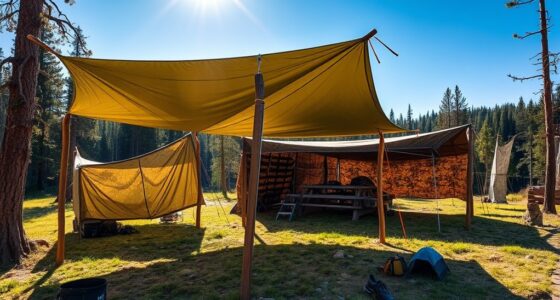

When pitching a tent on various surfaces, select stakes designed for each terrain. In grass, standard metal stakes driven straight down securely hold well. For sand, use broad, spiral, or specialized sand stakes, and consider anchoring at an angle or adding weight. On snow or ice, opt for snow stakes, ice screws, or bury objects for added stability, and use tools like an ice axe. Rocky terrain requires mechanical or natural anchors to secure your tent. Continue exploring to master effective techniques for all surfaces.
Key Takeaways
- Select appropriate stakes: metal stakes for grass, specialized sand or snow stakes, and rock anchors for rocky terrain.
- Drive stakes straight down into soft surfaces; twist or spiral stakes into loose sand or snow for better hold.
- Use additional anchoring methods like guy lines, buried objects, or natural anchors to enhance stability.
- In rocky terrain, employ expansion anchors or tie to large, stable rocks for secure attachment.
- Adapt stake choice and technique based on terrain to ensure a safe, stable tent setup.

When pitching a tent, selecting an appropriate surface is crucial for stability, safety, and comfort. The nature of the terrain directly influences your choice of tent stake types, which are critical components of your camping gear essentials. Different surfaces require specific stakes to guarantee secure anchoring and to prevent the tent from shifting or collapsing under wind or weight.
On grassy surfaces, you’ll find that standard metal stakes, such as V-shaped or J-shaped stakes, typically provide reliable hold. These stakes penetrate the soft soil with ease and hold firmly when driven straight down. If the grass is particularly thick or the ground moist, consider using heavy-duty stakes or screw-in variants, which offer increased holding power. A good set of tent stake types ensures adaptability to various grass conditions, maximizing stability. The key is to choose stakes that are durable, corrosion-resistant, and compatible with your tent’s design. Camping gear essentials like a hammer or mallet facilitate proper stake driving, ensuring the stakes are flush with the ground for ideal hold.
When dealing with sandy terrain, standard stakes often prove insufficient due to the loose, shifting nature of the surface. In this case, specialized sand stakes or those with broader, flatter heads are necessary to distribute pressure more effectively and prevent pull-out. Sand stakes often feature a spiral or helical design that allows them to anchor deeply when twisted into the ground. Using additional anchoring methods, such as pegging the stakes at an angle or employing weight-based anchors, can bolster stability. In sandy environments, your camping gear essentials also include guy lines, sand anchors, and extra stakes, allowing you to adapt to changing conditions and maintain tension on your tent.
On snow and icy surfaces, standard stakes are ineffective because they lack the necessary grip. You need specialized snow stakes or ice screws, which are designed to penetrate frozen ground or snowpack. These stakes often have a serrated or spiral profile to facilitate deep insertion and hold fast under tension. In extreme cold, using snow anchors like buried bottles or weighted objects can supplement stakes. Your camping gear essentials should include an ice axe or a hammer for driving in these stakes, along with extended guy lines to counteract tension from wind or shifting snow. Properly anchoring on snow requires careful assessment of surface firmness and the use of appropriate stakes designed for winter conditions.
Rocky terrains pose unique challenges, as the ground is often too hard for conventional stakes. In these environments, you should utilize specialized rock anchors, such as expansion anchors or mechanical anchors, designed to lodge securely into cracks or crevices. Alternatively, create natural anchors by tying off to large, stable rocks or using heavy objects as anchors. Your camping gear essentials for rocky surfaces include a sturdy hammer, adjustable anchor points, and a selection of different stake types to adapt to the terrain. Precise placement and the use of the right stakes are essential to guarantee your tent remains securely anchored despite uneven and uncompromising surfaces. Additionally, understanding the ground composition helps in selecting the most effective anchoring method for rocky terrains.
In all scenarios, understanding the interaction between stake types and terrain conditions enables you to maximize your setup. Proper selection and deployment of stakes from your camping gear essentials not only guarantee stability but also enhance safety and comfort during your outdoor experience.
Frequently Asked Questions
How Do I Prevent Tent Stakes From Loosening on Uneven Terrain?
To prevent tent stakes from loosening on uneven terrain, choose appropriate tent stake types like V-shaped or screw-in models for better grip. Use securing methods such as doubling up with guy lines, anchoring stakes at an angle, and tightening them firmly. Regularly check stakes and adjust as needed. On tricky surfaces, consider adding anchors like deadmen or using specialized stakes designed for rocky or loose ground to maintain stability.
What Are the Best Repair Techniques for Damaged Tent Fabrics?
For tent fabric repairs, start by cleaning the damaged area thoroughly. Use a patching technique with compatible tent fabric and waterproof adhesive, ensuring a secure seal. Cut patches slightly larger than the tear, and press firmly to avoid air or water leaks. For small tears, adhesive repair tapes work well. Always follow the manufacturer’s instructions for best results, maintaining the tent’s integrity and prolonging its lifespan.
How Can I Insulate a Tent Pitched on Cold Surfaces?
Think of your tent as a cozy fortress against winter’s bite. To insulate it on cold surfaces, use high-quality insulation materials like foam mats, reflective tarps, or closed-cell mats under your tent. These cold surface protections trap heat and prevent cold transfer. Secure them tightly to avoid gaps. Combining these methods guarantees your shelter remains warm, creating a barrier that keeps winter’s chill at bay and your comfort intact.
Are There Specific Tent Models Optimized for Rocky or Icy Grounds?
Yes, you should look for rocky terrain tents and icy ground shelters designed specifically for stability and insulation. These models feature reinforced stakes, durable materials, and low-profile designs to withstand uneven surfaces and cold conditions. They often include robust guy lines, specialized anchors, and thermal linings to enhance insulation. Choosing equipment tailored for rocky or icy environments guarantees safety, durability, and comfort during your outdoor adventures.
How Do Weather Conditions Affect Tent Setup on Different Surfaces?
Weather conditions wildly influence your tent setup on various surfaces. When facing wind, rain, or snow, you must master weather adaptation by adjusting stakes, guylines, and anchors. Surface moisture can weaken stakes in grass or sand, requiring specialized anchors or extra tension. On icy or snowy ground, use crampons or snow stakes for stability. Always assess wind strength and precipitation levels to make certain a secure, safe shelter regardless of the surface.
Conclusion
By understanding how to pitch your tent on grass, sand, snow, and rock, you guarantee stability and safety in diverse environments. Each surface demands specific techniques, like using stakes or anchors tailored to the terrain. Remember, preparation is key—knowing your ground means you won’t be caught off guard. With the right approach, you can set up confidently, turning any location into a secure shelter. It’s better to be safe than sorry when the ground beneath you is as unpredictable as life itself.