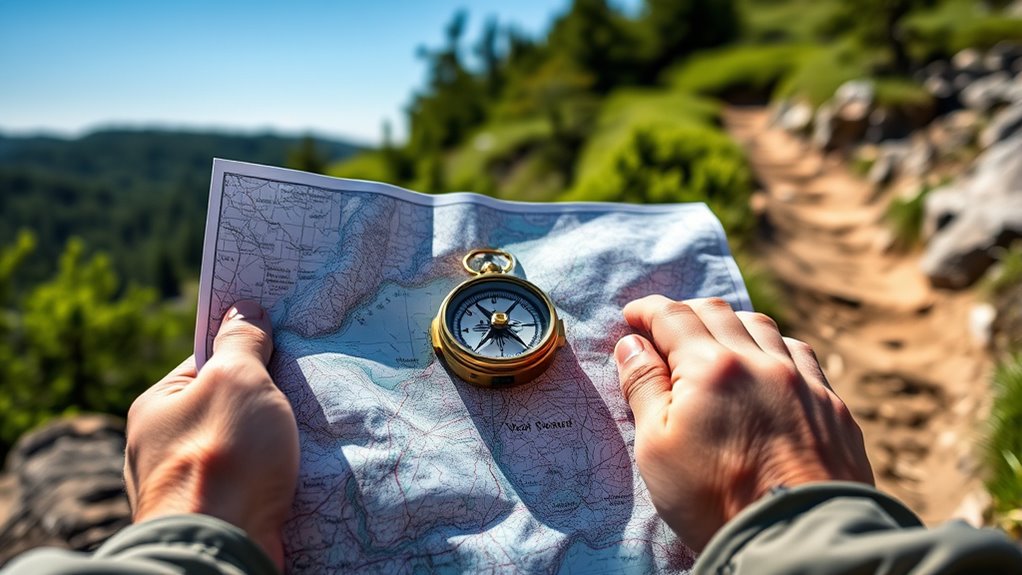

To navigate effectively, use maps to understand terrain and trail markers, while a compass helps orient you in the absence of visible signs. GPS apps provide real-time location data but should be supported with traditional methods to guarantee reliability. Regularly verify your position with these tools, interpret trail markers accurately, and plan alternate routes if needed. Continuing will enhance your skills for safe, confident outdoor navigation.
Key Takeaways
- Use maps to identify trail markers, terrain features, and plan routes; verify your position regularly.
- Orient your compass with the map to determine directions, especially when trail markers are sparse or unclear.
- Employ GPS apps for real-time location tracking, but always carry traditional navigation tools as backups.
- Cross-check trail markers with map features to confirm your route and avoid deviations.
- Familiarize yourself with emergency signals and keep signaling tools accessible for rescue situations.
Have you ever found yourself lost in the wilderness with no clear way to navigate? In such situations, understanding how to interpret trail markers and employ emergency signaling techniques is crucial for safety and efficient route finding. Trail markers serve as critical navigational aids, providing visual cues that confirm your position and guide you along designated paths. These markers typically include colored blazes, reflective signs, or symbols painted or attached to trees, rocks, or posts. Recognizing their patterns and meanings allows you to stay oriented, especially when natural landmarks are ambiguous or absent. For example, a double blue blaze often indicates a water crossing, while a red circle might mark a boundary or hazard zone. Familiarity with local trail marking conventions significantly reduces the risk of deviating from the intended route.
Effective navigation also involves strategic emergency signaling. When lost or injured, you must quickly communicate your location to rescue personnel or nearby hikers. Visual signals such as reflective mirrors, brightly colored clothing, or distress signals like large ground-to-air symbols can attract attention from a distance. Auditory signals, including whistles and loud calls, are effective in open terrain but require coordination to avoid confusion. It’s vital to keep signaling tools accessible at all times and to understand their optimal use cases. For instance, a series of three whistle blasts in quick succession universally indicates distress and prompts immediate response. Establishing a plan for emergency signaling before setting out enhances your ability to attract help under duress.
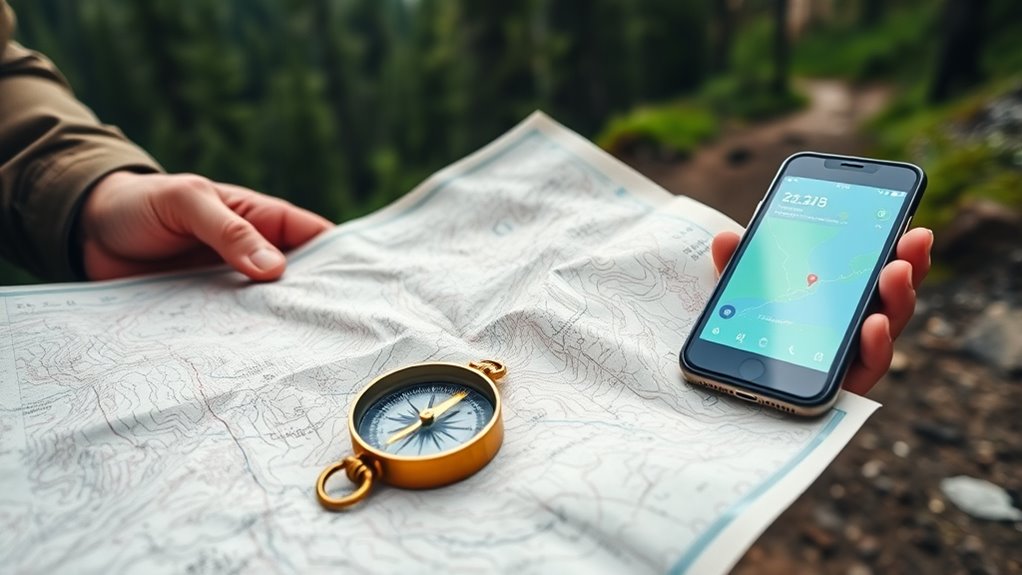
Additionally, integrating trail markers and emergency signaling with your navigation tools, like maps, compasses, and GPS devices, creates a robust system for wilderness travel. Maps display the locations of trail markers, helping you verify your position and plan alternate routes if necessary. A compass allows you to orient yourself relative to cardinal directions, especially when trail markers are sparse or ambiguous. GPS apps provide real-time positioning, but must be used judiciously with backup methods due to potential signal loss or device failure. Using a reliable GPS device can significantly improve your navigation accuracy and reduce the risk of getting lost. Combining these tools ensures redundancy, which is essential in wilderness navigation. When navigating, always note prominent trail markers along your route, and if you find yourself off course, rely on your compass and map to reorient, while preparing emergency signals if rescue becomes necessary.
Frequently Asked Questions
How Do I Choose the Best Navigation Tool for My Trip?
Choose your navigation tool based on your trip’s complexity and environment. For detailed planning, use maps with correct orientation and regularly verify compass calibration to confirm accuracy. If you’re in unfamiliar terrain or remote areas, a GPS app offers real-time positioning, but always carry a compass as a backup. Combining these tools enhances reliability; prioritize calibration and orientation to maintain precise navigation in any scenario.
What Should I Do if My GPS Device Fails?
When your GPS device fails, don’t panic—think of it as an unexpected opportunity. Immediately activate your alternative backup, like a compass or printed map, and use it to orient yourself. Also, employ emergency signaling techniques such as signaling mirrors or whistles to attract help if needed. Always carry these essentials as a failsafe; relying solely on electronic devices risks losing your way when it counts most.
How Can I Improve My Map Reading Skills?
To improve your map reading skills, study map symbols and their meanings thoroughly, ensuring you recognize terrain features accurately. Practice identifying landforms, water bodies, and vegetation types, correlating them with real-world terrain. Regularly analyze maps in different environments to enhance terrain recognition. Use topographic maps to understand elevation changes and contours. Consistent practice and studying map legend details will sharpen your ability to interpret maps precisely and navigate confidently in diverse outdoor settings.
Are There Safety Tips for Using Compass Navigation?
Back in the day, compass calibration was key to accurate navigation, and it’s still crucial. Always verify your compass’s accuracy before setting out, and carry proper safety equipment like a whistle and signaling mirror. When using a compass, keep it away from magnetic interference and double-check bearings regularly. These precautions ensure safe navigation, helping you avoid disorientation and stay on course, especially in challenging terrain or low visibility conditions.
How Do I Navigate in Areas With Poor GPS Signal?
When GPS signals are weak, rely on terrain features and natural landmarks for navigation. Identify prominent features like ridges, streams, or distinctive trees to orient yourself. Use a compass to determine direction relative to these landmarks, and cross-reference your map to verify your position. Always maintain a mental or physical note of key features around you, ensuring accurate navigation despite poor GPS reception.
Conclusion
Mastering navigation tools transforms the wilderness from an unpredictable maze into a well-charted map. By understanding how to read maps, operate compasses, and utilize GPS apps, you gain the precision needed to stay on course. Think of navigation skills as the compass guiding your adventure—without them, you’re lost in uncharted territory. Equip yourself with these essentials, and you’ll navigate the outdoors with confidence, turning potential disorientation into a clear path forward.