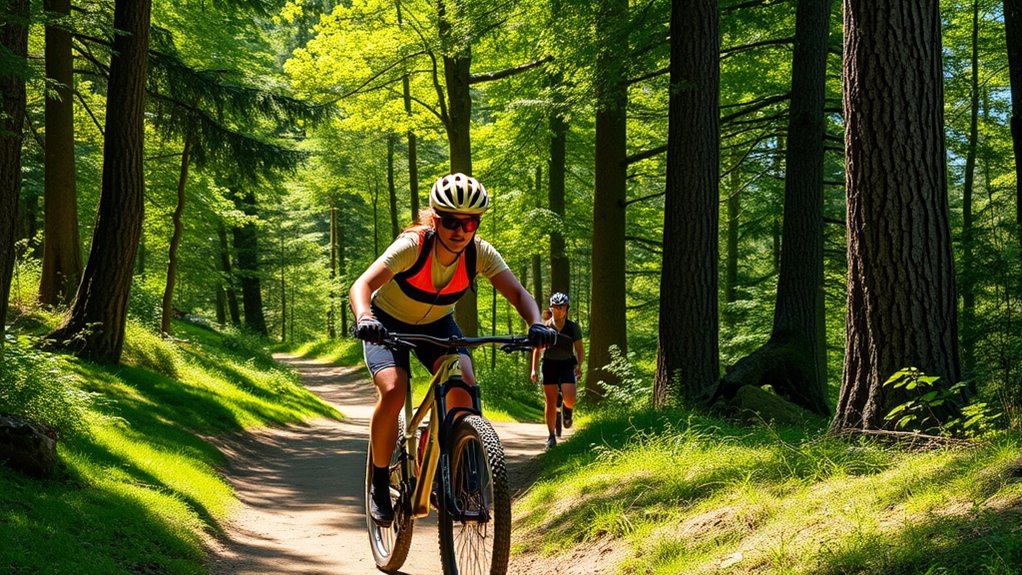

When starting mountain biking, it’s important to choose beginner-friendly gear like lightweight bikes with quality suspension and easy gear systems. Always follow trail etiquette: stay on designated paths, yield to uphill riders and pedestrians, and keep noise low to protect wildlife. Respect the environment by packing out trash and avoiding trail damage. Responsible riding helps preserve outdoor spaces for everyone. Staying informed about local conditions ensures a smooth ride—continue to uncover essential tips for a safe, eco-friendly adventure.
Key Takeaways
- Wear proper protective gear such as a helmet, gloves, and pads for safety and comfort.
- Respect trail rules by yielding to uphill riders and pedestrians to ensure everyone’s safety.
- Use eco-friendly bikes and maintain them regularly to minimize environmental impact and prolong their lifespan.
- Stay on designated trails to prevent erosion, protect wildlife, and preserve natural habitats.
- Plan your ride with local trail information, check for closures, and be mindful of trail conditions.
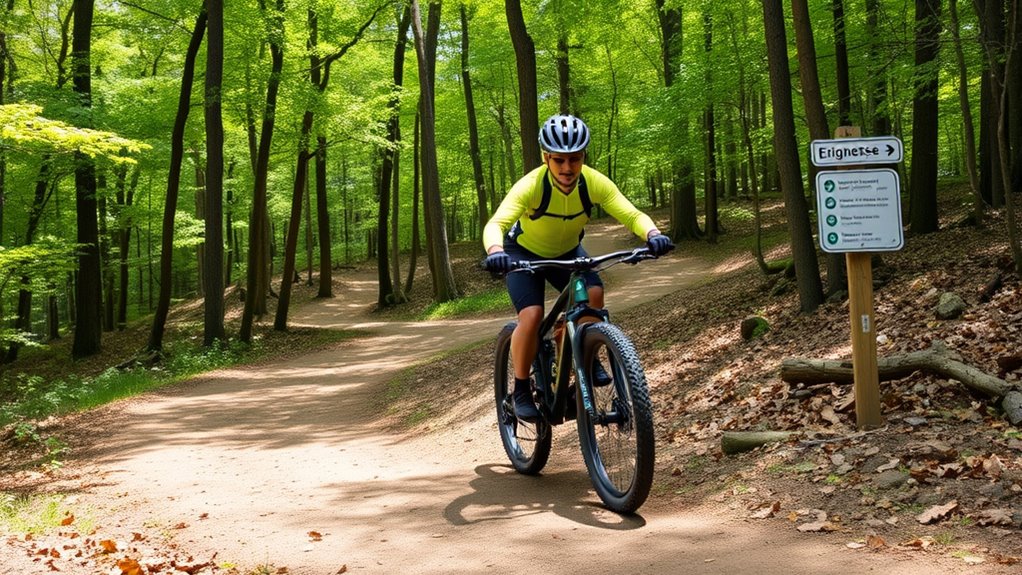
If you’re new to mountain biking, it can seem intimidating at first, but with the right approach, you’ll quickly discover how exhilarating and rewarding this sport can be. One of the key aspects to mastering mountain biking is understanding the latest tech innovations and their impact on both performance and the environment. Modern bikes are equipped with advanced suspension systems, lightweight yet durable frame materials, and electronic shifting, all designed to enhance your ride. These innovations not only improve control and comfort but also reduce rider fatigue, allowing you to tackle more challenging trails with confidence. Additionally, electric mountain bikes (e-MTBs) have gained popularity, offering assistance on steep climbs and rough terrain. While these bikes can extend riding capabilities, it’s essential to *consider* their environmental impact. Manufacturers are increasingly focusing on sustainable manufacturing practices, and many e-MTBs now feature eco-friendly batteries with longer lifespans and recyclable components, minimizing ecological footprint. As a beginner, embracing these tech advancements can make your riding experience smoother and more enjoyable, but it’s equally important to *stay mindful of* your environmental responsibilities. Always stick to designated trails to avoid damaging sensitive ecosystems, and practice responsible riding by avoiding shortcuts or trail widening. Maintaining your bike properly also plays a role in sustainability; well-maintained bikes last longer, perform better, and reduce the need for frequent replacements. Learning about trail etiquette is equally *crucial*. Respect for other trail users, whether hikers, runners, or fellow bikers, ensures everyone can enjoy the outdoors safely. Yielding to uphill riders and giving way to pedestrians are basic courtesies that foster a positive riding environment. Keep noise to a minimum and avoid riding in closed areas to protect wildlife and preserve the natural beauty of the trail. As you gain experience, you’ll develop a better sense of how your riding impacts the environment, and you can actively contribute to trail preservation. Practicing “Leave No Trace” principles by packing out trash, avoiding trail erosion, and respecting wildlife helps maintain these outdoor spaces for future riders. Being aware of local branch hours can help you plan your rides around available services and closure times. The combination of embracing tech innovations and practicing responsible trail etiquette not only enhances your personal riding experience but also plays a *crucial* role in conserving the natural landscapes that make mountain biking so special. By staying informed and respectful, you *ensure* that this exhilarating sport remains sustainable and accessible for everyone, now and in the future.
Frequently Asked Questions
What Are the Best Beginner-Friendly Mountain Biking Trails?
You should look for beginner-friendly mountain biking trails with easy trail difficulty levels, often marked clearly on bike trail maps. These trails typically feature gentle slopes, wide paths, and minimal technical challenges, making them perfect for newcomers. Always review local bike trail maps to identify suitable options and start on trails designed for beginners. As you gain confidence, you can gradually explore more challenging routes, but always prioritize safety and trail etiquette.
How Do I Choose the Right Mountain Bike Size?
To choose the right mountain bike size, focus on bike frame fit and saddle height. Measure your inseam to find a frame that matches your height, ensuring the bike feels comfortable and controllable. Adjust the saddle to a height where your knee slightly bends when seated. Proper sizing enhances your riding experience, minimizes fatigue, and boosts confidence. Always test ride different sizes to find your perfect fit.
What Safety Gear Is Essential for Mountain Biking?
You absolutely can’t hit the trails without essential safety gear! Wear protective clothing like padded shorts, gloves, and knee pads to shield against crashes. A helmet isn’t just safety—it’s your lifeline; guarantee helmet safety by choosing one that fits snugly and meets safety standards. These gear pieces are your armor against falls, making your ride safer and more enjoyable. Never compromise on safety—gear up properly before you start your adventure!
How Can I Improve My Mountain Biking Skills Quickly?
To improve your mountain biking skills quickly, focus on consistent practice and mastering trail navigation. Keep your bike well-maintained to prevent mechanical issues and guarantee safety. Study trail maps, learn to read terrain, and practice proper techniques like body positioning and braking. Ride with experienced bikers when possible, ask for feedback, and gradually challenge yourself on more difficult trails. Combining these steps accelerates skill development and boosts confidence on the trail.
Are There Specific Tips for Riding in Different Weather Conditions?
When riding in various weather conditions, prioritize weather preparedness by checking forecasts before heading out. Adjust your riding style for trail visibility—reduce speed and stay alert during fog, rain, or snow. Wear appropriate gear like waterproof clothing and gloves, and make certain your bike has proper tires for wet or muddy terrain. Being prepared helps you stay safe, maintain control, and enjoy your ride regardless of weather challenges.
Conclusion
Now that you’re equipped with essential trail etiquette and gear tips, you’re ready to conquer mountain biking adventures like a true champion. Embrace the thrill of the ride, respect fellow riders and nature, and push your limits with confidence. Remember, every trail you conquer transforms you into a more skilled and fearless rider—like a hero forging your path through nature’s wildest landscapes. Get out there, ride smart, and let your passion propel you forward!