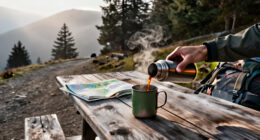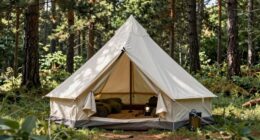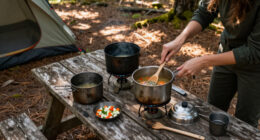
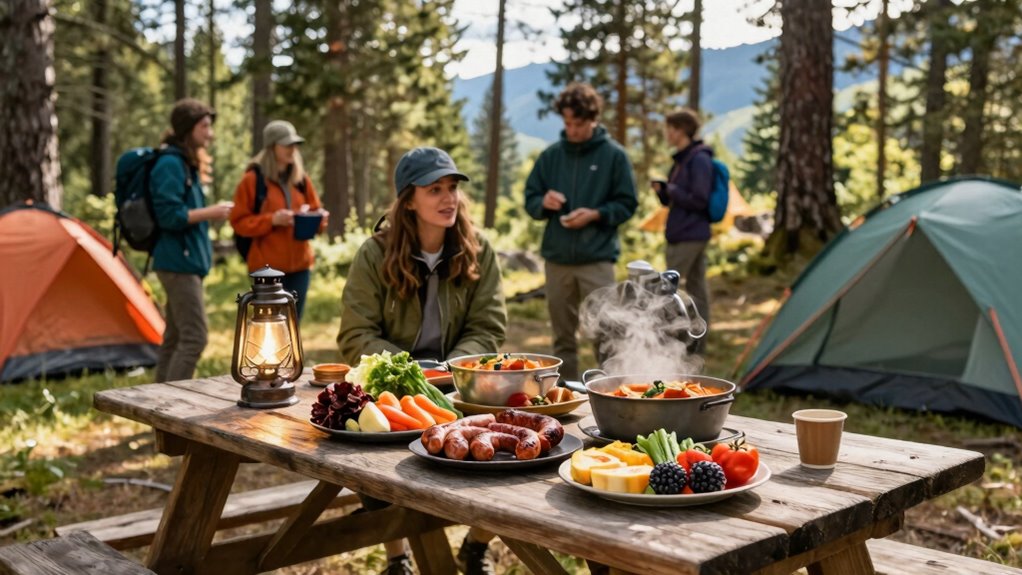
Meal timing is more important on camping trips because the outdoor environment brings unique challenges. Poor planning can lead to spoilage, food shortages, or messy cooking with limited facilities. Properly scheduling meals around weather, daylight, and activity helps you stay energized and keeps food fresh longer. It also reduces waste and guarantees safety. Mastering meal timing makes your trip more enjoyable and hassle-free—keep going to learn how to really optimize your outdoor dining experience.

Get travel and outdoor gear delivered free with Prime
- Fast, free delivery on millions of items
- Prime Video, Amazon Music and more included
- Member-only deals all year
Key Takeaways
- Limited facilities and resources make precise meal timing essential to prevent spoilage and ensure food safety.
- Weather conditions and daylight hours influence optimal cooking times, requiring careful planning outdoors.
- Managing supplies and waste efficiently depends on timing to avoid spoilage and overpacking.
- Coordinating meal times with outdoor activities maximizes comfort and enjoyment during the trip.
- Proper meal timing reduces stress, allowing campers to focus on relaxation rather than logistics.
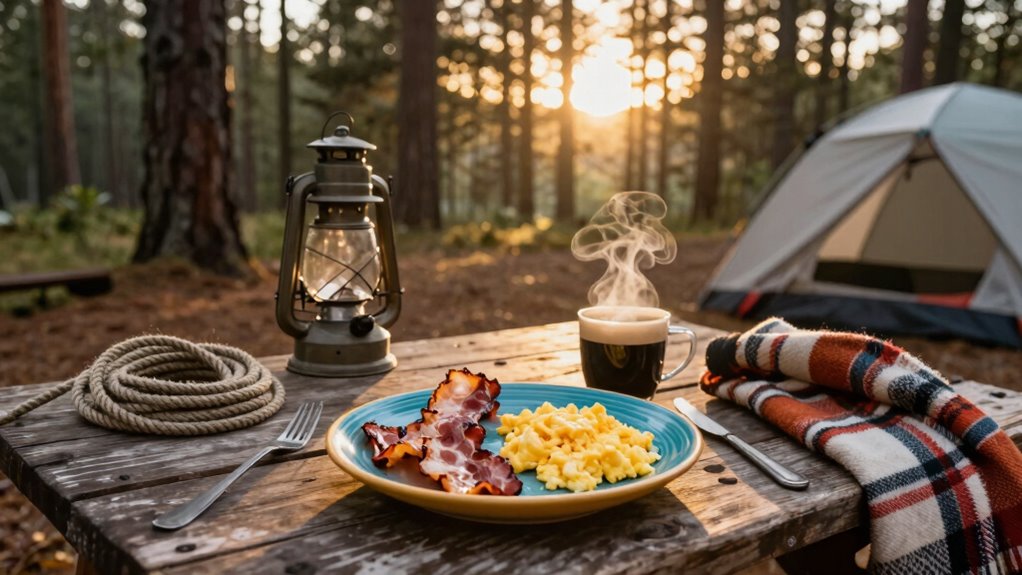
When camping, planning your meal timing can make a big difference in how smoothly your trip goes. Unlike at home, where you have a fully equipped kitchen and a predictable routine, camping challenges you to be more intentional with your food preparation and consumption. Proper timing ensures you’re not rushing to cook when you’re already tired or missing out on the best parts of the day for outdoor activities. It also helps you maximize your portable cooking options, making your meals both efficient and enjoyable.
Effective meal timing makes camping smoother, balancing prep, outdoor fun, and efficient cooking.
One key to successful meal timing is doing your meal prep before you leave. By preparing ingredients or even entire meals in advance, you can save time and energy once you’re at the campsite. When you’ve already chopped vegetables or pre-cooked proteins, your portable cooking setup becomes more about assembling than starting from scratch. This approach reduces the need for complicated or lengthy cooking sessions, which can be especially tricky if your campsite has limited facilities or if the weather isn’t cooperating. Proper meal prep means you can focus on savoring your meals rather than stressing over them, and it leaves more time for relaxing and exploring. Additionally, understanding your food storage options is crucial for keeping perishable items fresh and safe throughout your trip. Knowing how to properly store perishable foods can prevent spoilage and foodborne illnesses during your adventure. Being familiar with food safety practices can further help you avoid health issues and ensure your meals stay fresh. Planning your food inventory helps you avoid overpacking or underestimating your needs, streamlining your packing process.
Timing also influences the use of your portable cooking gear. If you plan your meals around the best weather windows or the times of day when cooking is most feasible, you’ll avoid unnecessary delays or discomfort. For example, cooking during the heat of midday might be less appealing than preparing a quick breakfast or dinner. Having a clear schedule helps you coordinate the use of your stove, grill, or other equipment efficiently, reducing the chances of conflicts or delays. It also ensures you’re eating at regular intervals, which keeps your energy levels steady for outdoor adventures.
Additionally, knowing when to eat can help you avoid common camping mishaps, like running out of fuel or having spoilage issues. If you time your meals right—such as consuming perishable foods early in the trip—you minimize waste and keep food safe. Planning meal timings also allows you to incorporate snack breaks or light bites, keeping hunger at bay without overloading your cooking setup. When you’re mindful of these details, your camping experience feels more organized and less stressful. Proper meal timing can even help extend your food supplies by reducing unnecessary waste, making your trip more sustainable.
In the end, meal timing on camping trips isn’t just about eating—it’s about creating a seamless rhythm to your outdoor experience. Coordinating your portable cooking tasks with your meal prep schedule ensures you’re well-fed without fuss. When you approach your meals with intention and good timing, you’ll find your trip is more enjoyable, allowing you to focus on the adventure rather than the food logistics.
portable camping stove with wind guard
As an affiliate, we earn on qualifying purchases.
As an affiliate, we earn on qualifying purchases.
Frequently Asked Questions
How Can I Keep Food Fresh During Long Camping Trips?
To keep food fresh during long camping trips, you should focus on food preservation and refrigeration alternatives. Use coolers with plenty of ice or ice packs, and pack perishable items last to keep them cold longer. Consider portable mini-fridges or insulation techniques like wrapping food with wet towels. Also, opt for non-perishable foods and plan meals that don’t require refrigeration, ensuring your food stays fresh and safe throughout your trip.
What Are Quick Meal Options for Busy Mornings?
Think of your morning as a race against the sun—quick breakfast ideas become your secret weapon. Whip up overnight oats, grab a handful of trail mix, or enjoy a protein bar for instant fuel. Morning meal hacks like pre-prepped smoothies or boiled eggs save precious moments. These fast options keep you energized and ready to conquer the day, even when time feels tight.
How Do I Prevent Foodborne Illnesses Outdoors?
To prevent foodborne illnesses outdoors, prioritize food safety by storing food at proper temperatures and avoiding cross-contamination. Follow hygiene practices like washing hands with soap and water or using hand sanitizer before handling food. Keep perishable items in coolers with ice, and cook meats thoroughly. Regularly clean utensils and surfaces, and don’t leave food out in the heat for too long. These steps help keep your outdoor meals safe and enjoyable.
What Are the Best Portable Cooking Tools for Meal Timing?
You should choose portable stoves that are lightweight and easy to use, ensuring you can cook meals quickly and efficiently. Pair them with compact utensils that save space and allow you to prepare and eat food without hassle. These tools help you stick to your meal schedule, prevent food safety issues, and make your camping experience more enjoyable. Prioritize durability and ease of cleaning for the best outdoor cooking setup.
How Can I Accommodate Dietary Restrictions While Camping?
Think of your camping meal plan as a puzzle—you need the right pieces to fit perfectly. To accommodate dietary restrictions, you adjust each piece during meal planning, selecting suitable ingredients and alternatives. Carry versatile, allergy-friendly options and label everything clearly. By planning ahead and customizing your meals, you guarantee everyone’s needs are met, making your outdoor adventure enjoyable and safe for all.
Conclusion
As you pack up and settle into your campsite, you realize that timing your meals isn’t just about convenience—it’s about survival. Imagine the sun dipping low, hunger gnawing, and your next meal still a distant plan. Properly timed meals could be the difference between feeling energized or drained, alert or sluggish. So, as you prepare for tomorrow’s adventures, remember: in the wild, meal timing isn’t just a detail—it’s your secret weapon.
Halloween Picks
halloween
As an affiliate, we earn on qualifying purchases.