
Many inflatable hot tub owners overlook how much electricity they use to keep their tubs warm and functioning. Your power bill depends on factors like temperature settings, usage habits, insulation quality, and equipment efficiency. Higher temperatures and frequent use increase costs, while good insulation and energy-efficient covers help cut expenses. To truly manage your costs, it’s essential to understand these factors and explore smart strategies—if you want to keep your hot tub cozy without breaking the bank, keep going.
Key Takeaways
- Hot tub electricity costs depend on heater, pump, and filtration energy use, influenced by temperature, usage frequency, and insulation quality.
- Maintaining a moderate temperature (around 100°F-102°F) and limiting usage can significantly reduce power expenses.
- Proper insulation, covers, and sealing gaps help minimize heat loss, lowering overall energy consumption and costs.
- Upgrading to energy-efficient equipment and using programmable timers optimize heating schedules and save electricity.
- Incorporating alternative energy sources like solar panels can offset hot tub power costs and improve efficiency.
Why Many Inflatable Hot Tub Owners Overlook Power Costs
Many inflatable hot tub owners overlook power costs because they focus primarily on the initial purchase and setup. They often underestimate ongoing expenses, especially energy use. To cut costs, consider integrating solar power options, which harness free sunlight to maintain water temperature. Additionally, applying insulation techniques can markedly reduce heat loss, meaning your hot tub stays warm longer without extra energy. Proper insulation around the walls, floor, and cover keeps heat trapped inside, minimizing the workload on your heater. These strategies not only lower your electricity bill but also make your hot tub more eco-friendly. An understanding of energy consumption and how to manage it can lead to significant long-term savings. While initial savings are appealing, understanding and managing power consumption through solar power and insulation is key to long-term savings and a more sustainable hot tub experience.
How Does Your Inflatable Hot Tub Use Electricity?
Your inflatable hot tub uses electricity primarily to power its heater, pump, and filtration system, ensuring the water stays warm, clean, and properly circulated. To maximize energy efficiency, it’s essential to understand how these components work together. The heater maintains your desired temperature, but it consumes the most energy, especially if insulation is poor. Effective insulation techniques help retain heat, reducing the workload on the heater and lowering electricity use. The pump circulates water through the filtration system, which keeps your hot tub hygienic, but it also contributes to energy consumption. By improving insulation and managing circulation times, you can considerably cut down on power costs. Proper use of energy-efficient equipment and insulation makes a noticeable difference in your hot tub’s overall power usage. Additionally, using DIY insulation techniques can further enhance heat retention and reduce energy bills.
What Factors Affect Your Hot Tub’s Power Consumption?
Your hot tub’s power use mainly depends on your temperature settings and how often you use it. Higher temperatures and frequent use can considerably increase energy consumption. Understanding these factors helps you manage costs and keep your hot tub running efficiently. Additionally, monitoring indoor air quality can prevent issues like mold or dust buildup that might affect your equipment’s performance.
Temperature Settings
The temperature setting on your hot tub directly impacts how much power it uses, as higher temperatures require the heater to work harder and longer. To optimize your hot tub’s energy efficiency, consider these factors:
- Keep the temperature at a comfortable level, typically around 100°F to 102°F, to avoid unnecessary energy use.
- Lowering the temperature even slightly can noticeably reduce power consumption without sacrificing comfort.
- Use temperature optimization techniques like insulating your hot tub to retain heat better, reducing heater workload.
- Paying attention to home design details such as insulation and placement can also help maintain consistent temperatures and reduce energy costs.
Adjusting your temperature settings thoughtfully helps balance comfort with energy efficiency. Maintaining a moderate temperature prevents excessive power draw, saving you money on electricity bills while still enjoying a relaxing soak.
Usage Frequency
How often you use your hot tub considerably impacts its overall power consumption. Frequent use means the heater runs more often to maintain your chosen temperature, which increases energy costs. To improve energy efficiency, consider turning the water filtration system off when not in use, as it can run daily regardless of activity. Limiting water filtration to necessary intervals reduces unnecessary power draw. Additionally, if you use your hot tub sparingly, running it only when needed helps lower overall costs. Regular maintenance, like cleaning filters, ensures water stays clean without overworking the system. Standby generators designed for energy efficiency can also help manage power consumption during peak and off-peak hours. By managing usage frequency and optimizing water filtration, you can greatly reduce your hot tub’s electricity expenses while maintaining a comfortable, well-maintained soak.
Calculating the Actual Electricity Cost to Run Your Hot Tub
Understanding the true cost of running your inflatable hot tub requires more than just checking the electricity bill. To accurately calculate your expenses, consider these factors:
Calculating hot tub costs involves energy use, daily hours, and local rates for accurate budgeting.
- Power consumption per hour (measured in kWh)
- Usage duration each day
- Local electricity rates
Start by noting your hot tub’s energy efficiency, which impacts overall costs. Multiply the kWh used per hour by your daily usage to find total daily consumption. Then, multiply that number by your local rate to estimate daily costs. Finally, multiply by the number of days you use it each month for a monthly cost estimate. This method allows you to perform a clear cost comparison, helping you determine if your hot tub runs efficiently or if adjustments are needed to save money.
Additionally, understanding the contrast ratio of your projector can significantly affect your viewing experience, especially in dark room settings.
What Are Typical Electricity Costs for Inflatable Hot Tubs?
Your monthly electricity costs for an inflatable hot tub depend on how often you use it and how you maintain it. Factors like local energy rates, insulation, and temperature settings can also impact your bill. Understanding these elements helps you estimate and manage your expenses more effectively. Additionally, free floating designs can influence energy efficiency by reducing heat loss.
Average Monthly Usage
Ever wondered what your monthly electricity bill might look like with an inflatable hot tub? On average, you might spend about $20 to $50 per month, depending on usage and energy efficiency. To better understand, consider these points:
- You typically run the heater 4-6 hours daily to maintain water temperature.
- Good insulation techniques can reduce heat loss, lowering energy costs.
- Proper energy efficiency measures, like using a cover, can cut your monthly bill considerably.
- Maintaining a balanced usage schedule helps prevent burnout and promotes more sustainable enjoyment.
Your actual costs depend on factors like local electricity rates and how often you use the tub. Keeping the hot tub insulated and using efficient heating methods helps minimize expenses, making it more affordable to enjoy your relaxing soak.
Factors Influencing Costs
Electricity costs for inflatable hot tubs vary based on local rates, usage habits, and energy efficiency features. Using energy efficient covers helps retain heat, reducing the workload on your heater and lowering energy bills. Proper insulation techniques, like adding thermal barriers or insulating the base, also minimize heat loss. The frequency and duration of use substantially impact costs; longer or more frequent sessions increase energy consumption. Additionally, the age and quality of your hot tub matter—older models or those with poor insulation tend to use more power. Maximize Your Truck Bed’s Potential for Every Adventure By investing in energy-efficient covers and applying effective insulation techniques, you can control costs more effectively and enjoy your inflatable hot tub without worrying about skyrocketing electricity bills.
Tips to Reduce Power Usage Without Sacrificing Comfort
To cut down on power usage without sacrificing comfort, start by setting your hot tub to an ideal temperature—around 100°F to 102°F—so it stays warm enough without wasting energy. Next, consider energy efficient upgrades like a high-quality cover or a programmable timer to control heating times. Additionally, use insulation techniques such as foam insulation panels or sealing gaps around the cover to minimize heat loss. These steps help maintain warmth efficiently. You can also reduce energy consumption by limiting the duration of each soak or lowering the temperature slightly when not in use for extended periods. Incorporating smart controls can further optimize energy use by adjusting heating based on your schedule and preferences. Combining these tips allows you to enjoy your hot tub comfortably while keeping electricity costs in check.
How Temperature Settings and Usage Frequency Impact Your Costs
Adjusting your hot tub’s temperature and how often you use it can considerably influence your energy bills. Lowering the temperature slightly reduces the heater’s workload, saving energy. Frequent use keeps the water hot but increases overall power consumption, especially if your hot tub lacks energy efficient insulation. To minimize costs, set the temperature to a comfortable but energy-conscious level and limit unnecessary use. If you’re looking for cheaper options, consider alternative power sources like solar panels or wind energy, which can offset electricity costs long-term. Proper insulation helps retain heat, reducing the need for constant reheating. By managing both your temperature settings and usage frequency, along with investing in insulation or alternative power, you can substantially cut your hot tub’s operating costs without sacrificing comfort.
Hidden Electricity Expenses of Operating Your Hot Tub
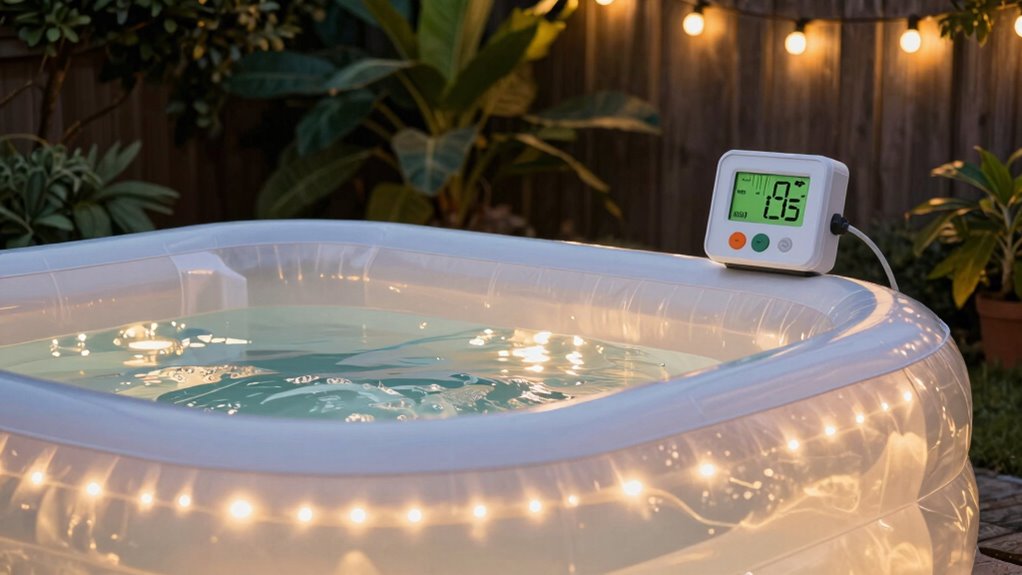
Even if you keep your hot tub’s heater at a moderate setting, there are hidden electricity expenses that can inflate your bills. First, outdated or inefficient pumps, instead of energy-efficient models, waste power unnecessarily. Second, poor insulation techniques allow heat to escape, forcing your heater to work harder and use more electricity. Third, frequent opening of the hot tub cover causes heat loss, increasing energy consumption. To minimize these hidden costs, invest in energy-efficient pumps that use less power and improve insulation with better covers or insulating panels. These measures reduce the workload on your heater and keep heat contained, helping you save money without sacrificing comfort. Being aware of these hidden expenses guarantees you don’t overlook significant energy drains.
Smart Strategies to Keep Your Hot Tub Warm and Save Money
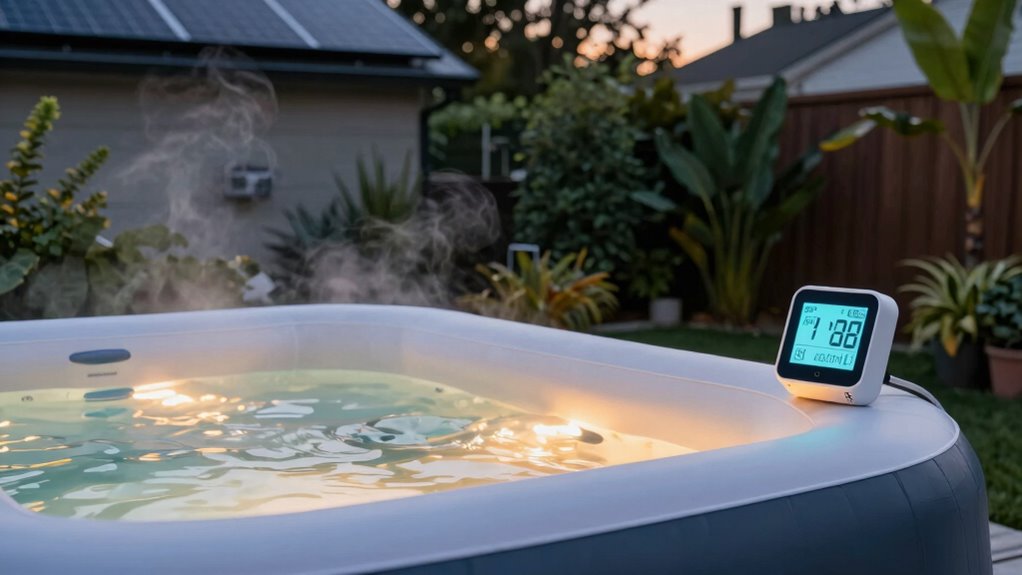
Keeping your hot tub warm efficiently requires smart strategies that minimize energy waste. One effective approach is exploring alternative energy sources, like solar panels or wind turbines, to offset electricity costs. Additionally, applying proper insulation techniques can markedly reduce heat loss. Use thermal covers and insulating blankets when the hot tub isn’t in use, and ensure the walls and jets are well-insulated. Position your hot tub in a sheltered, sunny spot to naturally retain warmth and reduce heating needs. Regularly checking for leaks and sealing gaps prevents unnecessary heat escape. By combining these strategies, you maximize energy efficiency, cut costs, and keep your inflatable hot tub comfortably warm without skyrocketing electricity bills.
Frequently Asked Questions
How Can I Accurately Measure My Hot Tub’s Real Energy Consumption?
To accurately measure your hot tub’s real energy consumption, use energy monitoring tools like a smart plug or a dedicated energy meter. These devices track consumption in real-time, giving you precise data. Regular consumption tracking helps identify patterns, peak usage times, and potential energy waste. By monitoring your hot tub’s energy use consistently, you can make informed decisions to reduce costs and improve efficiency.
Are There Specific Electrical Requirements for Different Inflatable Hot Tub Models?
Yes, different inflatable hot tub models have specific electrical requirements. You should check the electrical specifications provided by the manufacturer to guarantee proper power compatibility. Some models need standard outlets, while others may require a dedicated circuit or higher voltage. Always verify these details before setup to prevent electrical issues, ensuring your hot tub operates safely and efficiently. Proper electrical compatibility helps avoid damage and ensures a smooth, enjoyable experience.
What Safety Precautions Should I Follow When Managing Hot Tub Electricity Costs?
Did you know that a simple ground fault can cause serious electrical hazards? Always verify wiring safety by checking that your hot tub is properly grounded, which prevents shocks. Use a Ground Fault Circuit Interrupter (GFCI) for added protection and regularly inspect cords and connections. Never bypass safety features, and keep electrical components away from water. These precautions protect you and keep your hot tub experience safe and enjoyable.
Can I Use Alternative Power Sources to Cut Costs?
Yes, you can use alternative power sources like solar energy or generator power to cut costs. Solar panels can harness sunlight to power your hot tub, reducing reliance on grid electricity and saving money over time. Alternatively, a portable generator can provide temporary power, especially during outages or outdoor use. Just guarantee your setup is safe, efficient, and compatible with your hot tub’s power requirements to avoid damage or safety issues.
How Often Should I Service My Hot Tub’s Electrical Components?
You should service your hot tub’s electrical components at least once a year. Follow a regular maintenance schedule to check for signs of wear or corrosion, and always schedule a professional inspection to guarantee everything functions safely and efficiently. Proper maintenance helps prevent costly repairs and extends the lifespan of your hot tub. Don’t neglect these steps—routine servicing keeps your hot tub running smoothly and safely.
Conclusion
So, next time you kick back in your inflatable hot tub, remember that those hidden electricity costs can sneak up on you—kind of like finding a forgotten $20 in your pocket. By understanding what affects your power use and applying simple tips, you can enjoy your relaxing soak without the surprise of high bills. After all, a little awareness goes a long way—making your hot tub experience both cozy and budget-friendly.