
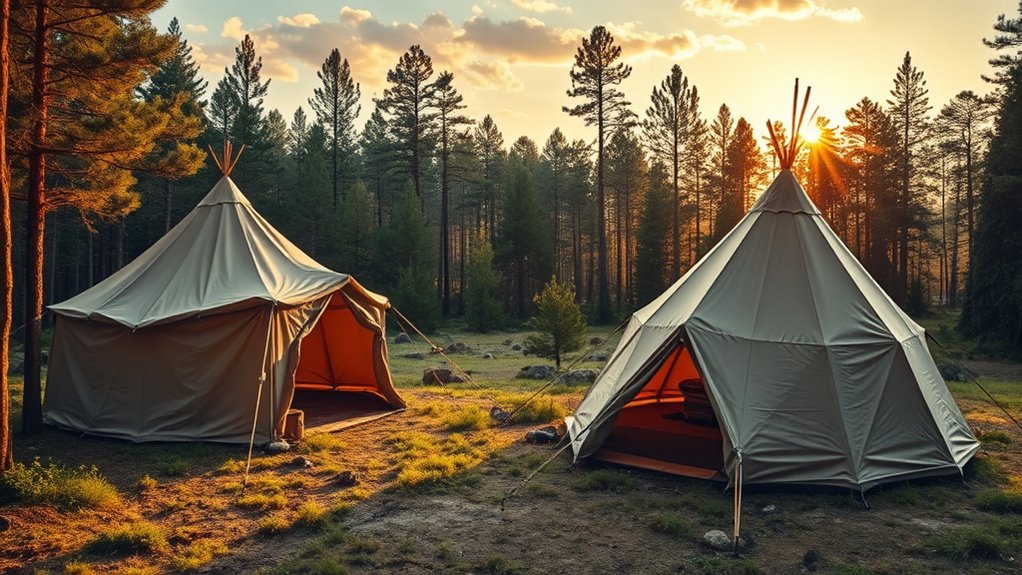

Throughout history, humans relied on natural shelters like caves and overhanging rocks before crafting portable covers from animal hides, woven grasses, and bark for mobility and protection. As needs evolved, primitive tents with better materials, such as canvas and synthetics, emerged, driven by both nomadic and military demands. These innovations led to modern tents that balance durability, comfort, and portability. If you explore further, you’ll discover how these designs have shaped today’s versatile camping solutions.
Key Takeaways
- Early humans used natural formations and portable hides for shelter, enabling nomadic lifestyles and survival.
- Primitive tents evolved with improved materials like canvas, focusing on durability, comfort, and portability.
- Military innovations introduced quick-assembly tents with reinforced features for strategic advantage and shelter needs.
- Nomadic and military demands drove design improvements, including lightweight frames, camouflage, and adaptable covers.
- Modern tents combine technology and comfort, serving diverse activities from recreation to specialized outdoor applications.
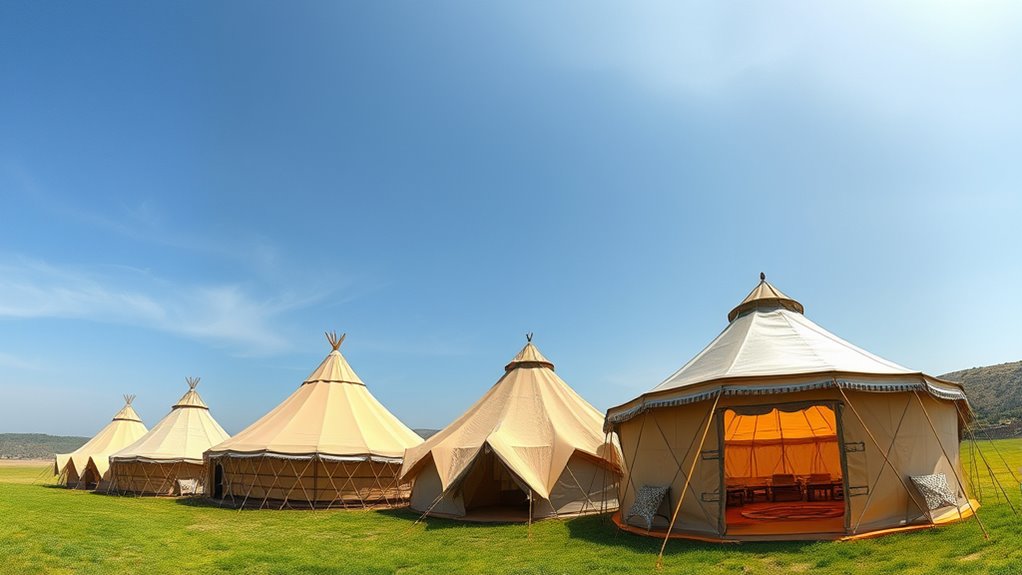
Have you ever wondered how humans first learned to shelter themselves from the elements? In ancient times, early humans relied on natural formations like caves, trees, and overhanging rocks for protection. As they developed, they began creating portable shelters that suited their nomadic lifestyles, essential for survival and resource management. These early tents were simple structures made from animal hides, woven grasses, or bark stretched over wooden frames. They offered protection from wind, rain, and sun, allowing nomadic groups to migrate in search of food and water, adapting their shelters to different environments. The portability of such shelters was *fundamental*, enabling groups to pack up and move quickly, which was *indispensable* for hunting, gathering, and avoiding predators. Over time, these primitive tents became more sophisticated, incorporating better materials and construction techniques, reflecting an evolving understanding of comfort and durability. Additionally, the development of specialized materials like canvas and synthetic fabrics significantly improved tent performance and lifespan. Military applications marked a significant turning point in the development of tents. As armies began to conduct campaigns over vast territories, the need for portable and reliable shelter grew. During the Roman Empire, soldiers used simple tents called *contubernia*, which could be quickly assembled and disassembled, providing essential cover during campaigns. The design evolved to include modular units that could be combined for larger command posts or field hospitals. These military tents prioritized quick setup, stability, and concealment, often made from heavy canvas or animal hides, with features like reinforced stakes and guy lines to withstand harsh weather. The strategic importance of these tents grew, as they not only provided shelter but also served as command centers, storage spaces, and medical stations. The adaptability of tents in military contexts influenced civilian designs as well, emphasizing lightweight materials and ease of transport. Throughout history, the influence of nomadic lifestyles and military needs drove innovation in tent design. Nomads demanded lightweight, easy-to-assemble shelters that could withstand varying terrain and weather, leading to innovations like collapsible frames and versatile coverings. Meanwhile, military applications pushed for more durable and functional structures, incorporating features such as camouflage, insulation, and quick deployment mechanisms. Both influences contributed to the gradual *evolution* from simple animal hide shelters to modern tents, blending portability, durability, and comfort. This ongoing innovation reflects the continuous evolution of tent design driven by human needs and technological advancements. Understanding this chronological progression reveals how necessity and innovation continually shaped the humble tent, transforming it from primitive nomadic shelters and military fortifications into the versatile gear we rely on for recreation and survival today.
Frequently Asked Questions
What Are the Earliest Known Materials Used for Tent Construction?
You find that the earliest tents used primitive fabrics made from natural fibers like animal hides, grasses, and woven bark. These materials provided durability and protection, evolving over time as humans refined their techniques. Initially, animal skins were sewn together to create shelters, offering waterproofing and insulation. Later, woven plant fibers gained popularity for their lightweight and breathable qualities, marking significant advancements in tent construction throughout history.
How Did Tent Designs Evolve Across Different Ancient Civilizations?
You see that tent designs evolved markedly across ancient civilizations. Nomadic societies, like the Mongols, developed portable, lightweight shelters for mobility, while Egyptians built large, ornate ceremonial pavilions for rituals and gatherings. Over time, materials and structures advanced, reflecting cultural needs—simple skins and hides for practicality, elaborate fabrics and frameworks for status. These adaptations highlight how tents served both functional and ceremonial roles across diverse societies.
What Role Did Tents Play in Military Strategies Historically?
You see that tents played a vital role in military strategies by providing portable shelter and facilitating troop movements. Over time, armies used military camouflage tents to blend into surroundings, enhancing concealment. They also served as bases for portable siege equipment, enabling quick deployment and support during campaigns. This adaptability made tents essential for logistical flexibility, allowing armies to establish temporary camps, coordinate attacks, and retreat efficiently across varied terrains.
How Have Modern Innovations Improved Tent Durability and Portability?
Modern innovations have considerably enhanced tent durability and portability. You’ll notice lightweight fabrics like ripstop nylon, which offer strength without added weight, making transport easier. Additionally, quick setup mechanisms, such as pop-up designs and color-coded poles, streamline assembly, saving time and effort. These advancements allow you to enjoy reliable shelter in various conditions, blending resilience with convenience and transforming camping from a challenge into a more accessible outdoor activity.
Are There Cultural Differences in Traditional Tent Architectures Worldwide?
You’ll find that traditional tent architectures showcase incredible cultural expressions and architectural diversity worldwide. Early nomadic societies crafted tents suited to their environments, like the yurts of Central Asia or the tipis of North America, reflecting their cultural identity. Over time, these designs evolved, influenced by climate and social customs, creating a fascinating chronological tapestry that highlights how different cultures uniquely adapt their shelters to their world.
Conclusion
As you’ve seen, tents have evolved from simple animal hides to sophisticated structures shaping human history. Their journey reflects adaptability, innovation, and survival instincts. But as modern technology advances, what’s next for the humble tent? Will future designs blend seamlessly with nature or redefine outdoor living entirely? The story isn’t over—your next adventure might just reveal the next chapter in tent evolution, waiting quietly on the horizon, ready to surprise us all.