


Hard shell rooftop tents offer better impact resistance, weatherproofing, and quick setup but tend to be bulkier and heavier, making them less portable. Soft shell tents are lighter, easier to handle, and generally cheaper upfront, but they may require more maintenance and aren’t as impact-resistant. Each has its tradeoffs depending on your camping style and budget. If you want to understand which fits your needs best, explore these differences further.
Key Takeaways
- Hard shell tents offer superior impact and weather resistance but are heavier, bulkier, and more expensive than soft shell tents.
- Soft shell tents are lightweight, easier to set up, and more portable, ideal for frequent or quick deployments.
- Hard shells provide quick, effortless deployment with minimal setup time, while soft shells may take longer but are easier to pack away.
- Soft shells usually require less maintenance and are simpler to clean, whereas hard shells are more durable with less frequent upkeep.
- The choice depends on priorities: durability and quick setup favor hard shells; portability and ease of use favor soft shells.
Which Rooftop Tent Is Right for You?
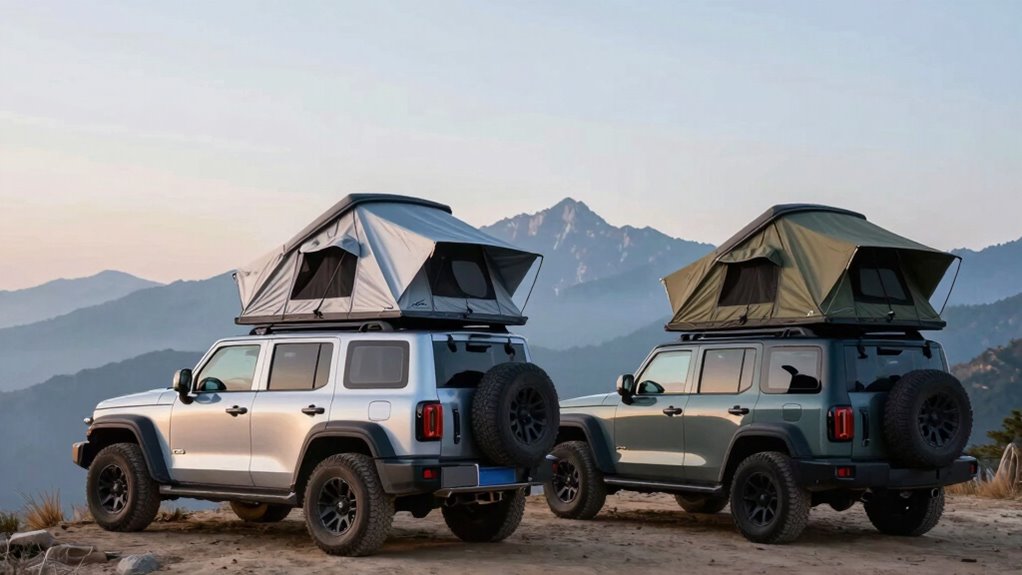
Choosing the right rooftop tent depends on your specific needs and camping style. Consider how much you value material maintenance—some fabrics require more care to stay waterproof and durable, while others are easier to clean and maintain. Think about aesthetic appeal too; a tent that complements your vehicle and camping setup can enhance your overall experience. If you prefer a sleek, modern look, soft shell tents often offer a stylish, streamlined appearance, whereas hard shell tents provide a rugged, polished look that can blend well with adventure vehicles. Your decision should balance ease of upkeep with visual appeal, ensuring your choice matches your adventure preferences and maintenance commitment. Additionally, understanding the fabric durability and maintenance requirements can help prevent surprises during your trips. Ultimately, selecting a tent that fits your lifestyle makes every camping trip more enjoyable.
Key Differences Between Hard Shell and Soft Shell Tents
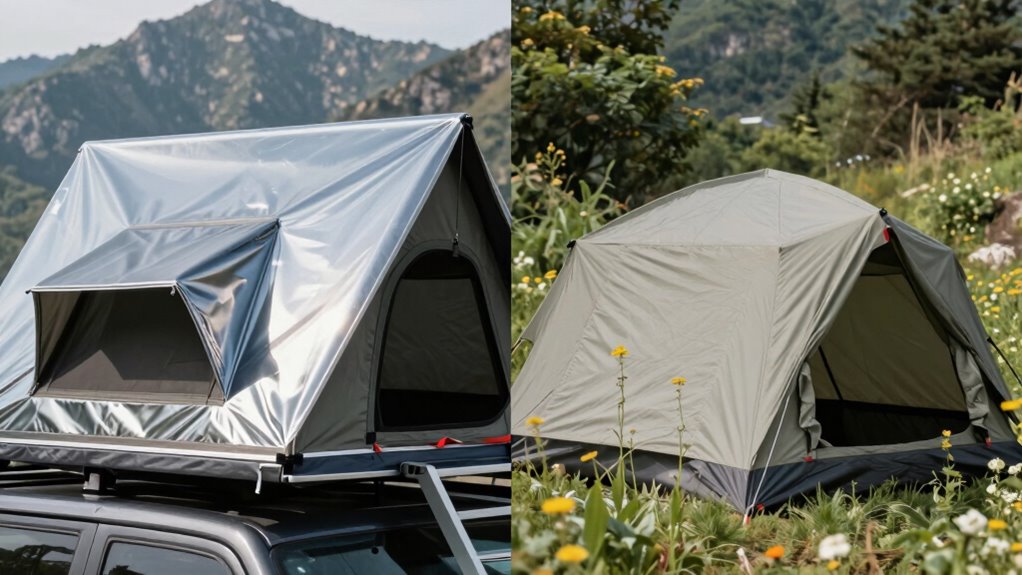
Hard shell and soft shell rooftop tents differ markedly in design, functionality, and performance, making it essential to understand their key distinctions. Hard shell tents feature a rigid outer shell, providing better protection and durability. Soft shell tents typically use fabric and rely on a hinge mechanism for opening and closing, which affects setup speed and flexibility. Canvas durability varies, with soft shells often using treated fabrics resistant to weather, but less impact-resistant than hard shells. The hinge mechanism in soft shells allows for quick deployment but can wear out over time. Hard shells offer superior protection against the elements but tend to be bulkier. The table below highlights these differences:
| Feature | Hard Shell Tents | Soft Shell Tents | Key Consideration |
|---|---|---|---|
| Durability | High impact-resistant shell | Canvas durability varies | Weather resistance |
| Setup Time | Longer, manual | Faster, hinge mechanism | Convenience |
| Portability | Bulkier, heavier | Lighter, more portable | Storage and transport |
Additionally, the design complexity of hard shell tents often requires more effort during manufacturing, which can influence cost and availability.
Pros and Cons of Hard Shell Rooftop Tents
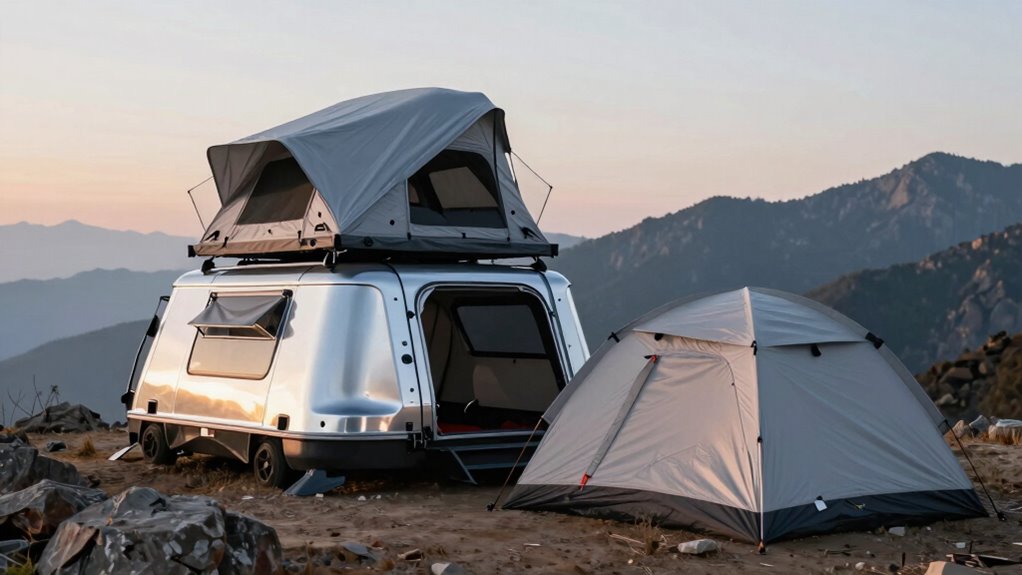
Hard shell rooftop tents offer several advantages that make them a popular choice for outdoor enthusiasts. They are durable, weather-resistant, and quick to set up, saving you time after a long day of exploring. If you carry climbing gear, the sturdy exterior provides extra protection for your equipment. When it’s time to relax, you can easily bring along camping chairs and set them up outside without worrying about the tent’s stability. Additionally, the rigid shell can limit headroom and storage options inside, which might affect your overall comfort and convenience during longer trips. Furthermore, the gear compatibility of hard shell tents is often better due to their solid structure, making them a versatile option for various outdoor activities.
Advantages of Soft Shell Rooftop Tents for Budget Campers
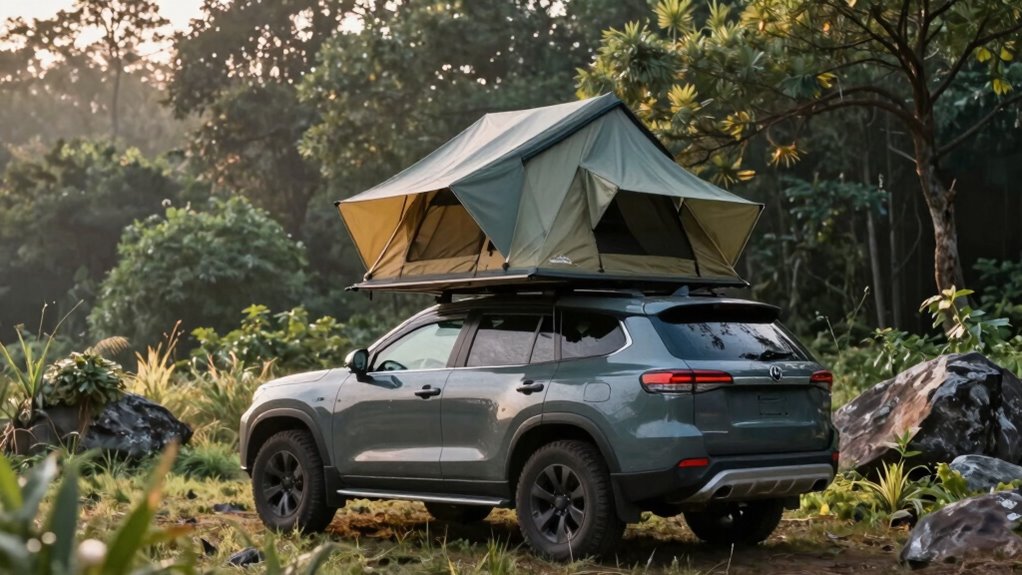
Soft shell rooftop tents are a cost-effective option that appeals to budget campers, offering many practical advantages. They typically cost less than hard shell models, making them an ideal choice for those seeking affordable gear for budget camping trips. Their lower price point doesn’t mean sacrificing functionality; you still get a comfortable sleeping space and decent weather protection. Soft shells are lightweight, which helps reduce overall vehicle load and fuel costs. They usually come with flexible setup options, allowing you to deploy them quickly without complicated mechanisms. Plus, their simple design often means fewer maintenance issues, saving you money in the long run. For budget campers, soft shell rooftop tents strike a balance between affordability and practicality, making outdoor adventures accessible without breaking the bank. Additionally, their easy-to-use features make them a popular choice among novice campers and seasoned explorers alike.
Setup and Ease of Use: Hard Shell vs. Soft Shell
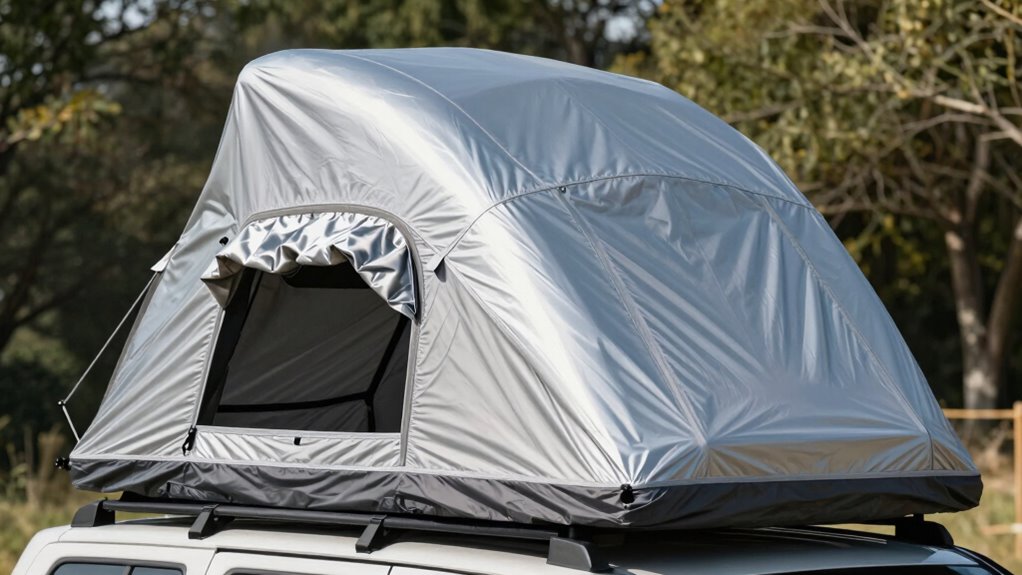
When it comes to setup speed and simplicity, soft shell tents usually take less time to pitch and pack away. Hard shell tents often require more effort and a bit more practice to set up correctly. Consider how important quick setup and packing are for your adventures when comparing these options. Additionally, soft shell tents tend to be more portable and lightweight, making them easier to carry and maneuver in different environments.
Setup Speed and Simplicity
Setting up a rooftop tent quickly and easily can save you time and frustration during your outdoor adventures. Soft shell tents typically require less time to deploy because they unfold in seconds, making setup straightforward. They often include features like built-in tent ventilation, which helps improve interior comfort immediately after setup. Hard shell tents, on the other hand, usually involve unfolding or lifting panels, which takes a bit more effort and time. While they may offer a more streamlined look once set up, the initial process can be more complex. If you prioritize simplicity and speed, a soft shell tent lets you settle in faster, ensuring better interior comfort without the hassle of complicated assembly. This makes soft shells ideal for quick stops or unpredictable weather. Additionally, soft shell tents tend to be more adaptable to various vehicle types and terrain, enhancing their versatility for different outdoor situations.
Packing and Storage Effort
Packing and storing rooftop tents varies considerably between soft shell and hard shell models. Soft shells typically fold into a compact form, making them easier to store and requiring less effort when packing away. Hard shells, however, often demand more time and effort due to their rigid structure and the need to secure the tent interior properly. Ventilation features in both types influence packing; open vents can help dry out the tent interior faster, reducing odors and mildew risks. The table below compares these aspects:
| Aspect | Soft Shell | Hard Shell |
|---|---|---|
| Packing effort | Less effort, folds compactly | More effort, rigid structure |
| Storage space | Smaller, easier to stow | Larger, needs dedicated space |
| Tent interior access | Easier to access for ventilation | More limited access during pack |
| Ventilation features | Typically better airflow options | Often less ventilation access |
Additionally, air circulation during packing helps maintain the tent’s condition and prolongs its lifespan.
Durability and Weather Resistance of Rooftop Tents
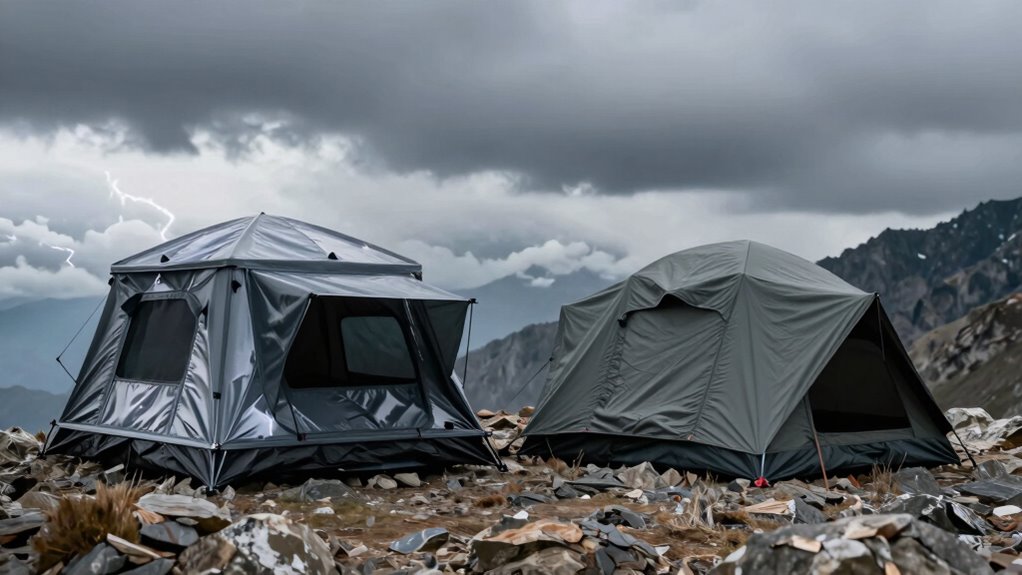
When choosing a rooftop tent, you want to consider how well it holds up against harsh weather and rough conditions. Material strength and resistance play a big role in its longevity, while weatherproofing features and seals protect you from rain and wind. Let’s explore how hard shell and soft shell tents compare in these key areas. Additionally, selecting a tent with proper maintenance practices ensures sustained durability and weather resistance over time.
Material Strength and Resistance
Material strength and resistance are essential factors when choosing between hard shell and soft shell rooftop tents, as they determine how well the tent withstands harsh conditions over time. Your focus should be on material durability and impact resistance, which directly affect the tent’s longevity. Hard shell tents typically use sturdy, impact-resistant materials like fiberglass or aluminum, offering excellent protection from falls or debris. Soft shell tents often rely on durable fabrics such as ripstop nylon or polyester, which resist tearing and punctures but may wear faster under heavy use. Both types can provide strong resistance to environmental stressors, but the hard shells generally excel in impact resistance, ensuring your investment stays protected through rough conditions. Additionally, material composition plays a crucial role in overall weather resistance, helping your tent endure rain, snow, and UV exposure over time.
Weatherproofing Features and Seals
Weatherproofing features and seals are essential for making sure your rooftop tent keeps water, wind, and dirt out, especially during unexpected storms. Waterproof zippers prevent leaks around entry points, giving you peace of mind in heavy rain. Seam sealing is equally important, as it enhances the tent’s durability by waterproofing the stitched areas that are vulnerable to leaks. Look for tents with sealed seams and quality waterproof zippers to maximize weather resistance. These features help maintain a dry interior and protect your gear from the elements. Proper weatherproofing also extends the lifespan of your tent, reducing wear and tear caused by moisture. Whether you choose a hard shell or soft shell tent, investing in reliable seals and waterproof zippers ensures your camping experience remains comfortable and dry in unpredictable weather. Additionally, selecting a tent with durability and weather resistance features can provide extra protection against harsh conditions and prolong the life of your investment.
Portability and Storage Options
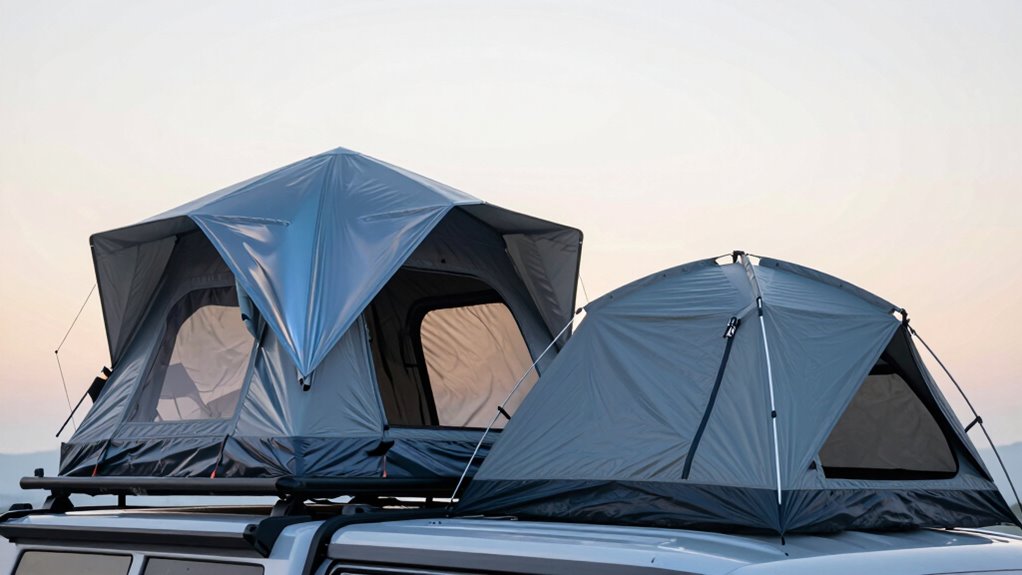
Ever wondered how easy it is to pack up and store your rooftop tent after a trip? With a compact design, soft shell tents typically fold down smaller and are lighter, making them easier to handle and store. They often come with integrated bags or cases that fit neatly in your garage or closet. Hard shell tents, on the other hand, tend to be bulkier and heavier, requiring more effort to pack away. While they offer quick setup and tear-down, their size and weight considerations mean you might need more space for storage and more strength to move them. Overall, if portability and easy storage are priorities, soft shells have the edge thanks to their lighter weight and more manageable, space-efficient design.
Cost and Value: Which Rooftop Tent Fits Your Budget?

When choosing between hard shell and soft shell rooftop tents, your budget plays a significant role in determining the best option for you. A thorough cost comparison helps you understand initial expenses, maintenance, and long-term value. Hard shell tents typically cost more upfront but offer durability and quicker setup, which may save you time and money over time. Soft shell tents often have a lower initial price but might require more ongoing maintenance and repairs. To decide which fits your budget, do a value assessment considering your camping frequency, convenience preferences, and durability needs. Remember, the cheapest option isn’t always the best long-term investment. Balancing cost with features ensures you select a rooftop tent that truly aligns with your budget and lifestyle.
Frequently Asked Questions
How Do Rooftop Tents Affect Vehicle Fuel Efficiency During Travel?
Rooftop tents can decrease your vehicle’s fuel efficiency because they increase aerodynamic drag, especially at higher speeds. The added weight and altered shape cause your engine to work harder, leading to higher fuel consumption. Hard shell tents tend to impact aerodynamics more than soft shell ones, but both types can reduce mileage. To minimize effects, keep the tent streamlined and remove it when not in use for long trips.
What Maintenance Is Required to Keep Both Tent Types in Optimal Condition?
Did you know that regular maintenance can extend your tent’s lifespan by up to 30%? To keep your rooftop tent in top shape, you should regularly perform tent cleaning to remove dirt and debris, and inspect zippers for wear or damage. Zipper maintenance involves lubricating them with a suitable product and ensuring they slide smoothly. With consistent care, your hard shell or soft shell tent stays durable and ready for adventure.
Are There Specific Vehicle Models Better Suited for Hard or Soft Shell Tents?
You’ll find that vehicle compatibility plays a big role in choosing between hard shell and soft shell tents. Hard shell tents work best on vehicles with strong roof racks and flat, sturdy surfaces, making installation easier. Soft shell tents are lighter and more versatile, fitting a wider range of models, but you’ll need to verify your vehicle’s roof can handle the extra weight and that installation is secure.
How Do Rooftop Tents Impact Overall Vehicle Safety and Handling?
Adding a rooftop tent can affect your vehicle’s safety and handling, but proper setup minimizes risks. You’ll notice changes in vehicle weight distribution and center of gravity, which could impact stability during turns or strong winds. To stay safe, verify your tent is installed correctly, keep within weight limits, and drive cautiously, especially at higher speeds. With these precautions, you can enjoy your adventure without compromising safety.
Can Rooftop Tents Be Used Year-Round in All Climate Conditions?
You can use rooftop tents year-round, but their seasonal usability depends on climate adaptability. In mild, dry conditions, they perform well in all seasons. However, in extreme cold, heavy snow, or intense heat, you might face challenges like insulation issues or discomfort. Make sure to choose a tent with proper ventilation, insulation, or weatherproof features for seasonal usability, and consider additional gear to stay comfortable in harsh climates.
Conclusion
Choosing between hard shell and soft shell rooftop tents is like picking the right pair of shoes—you need what fits your journey best. Both have their perks and pitfalls, but understanding these tradeoffs helps you make a confident decision. Think of your tent as your home away from home; pick the one that aligns with your style, budget, and adventures. Ultimately, the right choice makes your camping experience a smooth sail on your journey’s ocean.