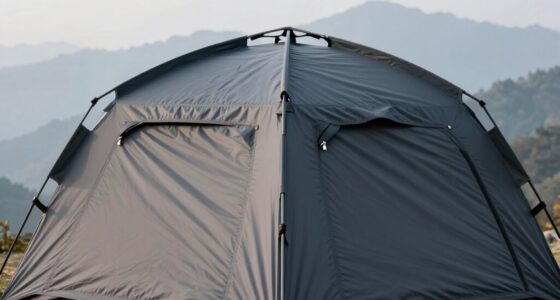

After a wet trip, shake out your tent and unzip all doors and windows to promote airflow. Set it up in a shaded, well-ventilated area or hang it indoors. Use a fan or open windows to speed up drying, gently pat wet spots with a towel, and remove the rainfly for better circulation. Check for mold or damage and consider applying waterproofing treatments once fully dry. Keep your tent in top shape by following these steps—more tips are ahead.

Get travel and outdoor gear delivered free — and shop member deals
- Fast, free delivery on millions of items
- Access to Prime Big Deal Days deals on October 6–7
- Prime Video, Amazon Music and more included
Key Takeaways
- Shake out and unzip all doors and windows to promote airflow and begin moisture removal.
- Set up the tent in a shaded, well-ventilated area or indoors with fans or a portable heater.
- Pat wet spots with a clean towel and hang rainfly separately for thorough drying.
- Use moisture-absorbing desiccants and ensure good ventilation to prevent mold and mildew.
- Confirm the tent is completely dry to the touch before storage, and perform final inspections for damage.
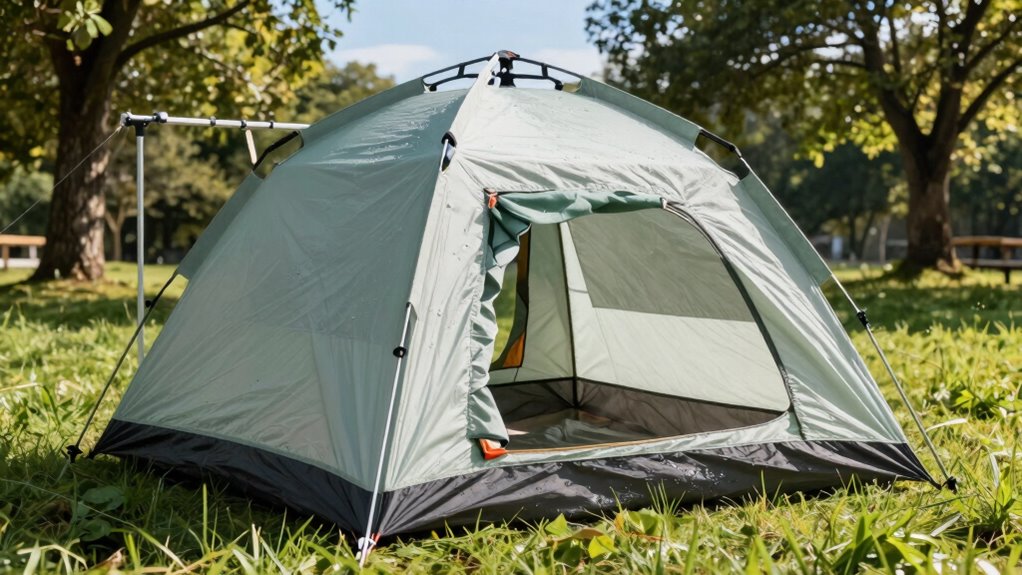
After a wet trip, drying out your tent quickly and effectively is essential to prevent mold, odors, and material damage. Proper tent maintenance begins with removing excess moisture as soon as you pack up. Start by shaking out the tent to dislodge loose dirt and water droplets. If possible, set up your tent in a shaded, well-ventilated area to give it a head start on drying. This not only speeds up the process but also helps prevent prolonged dampness, which can lead to mold growth.
Next, unzip all doors and windows to promote airflow inside the tent. Good ventilation is key to moisture prevention. Using a clean, absorbent towel, gently pat down any remaining wet spots on the fabric. Avoid rubbing vigorously, as this can damage the material. If your tent has a rainfly, remove it and hang it separately to dry, ensuring both components get adequate air circulation. Hanging the rainfly and tent body allows moisture to escape more efficiently, reducing drying time.
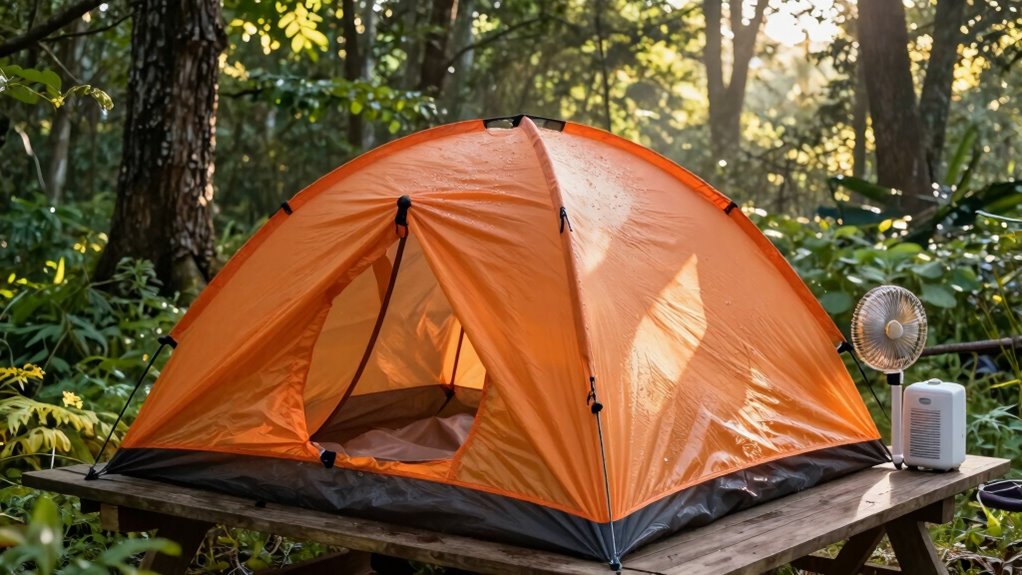
To expedite drying, consider using a fan or a portable heater in a safe, well-ventilated space. Direct airflow helps carry away humidity trapped within the fabric fibers. If you’re drying your tent indoors, place it on a clean, dry surface or hang it from a sturdy structure. It’s important to keep the tent away from direct sunlight initially, as intense UV rays can degrade the fabric over time. Additionally, ensuring proper moisture management can help you avoid mold and mildew buildup during the drying process. Using desiccants in enclosed spaces can also assist in absorbing excess moisture, especially in humid environments. Incorporating preventive measures such as applying waterproofing treatments after drying can help maintain the tent’s water resistance. Regularly inspecting your tent for signs of clogged zippers and debris can prevent unnecessary strain and damage during use. Once the tent feels dry to the touch, you can expose it to sunlight for a short period to help eliminate any lingering dampness and odors. Properly drying your tent also involves inspecting and maintaining its moisture prevention features, such as seams and zippers. Throughout this process, pay close attention to tent maintenance and moisture prevention. Make sure all zippers and seams are free of debris and functioning correctly to avoid unnecessary wear and tear. Check for any small tears or damage that might have occurred during your trip, repairing them promptly to maintain the tent’s waterproof integrity. Properly drying your tent not only prolongs its lifespan but also ensures it’s ready for your next adventure.
As an affiliate, we earn on qualifying purchases.
Frequently Asked Questions
Can I Use a Hairdryer to Dry My Tent?
You can use a hairdryer for tent maintenance, but it’s not ideal for drying your whole tent. Hairdryers work best for spot drying small, damp areas, especially seams or corners. For drying techniques, it’s better to set up your tent in a well-ventilated, sunny spot, or use a fan to circulate air. Avoid high heat, which can damage fabric. Always make sure your tent is thoroughly dry before storing to prevent mold.
How Long Does It Take to Fully Dry a Tent?
It can take anywhere from a few hours to a full day to fully dry your tent, depending on the tent material and drying techniques you use. Lightweight fabrics dry faster, while heavy-duty materials take longer. To speed up the process, set up your tent in a well-ventilated area, unzip windows, and use fans or a hairdryer carefully. Patience is key—you want every drop of moisture gone before packing up.
Is It Safe to Use a Heater Inside the Tent?
Using a heater inside your tent isn’t safe, even with proper tent insulation. Heaters pose fire risks and can produce harmful fumes. Always follow safety precautions, like ventilating the tent and avoiding direct contact with the heater. Instead, opt for natural drying methods or use a low-wattage, battery-operated fan to circulate air. Prioritize safety to prevent accidents and guarantee your tent dries safely.
Should I Store My Tent Wet or Dry?
You should always store your tent dry to prevent mold and damage. Wet storage invites mold growth and weakens fabric over time. After your trip, focus on proper tent maintenance by thoroughly drying and cleaning it first. Use storage tips like keeping it in a cool, dry place and loosely folded to maintain its shape. This way, your tent stays in great condition, ready for your next adventure.
Can I Dry My Tent Outdoors in Cold Weather?
Yes, you can dry your tent outdoors in cold weather, but it may take longer. Make sure to set up your tent in a well-ventilated area, ideally under some sunlight if possible, to speed up drying. Use camping essentials like a fan or dehumidifier if available. Proper tent maintenance, including regular cleaning and drying, helps prevent mold and prolongs your tent’s lifespan, even in colder climates.
Conclusion
After a wet trip, drying your tent properly is essential to prevent mold and prolong its lifespan. Remember to set it up in a well-ventilated area and avoid direct sunlight, which can damage fabric. Did you know that mold can begin growing within just 24-48 hours of moisture exposure? By taking these simple steps, you make sure your tent stays fresh and ready for your next adventure. Proper drying isn’t just maintenance—it’s your key to outdoor success.
Fall Picks
fall essentials
As an affiliate, we earn on qualifying purchases.