
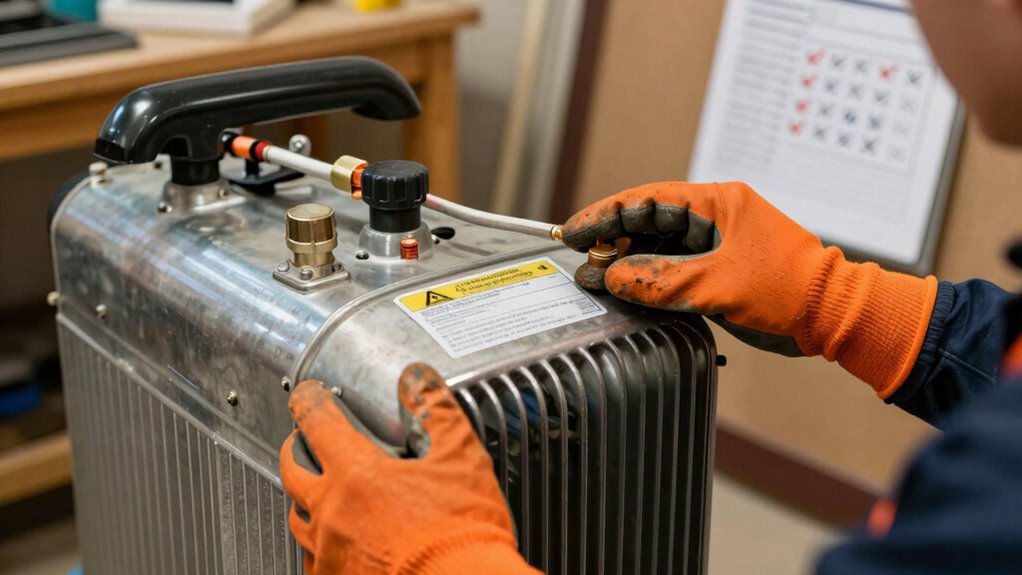

To stay safe with your diesel heater, perform regular maintenance, inspect for leaks, and guarantee proper ventilation. Always secure the exhaust system outside, and install reliable carbon monoxide detectors near sleeping areas. Mount the heater on non-combustible surfaces and keep flammable materials away. Keep emergency equipment handy, and know how to respond quickly if issues arise. If you follow these safety tips, you’ll minimize risks—continue exploring to learn how to keep your setup safe and efficient.
Key Takeaways
- Regularly inspect and maintain the heater, including filters, exhaust, and fuel system, to prevent malfunctions and hazards.
- Ensure proper ventilation and securely install exhaust outlets to prevent dangerous buildup of carbon monoxide.
- Use safety devices like detectors and keep fire extinguishers accessible; test and replace detectors annually.
- Mount heaters on non-combustible surfaces, away from flammable materials, and handle fuel carefully to avoid leaks.
- Respond immediately to any odors, smoke, or strange noises by shutting off the heater, ventilating the area, and consulting professionals.
Why Diesel Heater Safety Is Critical

Because diesel heaters are often used in enclosed spaces, ensuring their safety is vital to prevent dangerous incidents. Proper heater sizing is essential; an improperly sized heater can cause overheating or inefficient operation, increasing safety risks. Using the right fuel additives helps maintain ideal combustion, reducing the buildup of harmful emissions and preventing blockages that could lead to malfunctions. Inadequate fuel quality or neglecting additives may cause the heater to operate improperly, risking fire or carbon monoxide leaks. Always select a heater that matches your space’s size and follow manufacturer recommendations for fuel and additives. Additionally, understanding waterpark safety guidelines can help prevent accidents in various environments, including enclosed heating areas. Taking these precautions ensures safe operation, protecting you and those around you while maintaining efficient and reliable heat.
Common Mistakes That Can Lead to Safety Hazards

One common mistake that can lead to safety hazards with diesel heaters is neglecting proper maintenance and inspection. Overlooking issues like clogged filters, worn parts, or fuel leaks increases risks, especially related to ventilation concerns and fuel safety. Poor ventilation can cause dangerous carbon monoxide buildup, while fuel mishandling raises the chance of fires or explosions. To stay safe, make certain you:
- Regularly check and clean ventilation pathways
- Inspect fuel lines for leaks or cracks
- Follow manufacturer guidelines for maintenance
- Keep combustible materials away from the heater
Ignoring these steps can turn minor issues into serious hazards. Prioritizing routine maintenance and understanding fuel safety are essential to preventing accidents and ensuring your diesel heater operates safely. Routine maintenance practices are crucial for keeping your heater in optimal condition and avoiding overlooked issues.
How to Vent Your Diesel Heater for Safe Operation

Proper ventilation is vital for the safe operation of your diesel heater, as it prevents dangerous buildup of carbon monoxide and other exhaust gases. Follow the ventilation requirements specified by the manufacturer, guaranteeing adequate airflow around the heater. Pay close attention to exhaust pipe placement; it should extend safely outside your vehicle or space, avoiding any obstructions or areas where gases could re-enter. Confirm the exhaust pipe is securely connected and free of leaks or blockages. Position the vent outlet away from windows, vents, or air intakes to prevent exhaust gases from re-entering your space. Regularly check that the exhaust system remains intact and properly routed, maintaining clear passage for exhaust gases to escape safely. Proper venting is essential for your safety and heater efficiency. Ensuring proper ventilation is a key safety step when operating a diesel heater.
Maintaining and Checking Your Heater’s Exhaust System
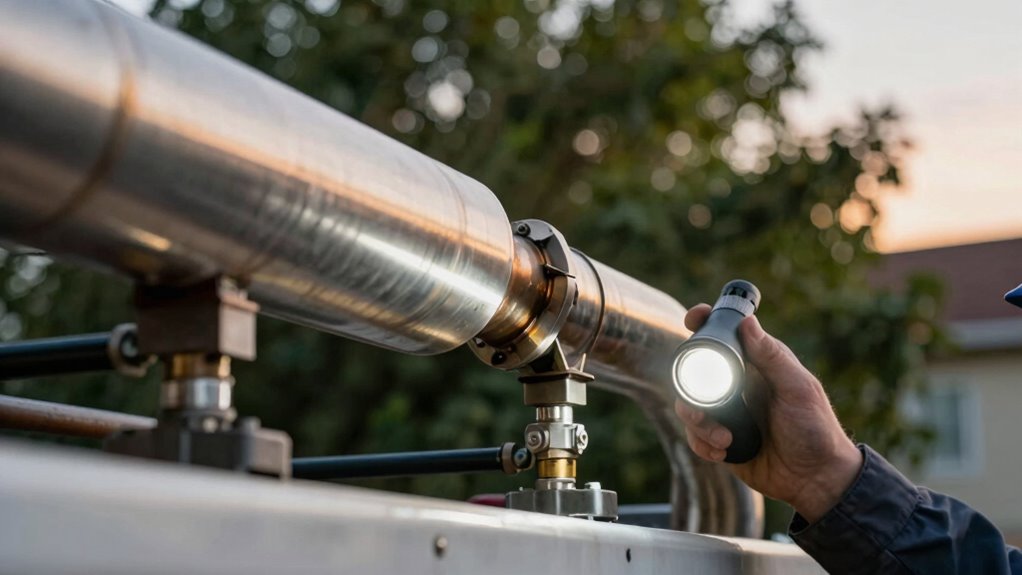
Regularly inspecting your heater’s exhaust system is essential to guarantee safe and efficient operation. A well-maintained exhaust system ensures proper venting procedures, preventing dangerous buildup of fumes. Check for blockages, corrosion, or leaks in the exhaust pipe and connections. Make sure the venting system is clear of debris or obstructions that could impair airflow. Confirm that the exhaust outlet is securely attached and free of damage. Regular inspections help identify issues before they become serious, reducing the risk of carbon monoxide exposure. Pay particular attention to signs of wear, such as rust or soot buildup, which can compromise the exhaust system’s integrity. Maintaining a clean, intact exhaust system guarantees your heater runs safely and efficiently, protecting you and your loved ones from potential hazards. Additionally, understanding exhaust system components can help you better recognize signs of deterioration early on.
Installing and Testing Carbon Monoxide Detectors
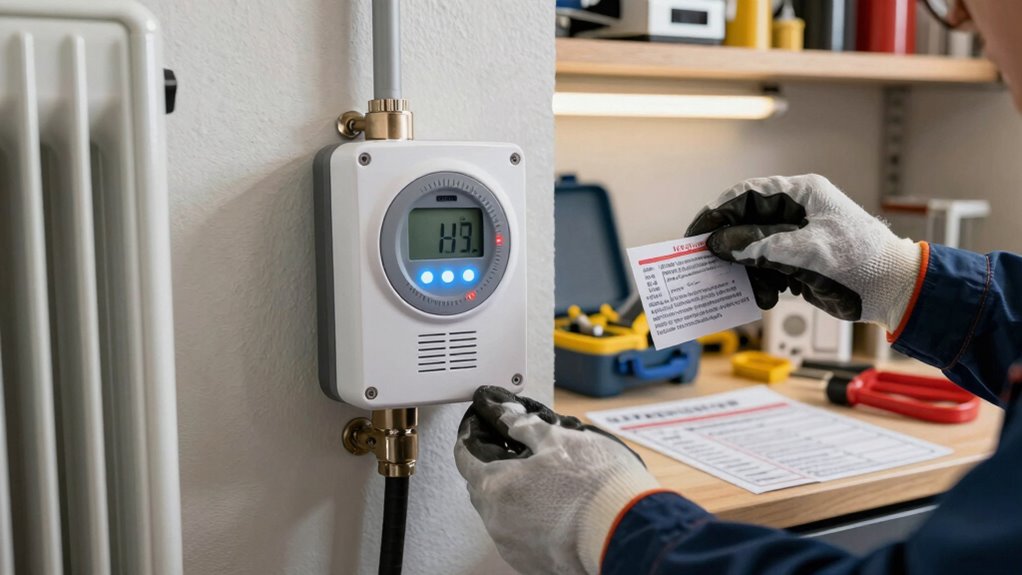
You need to install carbon monoxide detectors in the right locations to guarantee your safety. Proper placement techniques help detect CO leaks early, so follow the manufacturer’s guidelines carefully. Regular testing procedures are essential to confirm that your detectors are working properly and providing reliable alerts. Additionally, understanding must-see destinations can help you plan safer travel experiences and ensure your overall well-being during adventures.
Proper Placement Techniques
Ensuring your carbon monoxide detectors are correctly installed is crucial for safety when using a diesel heater. Proper placement enhances detection and minimizes false alarms. Use ventilation strategies to guarantee fresh air flow and prevent gas buildup. When choosing mounting options, position detectors at least 1.5 meters above the floor, away from vents and windows. Place detectors near sleeping areas but not directly in the path of airflow to avoid false readings. Avoid mounting detectors in high-humidity zones or near heat sources. Consider the layout of your space to optimize coverage. Keep detectors accessible for testing and maintenance. Additionally, understanding sound design principles can help you identify the best locations for detectors based on acoustic considerations. Remember, correct placement can be the difference between early warning and dangerous exposure, so follow these guidelines precisely.
Regular Testing Procedures
Proper placement of carbon monoxide detectors is just the first step; testing them regularly guarantees they function correctly when needed. Follow a consistent schedule—at least once a month—to ensure safety. During testing, press the test button and listen for the alarm. If it doesn’t sound, replace the detector immediately. Use the installation guidelines to place detectors where CO buildup is likely, such as near the heater and sleeping areas, without compromising fuel efficiency. Regularly monitor detector performance to catch any potential issues early.
Placing Your Diesel Heater Safely Inside Your Vehicle
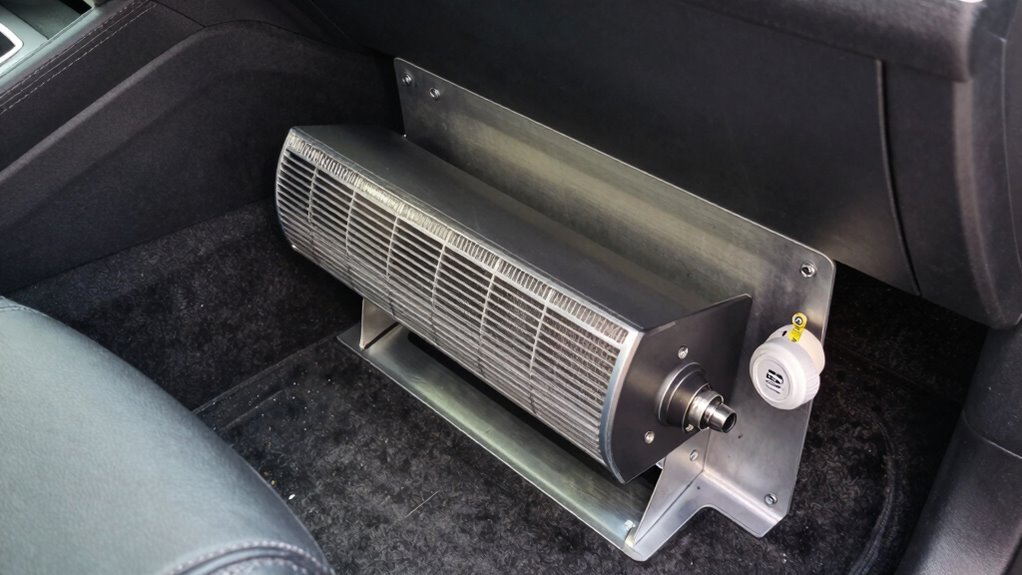
When placing your diesel heater inside your vehicle, selecting a secure, stable location that allows for proper ventilation and easy access to power sources is vital. Proper ventilation strategies help prevent dangerous fumes from accumulating, while effective heater placement techniques ensure safety and efficiency. Consider mounting the heater on a non-combustible surface away from flammable materials. Keep it near an accessible power source for easy wiring, and guarantee it’s stable to avoid vibrations or movement. Avoid tight or enclosed spaces that restrict airflow or trap fumes. Additionally, position the heater where you can monitor it easily, and always check the manufacturer’s guidelines for specific placement recommendations. Prioritize safety and airflow to maintain a secure environment inside your vehicle. Using tracking gear such as GPS or Bluetooth devices can help monitor your vehicle’s environment and ensure the heater remains functioning correctly.
Regular Maintenance Tips to Keep Your Diesel Heater Safe

Regular maintenance is essential to keep your diesel heater operating safely and efficiently. Regularly inspect and clean the heater components, including the fuel filter and combustion chamber, to maintain maximum fuel efficiency. Check for any signs of wear or corrosion that could compromise safety. Ensuring proper heater insulation helps prevent heat loss, reducing strain on the unit and lowering fuel consumption. Keep vents clear of debris to promote proper airflow and prevent dangerous buildup. Test the safety features, like automatic shut-off systems, to confirm they’re working correctly. By staying proactive with maintenance, you reduce the risk of malfunctions, improve fuel efficiency, and ensure your heater operates safely during every use.
Safety Gear and Emergency Preparedness for Diesel Heater Use
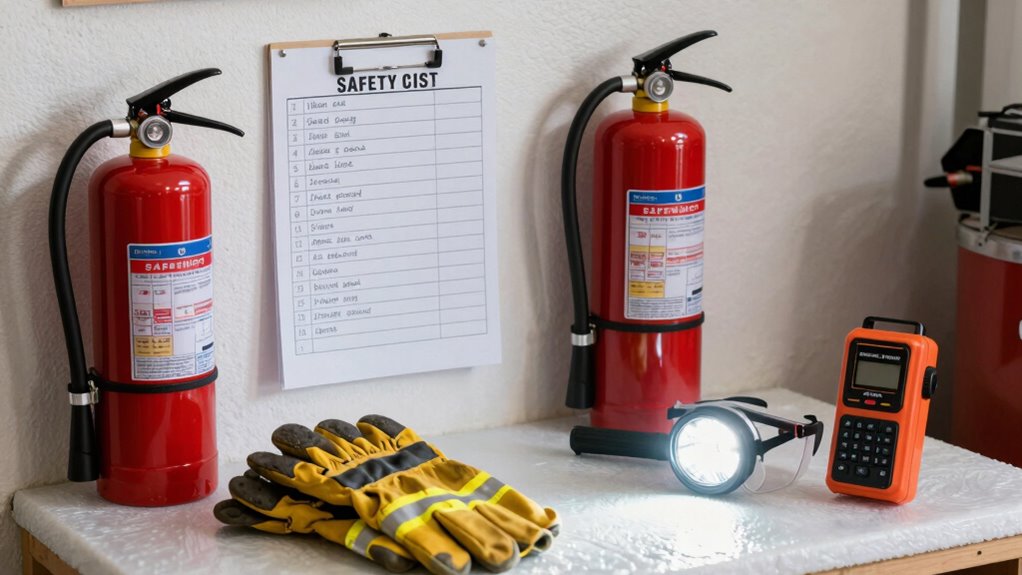
To guarantee your safety while using a diesel heater, it’s crucial to have the right safety gear and be prepared for emergencies. Personal protective equipment like gloves, safety goggles, and a dust mask can protect you from fumes and debris. Keep a fire extinguisher nearby, and ensure you know your emergency escape routes in case of a fire or carbon monoxide leak. Regularly check that your smoke and carbon monoxide detectors are working properly. Additionally, keep a well-stocked first aid kit close at hand. Being prepared means you can respond quickly and effectively if something goes wrong, minimizing risks and ensuring your safety during heater operation. Proper gear and emergency planning are essential for a safe, worry-free experience. Monitoring filter performance and maintaining your equipment also play a critical role in preventing hazards.
What to Do If You Suspect a Safety Issue or Accident
If you notice signs of a safety issue or suspect an accident, take immediate action to protect yourself and others. Turn off the heater and ventilate the area if needed. Then, report the problem promptly and arrange for a thorough inspection to prevent further risks. Regular appliance maintenance plans can help identify potential hazards early and ensure safe operation.
Immediate Safety Measures
When you suspect a safety issue or accident with your diesel heater, acting quickly can prevent further harm. First, turn off the heater and shut off the fuel supply immediately. Confirm proper ventilation practices by opening windows or vents to disperse any fumes. Check the heater placement—make sure it’s on a stable, non-flammable surface, away from combustible materials. Do not attempt to fix the problem yourself; instead, evacuate the area if you notice strong odors, smoke, or unusual noises. Keep a fire extinguisher nearby and stay alert for any signs of carbon monoxide buildup. Remember, quick action can minimize danger and prevent accidents from escalating. Always prioritize safety and get professional help if needed.
Reporting and Inspection
As soon as you notice signs of a safety issue or accident with your diesel heater, it’s crucial to report the problem promptly and conduct a thorough inspection. Check for irregularities in fuel efficiency, as decreased performance might indicate a blockage or leak. Listen for abnormal noise levels, which can signal mechanical issues or improper operation. Inspect the heater for visible damage, leaks, or soot buildup, and verify that all connections are secure. Document any irregularities and contact a professional for repairs if needed. Regular inspections help catch potential hazards early, maintaining safety and efficiency. Prompt reporting and detailed inspection safeguards against fire risks or carbon monoxide leaks, ensuring your heater operates safely and reliably.
Frequently Asked Questions
How Often Should I Schedule Professional Inspections for My Diesel Heater?
You should schedule professional inspections for your diesel heater at least once a year, following a proper maintenance schedule. Depending on usage, inspection frequency might increase to every six months if you use it heavily or notice any issues. Regular inspections guarantee safe operation, prevent breakdowns, and extend the heater’s lifespan. Don’t skip these checkups—they’re essential for keeping your diesel heater running efficiently and avoiding costly repairs.
Can I Use a Portable Fan to Improve Ventilation Around the Heater?
You can use a portable fan to improve ventilation around your diesel heater, but follow ventilation tips to guarantee safety. Place the fan to direct fresh air toward the heater’s exhaust and avoid blocking vents. Always prioritize fan safety by keeping it away from heat sources and ensuring it’s in good working condition. Proper ventilation prevents carbon monoxide buildup and keeps the area safe during heater operation.
What Are the Signs of a Malfunctioning Diesel Heater?
Your diesel heater may be giving you silent alarm bells. Watch for warning signs like unusual smoke, strange smells, or inconsistent heating—these are your maintenance indicators that something’s off. If it struggles to start, makes odd noises, or shuts down unexpectedly, don’t ignore these signals. Recognizing these heater warning signs early keeps your heater running smoothly and safely, preventing small issues from becoming costly repairs.
Is It Safe to Run the Heater Overnight Unattended?
Running your diesel heater overnight unattended isn’t safe if you don’t follow proper precautions. Make sure it’s placed on a stable, non-flammable surface and away from combustible materials to prevent fire hazards. Always verify good ventilation to reduce carbon monoxide risks, as this deadly gas can build up if the heater malfunctions or is poorly ventilated. Consider installing a carbon monoxide detector for added safety, and never leave the heater running without supervision.
How Do I Safely Troubleshoot Common Diesel Heater Issues?
Think of troubleshooting your diesel heater like steering a ship through calm waters—stay vigilant. Start by checking ventilation best practices; ensure exhaust isn’t blocked and vents are clear. When troubleshooting safety, turn off the heater before inspecting components, look for fuel leaks or soot buildup, and consult your manual. If issues persist, don’t hesitate to seek professional help. This proactive approach keeps your heater running safely and smoothly.
Conclusion
Remember, safety with your diesel heater isn’t something to take lightly—it’s better to be safe than sorry. Follow the checklist, stay vigilant, and don’t cut corners. Regular maintenance and proper setup can prevent disasters before they happen. Keep safety gear handy and know what steps to take if something goes wrong. When it comes to diesel heaters, it’s better to be safe than sorry—playing it safe keeps you out of hot water and guarantees peace of mind on your adventures.