
By participating in conservation projects during camping trips, you actively help protect wildlife and restore habitats. You can support activities like planting native vegetation, removing invasive species, and monitoring local species. Staying on designated trails and properly disposing of waste minimizes environmental impact. Engaging in these efforts fosters a deeper connection to nature and promotes sustainable travel. Keep exploring how small actions can lead to meaningful, lasting change for our planet.
Key Takeaways
- Join organized conservation activities like habitat restoration or wildlife monitoring during your camping trip.
- Volunteer for local conservation projects such as tree planting or invasive species removal.
- Follow guidelines to minimize environmental impact, such as staying on trails and properly disposing of waste.
- Educate yourself and others about local ecosystems to promote awareness and responsible behavior.
- Collaborate with park rangers and conservation groups to support ongoing preservation efforts.
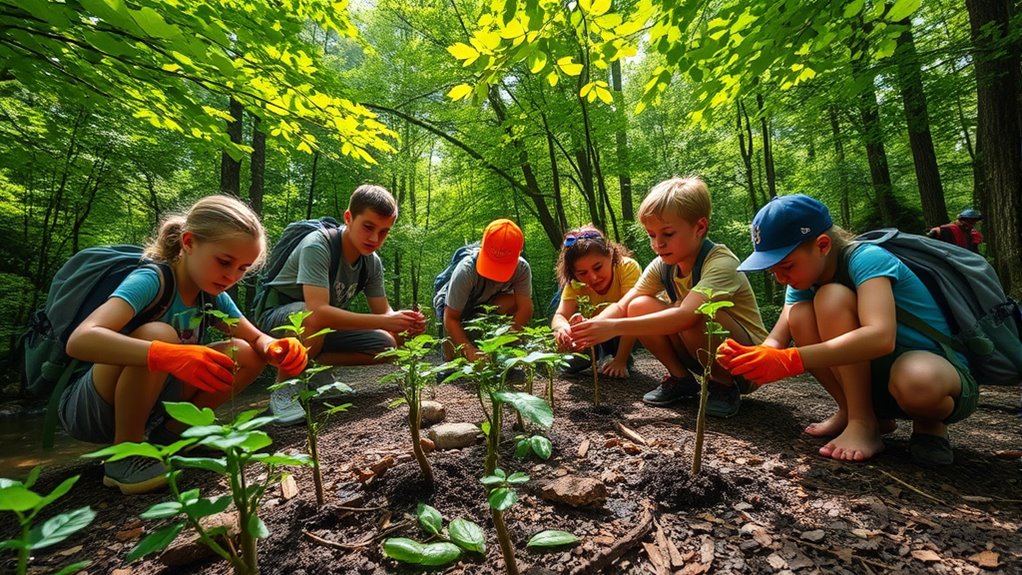
Camping trips offer more than just relaxation and adventure; they present a unique opportunity to make a meaningful environmental impact through participation in conservation projects. When you choose to engage in activities like wildlife preservation and habitat restoration, you actively contribute to safeguarding the natural beauty and biodiversity of the areas you visit. These efforts are essential for maintaining healthy ecosystems, ensuring that future generations can enjoy the same richness of wildlife and landscapes that inspire us today.
Wildlife preservation is an indispensable component of conservation during your camping adventures. By participating in local initiatives, you help protect endangered species and their habitats from threats such as pollution, invasive species, and habitat loss. For example, you might assist in monitoring bird populations, helping researchers gather data on migration patterns or nesting success. You could also support efforts to create wildlife corridors, which facilitate safe passage for animals between fragmented habitats. Your involvement can greatly reduce human-wildlife conflicts and promote coexistence, ensuring that species thrive in their natural environments.
Participating in wildlife conservation helps protect species and reduces conflicts, promoting healthy ecosystems for future generations.
Habitat restoration is equally essential and often involves hands-on work that directly benefits the land you’re exploring. You might join efforts to plant native vegetation to stabilize soil and prevent erosion, or assist in removing invasive plant species that threaten local biodiversity. Restoring wetlands, meadows, or forested areas helps replenish ecosystems that have been degraded by human activity or natural disturbances. Your active participation in these projects not only aids in the recovery of damaged habitats but also fosters a deeper connection and responsibility toward the land. Incorporating native plants into restoration efforts is particularly beneficial for supporting local wildlife and maintaining ecosystem balance.
Engaging in conservation during your camping trips also enhances your understanding of local ecosystems and the challenges they face. It’s a chance to learn from conservation experts, park rangers, and local volunteers, gaining insights into sustainable practices. This knowledge empowers you to become a more conscientious traveler and advocate for environmental protection beyond your trips.
Moreover, your involvement doesn’t have to be limited to large-scale projects. Simple actions like properly disposing of waste, avoiding the use of non-biodegradable products, and sticking to designated trails can make a substantial difference. When combined with active participation in formal conservation efforts, these habits amplify your positive impact on the environment.
Frequently Asked Questions
What Tools Are Needed for Conservation Projects During Camping?
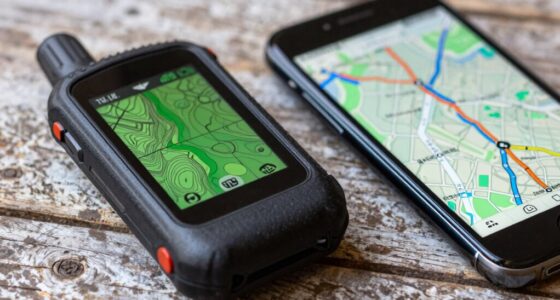
To get started with conservation projects during camping, you’ll need tools like binoculars for wildlife monitoring, gloves for habitat restoration, and trash bags to keep the environment clean. A field guide helps identify local species, while small shovels or trowels assist with planting or habitat work. Don’t forget notebooks for recording data. These tools empower you to actively contribute to protecting ecosystems and supporting wildlife during your outdoor adventures.
How Do I Find Local Conservation Projects to Join?
You can find local conservation projects by researching online through platforms like VolunteerMatch or local environmental organizations’ websites. Look for opportunities such as trail cleanup events or wildlife photography projects that focus on protecting habitats. Connect with community groups or social media pages dedicated to conservation. Attending local events or visiting visitor centers can also provide valuable information. Your passion for wildlife photography and trail cleanup can inspire others and make a real impact.
Are Conservation Activities Suitable for Children?
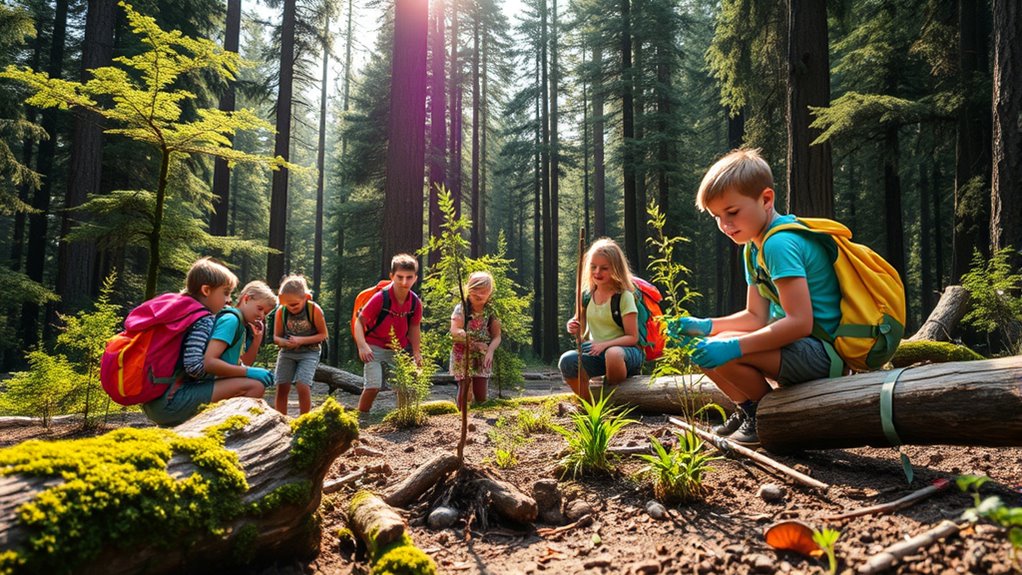
Imagine a young explorer planting seeds of change—conservation activities like habitat restoration are perfect for children. They’re enthusiastic to learn about wildlife preservation and develop a love for nature. Many projects tailor activities to be safe and engaging for kids, fostering responsibility and environmental awareness. With supervision, children can actively contribute, making a lasting impact while nurturing their curiosity about sustaining our planet’s natural beauty.
What Safety Precautions Should I Take During Conservation Work?
You should always wear appropriate safety gear, like gloves, goggles, and sturdy shoes, to protect yourself during conservation work. Before starting, review emergency plans and know the location of first aid kits. Stay alert, avoid risky tools or activities, and work with a partner when possible. By staying prepared and cautious, you guarantee your safety and contribute effectively to conservation efforts, making the experience both rewarding and secure.
Can I Participate in Conservation Projects Without Camping Experience?
Yes, you can participate in conservation projects like wildlife preservation and habitat restoration even without camping experience. Many programs welcome beginners and provide training to guarantee you understand the essential work involved. Your passion for protecting nature fuels your contribution, and you’ll gain valuable skills while helping restore ecosystems. With guidance and enthusiasm, you can make a meaningful impact on conservation efforts, regardless of your prior camping background.
Conclusion
By joining conservation projects on your camping adventures, you become a steward of the wild, planting seeds of change in the fertile ground of nature’s beauty. Your efforts ripple outward, like waves washing over untouched shores, preserving the delicate balance of ecosystems. Each action transforms your trip into a powerful story of hope and responsibility—proof that even a small footprint can leave a lasting, positive mark on the world. Embrace this journey; nature needs your passion.