
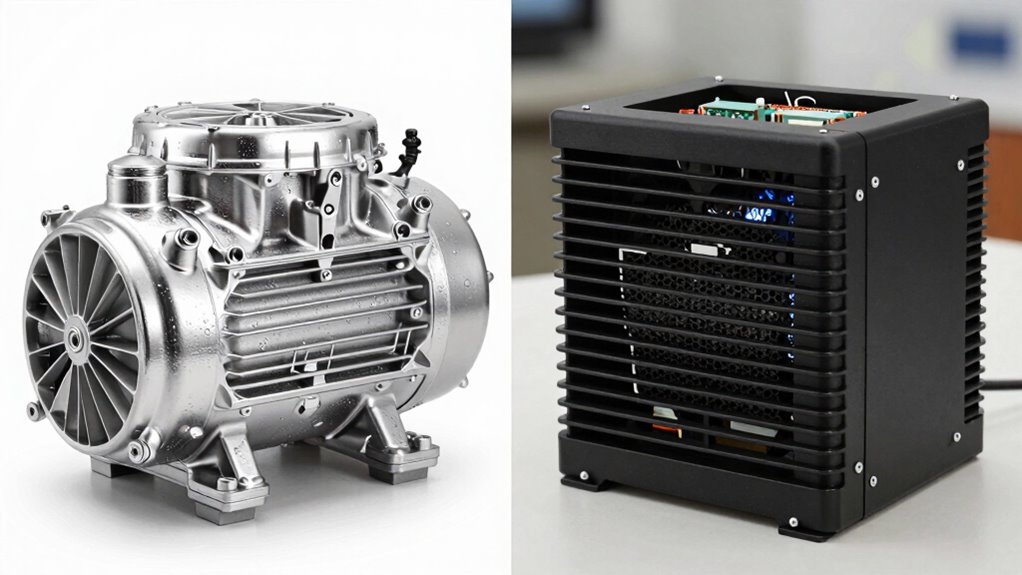

In high-heat environments, thermoelectric coolers often fail because they can’t handle large thermal loads and suffer from internal heat buildup, which reduces efficiency and leads to premature wear. Unlike compressors, which are designed for heavy-duty cooling tasks and can manage large heat loads reliably, thermoelectric devices struggle with thermal stress. To learn how to choose the right solution and prevent failures, continue exploring the differences and challenges of each cooling method.
Key Takeaways
- Thermoelectric coolers are highly sensitive to high ambient temperatures, causing efficiency drops and early failure due to heat buildup.
- Poor heat dissipation and inadequate thermal management exacerbate thermoelectric device overheating under heavy heat loads.
- Compressors handle large heat loads more effectively because of their robust design and higher cooling capacity.
- Thermoelectric materials have limited thermal tolerance; excessive heat causes material fatigue and reduces device lifespan.
- Proper thermal design and cooling solutions are critical; failure to manage heat leads to thermoelectric malfunction, unlike more resilient compressors.
How Do Compressors and Thermoelectric Coolers Work?
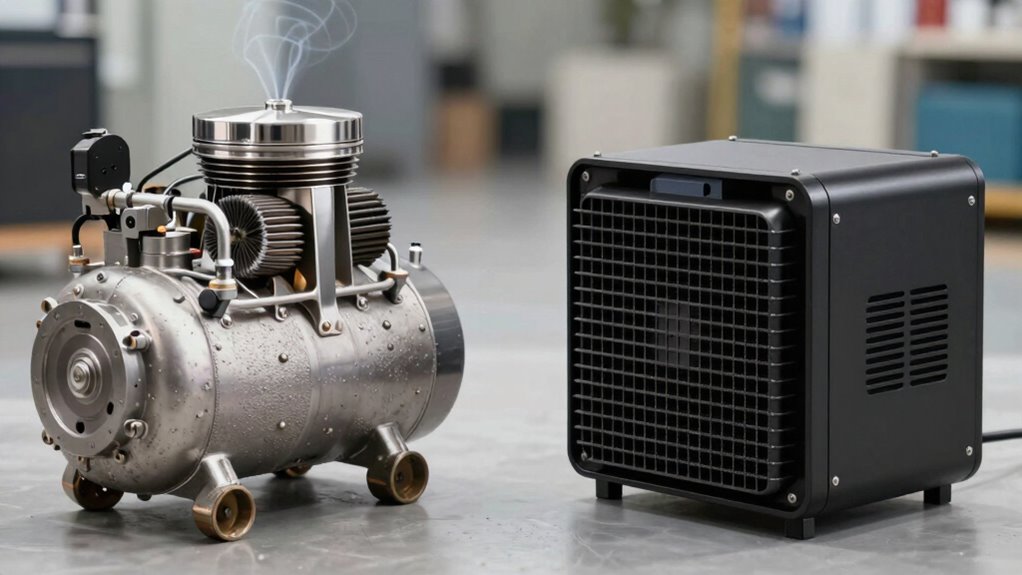
To understand how compressors and thermoelectric coolers work, it’s important to recognize that they use different principles to achieve cooling. Compressors operate through refrigeration cycles, where a gas is compressed, then cooled and expanded to absorb heat from the environment. This cycle relies on phase changes and pressure differences to move heat efficiently. Thermoelectric coolers, on the other hand, use the Peltier effect, where electric current creates a temperature difference across materials. Their thermoelectric efficiency depends on how well they convert electrical energy into cooling power. While compressors are effective for larger cooling needs, thermoelectric coolers are typically used for small-scale applications due to their simpler design and solid-state operation, which offers quiet, reliable performance in suitable conditions. Efficiency of thermoelectric devices is also influenced by the materials used and the temperature gradient they are subjected to.
Why Do Thermoelectric Coolers Fail in High-Heat Conditions?
Thermoelectric coolers rely on the Peltier effect to transfer heat, but their efficiency drops markedly when exposed to high ambient temperatures. As the surrounding heat increases, the cooler struggles to maintain effective cooling efficiency, causing the device to work harder and generate more heat internally. This additional internal heat can further diminish performance, creating a vicious cycle that accelerates device failure. It leads to faster wear and reduced device longevity. You might notice that the cooler becomes less effective over time or even fails prematurely. Factors contributing to this include:
High ambient temperatures reduce thermoelectric cooler efficiency, causing faster wear and potential failure.
- Increased heat load overwhelms the thermoelectric modules
- Excess internal heat causes thermal stress and damage
- Reduced heat dissipation impairs overall cooling performance
All these issues make thermoelectric coolers unsuitable for consistently high-heat environments, jeopardizing their lifespan and reliability.
What Causes Thermoelectric Cooler Failures in Hot Environments?
Heat dissipation becomes more difficult in hot environments, making it harder for your thermoelectric cooler to shed excess heat. This increased thermal stress can strain the device’s components, leading to failures over time. Without proper management, these challenges considerably raise the risk of cooler breakdowns. Additionally, inadequate gear maintenance can exacerbate the problem by reducing cooling efficiency and increasing wear on the device.
Heat Dissipation Challenges
When thermoelectric coolers operate in hot environments, excessive heat can overwhelm their ability to dissipate it effectively. Poor radiator design and inadequate airflow optimization are common culprits. If heat isn’t removed efficiently, the cooler’s performance drops, leading to failures. To improve heat dissipation, focus on enhancing radiator design to maximize surface area and heat transfer. Ensuring proper airflow around the cooler is vital; obstructions or poor airflow paths trap heat, raising temperatures further. Consider these factors:
- Optimizing radiator placement for better heat exchange
- Using fans or airflow channels to increase heat removal
- Reducing thermal resistance with better contact interfaces
Additionally, understanding regional flavors and chicory/coffee insights can inspire innovative cooling solutions that incorporate natural insulating materials. Addressing these challenges helps prevent overheating and extends the lifespan of thermoelectric coolers in hot environments.
Increased Thermal Stress
Excessive thermal stress often causes thermoelectric cooler failures in hot environments because the device’s materials and components are pushed beyond their designed temperature limits. Repeated thermal expansion and contraction lead to material fatigue, weakening the internal structure over time. As temperatures rise, the differential expansion between the thermoelectric elements and their substrates creates stress that can crack or delaminate components. This ongoing strain accelerates wear and reduces efficiency, ultimately causing failure. The delicate balance of thermal management becomes unmanageable under sustained high heat, making the cooler vulnerable to damage. To prevent such failures, managing thermal stress through improved materials and design is vital, especially when operating in environments where heat is excessive and continuous.
When Are Compressors More Effective Than Thermoelectric Coolers?
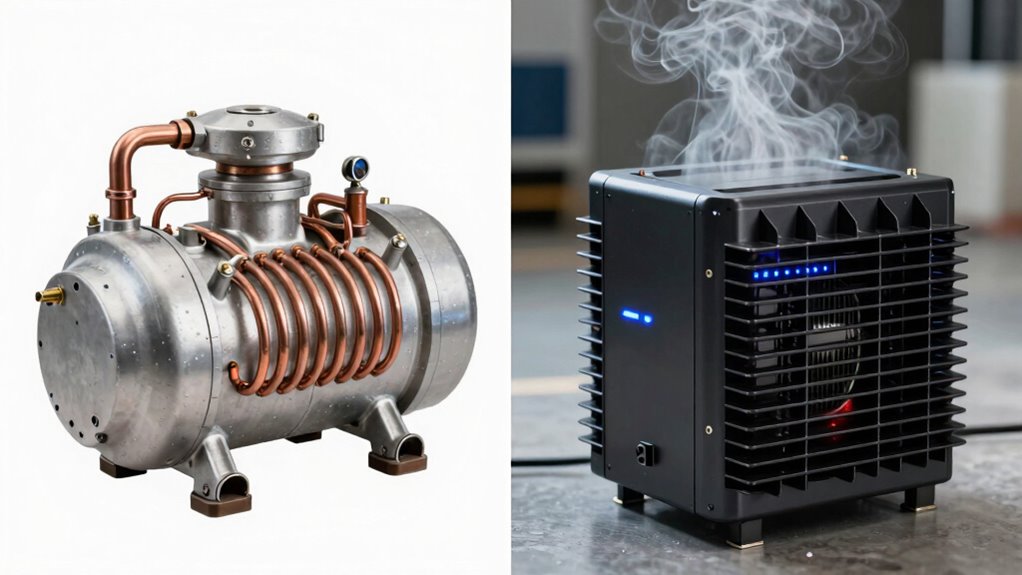
Compressors tend to outperform thermoelectric coolers when you need to achieve substantially lower temperatures or handle larger cooling loads. They are more energy-efficient for these demanding tasks, reducing operational costs over time. Additionally, compressors generally have a lower environmental impact due to their higher efficiency and use of refrigerants with lower global warming potential. They excel in applications where sustained, heavy-duty cooling is essential.
Compressors excel in demanding cooling tasks, offering higher efficiency and lower environmental impact than thermoelectric coolers.
- Suitable for large-scale or continuous cooling operations
- Better energy efficiency in high-demand environments
- Lower environmental impact over longer periods
Choosing a compressor over thermoelectric coolers in these scenarios ensures you meet cooling needs effectively while minimizing energy consumption and environmental footprint.
What Are the Main Advantages of Compressors for Heavy Heat Loads?

Compressors are ideal for heavy heat loads because they offer high cooling capacity that quickly removes large amounts of heat. You can count on their proven reliability even under demanding conditions, ensuring consistent performance. Plus, they’re often more cost-effective for large-scale applications, making them a practical choice for big cooling needs. Additionally, high refresh rates in some compressor-based systems can improve overall efficiency during intense cooling cycles.
High Cooling Capacity
When dealing with heavy heat loads, the ability to deliver high cooling capacity becomes essential. Compressors excel in this area, providing robust heat management strategies that handle large thermal loads efficiently. Unlike alternative cooling methods, they can sustain consistent performance under demanding conditions. This high capacity means you can cool larger systems or equipment without frequent adjustments. Compressors also adapt well to varying heat loads, maintaining stability where thermoelectric coolers often struggle. Their scalability makes them ideal for industrial settings, where heavy heat loads are common. By choosing a compressor, you ensure reliable, powerful cooling that meets your needs. Additional advantages include:
- Handling significant heat dissipation effortlessly
- Maintaining performance over extended periods
- Supporting complex heat management strategies effectively
Proper tools and safety precautions are crucial when installing or maintaining these cooling systems to ensure safety and optimal performance.
Proven Reliability Under Stress
Because heavy heat loads put significant stress on cooling systems, choosing equipment with proven reliability is vital. Compressors excel here due to their resilience against material fatigue, which can compromise other cooling methods over time. Their robust construction and proven track record ensure consistent performance even under demanding conditions. Additionally, design optimization plays a critical role, allowing compressors to dissipate heat efficiently and maintain stability during prolonged operation. Unlike thermoelectric coolers, which are more susceptible to component wear, compressors are engineered for durability, making them ideal for heavy-duty applications. This reliability under stress minimizes downtime, reduces maintenance costs, and guarantees continuous cooling performance, making compressors the smarter choice for heavy heat loads that demand consistent, long-term operation. Proper system design further enhances their ability to withstand extreme conditions, ensuring longevity and dependable service.
Cost-Effective for Large Loads
For handling large heat loads efficiently, compressors offer a cost-effective solution that scales well with increasing demands. They deliver high cooling capacity without markedly raising energy costs, making them ideal for heavy-duty applications. Their design allows for straightforward maintenance strategies, which helps keep operational costs low over time. Additionally, compressors are more energy-efficient at larger loads, reducing overall power consumption compared to alternative cooling methods. This efficiency is vital when cooling large systems or industrial processes. Their ability to handle substantial heat loads reliably and economically makes them the preferred choice in many high-demand environments. Ultimately, the combination of scalability, energy efficiency, and manageable maintenance strategies makes compressors the practical solution for large-scale cooling needs. Efficiency advantages also contribute to their popularity in industrial settings.
How Do Limitations of Thermoelectric Coolers Lead to Failures?
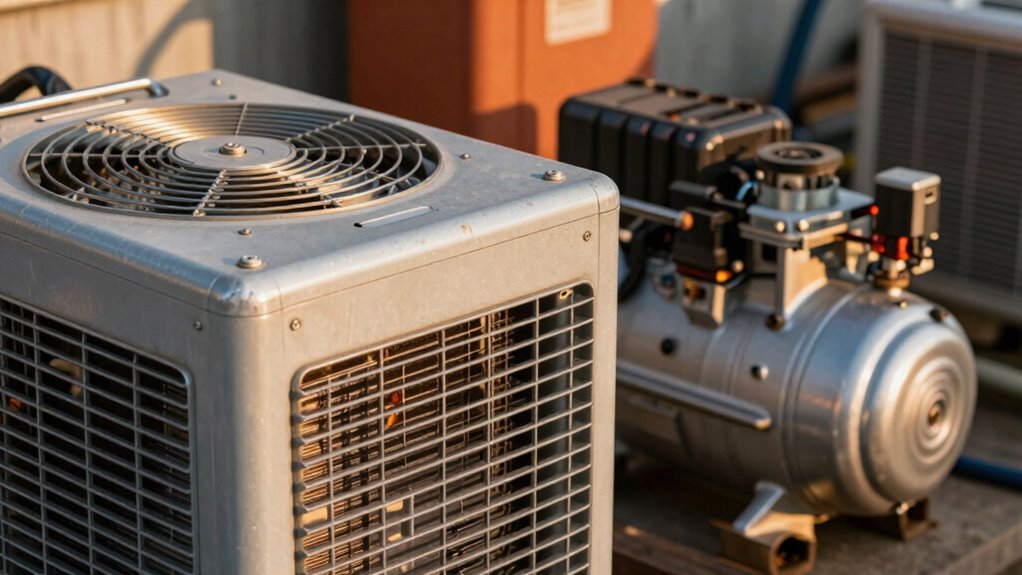
Thermoelectric coolers (TECs) are limited by their inherent material properties, which can lead to failures under certain conditions. When you push for efficiency optimization, they generate more heat, stressing their materials. This heat buildup causes performance degradation and potential device failure. Additionally, the limited temperature differential they can sustain restricts cooling effectiveness, especially in high-heat environments. These limitations also impact environmental impact, as TECs often require additional power to compensate for inefficiencies. To illustrate, consider this table:
| Limitation | Effect on Performance | Resulting Failure |
|---|---|---|
| Material thermal limits | Reduced cooling capacity | Device overheating |
| Low thermoelectric efficiency | Higher power consumption | Component fatigue |
| Temperature differential | Ineffective cooling | System failure |
Understanding these constraints helps you avoid failures caused by material limitations, which are fundamental material constraints affecting TEC performance.
How Can You Choose Between a Compressor and a Thermoelectric Cooler?
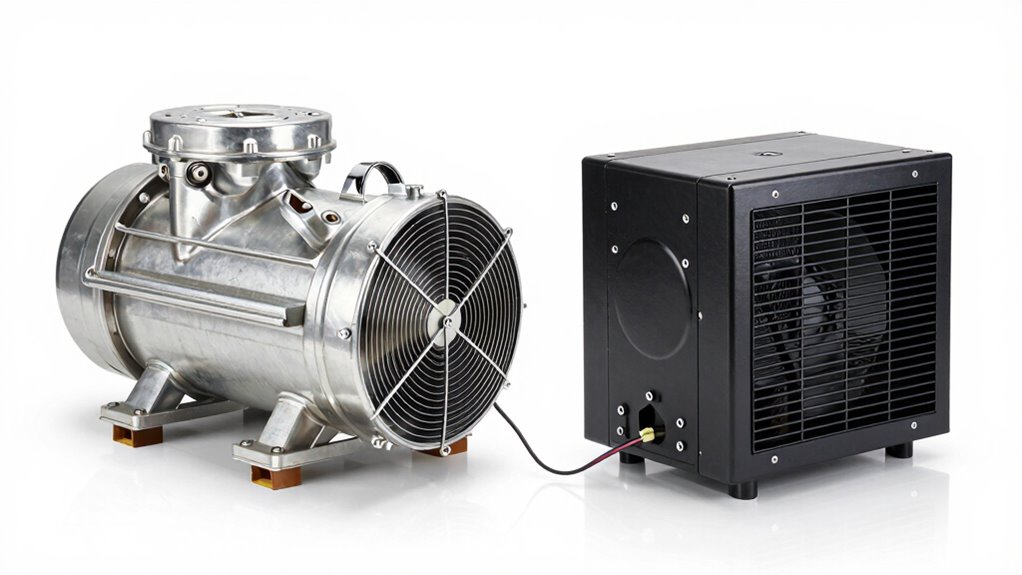
Choosing between a compressor and a thermoelectric cooler depends on your specific cooling needs, budget, and system constraints. Consider factors like the required cooling capacity, available space, and long-term energy efficiency. Thermoelectric coolers are compact and ideal for small-scale applications but may struggle with high heat loads. Compressors offer greater cooling power and better thermal insulation options but tend to be larger and less energy-efficient. To make an informed decision:
Choose the right cooling solution based on capacity, space, and efficiency needs.
- Assess your thermal insulation to ensure maximum efficiency.
- Evaluate the energy consumption and operational costs over time.
- Determine if your system needs precise temperature control or simple cooling.
- Keep in mind that environmental impact is an important consideration when choosing your cooling system.
How to Troubleshoot Thermoelectric Cooler Failures in High-Heat Settings?

When troubleshooting thermoelectric cooler failures in high-heat settings, start by checking how well heat is dissipating from the system. Next, inspect the thermoelectric modules for damage or wear, and verify the power supply is providing consistent, adequate voltage. Addressing these points can help identify and resolve common issues effectively.
Check Heat Dissipation
If your thermoelectric cooler isn’t effectively dissipating heat in high-heat environments, the first step is to check the heat dissipation setup. Proper heat transfer depends on good thermal insulation and a well-designed heat sink. Ensure your heat sink has enough surface area and is free of dust or debris, which can hinder heat transfer. Verify that your thermal interface material between the thermoelectric module and heat sink isn’t degraded or missing, as this affects heat conduction. Also, confirm that airflow around the cooler is unobstructed, facilitating efficient heat removal.
- Inspect if the heat sink is properly attached and mounted securely
- Check for adequate airflow or consider adding a fan
- Ensure thermal insulation minimizes heat buildup around critical components
Inspect Thermoelectric Modules
After confirming your heat sink and airflow are functioning properly, it’s time to examine the thermoelectric modules themselves. Conduct a thorough thermoelectric inspection by carefully inspecting each module for signs of damage, corrosion, or discoloration. During module evaluation, check for cracks, broken pins, or loose connections that could impair performance. Use a multimeter to test the electrical continuity and guarantee the modules are receiving proper voltage. If a module feels unusually hot or shows uneven temperature distribution, it may be failing. Remember, consistent performance depends on intact, properly connected thermoelectric modules. Address any visible issues immediately, and replace damaged modules to prevent further failure. Proper inspection and evaluation are vital steps in troubleshooting heat-related failures in thermoelectric coolers.
Monitor Power Supply
Monitoring the power supply is essential because it directly affects the thermoelectric cooler’s ability to operate effectively under high-heat conditions. A stable, well-functioning power source ensures ideal energy efficiency and prevents unexpected failures. Check for voltage fluctuations and current stability, as inconsistent power can lead to overheating or reduced cooling performance. Guarantee the power supply delivers clean, noise-free power to minimize noise levels that could interfere with sensitive components.
- Verify voltage and current ratings match the cooler’s specifications
- Inspect wiring connections for secure, corrosion-free contact
- Test for electrical noise that could reduce energy efficiency and cause malfunctions
Addressing these factors helps maintain proper cooling performance and extends the lifespan of your thermoelectric cooler.
What Future Innovations Could Improve Thermoelectric Cooler Performance?

Advances in materials science hold great promise for boosting thermoelectric cooler performance. Material innovation is key to achieving efficiency improvements that can overcome current limitations. Researchers are exploring new thermoelectric materials with higher electrical conductivity and lower thermal conductivity, which could markedly enhance efficiency. These breakthroughs could lead to more compact, energy-efficient coolers suitable for a wider range of applications. Here’s a quick overview:
| Material Type | Key Benefit | Challenges |
|---|---|---|
| Nanostructured Materials | Improved efficiency through phonon scattering | Manufacturing complexity |
| Skutterudites | High thermoelectric performance | Cost and stability concerns |
| Organic Thermoelectrics | Flexibility and low-cost production | Lower efficiency compared to inorganic materials |
These innovations could revolutionize thermoelectric cooling in the future.
Which Cooling Solution Is Best for Your Heat-Intensive Application?
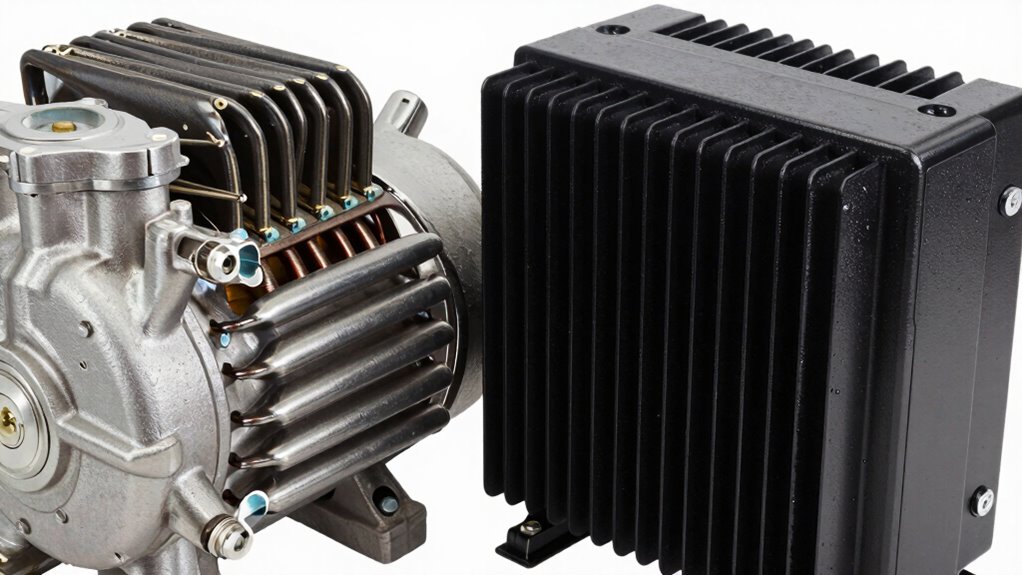
Choosing the right cooling solution for heat-intensive applications depends on several key factors, including the amount of heat to be removed, space constraints, energy efficiency, and cost considerations. If you need high cooling capacity and reliability, a compressor system often outperforms thermoelectric coolers. However, for smaller spaces or lower power needs, thermoelectric modules offer compactness and quiet operation. When considering alternative cooling options, focus on efficiency maximization to minimize energy consumption.
Selecting the optimal cooling method depends on heat load, space, efficiency, and cost considerations.
- Heat load capacity: Ensure the system can handle your specific heat removal requirements.
- Space and integration: Match the solution’s size and form factor to your application’s constraints.
- Energy efficiency: Prioritize solutions that deliver top performance with less power consumption.
Ultimately, your choice hinges on balancing these factors to meet your application’s heat removal needs effectively.
Frequently Asked Questions
What Are the Maintenance Requirements for Compressors Versus Thermoelectric Coolers?
You need to follow specific maintenance routines for both. For compressors, check lubrication schedules regularly to prevent overheating and wear, and replace filters to guarantee proper airflow. Thermoelectric coolers require less maintenance, but you should still clean filters periodically to maintain efficiency. Keep an eye on temperature controls and ensure seals are intact. Regular maintenance minimizes failures, especially in heat, by keeping components clean and well-lubricated.
How Do Ambient Environmental Factors Impact Cooling Efficiency and Lifespan?
Ambient environmental factors like humidity effects and dust accumulation greatly impact your cooling system’s efficiency and lifespan. High humidity can cause corrosion and reduce heat transfer, while excessive dust buildup clogs vents and impairs airflow. These issues force your cooler to work harder, increasing wear and tear. Regular cleaning, maintaining proper ventilation, and controlling humidity levels help guarantee peak performance and extend your cooler’s durability in challenging environments.
Are There Specific Applications Where Thermoelectric Coolers Outperform Compressors?
You’ll find thermoelectric coolers excel in portable cooling and specific medical applications. They’re ideal when size, noise, and vibration matter, like in portable refrigerators or medical devices requiring precise temperature control. Unlike compressors, thermoelectric coolers operate quietly and have no moving parts, making them perfect for sensitive environments. While they may not handle large cooling loads, they outperform compressors in scenarios demanding compact, reliable, and silent cooling solutions.
What Are the Environmental Impacts of Using Each Cooling Technology?
Using compressors has a bigger environmental impact, like fueling a wildfire, because they rely on refrigerants that pose recycling challenges and often contain harmful chemicals. Thermoelectric coolers are more eco-friendly, with minimal emissions and no need for refrigerants, making them easier to recycle. If you care about our planet, choosing thermoelectric options helps reduce pollution and preserves natural resources.
How Cost-Effective Are Compressors Compared to Thermoelectric Coolers Over Time?
You’ll find compressors more cost-effective over time because their initial investment is higher, but they offer better long-term savings thanks to greater energy efficiency. A thorough cost analysis shows that compressors, despite higher upfront costs, consume less power in the long run. Thermoelectric coolers tend to be cheaper initially but can lead to higher utility bills, making them less economical over extended periods.
Conclusion
When heat storms your system, don’t let it be a battlefield. Compressors stand tall like sturdy guardians, conquering heavy heat with unwavering strength. Thermoelectric coolers, while sleek and silent, can falter when the flames rise too high. Choose your champion wisely, understanding their strengths and limits. With the right cooling solution, you’ll tame the fiery beast, turning chaos into calm—your system’s resilient heart beating stronger amidst the heat’s relentless assault.