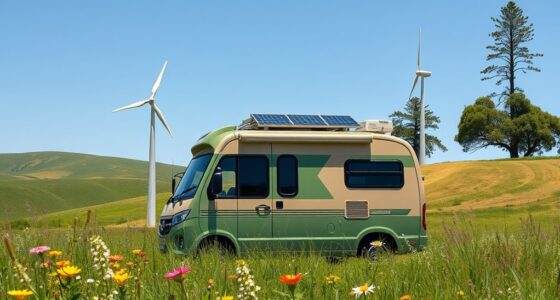
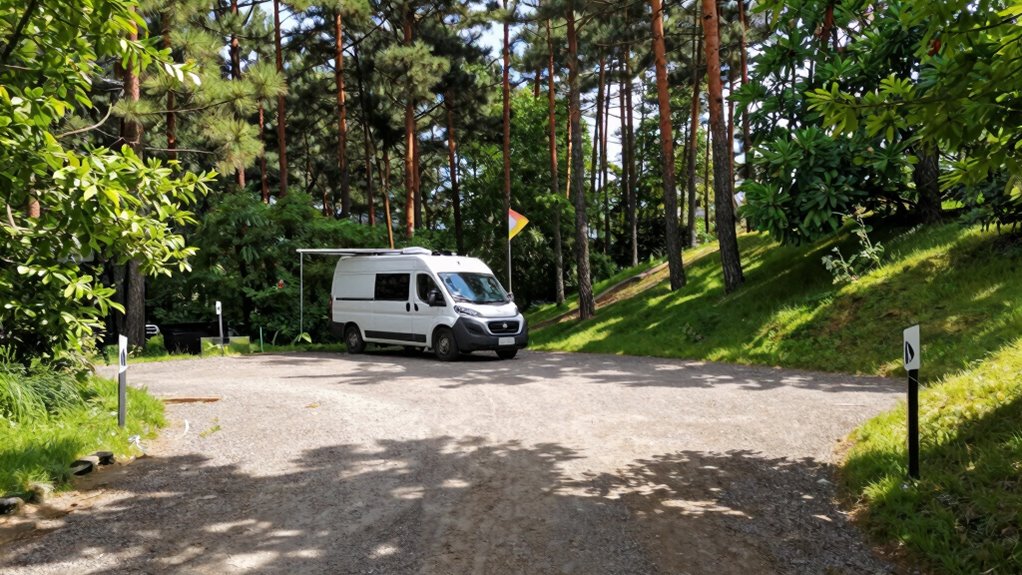

To choose the right campsite for your van, start by measuring the size to verify it comfortably fits and allows space for setup and outdoor gear. Check the terrain for flat, stable ground free of soft or erosion-prone areas, and avoid steep slopes to prevent tilting. Look for natural shade from trees or rocks to stay cool, and test signal strength beforehand, considering boosters if needed. Continue exploring ways to find the perfect balance for a safe, cozy, and connected vanlife spot.
Key Takeaways
- Ensure the campsite has enough space to comfortably accommodate your van and outdoor gear without overcrowding.
- Check the terrain for flat, stable ground to prevent sinking or tilting, avoiding soft or erosion-prone areas.
- Look for natural shade sources like trees or rocks to stay cool and protect from wind, optimizing comfort and energy efficiency.
- Test signal strength with your devices beforehand; consider signal boosters in areas with weak cellular or Wi-Fi coverage.
- Prioritize sites near water sources and emergency services while maintaining safety protocols for campfire and wildlife.
What Do You Need in a Campsite? Understanding Your Vanlife Priorities
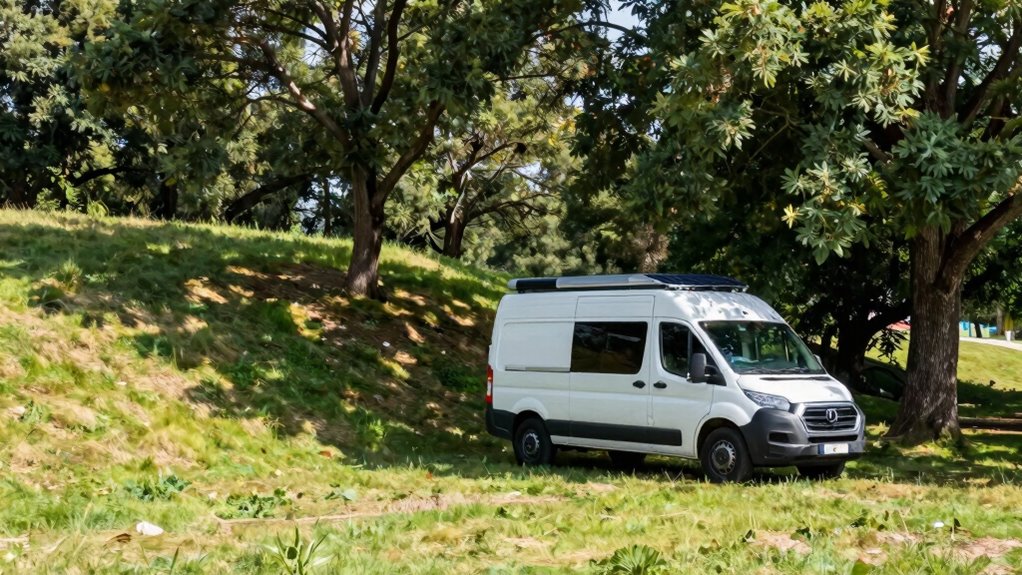
When choosing a campsite, it’s essential to think about what matters most to you in your vanlife experience. Safety should be a top priority, so consider campfire safety practices to prevent wildfires and accidents. Always check if fires are allowed, keep a bucket of water nearby, and never leave a fire unattended. Wildlife awareness is equally important; choose areas that minimize encounters with animals and store food securely to avoid attracting pests. Think about how close the site is to water sources or wildlife habitats, and plan accordingly. Your comfort and safety depend on understanding these factors. By prioritizing campfire safety and wildlife awareness, you create a safer, more enjoyable environment for your adventure. Additionally, understanding your campsite’s terrain and slope can help prevent issues with drainage and ensure a more comfortable setup.
How to Evaluate Campsite Size and Layout for Comfort

When choosing a campsite, consider the ideal site dimensions to guarantee enough space for your van and gear. The layout should facilitate easy access and movement, making your stay more comfortable. Don’t forget to check accessibility features, so you can navigate the site safely and efficiently. Additionally, assessing the ergonomics of the setup can help ensure your workspace remains comfortable even during extended stays.
Optimal Site Dimensions
Choosing the right campsite size is essential for a comfortable outdoor experience, and evaluating the layout helps guarantee you have enough space for both your tent and activities. When considering optimal site dimensions, determine how much room you need for your van, setup, and movement. Check campground amenities to verify the site can accommodate your needs. Be aware of campsite regulations that might restrict certain sizes or setups. A well-sized site provides space for cooking, relaxing, and storage without feeling cramped. Avoid sites that are too small or overly large, which can affect comfort and safety. Properly evaluating dimensions ensures you enjoy a seamless outdoor experience without feeling confined or wasting space. Additionally, understanding campsite regulations can prevent potential issues during your stay.
Layout and Accessibility
Evaluating a campsite’s layout and accessibility is crucial to ensuring your outdoor experience is comfortable and hassle-free. You want enough space for your van, easy parking proximity, and good campsite privacy. Check if the site allows smooth access without tight turns or obstacles. A well-organized layout minimizes stress and maximizes comfort. Consider the proximity to facilities and the overall flow of the area. A good campsite offers privacy from neighboring sites, reducing noise and disturbances. Use the table below to assess key aspects:
| Aspect | What to Check | Why It Matters |
|---|---|---|
| Parking Proximity | Easy access to parking without blocking others | Convenience and safety |
| Site Size | Adequate space for van and gear | Comfort and maneuverability |
| Privacy | Distance from neighboring campsites | Peaceful experience |
| Accessibility | Pathways free of obstacles, suitable terrain | Ease of setup and breakdown |
Additionally, evaluating the site layout can help identify potential issues before arriving, making your stay more enjoyable.
Assessing Terrain and Slope to Keep Your Van Safe
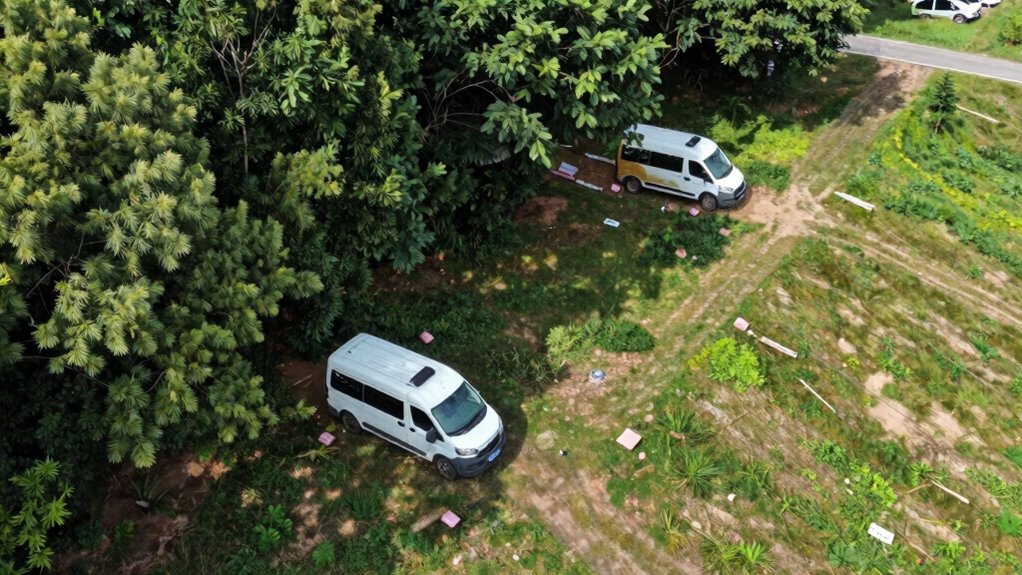
Before setting up, check the terrain for a solid, firm foundation to keep your van stable. Steer clear of sloped areas that could cause your vehicle to shift or roll. Ensuring a level, sturdy spot now prevents headaches later. Additionally, stylish men’s slim-fit blazers can serve as a metaphor for choosing a well-fitting, secure spot that complements your needs.
Check for Firm Foundation
How can you guarantee your van stays stable and safe? The key is checking for a firm foundation. Look for stable ground that can support your van’s weight without shifting or sinking. Avoid soft, muddy, or loose soil, which can cause instability. Firm ground provides a solid base that prevents your van from settling or tilting. Before setting up, examine the terrain closely for signs of erosion or loose gravel. Confirm the surface is level enough to keep your van balanced, especially if you plan to stay for a while. Remember, a stable ground is essential to prevent accidents and ensure your comfort throughout your stay. Taking the time to assess the terrain now can save you trouble later. Testing the ground with your weight can help evaluate its stability. Avoid areas with loose gravel or sand. Look for compacted, solid soil or rock. Confirm the surface is level or minimally sloped. Additionally, considering natural features such as landscape stability can further ensure a secure setup.
Avoid Sloped Areas
Ensuring your van stays stable isn’t just about finding firm ground; it also means avoiding slopes that could cause instability. Steep inclines and uneven ground can make your vehicle unsafe, especially overnight. When scouting a site, check the terrain carefully—look for flat areas that provide a level surface. Avoid spots with sharp or uneven inclines, as these can cause your van to slide or tip. If the ground is sloped, try to find the gentlest incline possible, with the front or rear slightly elevated rather than steeply tilted. Always test the stability of the ground by pressing down on the surface. Staying on flat, even ground minimizes the risk of accidents and guarantees your van remains secure throughout your stay. Terrain assessment is essential for safe camping and can help prevent accidents caused by uneven or unstable ground.
Finding Shade and Natural Cover to Stay Cool
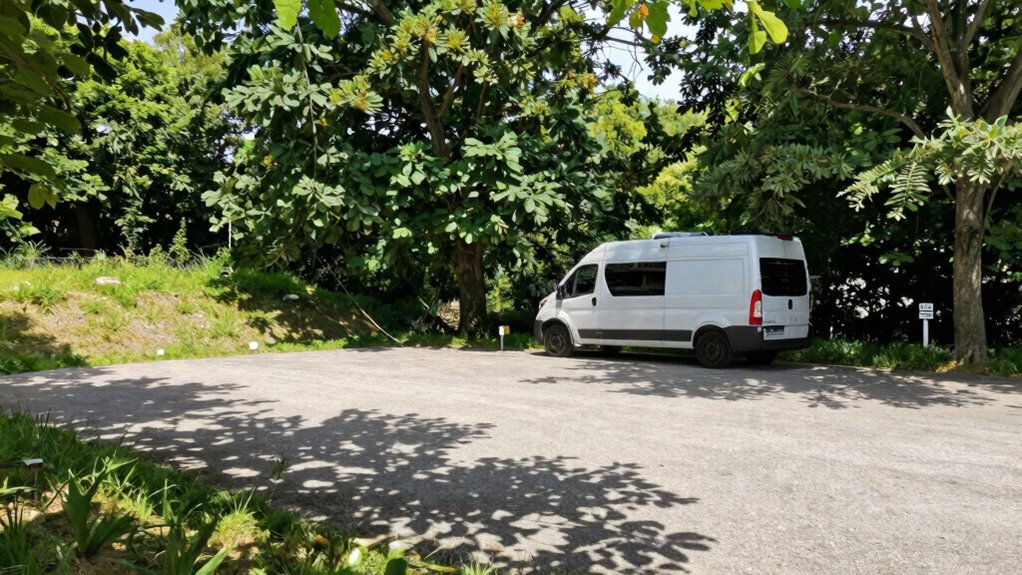
Finding shade and natural cover is essential for staying cool at your campsite, especially during hot days. Natural shade from trees or large rocks can markedly reduce heat and provide a comfortable spot to relax. It also offers wind protection, helping you stay cool and shielded from gusts. To maximize your comfort, look for areas with dense foliage or natural structures that block direct sunlight and wind. Position your van near these features for added relief. Additionally, observing the local art and culture can help you identify scenic spots rich in natural features and cultural significance.
Checking Signal and Internet Options at Campsites
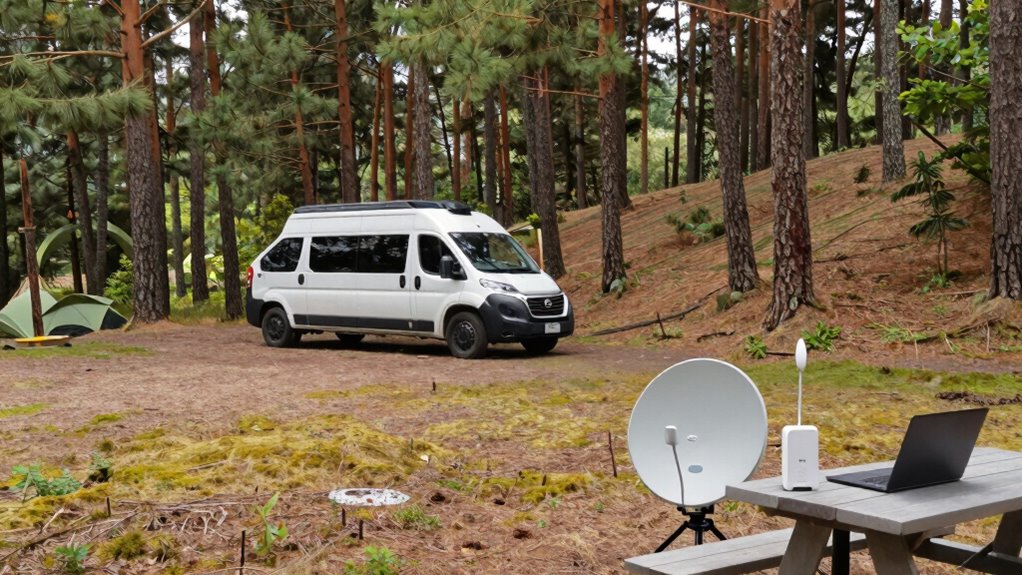
After locating a shaded spot and natural cover to stay cool, it’s important to evaluate your campsite’s connectivity options. Check the signal strength on your devices to ensure reliable communication and navigation. Some campsites may have strong cellular signals, while others might be spotty or non-existent. Consider internet options like Wi-Fi availability or signal boosters if you need consistent connectivity. You can test the signal before settling in by using your smartphone or portable hotspot. Keep in mind that signal quality can fluctuate based on terrain, vegetation, and distance from cell towers. Understanding smart home technology features such as signal extenders and adaptive connectivity solutions can help you plan for emergencies, stay connected with loved ones, or work remotely if needed. Ensuring good signal strength and internet access can make your camping experience smoother and more enjoyable.
Quick Checklist: Making Sure Your Campsite Checks All the Boxes
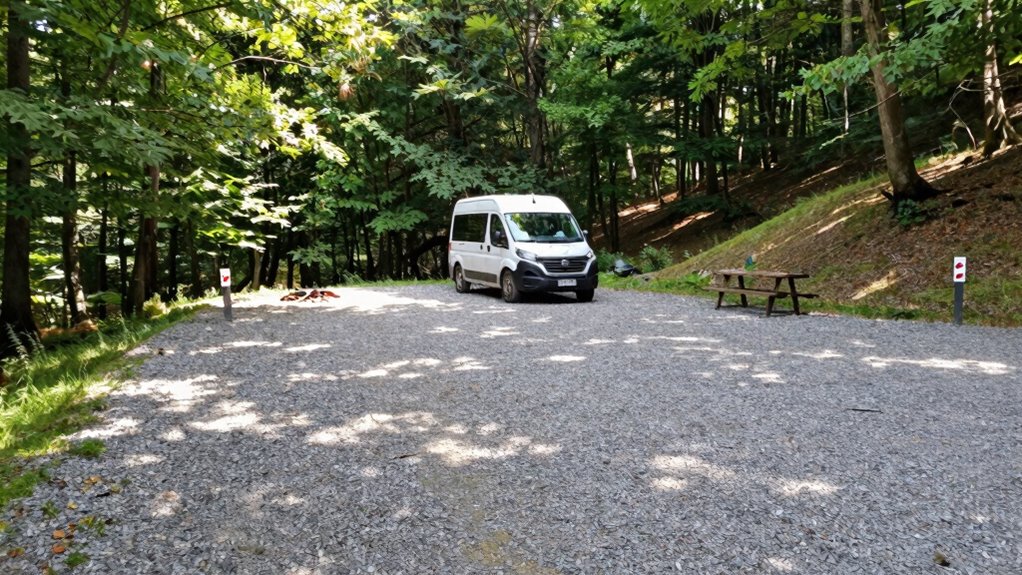
Before settling into your campsite, it’s essential to run through a quick checklist to confirm everything is in order. This guarantees safety and comfort during your stay. First, check the terrain for stability and slope to prevent issues with your van. Next, verify access to shade and sunlight for temperature control. Then, review your site for campfire safety, ensuring you’re a safe distance from trees and flammable materials. Finally, consider wildlife encounters; store food securely and keep a clean site to avoid attracting animals. Additionally, smart design can help you optimize your living space for comfort and safety even in outdoor settings.
Frequently Asked Questions
How Do Weather Conditions Influence Campsite Selection and Safety?
Weather conditions greatly influence your campsite choice and safety. You should pay attention to weather patterns, like storms or heavy rain, and avoid low-lying areas prone to flooding. Temperature considerations matter too; hot weather requires shade and ventilation, while cold conditions mean you need insulation and shelter from wind. Always check the forecast before setting up camp, and be prepared for sudden changes to stay safe and comfortable.
What Are the Local Regulations or Permits Needed for Camping Spots?
Think of campground permits and local regulations as your map and compass in a wild, uncharted terrain. Before you set up camp, check with local authorities or park websites to see if you need permits or if there are restrictions. Ignoring these rules can turn your adventure into a detour. Staying informed guarantees your journey stays smooth, allowing you to enjoy the wilderness without legal storms brewing on the horizon.
How Can I Identify Wildlife Risks at Potential Campsites?
You can identify wildlife risks at campsites by looking for wildlife signs, such as tracks, scat, or browse marks, which indicate animal activity nearby. Avoid hazard zones like dense woods, berry patches, or water sources where animals are likely to gather. Stay alert for sounds or movement that suggest wildlife presence. Keeping a safe distance and storing food properly will help reduce the chance of unwanted encounters.
What Are the Best Practices for Minimizing Environmental Impact?
To minimize environmental impact, you should follow Leave No Trace principles and eco-friendly practices. Always pack out all trash, avoid damaging vegetation, and stick to established trails and campsites. Use minimal campfire impact techniques, like using a stove instead of building fires, and avoid disturbing wildlife. Respect local flora and fauna, and opt for biodegradable products. By staying mindful and responsible, you help preserve nature for future adventurers.
How Do Neighboring Campsites Affect Privacy and Noise Levels?
Neighboring campsites can considerably impact your privacy concerns and noise pollution levels. If they’re too close, you might feel exposed or disrupted by loud conversations or activities. To maintain privacy and reduce noise, look for spots with natural barriers like trees or distance between sites. Choosing a campsite farther from others or in more secluded areas helps you enjoy peace, privacy, and a quieter experience during your van trip.
Conclusion
Choosing the perfect campsite isn’t just about finding a spot—it’s about discovering a place that checks all your boxes. But what if the ideal site hides just beyond your first glance? By considering size, terrain, shade, and signals, you’re one step closer. Will you spot the hidden gem before someone else does? Stay alert, stay curious—your perfect vanlife haven might be waiting just around the corner. Are you ready to find it?